Archive for the ‘kit car’ Tag
. . . and a BBQ Dessert Experiment
Work on the passenger and driver side foot boxes continues on the Factory Five Racing Type 65 Coupe.
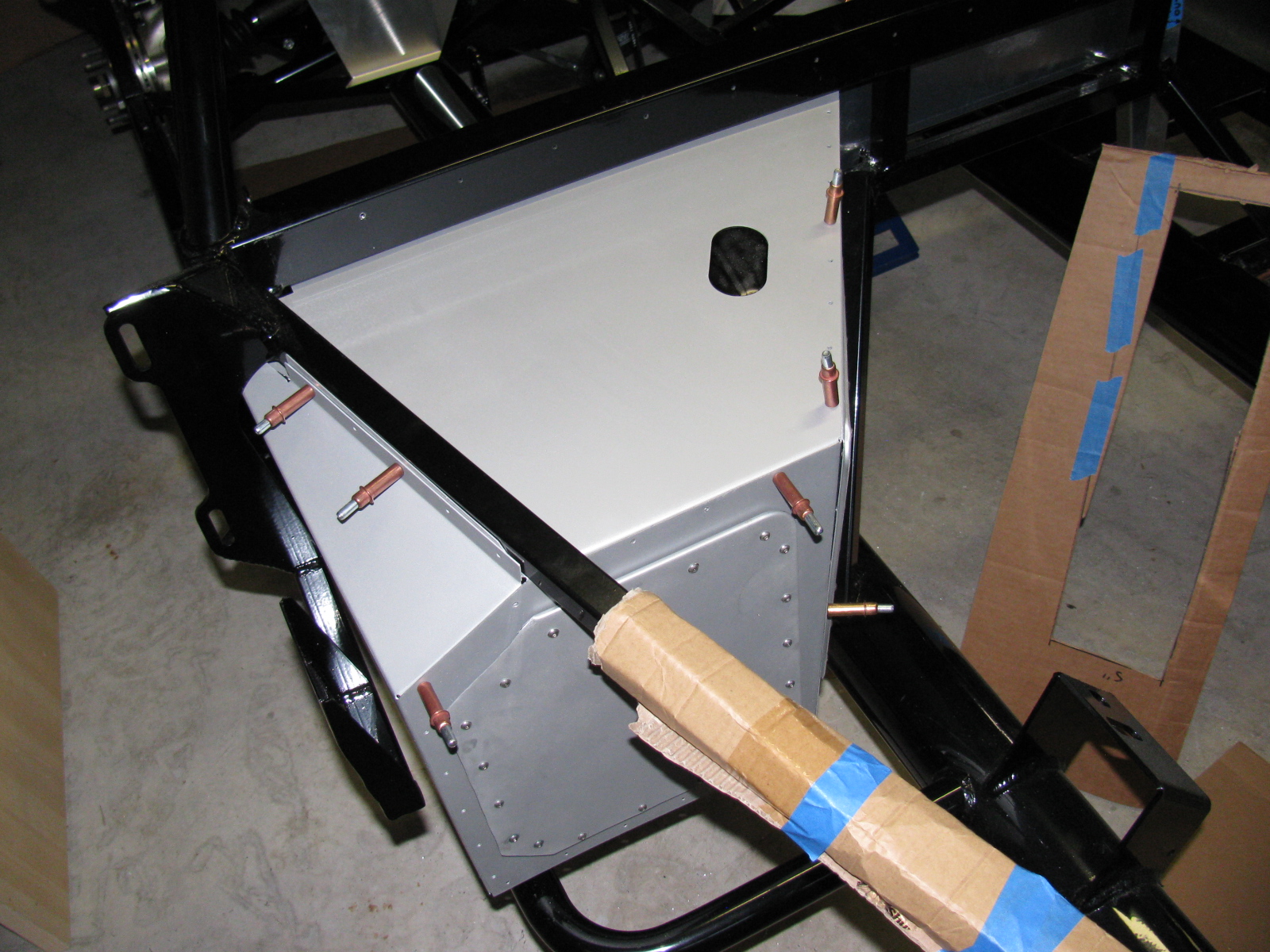
I painted the engine side of the panels with silver BBQ paint, and left the interior side un-painted, since all panels will be covered with Cool-It heat and sound barrier. Panels that face the exterior of the car – like the foot box floors and the trunk area, will be painted with RustOleum truck bed liner. It is a textured black finish that will also help reduce sound and noise. Here are some images. ..
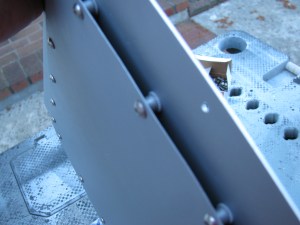

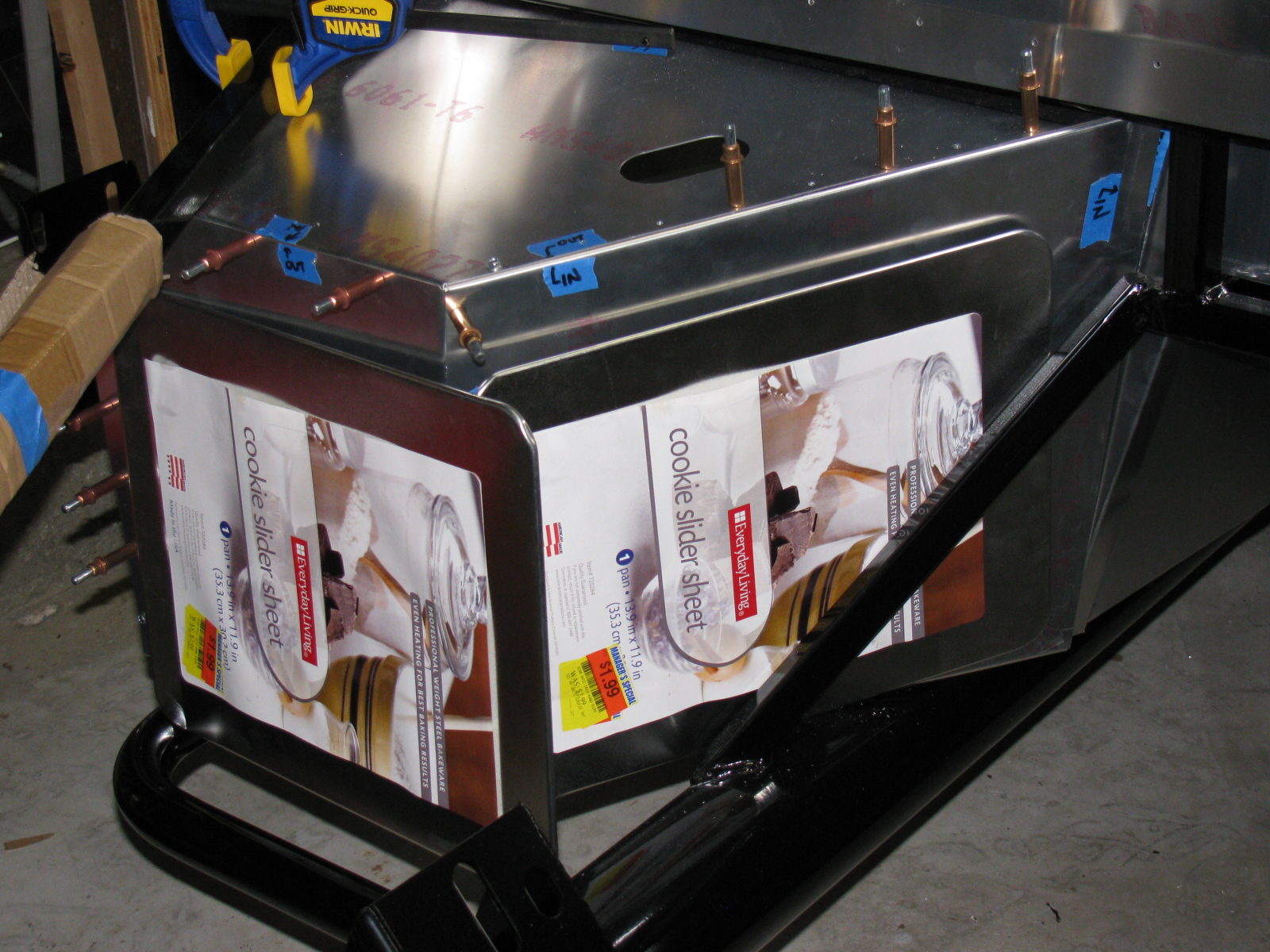
On the left is a detail of one of the cookie sheet heat shields, fastened to the firewall with 8-32 riv-nuts. The spacing is about one-quarter-inch. On the right is a view of the top of the heat shield, showing the nicely rolled edge.

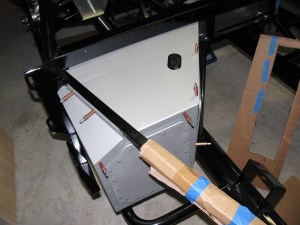
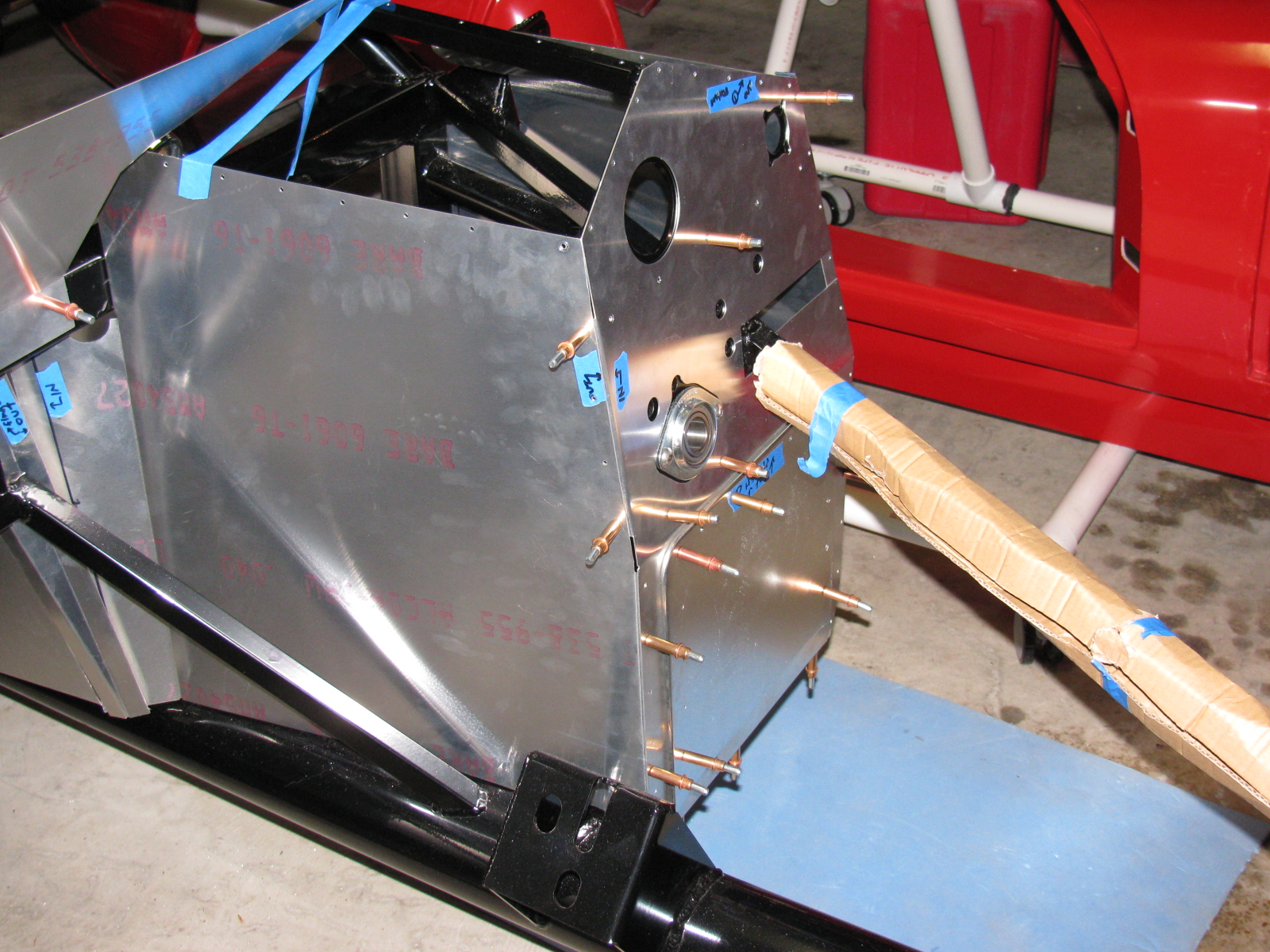
Passenger side foot box appears on the left of the photo above. The photo on the right shows a closer look at the passenger foot box.
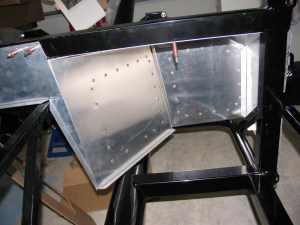
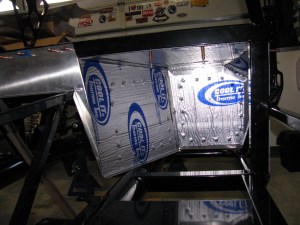
Photos above: Passenger foot box, before and after installing the Cool-It mats.
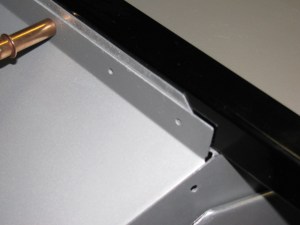

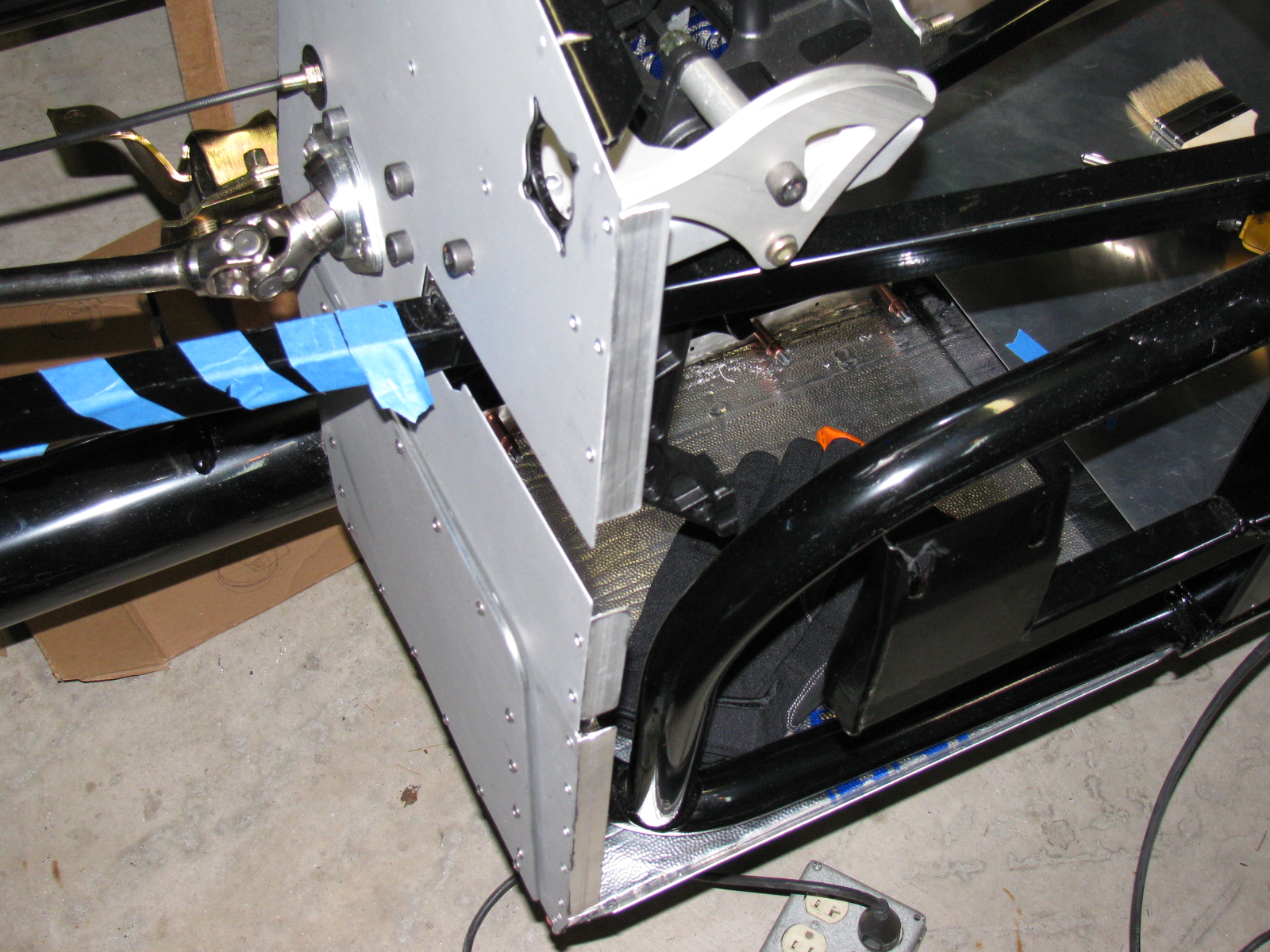
Above left: The top seam on the passenger foot box – this will be either trimmed or a strip of aluminum will be used to cover the mis-match. On the right, I added srtips of aluminum angle to the outer wall of the driver side foor box. This should make the outer wall easier to install.
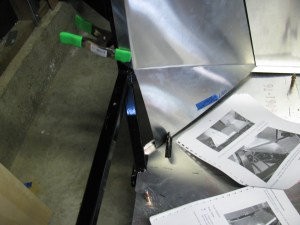
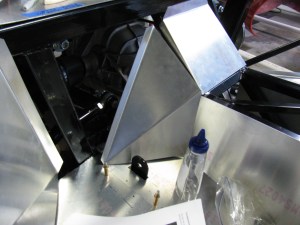
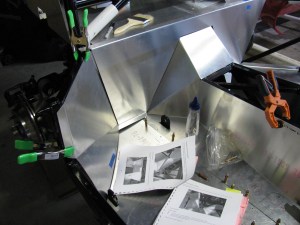
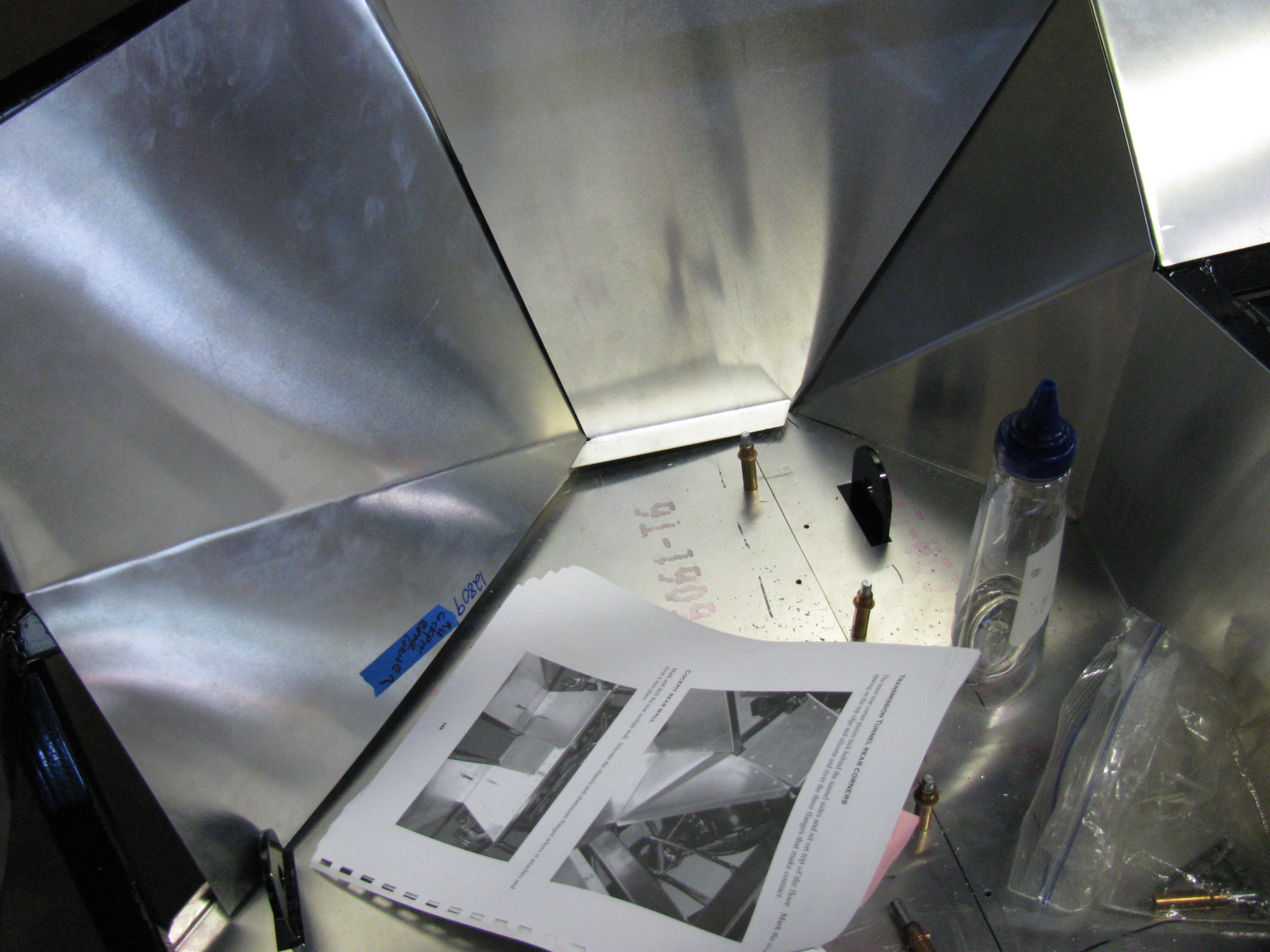
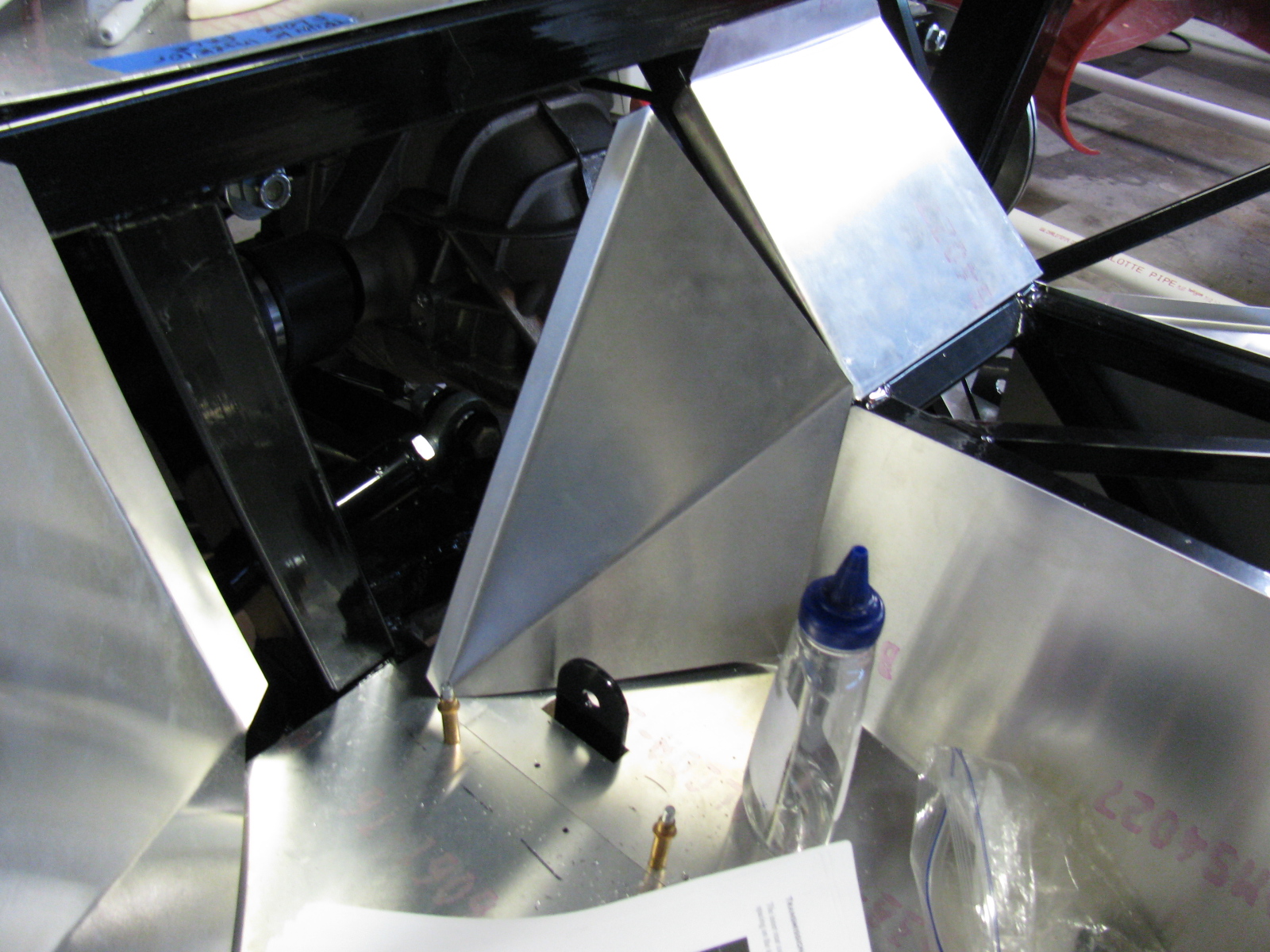
The next series of photos show how the interior panels go into place. The un-finished aluminum is difficult to photograph, I wish the manual would include an exploded view of the panels and how they fit into place. This is a complex jigsaw puzzle, and many of the parts must be flexed, trimmed and pulled into place. Clecos really help. This is one area where the manual offers good advice – the sections fit best when you follow the order outlined in the manual. Although many of the panels are marked with a part number, they do not indicate the orientation of the panel.
The foot box floors were very difficult to fit into place, so I sliced them into sections. If you look carefully you can see the saw kerfs (seams) on the floor panels. I chose the cuts carefully, in order to make sure I would have something solid to rivet to. In the areas without any supporting chassis tubes, I will install strips of aluminum bar stock.
The panels will be permanently attached later with silicone adhesive and rivets – at this stage, the panels are being “dry-fitted” with clecos to make sure everything is properly in place.



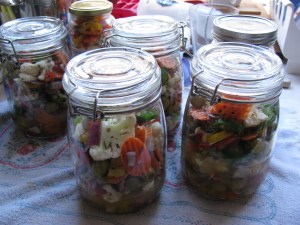
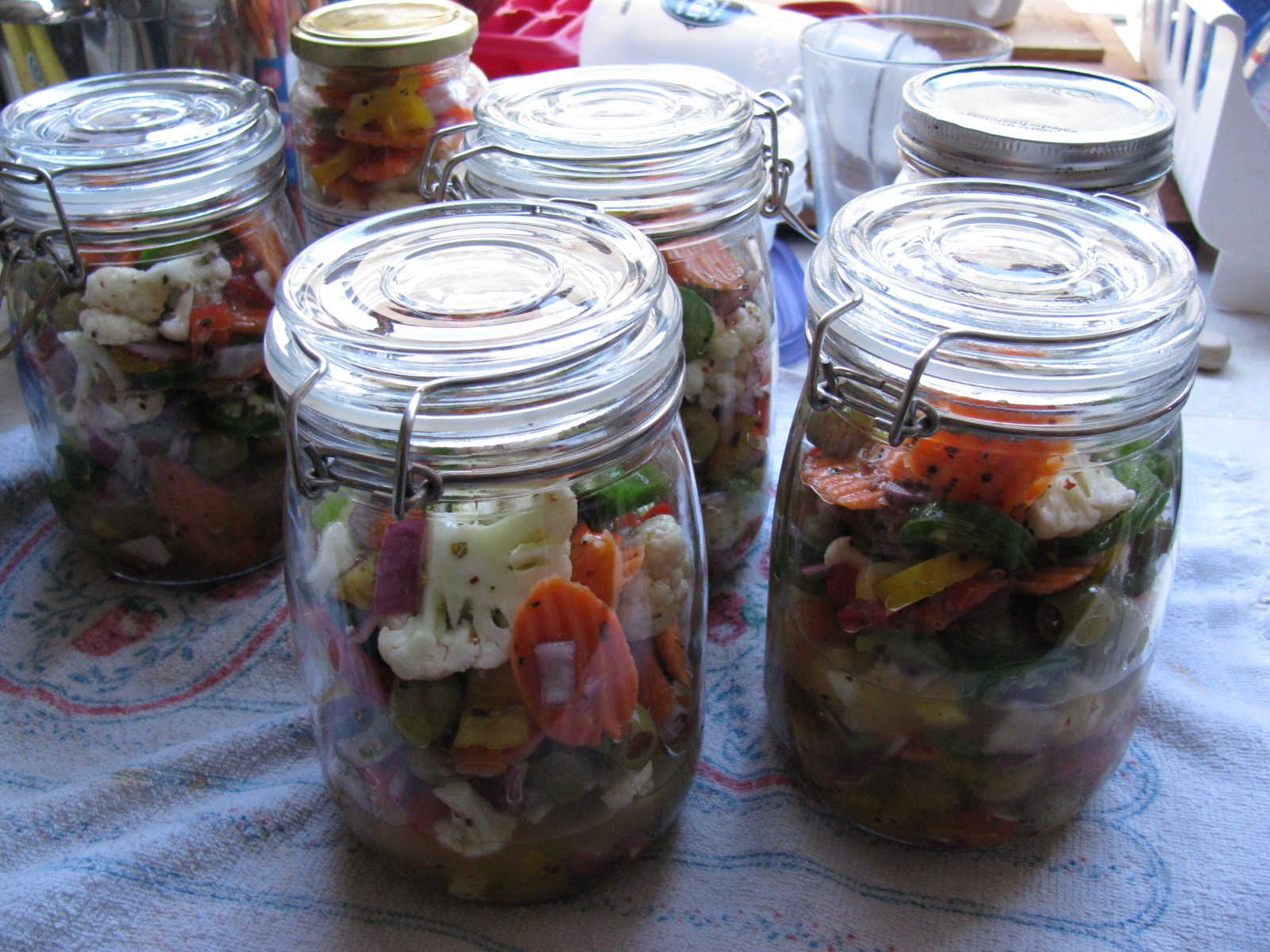
Somewhere during this building session, I made some time to pack my hot giardiniera into jars, and made a few deliveries. . .
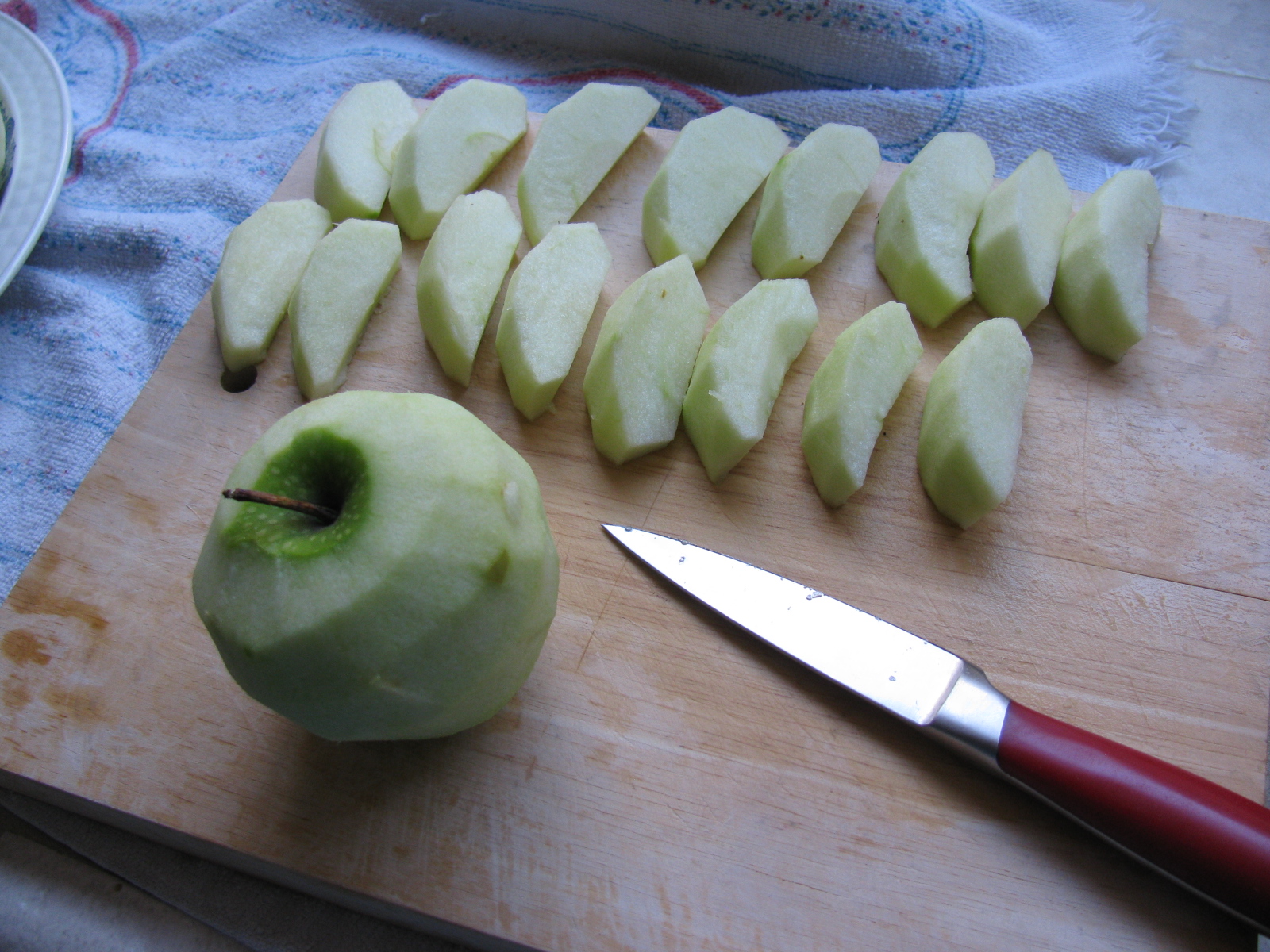
I also managed to do some BBQ experiments. This time I baked some apple turn-overs in the Big Green Egg. They turned out OK, but could be better. They are like just-right bites of apple pie. Here are some pictures. . .


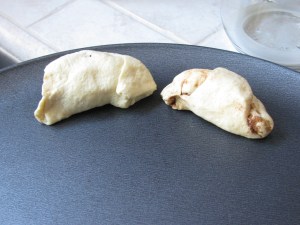


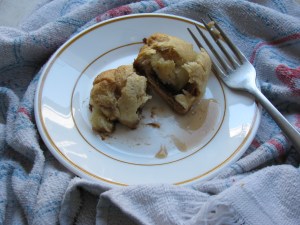
I forgot to add notes and images from the IRS (standard width) brake installation. Here are some images, plus a link to a YouTube video…


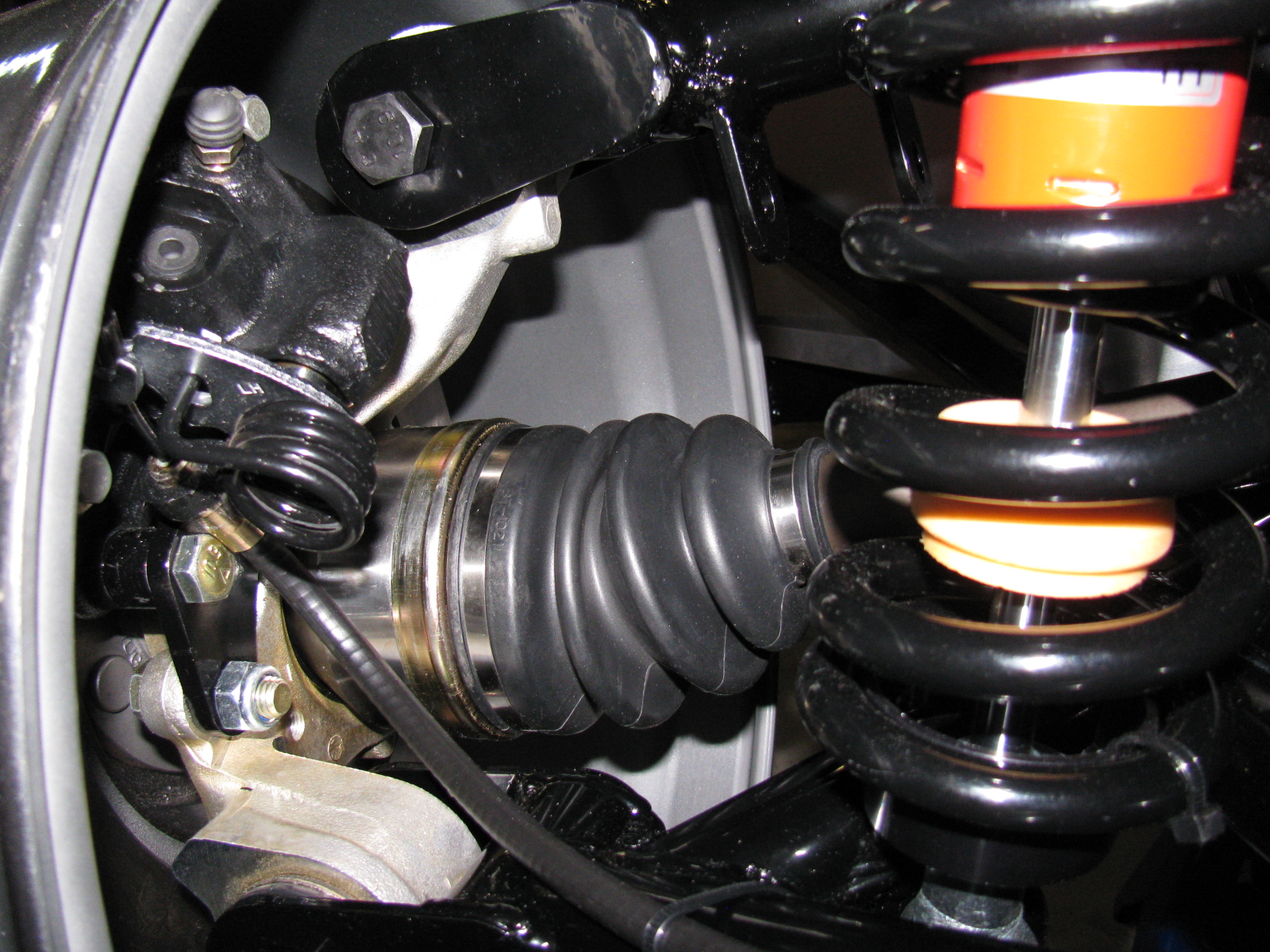
As you can see in the picture above left, an open end wrench can go onto the caliper mounting bolt. This was a button head Allen screw in the past. The emergency brake cable seems very tight and has a sharp bend, but this seems to work OK.


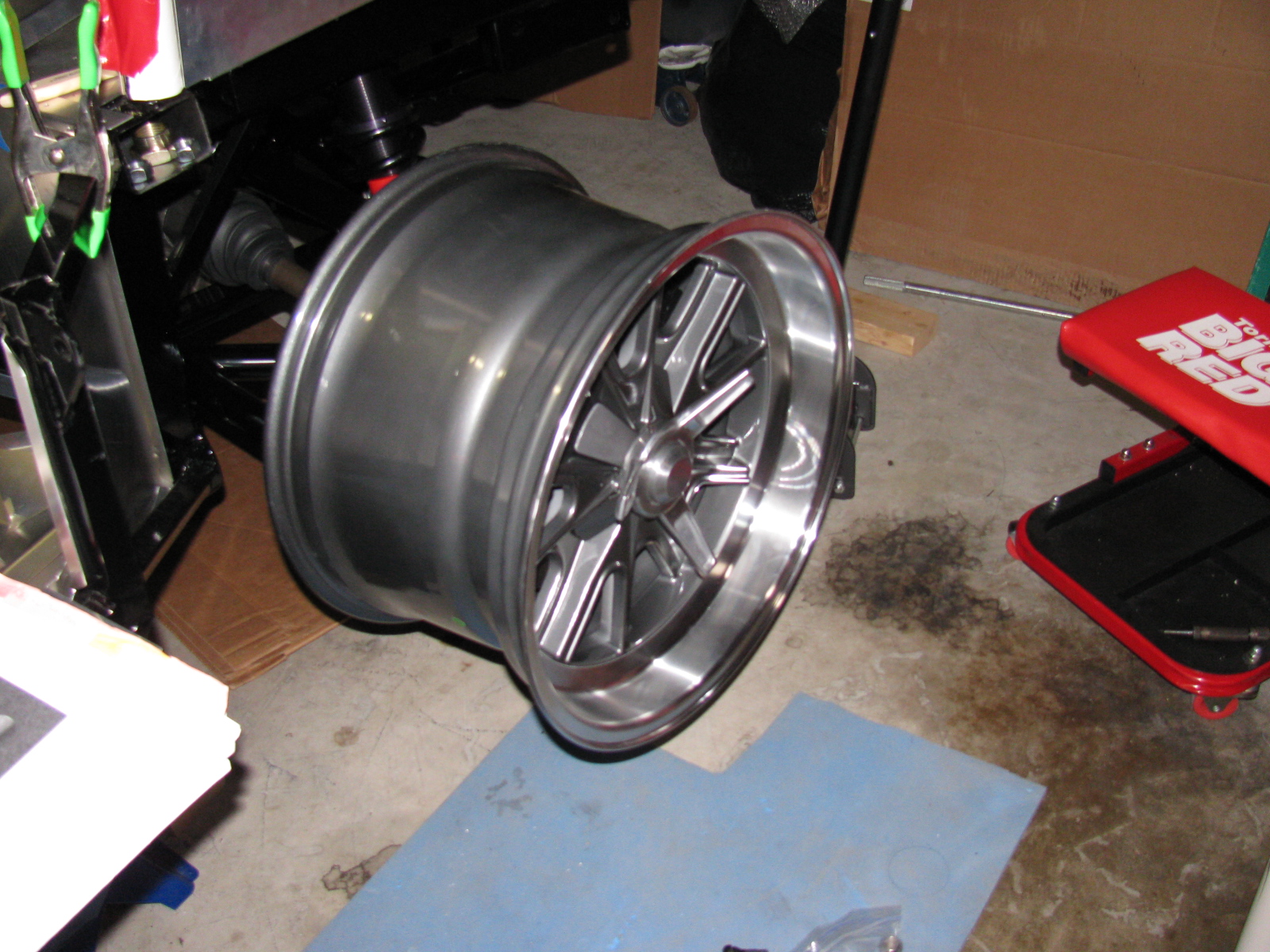
The vintage Halibrand replica wheels fit nicely over the axle-hub-brake assembly, but I don’t have tires yet.
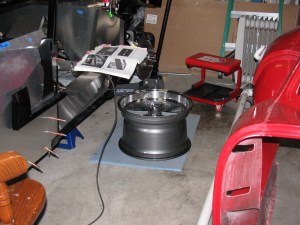
The rear wheels are 17-inches by 10.5-inches, and the tires will be 275 / 40ZR17, probably BF Goodrich g-Force Sport Comp 2, but not sure yet.
A Silent Movie: Rear Brake Installation
Oh – almost forgot. Here is a silent movie about the rear brake installation:
http://www.youtube.com/watch?v=bVcX8-Nnqfo
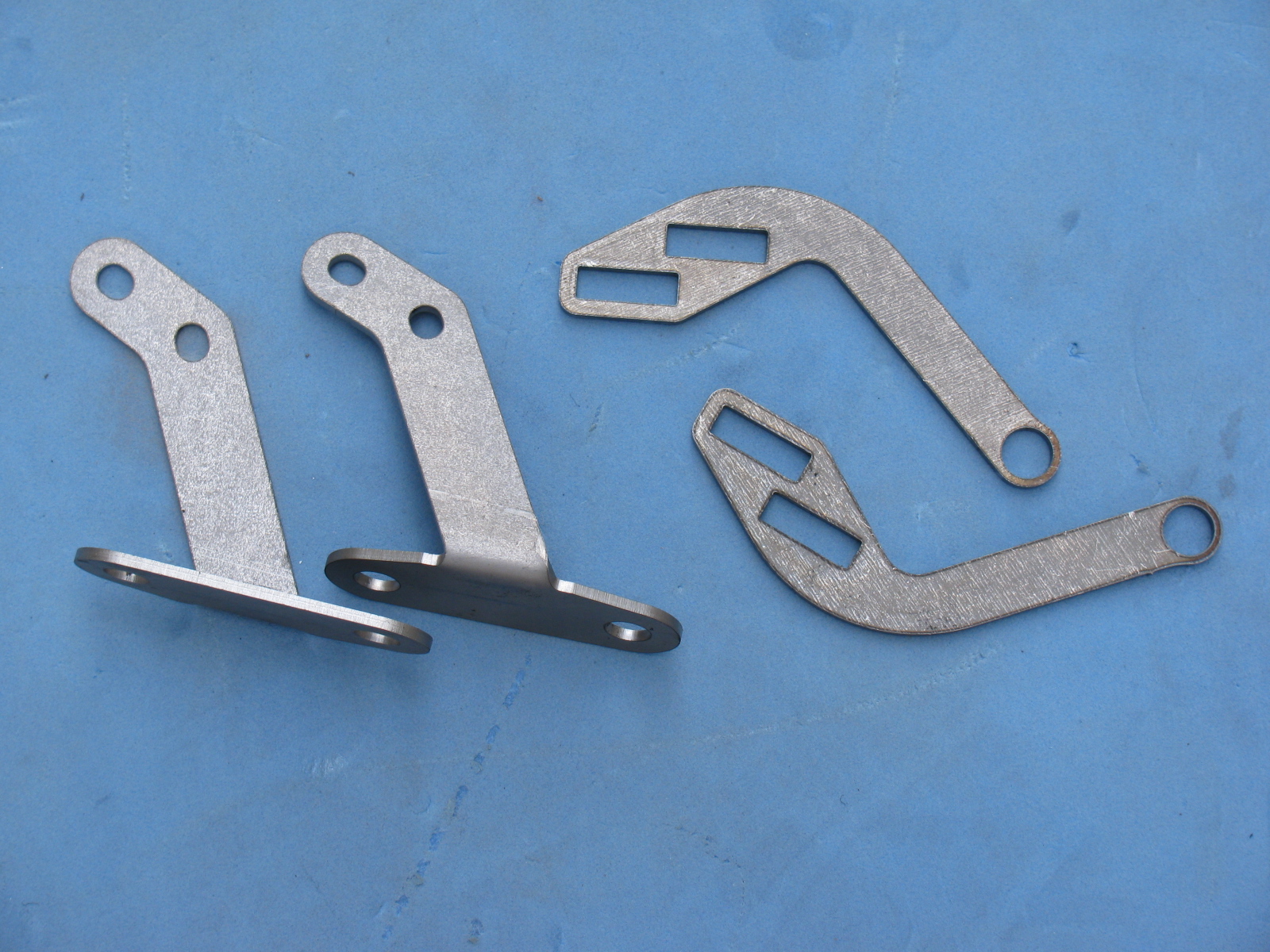
I got tired of fiddling with the IRS so I did something different this weekend. Here is a picture of the E-brake ratchet handle that comes with the Complete Kit. Since the parts are plain, un-finished steel, I decided to paint it to prevent rust. The exploded view in the instructions make assembly very easy. I wish The Factory would include an exploded view for the IFS as well as the IRS – makes things go so much better. The finish is white and black appliance epoxy from Rustoleum.
Here are some pictures. . .


I am not sure if I like the location of the E-brake handle, it is on the passenger side of the transmission hump. A popular modification is to use a Pontiac Fiero unit and re-locate it closer to the driver. We’ll see if I want to change this setup. (The sharp-eyed people will notice the e-brake handle is backwards. . . . . . )
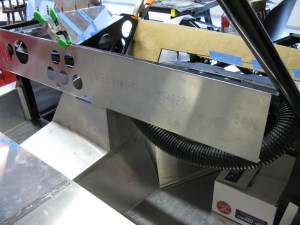
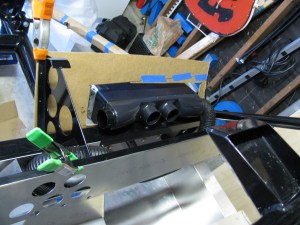
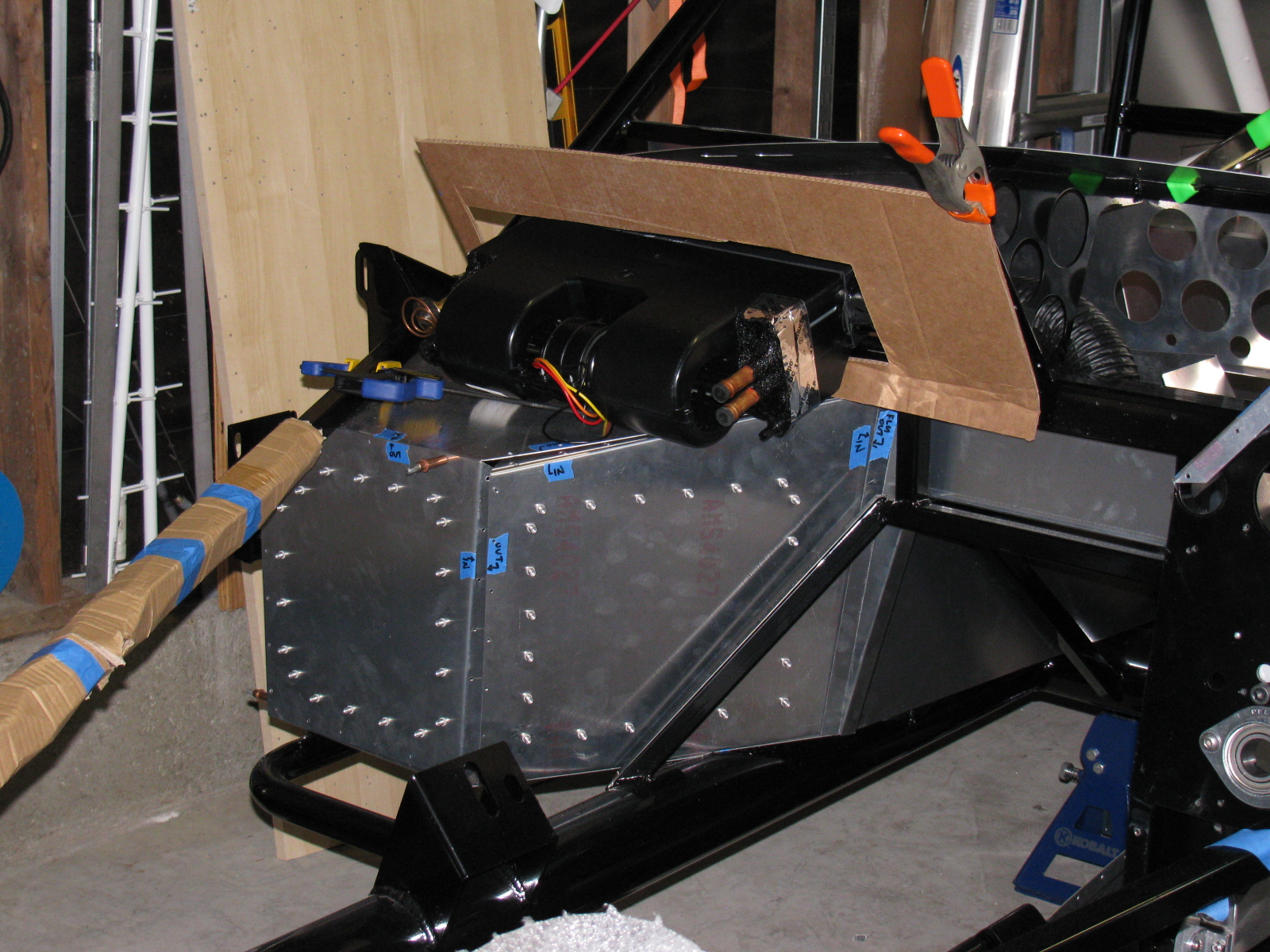
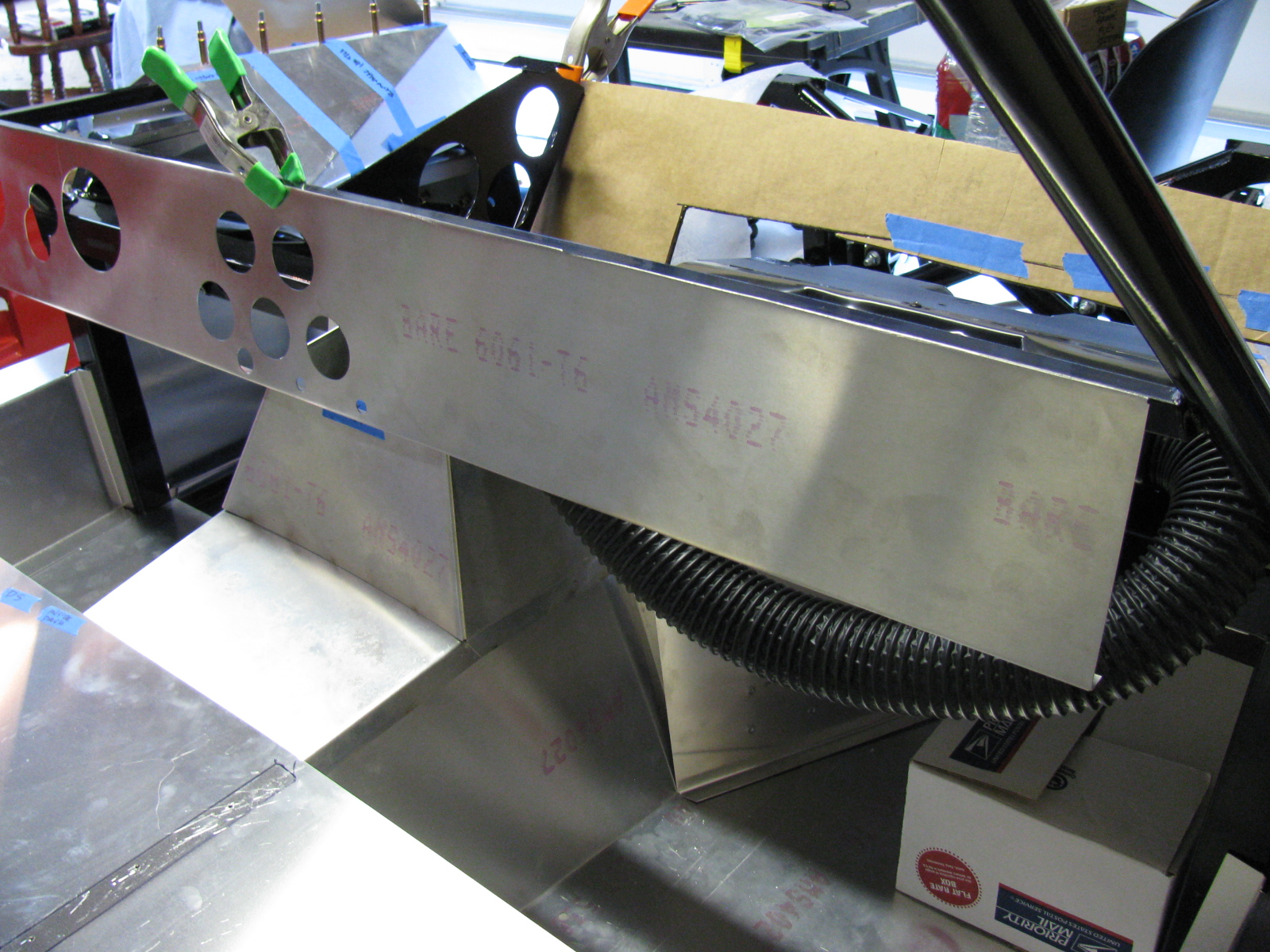
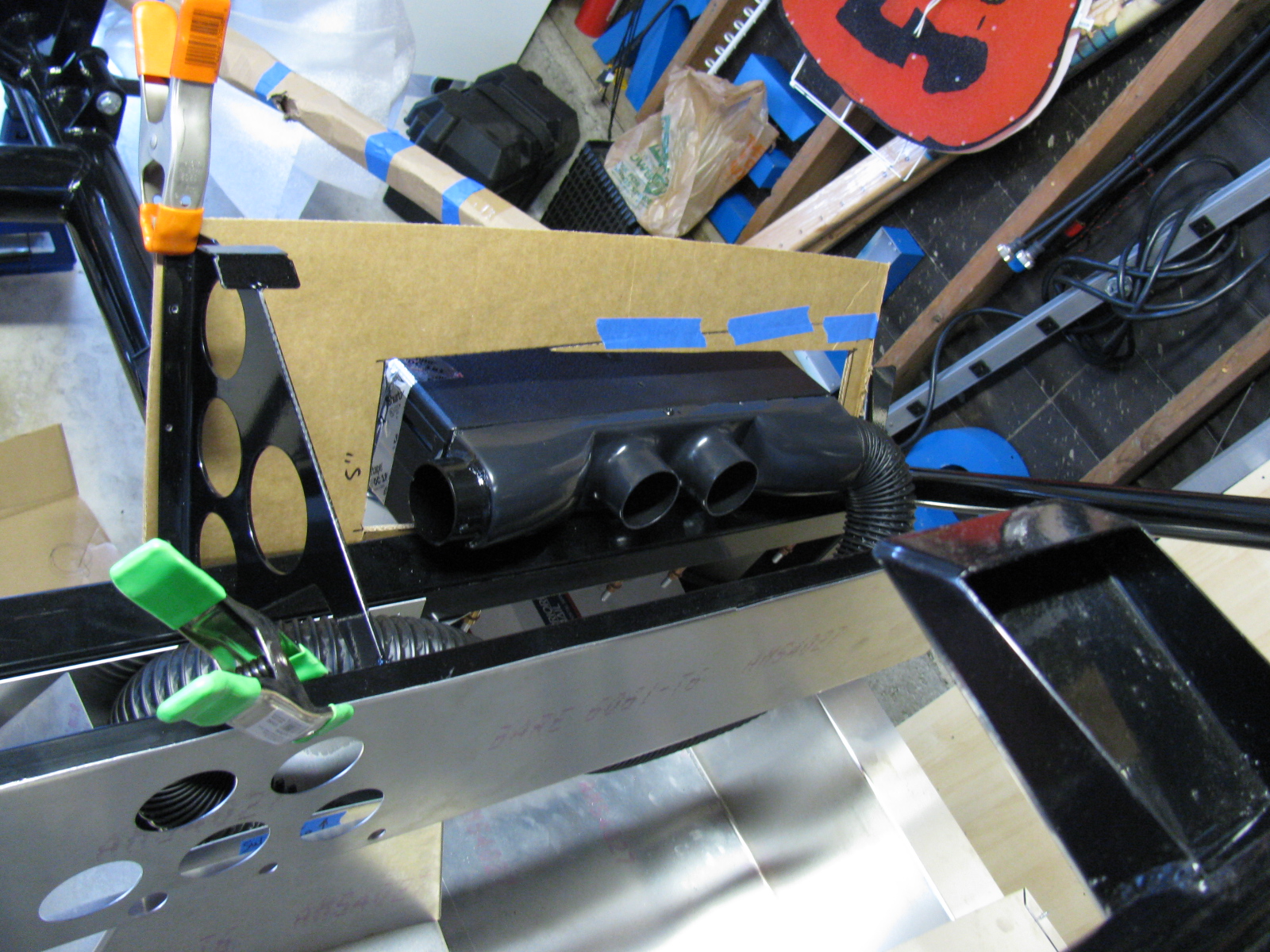
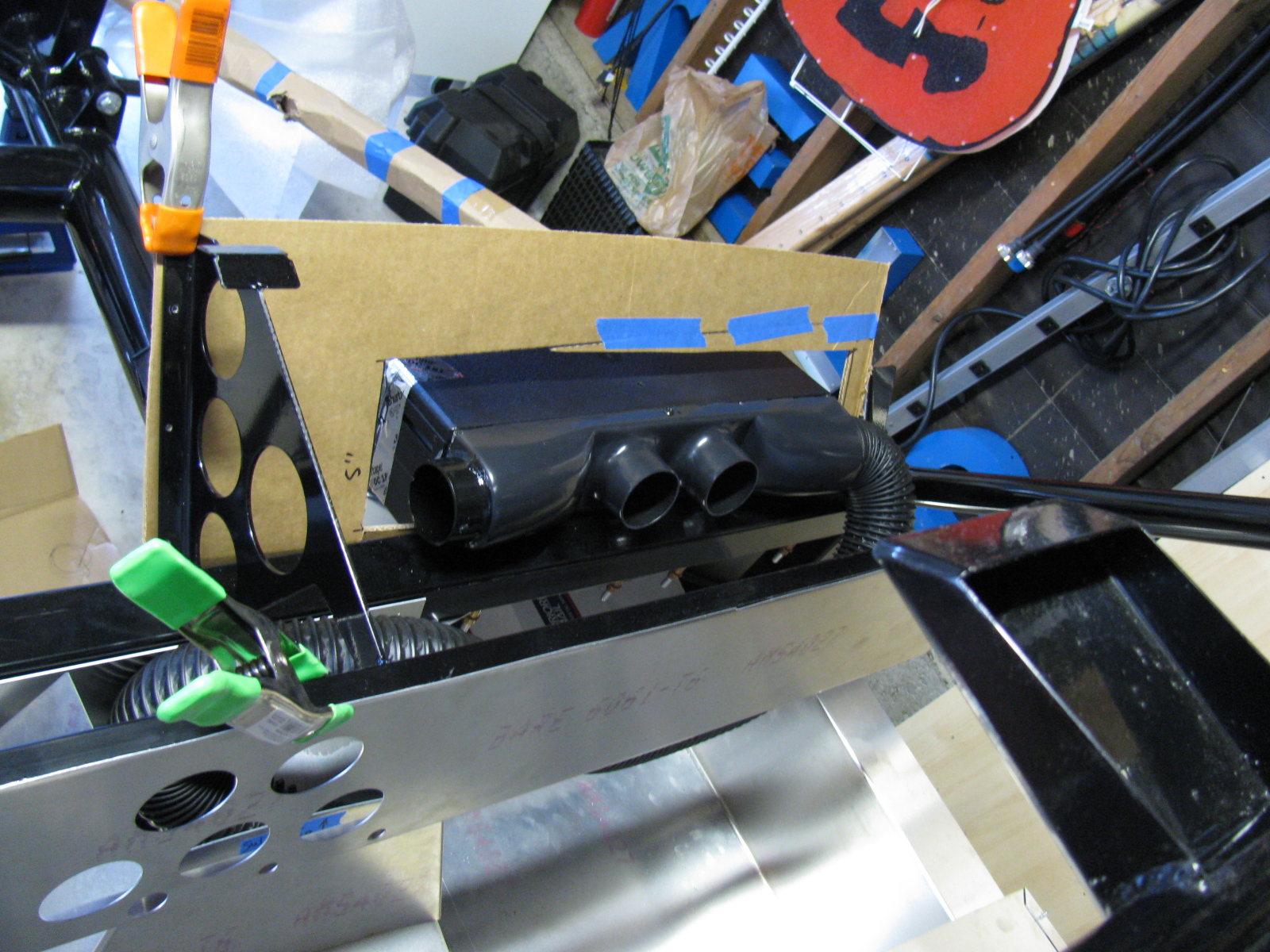
Here are some images of the air conditioner and a cardboard aided design (CAD) templates I am making. This requires some cutting of the dashboard and firewall, so I want to mock everything up before I start cutting. I have some very sturdy aluminium plates for the A/C baseplate, and some sheet aluminum for the enclosure. A CAD version will be made first, then transferred to aluminum.



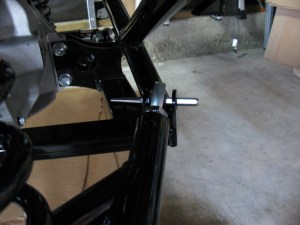
Moving back to the IRS, I received some advice from the veteran builders, and so here is what I did to the lower control arm mounts. The shims (thin black steel washers) F5R supplies are slipped into place and some adjustment is done by placing shims here and there. However, it makes more sense to limit the toe and camber adjusters so that the tweaking can be as simple as possible. By “fixing” one side of the control arm, and limiting it to one adjuster for toe and one adjuster for camber, alignment is simplified and less time consuming.
Currently, this stage is to just “eyeball” the adjustments, and continue the build process. Wheel alignments – both front and rear – may be done after the wheels and tires are mounted. (Probably can be done at the “go kart” stage, when the chassis is complete and the engine, drivetrain, electrics and brakes are installed and running.)
Here are some pictures. As this step gets closer to completion, I will add more details for future reference.
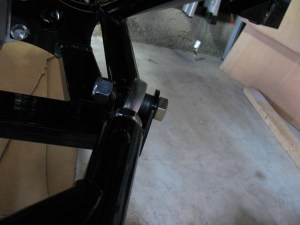
Above left: The Type 65 Coupe IRS lower control arm mounts. One shim on the front side of the mount, six shims on the side toward the rear of the car. The heim joint is threaded on so that 5/8-ths of an inch of thread are showing.
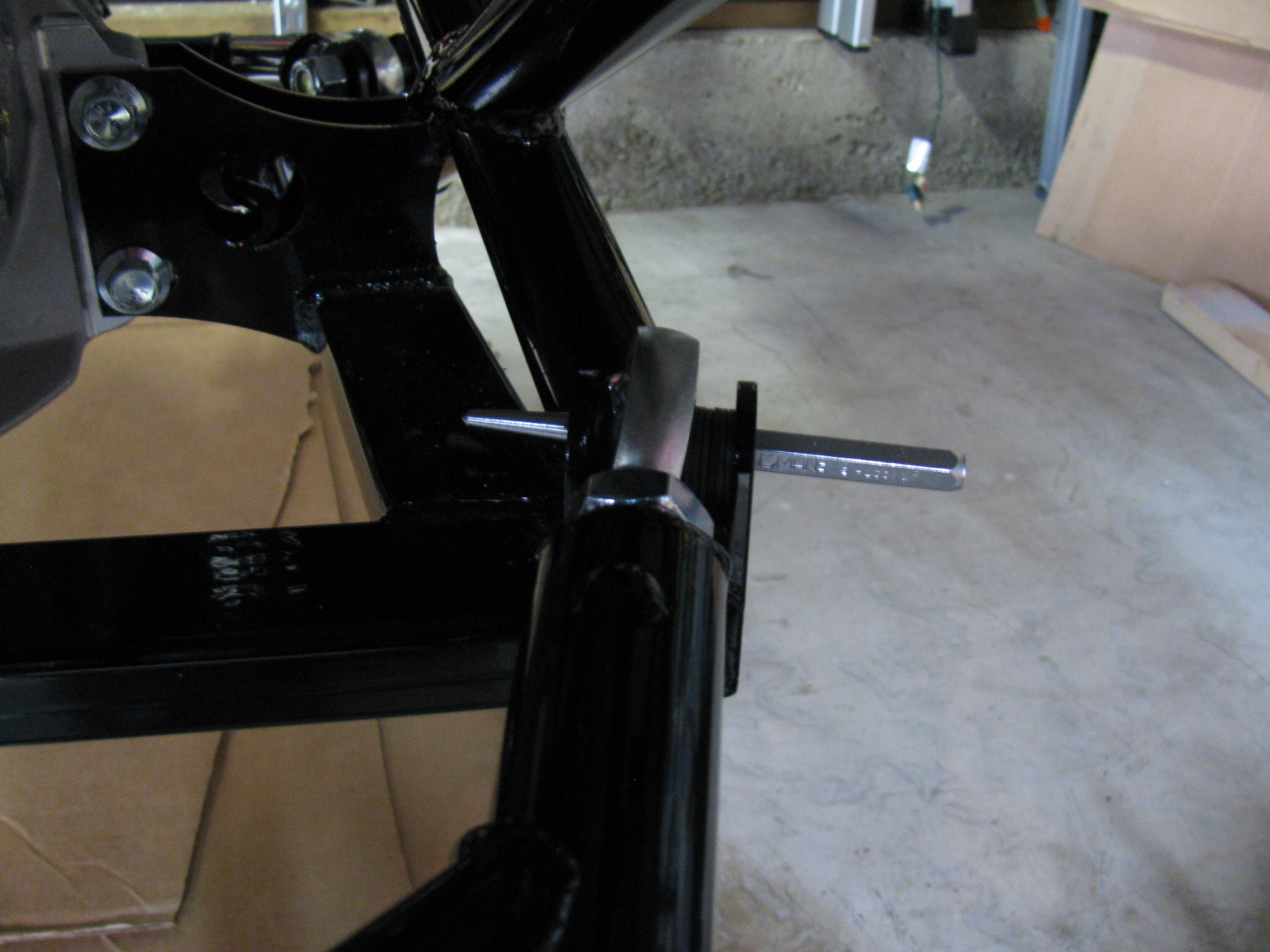
Above right: Here is the trick I use to install slippery washers, shims and spacers onto things – Use a punch or some other tool to poke through the stack of parts together, thus aligning the holes of each part. Then . . .

. . . push the fastener – and the punch – through the stack of parts. Wiggling, pushing and pulling will help. Sometimes a quick-clamp can help, too.
Maker Faire 2013 Update: Application is In!
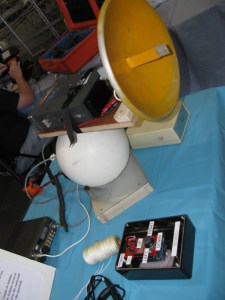
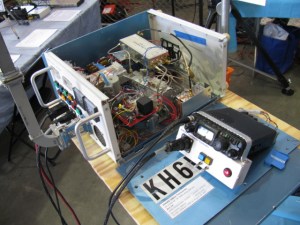
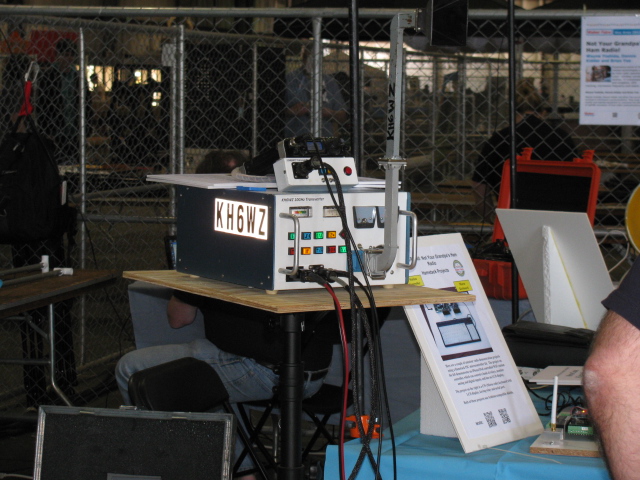
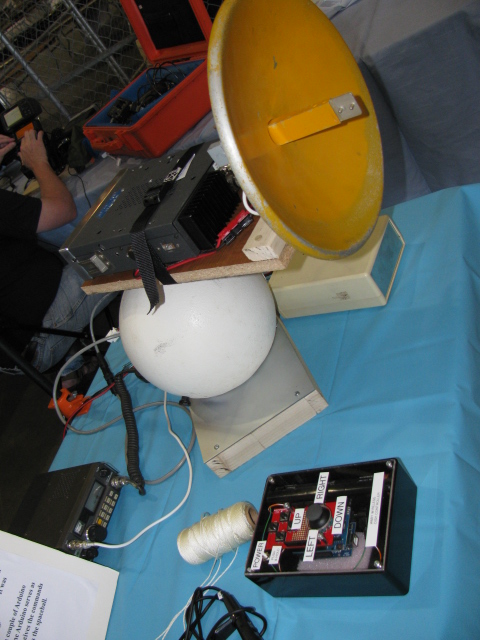
I turned in an application for Maker Faire Bay Area 2013. Our Maker name is “Not Your Grandpa’s Ham Radio 2” and we will continue the theme my team entered last year. We will have some new projects on display, and we will bring some of the more popular items from last year. Here is a look at some of our projects from last year – as well as some other interesting and amazing things I saw last year.


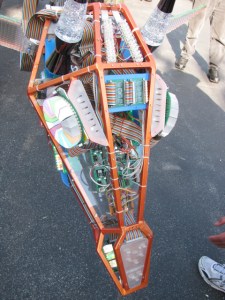

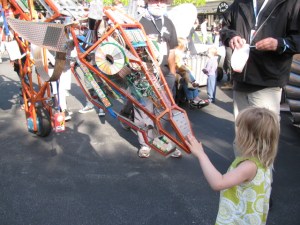
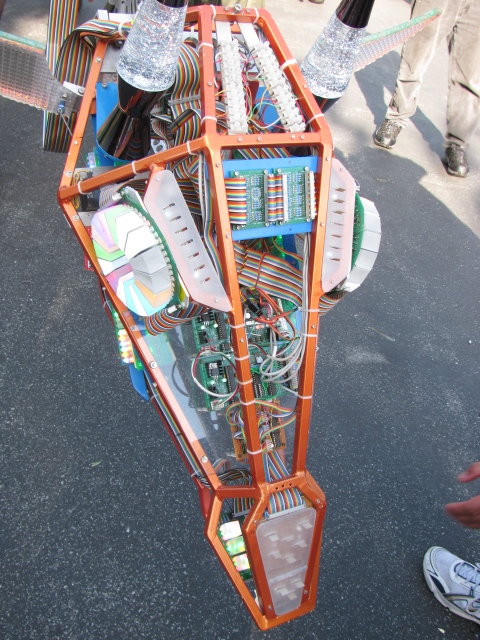
Above – One of the most interesting exhibits at Maker Faire 2012 — The Electric Giraffe named Russell – it is a scaled-up and enhanced version of a plastic model kit – it is 17 feet tall. Below left: Jeri Ellsworth, aka Circuit Girl, and her electric Key-Tar at Maker Faire 2012. Below right, Maker Alex shows us her finger tip no keyboard keyboard.


More Maker Faire 2012 images are posted on my YouTube channel.
I did not do much work in the garage this past weekend, since I had to pull an all-nighter to get my CQ magazine article finished before a deadline, and there was a Coupe welcome party at a fellow Factory Five builder’s house.
Here are some pictures of a brand new Type 65 Coupe kit that recently arrived at QSL and Mrs QSL’s house. (They just finished a Factory Five Racing Roadster. It looks great and is finally registered and running.)
It was good to meet some of the other builders in the area and see the special parts QSL bought for MRS QSL’s Coupe.
Follow the Casey Family Coupe Thread for the latest updates on Mike and Julie’s Type 65 Coupe.


I took a nap shortly after I got home, lack of sleep from the all-night writing session before wore me out. I woke up, and it was dark outside, so I just went back to sleep, and woke up at 3AM on Sunday.
After doing some chores around the house, I decided to prep and paint the other steel parts on the Coupe. Here are some before and after pictures of the steel items painted with gloss black Rust-Oleum Appliance Epoxy. It is a great finish, and looks almost like black powder coat.


For some reason I didn’t take a picture of the hatch hinge parts or the door frame after painting. Oh well.
Hopefully will be able to get some more work done on the chassis and the rear suspension in particular next time.
Stay tuned for more. . . .
Since the engine is in the middle of my garage, I really need to accelerate my building, or at least, get my chassis ready for engine installation.
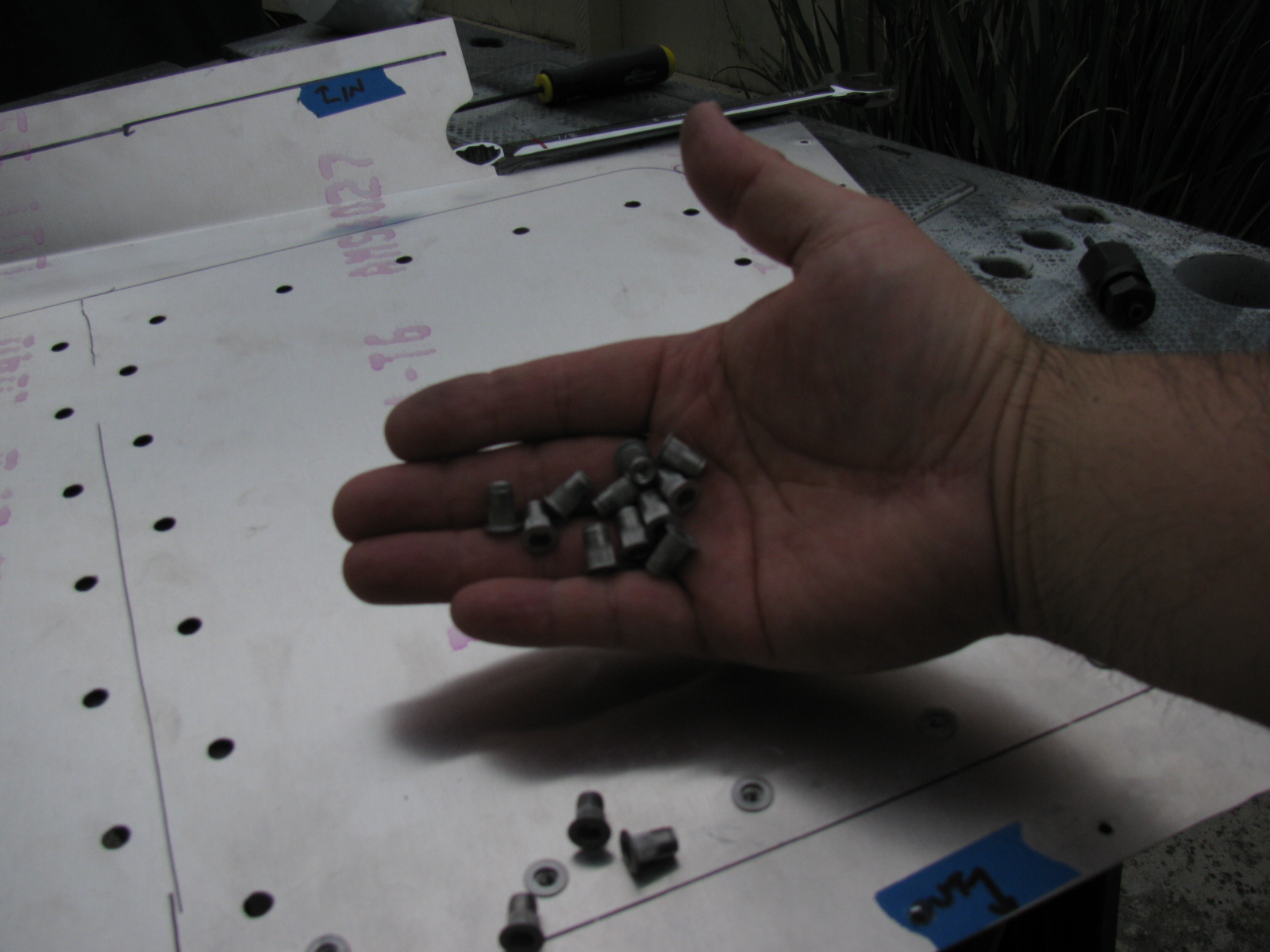
I looked at my cookie sheet heat shields and the mounting locations filled with 8-32 riv-nuts, and thought – shoot, the riv-nuts actually have a shaft that might be used as stand-offs for the shield plates. So I checked the length, and the threaded shafts are about a quarter-inch long, enough to be used as a spacer between the firewall and the heat shield. I may add another quarter-inch in certain places, if there is room.
So I spent a few hours removing all of the riv-nuts I installed a few weeks ago. Good thing I bought several hundred from McMaster-Carr. . . .
At least I am an expert on installing and extracting riv-nuts now.
Rivet Nuts and the Rivet Nut Tool
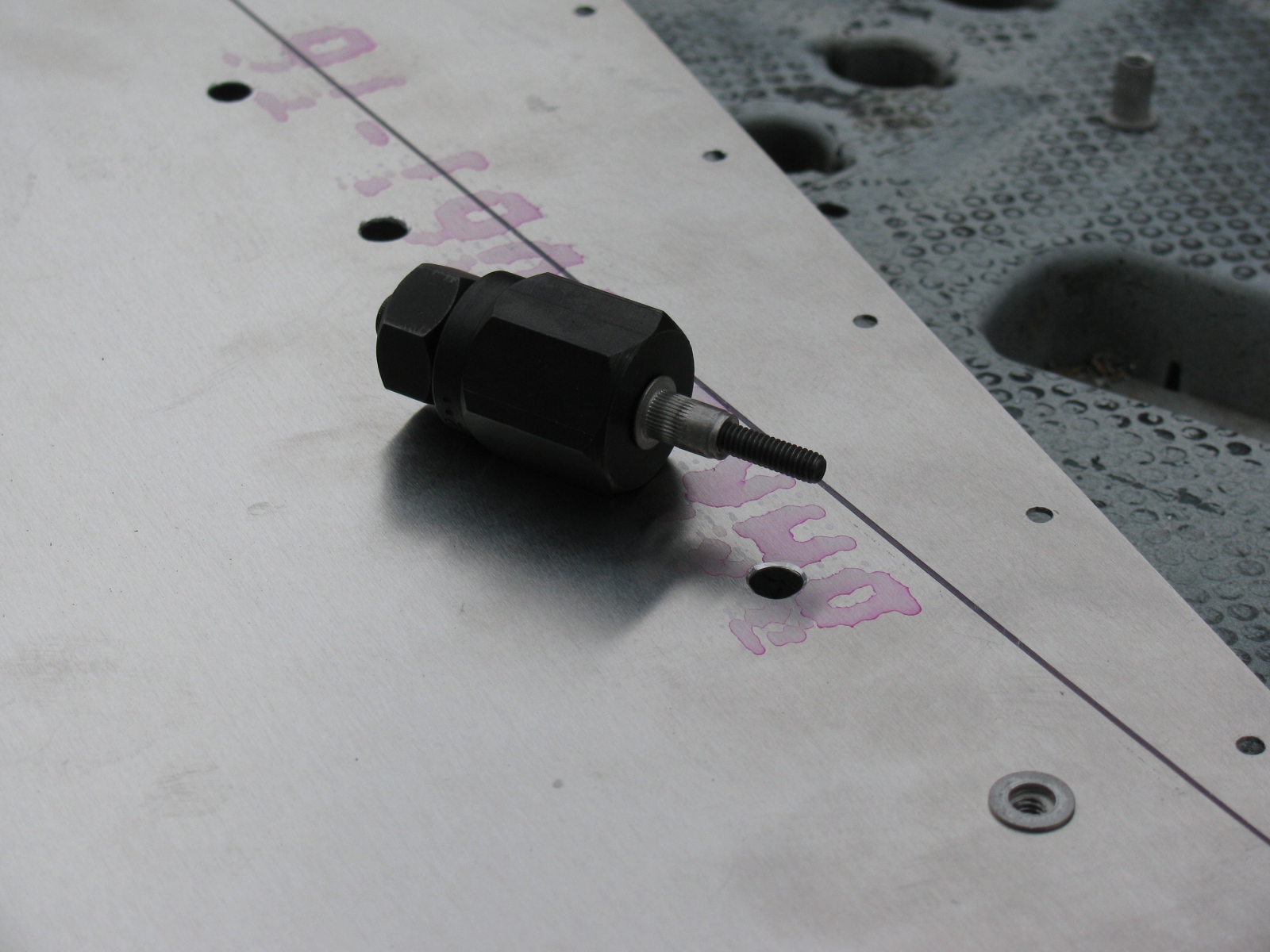
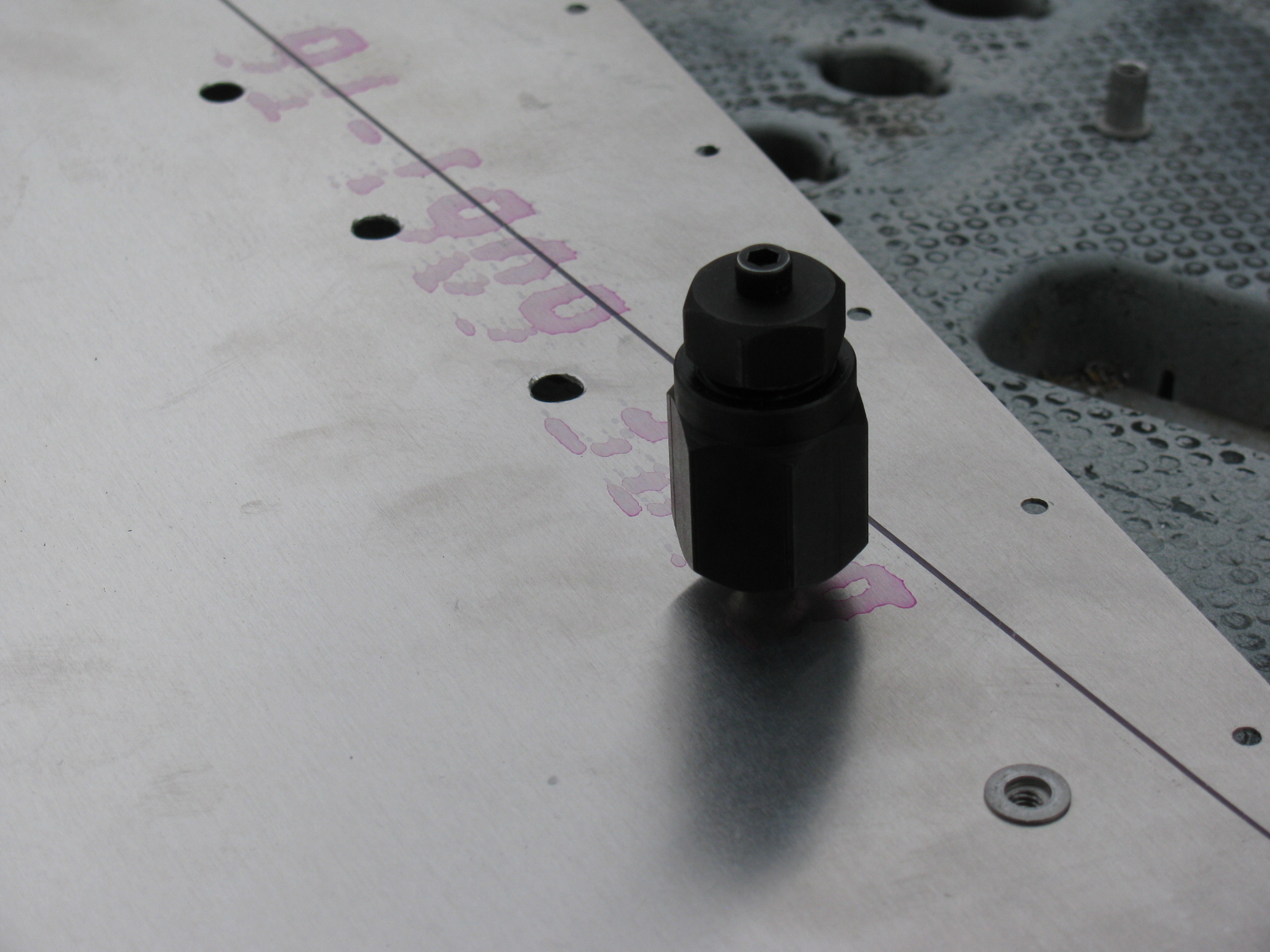
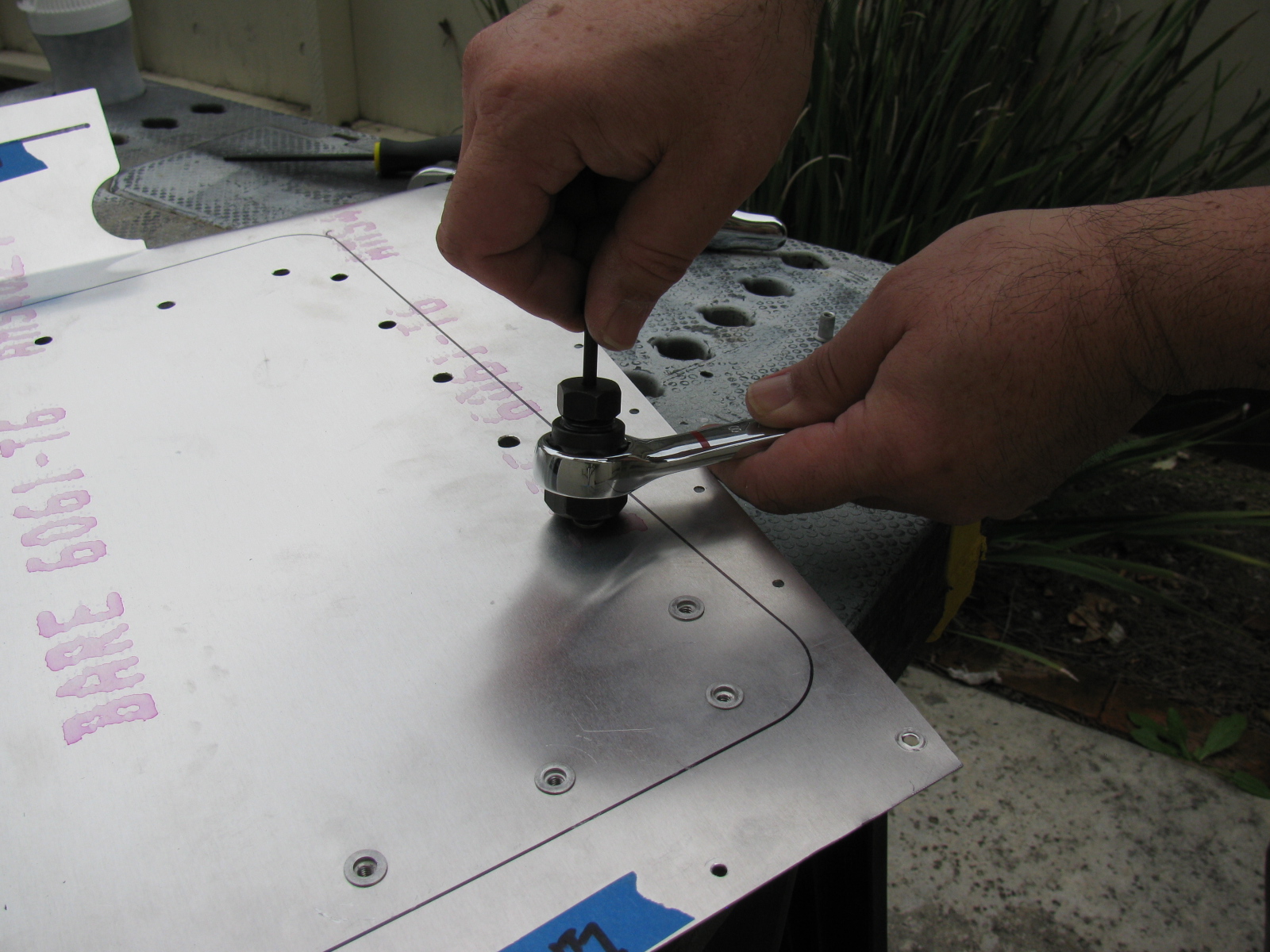
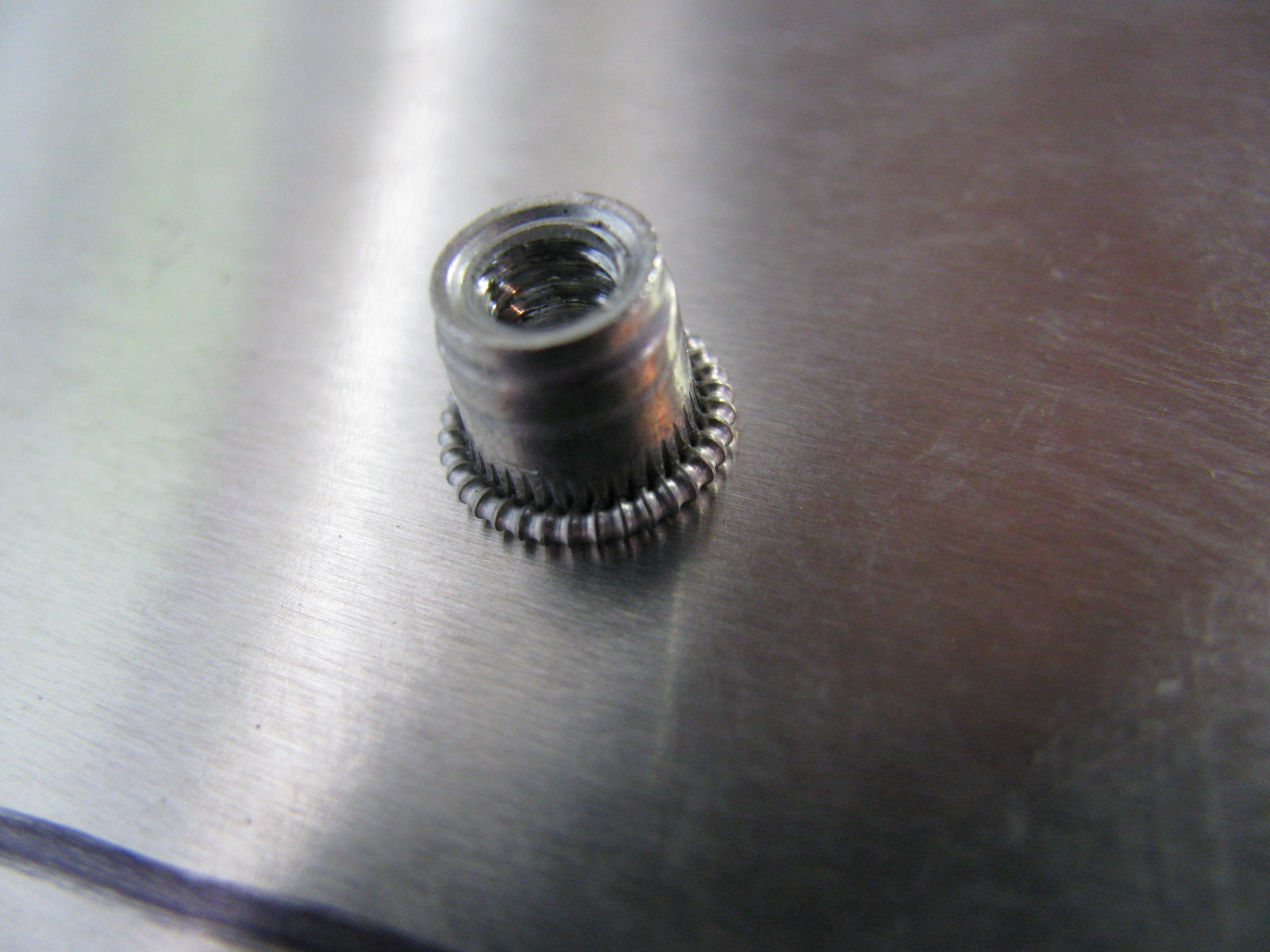
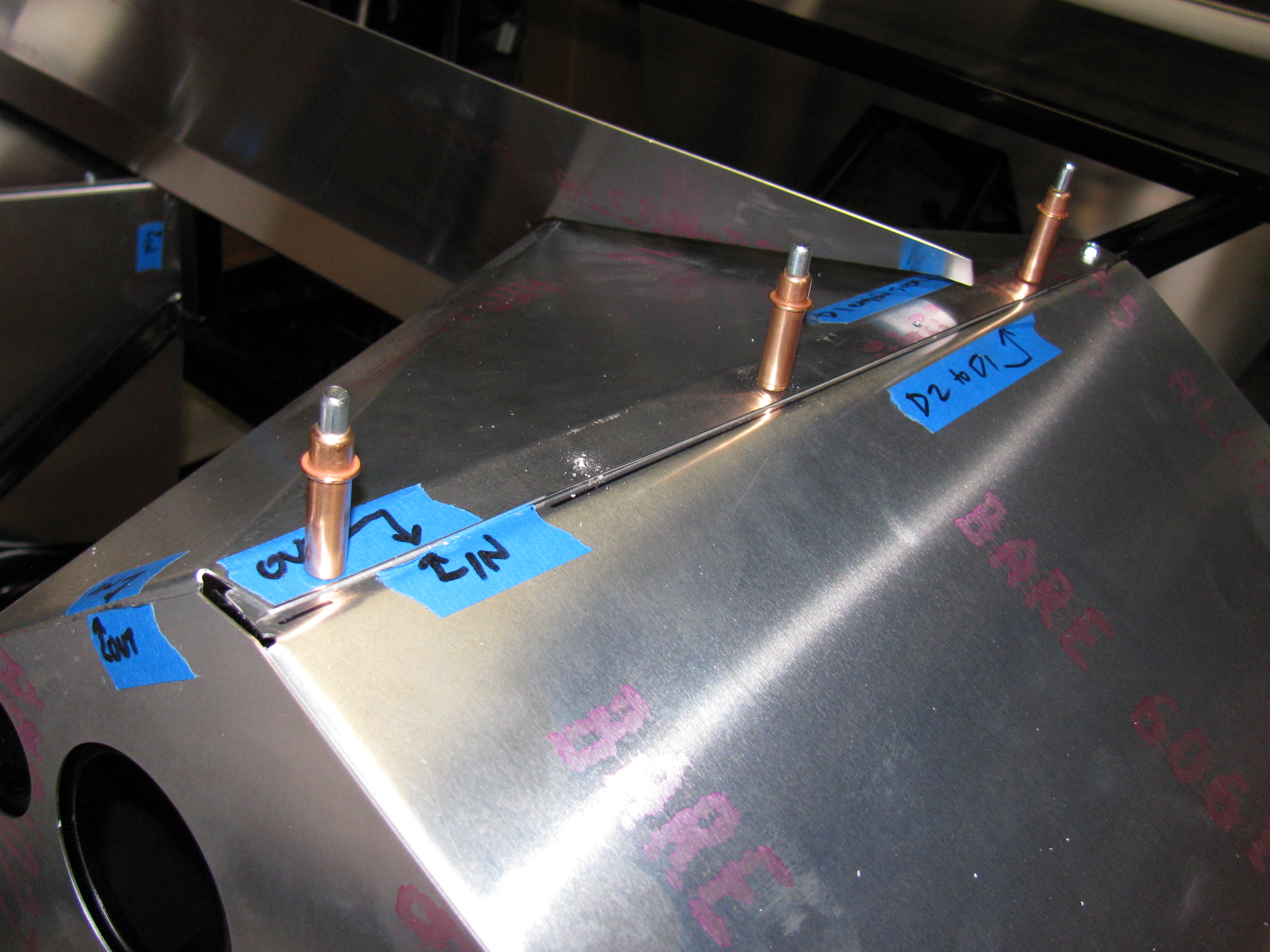
Here are some pictures of the riv-nut tool from McMaster-Carr and how it is used. Riv-nut fasteners are very handy if you need a threaded hole installed into a blind location, or when you do not have access to the back side of a mounting surface. I will use these fasteners for hatches and compartments in the trunk area of the Type 65 Coupe.
McMaster-Carr information
Wrench-drive rivet nut installation tool for 10-24 and 10-32 thread: 96349A203
Wrench-drive rivet nut installation tool for 8-32 thread: 96349A152
Wrench-drive rivet nut installation tool for 6-32 thread: 96349A101
Aluminum heavy-duty rivet nut, 6-32 internal thread, .080″-.130″ material thickness, packs of 25: 94020A315
Aluminum heavy-duty rivet nut, 8-32 internal thread, .080″-.130″ material thickness, packs of 25: 94020A323
Aluminum heavy-duty rivet nut, 8-32 internal thread, .020″-.080″ material thickness, packs of 25: 94020A319

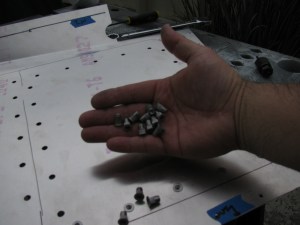

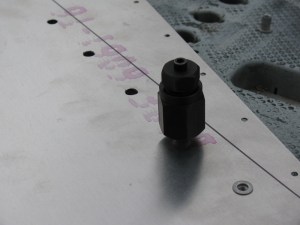
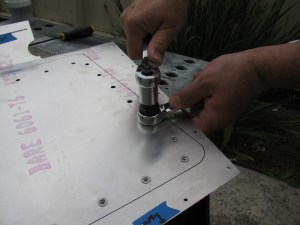

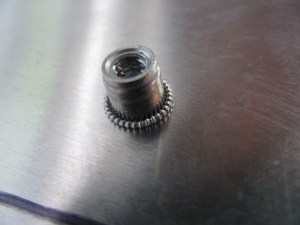
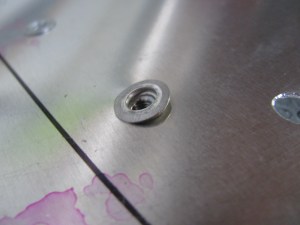
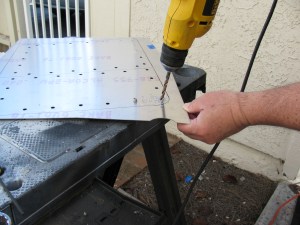
Above left – a picture of a properly installed riv-nut, viewed from the reverse (back) side. At right, a riv-nut improperly installed, viewed from the face (front) side. This one must be removed by drilling the riv-nut out. Below left, use a twist drill slightly smaller than the mounting hole, in this case, a 1/4-inch bit is being used to drill out the riv-nut. By slightly rocking the drill, the riv-nut will break apart and, usually, just fall out of its hole.

Give Me a Brake: The Wilwood Pedal Box
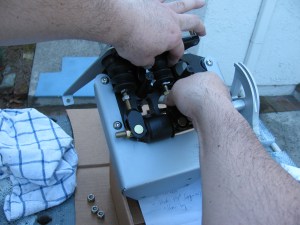
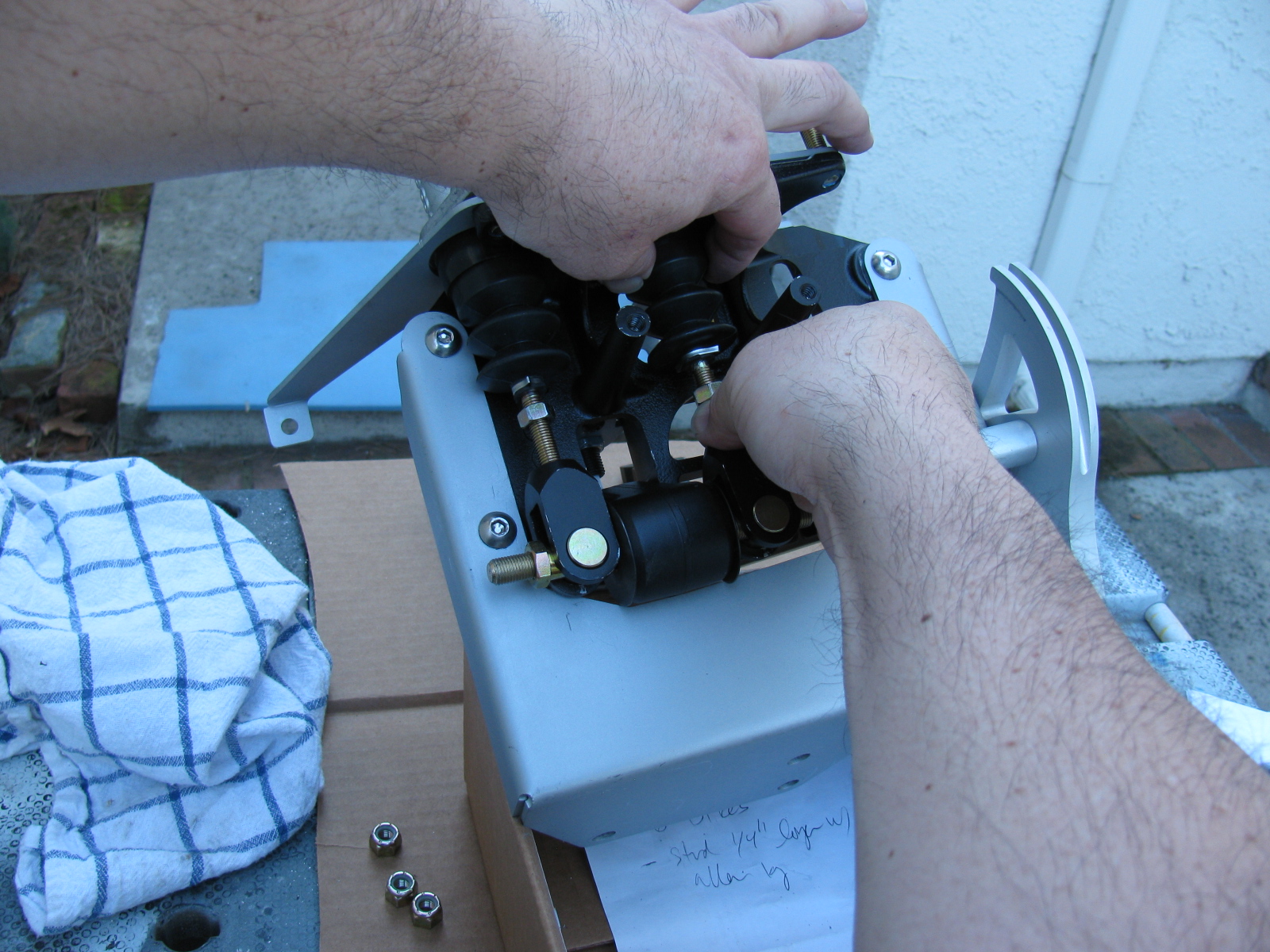
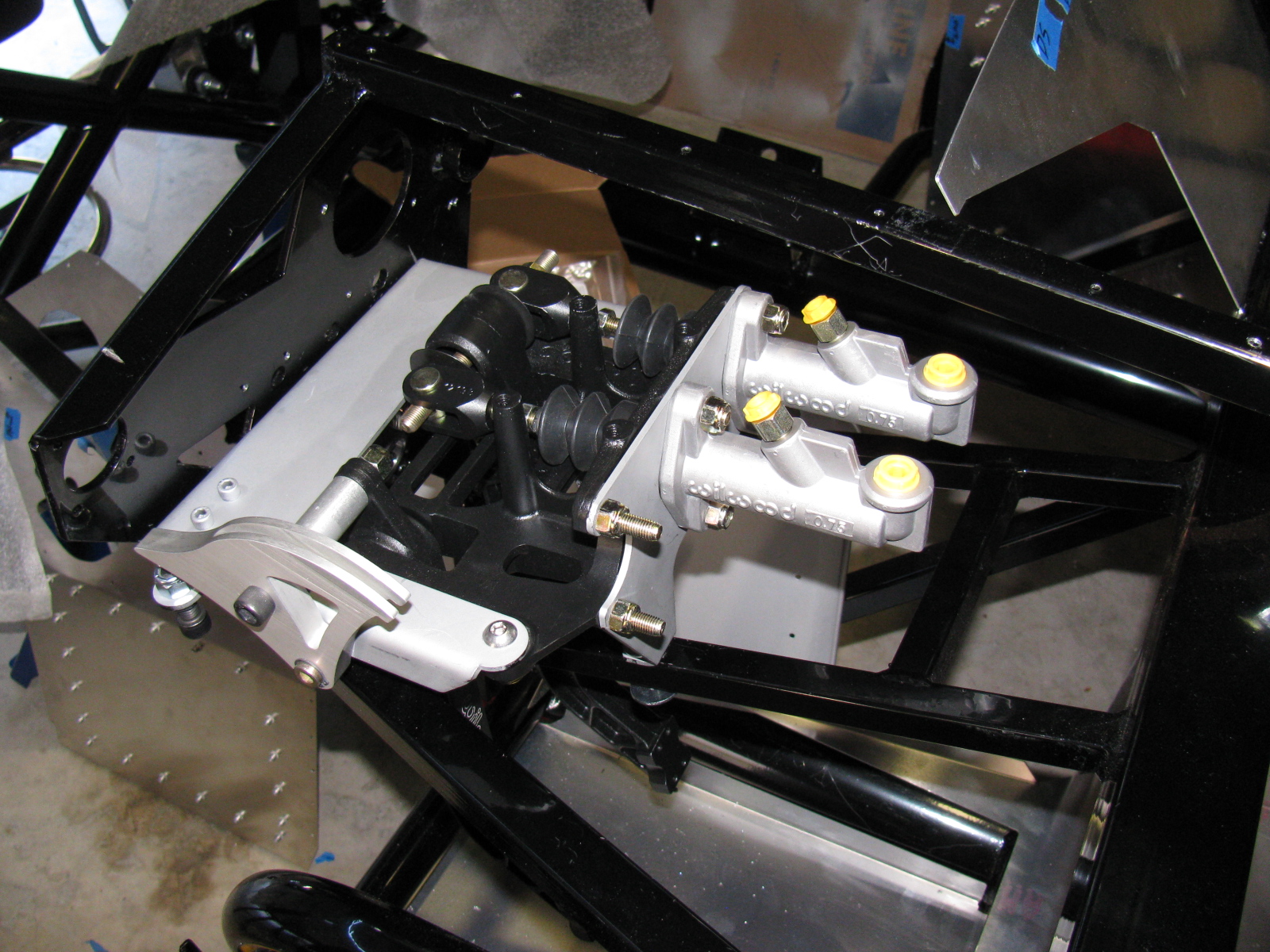
The pedal box is a challenge to install with the Factory Five Racing Assembly Manual, revision 3E, July 2011 – since there are no assembly instructions for the Wilwood Complete Kit pedal box.
Fortunately, a dedicated Type 65 Coupe builder named Chris has an excellent photo album of his Coupe build, with many detailed images. Without his documentation – it would have been impossible to assemble this part of the kit. Take a look at cbergquist1’s photostream on Flickr.
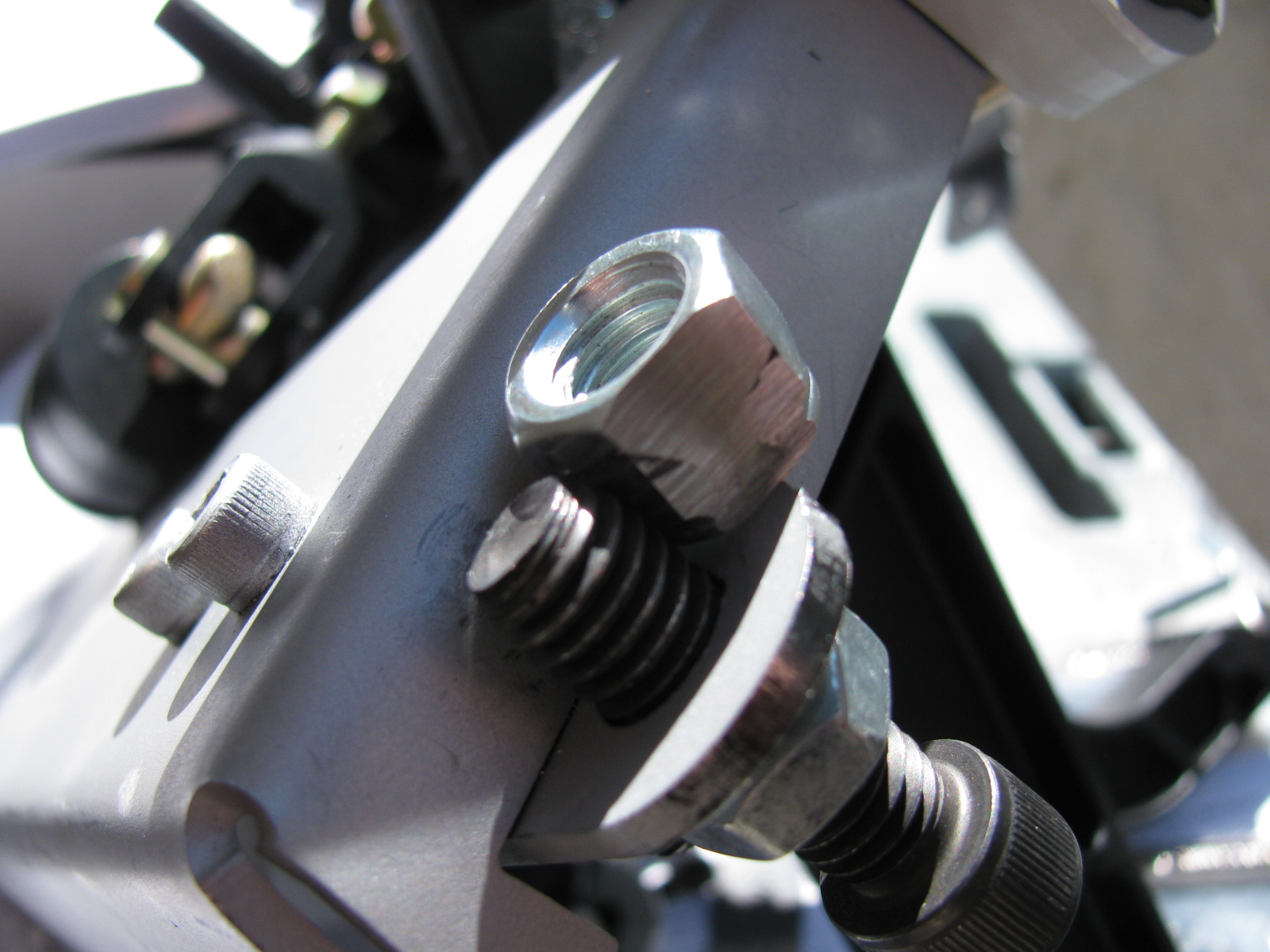
Here are some pictures of my pedal box, including a trouble spot I ran into, and how I had to fix it. . . .
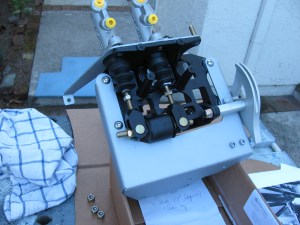
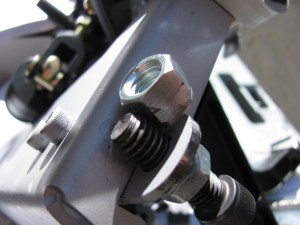
This is the clutch quadrant adjuster (above). This Nylok had to be ground down to fit properly. The hole in the adjuster plate is too close to the master cylinder mounting plate. A better solution would be to eliminate the Nylok altogether and thread the small plate. Then the lock nut and Allen bolt are used to make clutch travel adjustments.

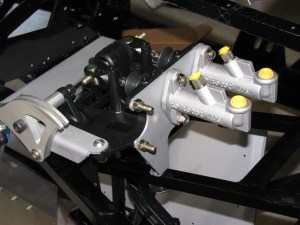
Now I have to find a place to mount the master cylinder reservoir. There are some rare posts about this, but most of them are for the Factory Five Racing Roadster.
I think I will mount mine at or near the peak of the driver’s side footbox/firewall. This location should be away from too much heat, and should be in the clear for fluid bleeding, checks and re-filling. We will see. . .
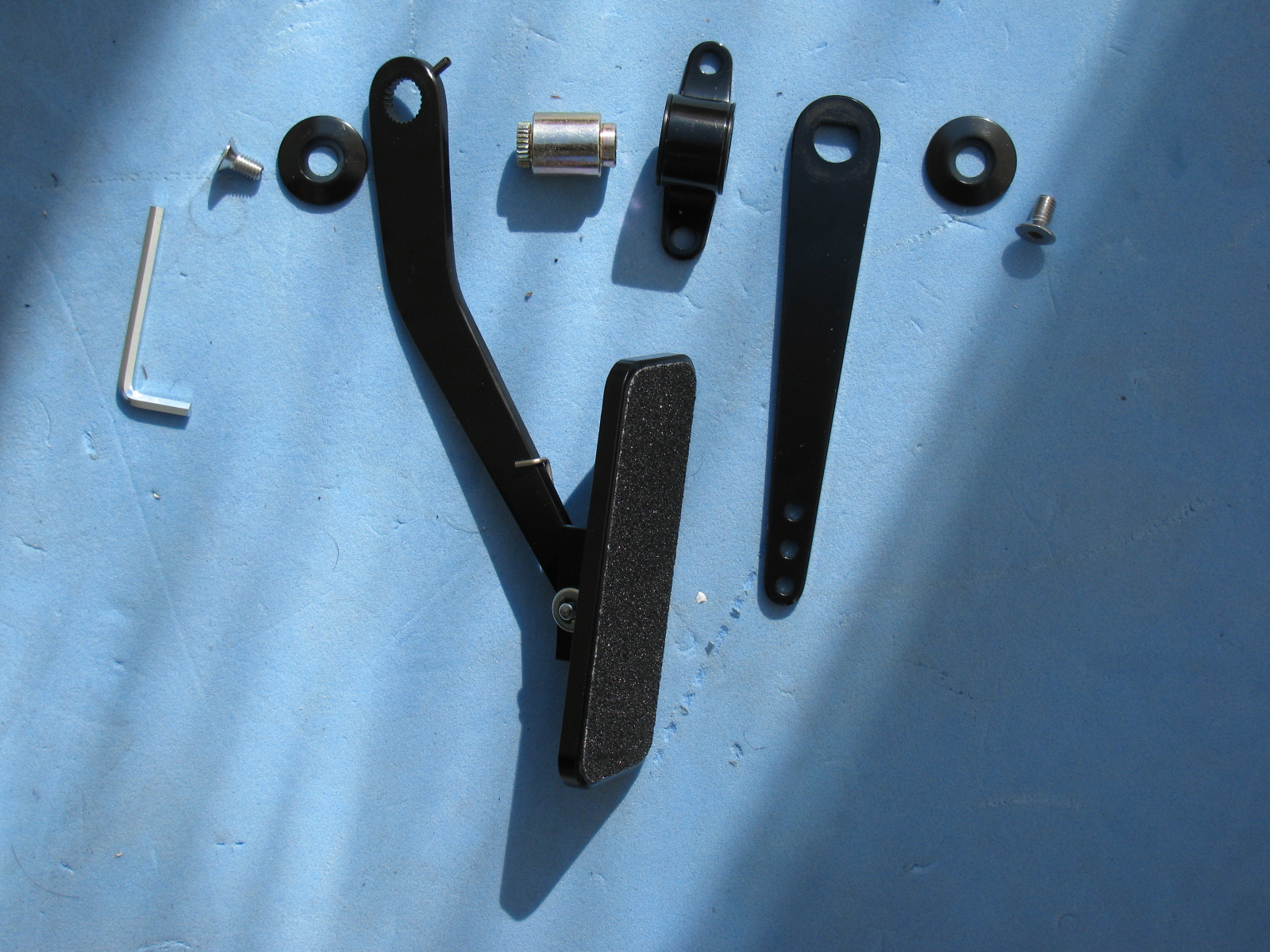
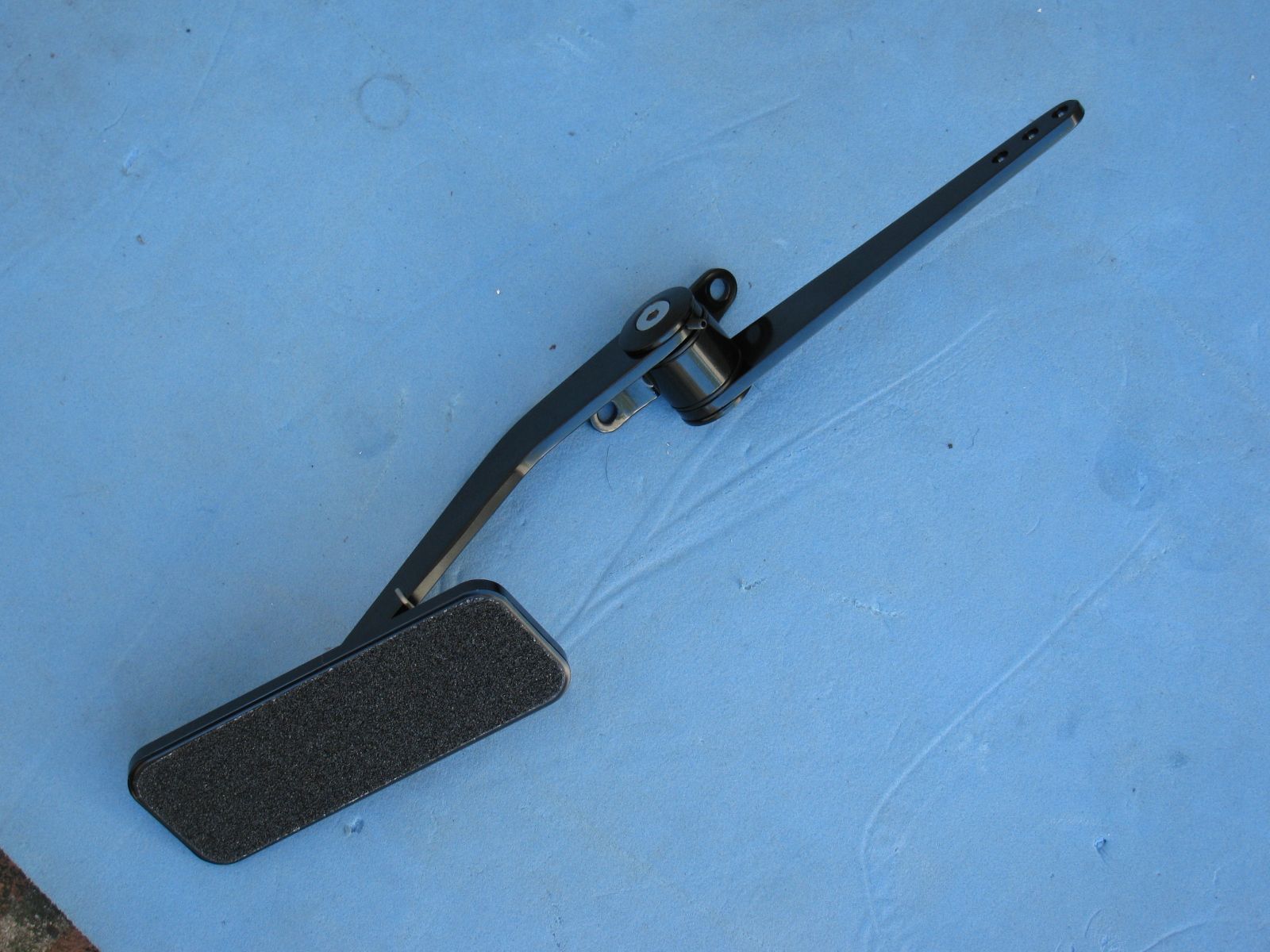
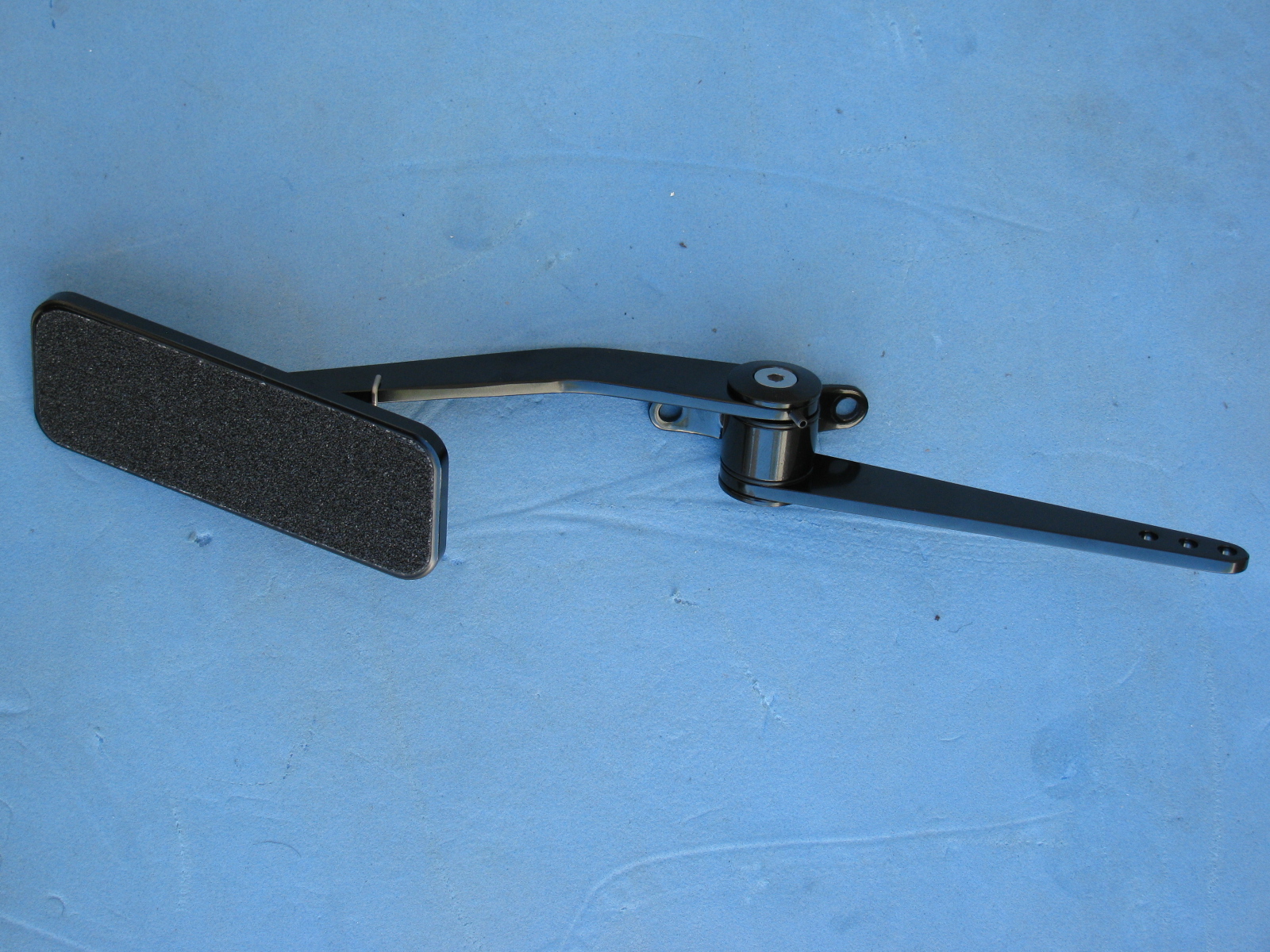
The Gas Pedal


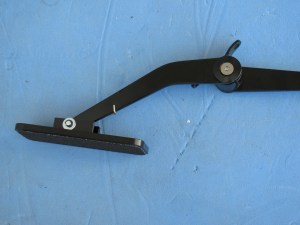

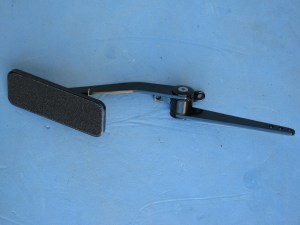
Part of the pedal box area is the accelerator pedal. Again, instructions are very skimpy on how to put this thing together. Here are some pictures of the gas pedal parts and how to dis-assemble the unit as it comes out of the box, and where it mounts onto the firewall area. Adjustments for the pedal box and accelerator pedal will happen later.
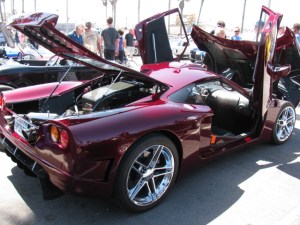
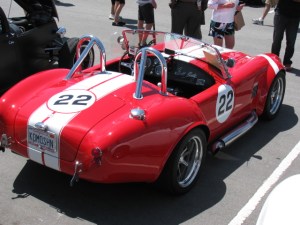
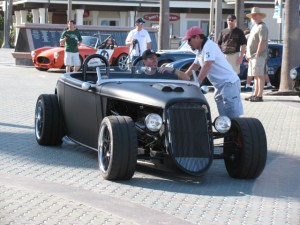
The Factory Five Racing Cruise-In at Huntington Beach is expanded to include both Pier Plaza and Main Street this year. On top of all this, a tour of the Riverside Auto Museum and an autocross event is scheduled for Sunday, April 28.
The event is free and open to the public, an entry fee is charged for Factory Five Racing car display space.
Click here for more information on the 2013 event.
Click here for a quick video of last year’s Moment of Thunder.
Here are some random photos from last year’s event. . . .
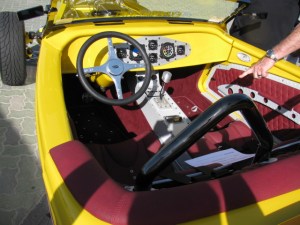
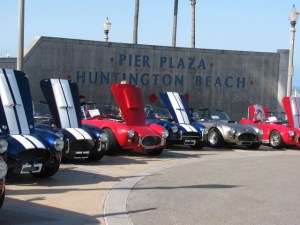

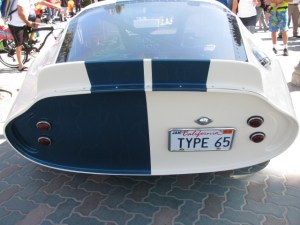

It has been raining off and on all week, and continued through this past weekend. This is a good thing, since I can avoid yard work, and even better – I can spend more time in the garage. However, the garage has been cold, 40 degrees F. This pretty much kills any plans for painting anything.
Since the 80 pound metal medicine ball – also known as the pumpkin, center section, differential and other names – is re-sealed and mounted, the rest of the independent rear suspension assembly is going smoothly.
Learning something from the front suspension experience, I decided to assemble all the pieces on one side of the car first, and only hand-tighten the fasteners. This will prevent time-consuming error-fixing.
There is a saying on the Factory Five Forums – it goes something like, “if there aren’t any pictures, it didn’t happen.”
So, since there aren’t any pictures of the parts I installed backwards, it didn’t happen, right?
Let’s just say the assembly manual lacks good pictures to help us understand how to orient things properly. Many of the pictures are cropped too tightly, and do not show the nearby parts to help us visualize relationships to other parts or reference points.
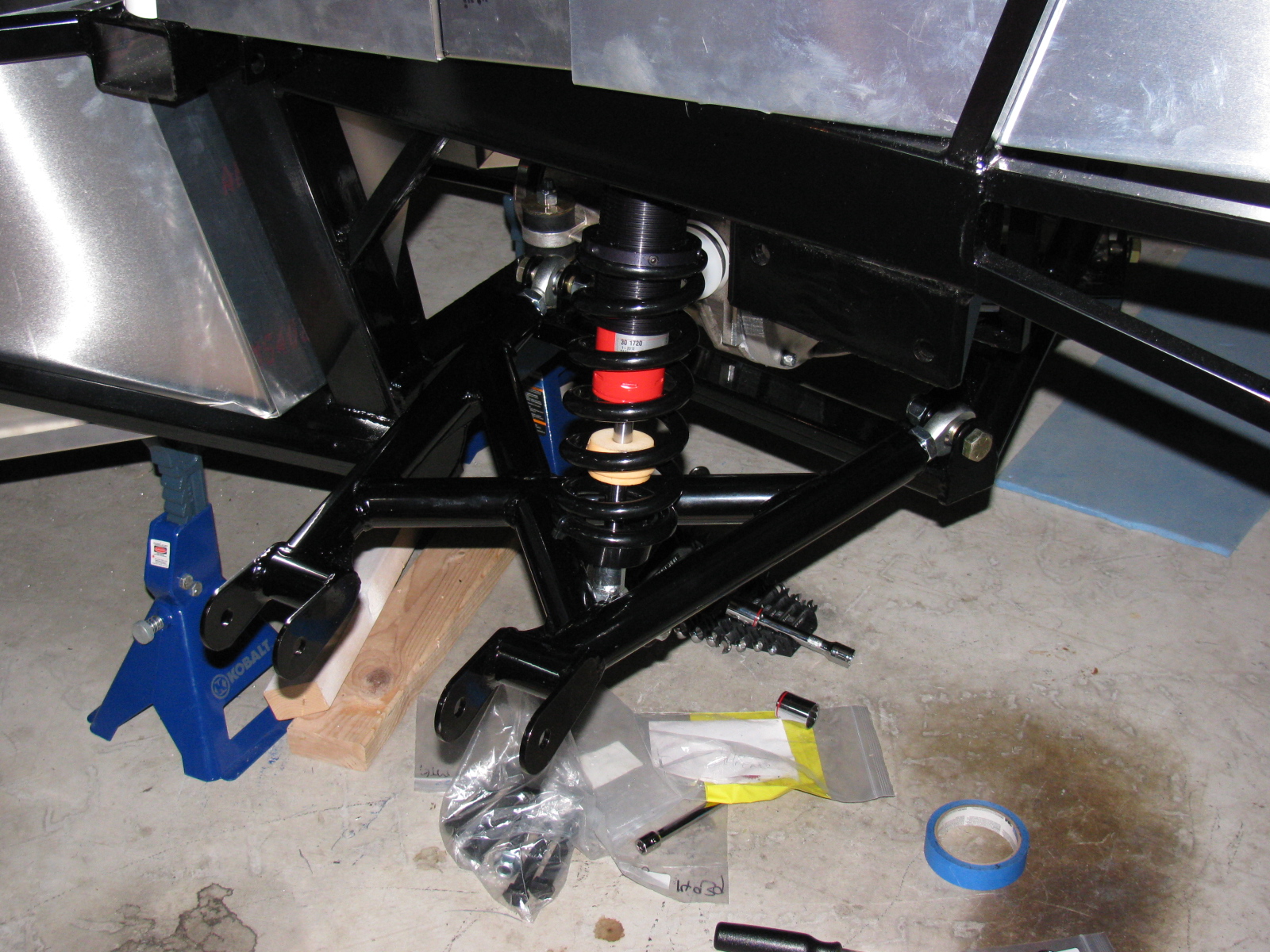
Here are some pictures of the driver side lower control arm and coil-over-shock being installed. . .


While mounting the lower control arms, I kept dropping a stack of small shims (they look like thin washers) needed between the chassis mounting tabs. Of course, since they are round, they roll all over and under the strangest places. I had to use a small magnet to retrieve several of them.
The magnet made me think of a great way to hold and install these small shims on the mounts. Take a look. . .

The little magnet holds the stack of shims together, and by wiggling, pushing and pulling on the suspension parts, the bolt will slide through the stack. This works great, and it makes me feel happy rather than mad while underneath the chassis.
Of course, this only works if the parts are ferrous. The aluminum spacers are another story.
The spindles, upper control arms, and CV axles are next. Stay tuned . . . .
The front IFS is still not right, and the responses from the forums and the directions are confirmed by Jason at Factory Five Racing. Now the difficult task involves more un-building and hoping parts are not damaged. The ball joint on the passenger side needs to be removed and the upper A-arm top plate has to be flipped over. This is a direct result of an error in the Factory Five Racing Type 65 Coupe manual (revision 3E, July 2011) on pages 60 and 61 and 63 and 64.
The manual says to install the ball joint into the upper control arm to make “a left and a right.” I did this, and now must dis-assemble one of the ball joints. A new upper control arm is more than $200, so this is a costly error if I am not able to correct this.
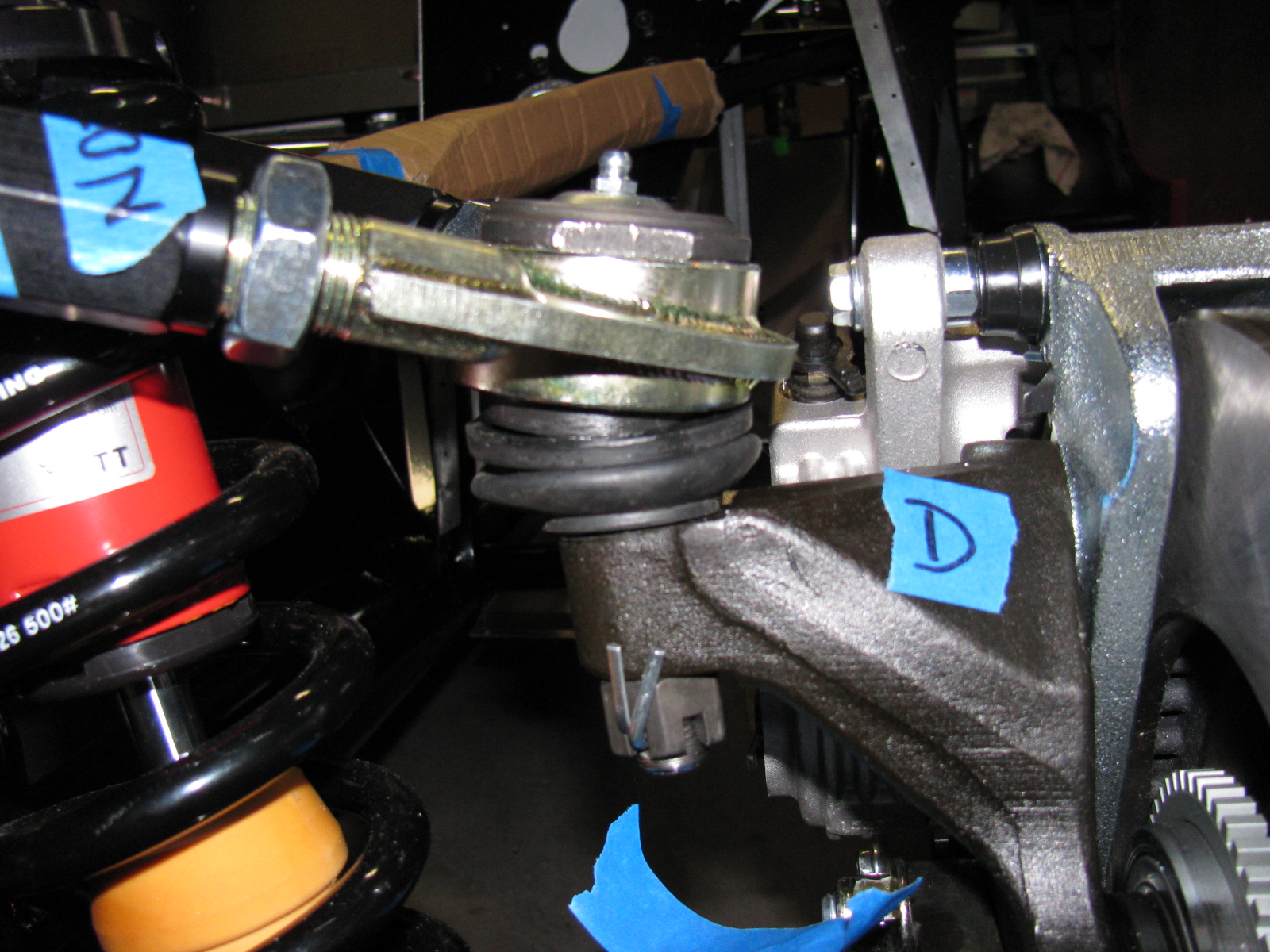
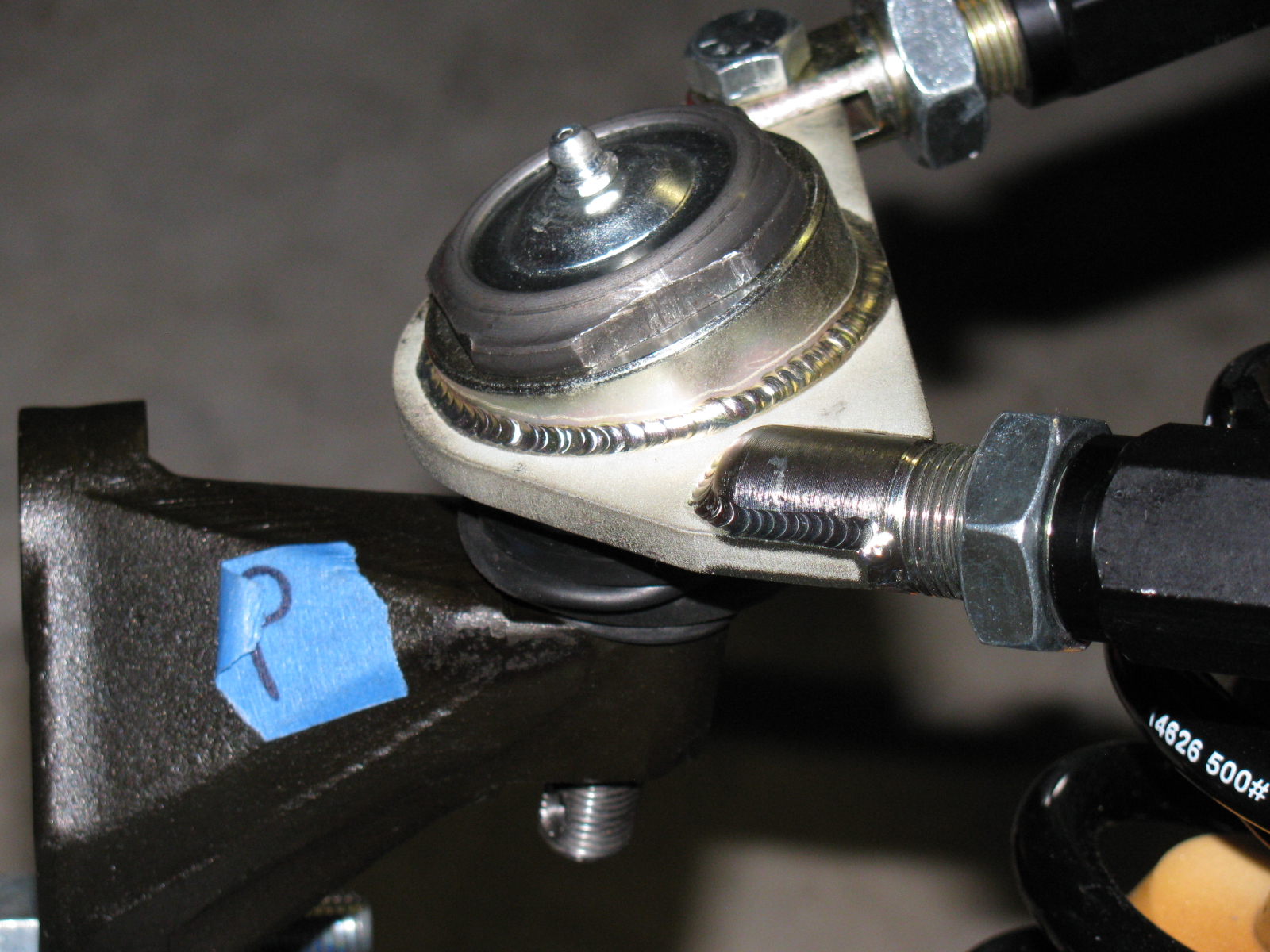
The correct orientation is shown on the driver’s side of the suspension. The passenger side is incorrect. This assembly is difficult to describe in words, so it is best shown with pictures.
Here is the driver side showing the upper control arm and the ball joint mount on the plate – see the wedge-shaped, “thicker” end at the apex of the triangular plate? This is correct.
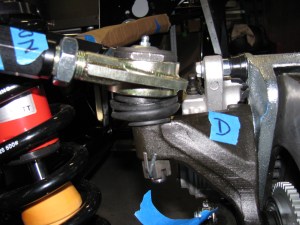

This is the passenger side upper control arm. See the thicker wedge-shape on the opposite side of the apex? This is incorrect (wrong).
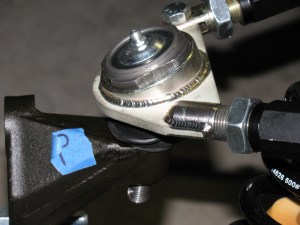

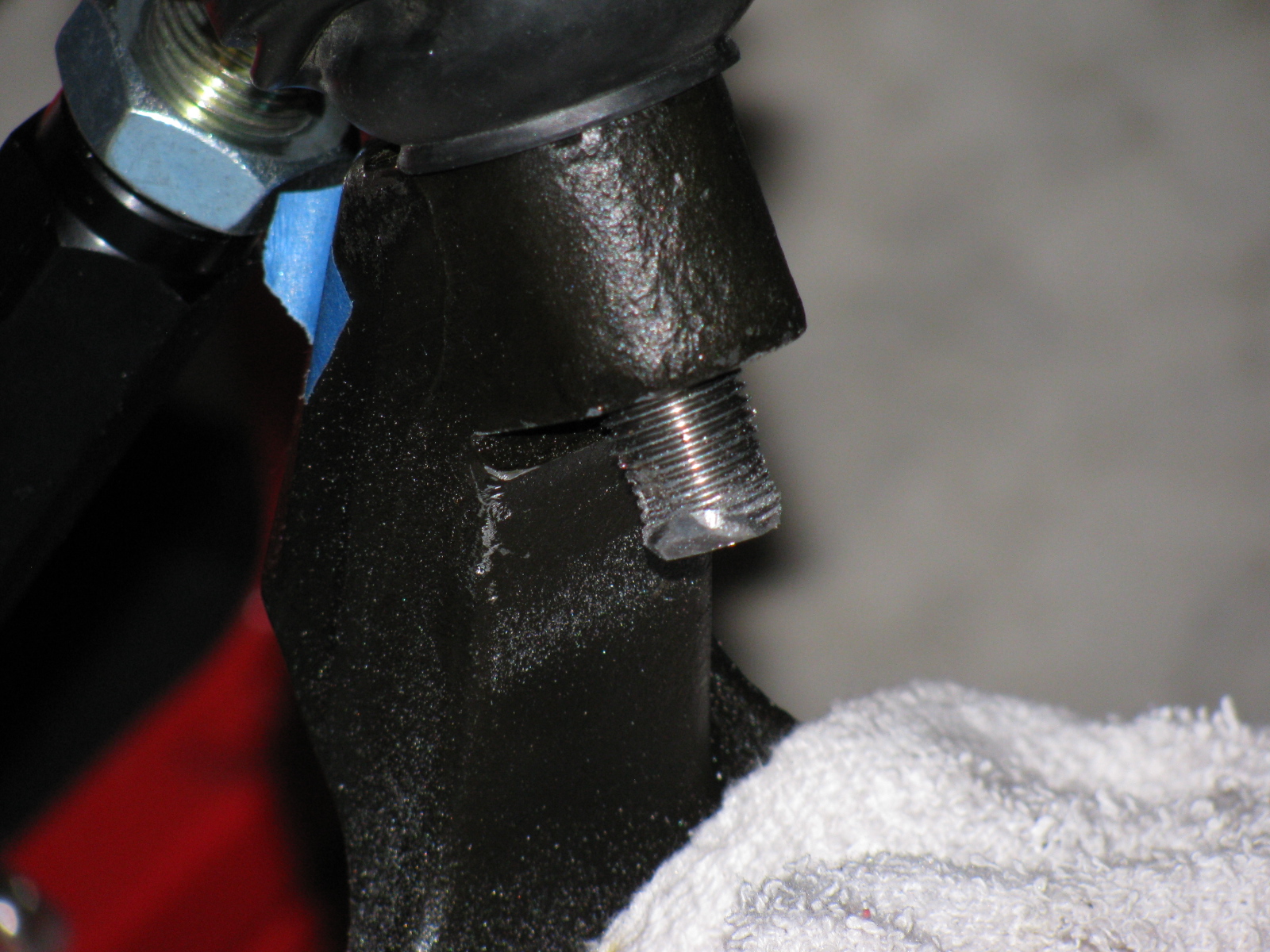
I dis-assembled most of the front suspension to get to this ball joint. However, the ball joint fits into the spindle via a tapered hole. . . meaning that some force must be applied to remove the ball joint stem from the spindle. I started by tapping – then pounding – with my plastic hammer, since I did not want to damage anything. No good. I changed to a scrap of oak and my ball-peen hammer and hit it hard for several minutes. Still no good. I got rid of the piece of wood and really slammed with the ball-peen hammer. Finally, the stem popped loose.
Of course, this created a mushroom on the ball joint stem, and it would not come out of the hole. I filed around the mushroom and finally separated the ball joint from the spindle. I should be able to file or grind the stem so the ball joint can be re-used.
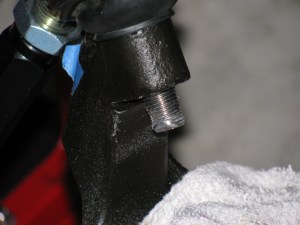
Mushroom on the stem!
Removing the ball joint requires dis-assembly with 450 degrees F (since I used Permatex medium strength thread locker blue), a vise and a big wrench with lots of grip and torque.
I tried several times, but my vise just isn’t gripping the ball joint properly, it slips off. I need a bigger vise and a torch for this. My bench vise is too small.
Cutting the Dash
Since I could not remove the ball joint, I decided to move to another part of my project – cutting the dashboard in half. This is a popular modification that will increase access into the area between the dashboard and the firewall. This area will soon be stuffed with wiring and air conditioner ducting, so the dashboard had to be cut sooner or later.
I wondered how this was done, should I leave a “lip” on one of the sections so I can patch the panels together? Or do I just slice along the fold? What is the safest way to do this with my power jig saw?
It turned out to be easier than I thought. Here are some pictures of the cutting operation . . .

I used some duct tape and a wood scrap to hold the dashboard in place for the cut. My trusty Makita power jig saw did the trick.
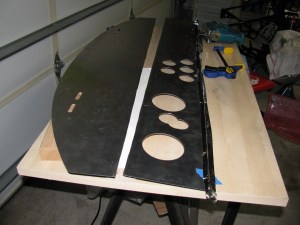
I will use a piece of aluminum angle stock to mend the two sections together.
I may make a new dashboard front panel, especially since the original one has several things wrong. For example, I ordered the “modern gauges” option. There is no mention that the modern gauges are smaller than the vintage gauges. The dashboard comes with cut-outs for the larger gauges, and a triangular-shaped adapter plate for the smaller gauges. Also, the steering column hole is in the wrong place, as mentioned in a previous posting. If I knew this was going to happen, I would have ordered a plain, non-drilled dashboard – so if you are planning your order – consider asking for an un-cut, un-drilled dashboard and make custom cut-outs where you want them.
Cookie Sheet Heat Shields
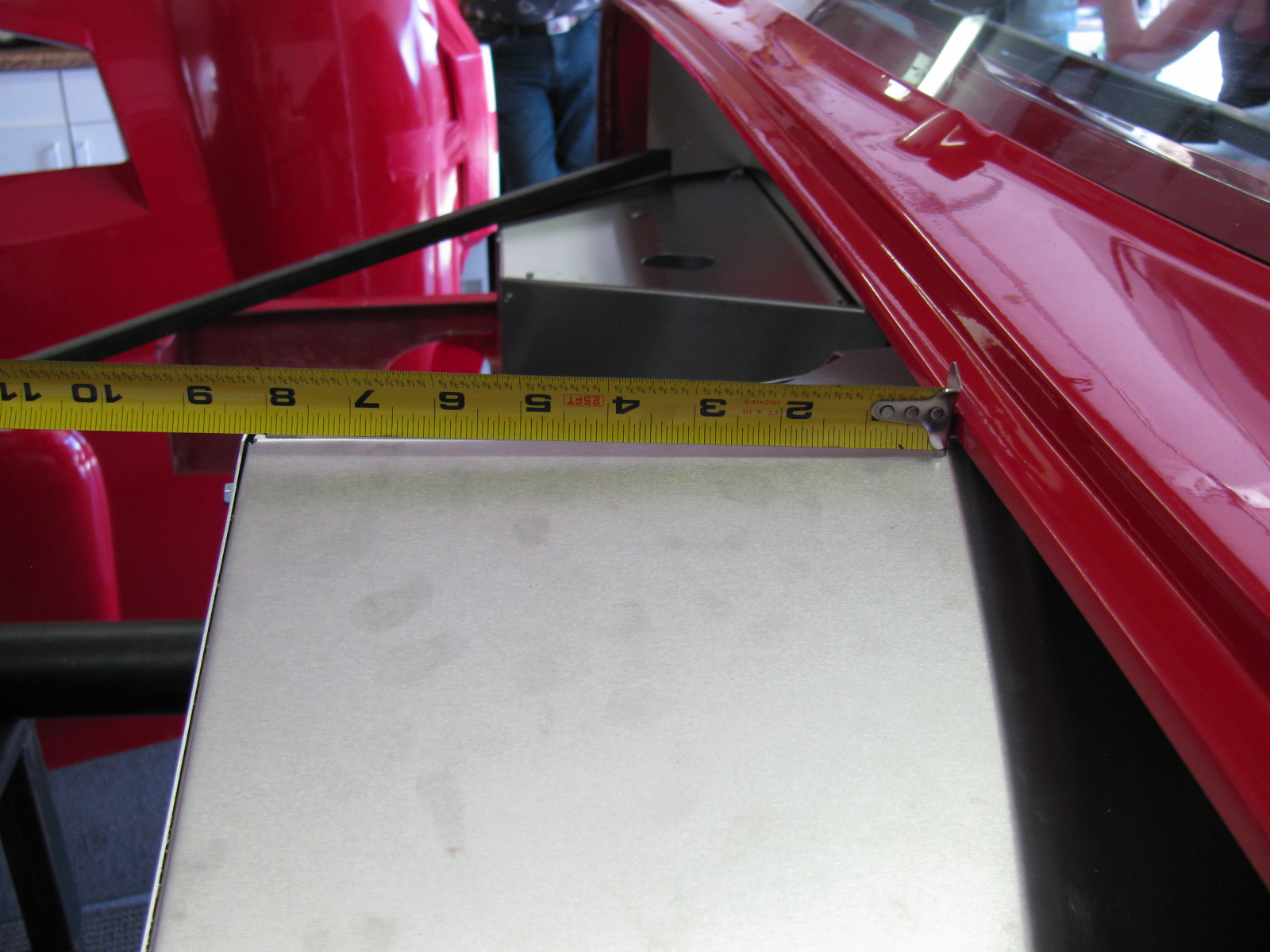
A few weeks ago, I found these cookie sheets in the close-out bin at the grocery store. They have nicely rolled edges and they happen to be almost the right size for the footboxes.
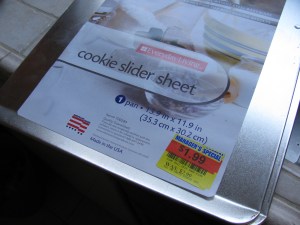
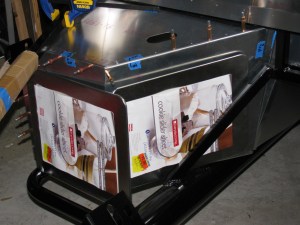

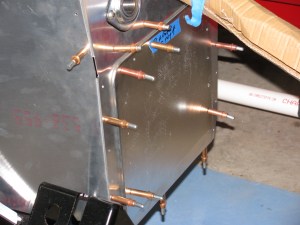
The amazing part about these cookie sheets is the angle at one end – it exactly matches the angle at the back of the driver-side footbox. I will mount them with 8-32 machine screws, spacers and locking nuts. I will also add a layer of insulation (Cool-It mat) between the heat shield and the footbox panels.
I am no longer sure if I want to use the Rust-Oleum BBQ paint for my firewall and other panels. I did a paint test this weekend, and the paint is quite soft, and scratches easily.
The Battery Mounting Plate
After noticing how soft that BBQ paint is, I decided to do some more paint testing. This is the battery mounting plate. It is made of steel, and it is already starting to rust. So I decided I should paint this part and the other steel items soon.

I used Rustoleum Appliance Epoxy paint for this test. This is my standard paint for radio and electronics projects. The finish is very hard and glossy, the cured surface is washable and no primer is needed. However, it is not meant for heat, the maximum temperature is 200 degrees F.
I prep the surface by scuffing the surface with 80- or 150-grit sandpaper on a random orbit sander, followed by a dish soap and water wash. I apply the paint in three or four very light fog coats and the surface becomes slightly textured. I may go with this paint, if I can find a suitable color. The last time I looked at spray paints, this appliance finish comes in white, almond and black. Too bad it does not come in silver or gray.
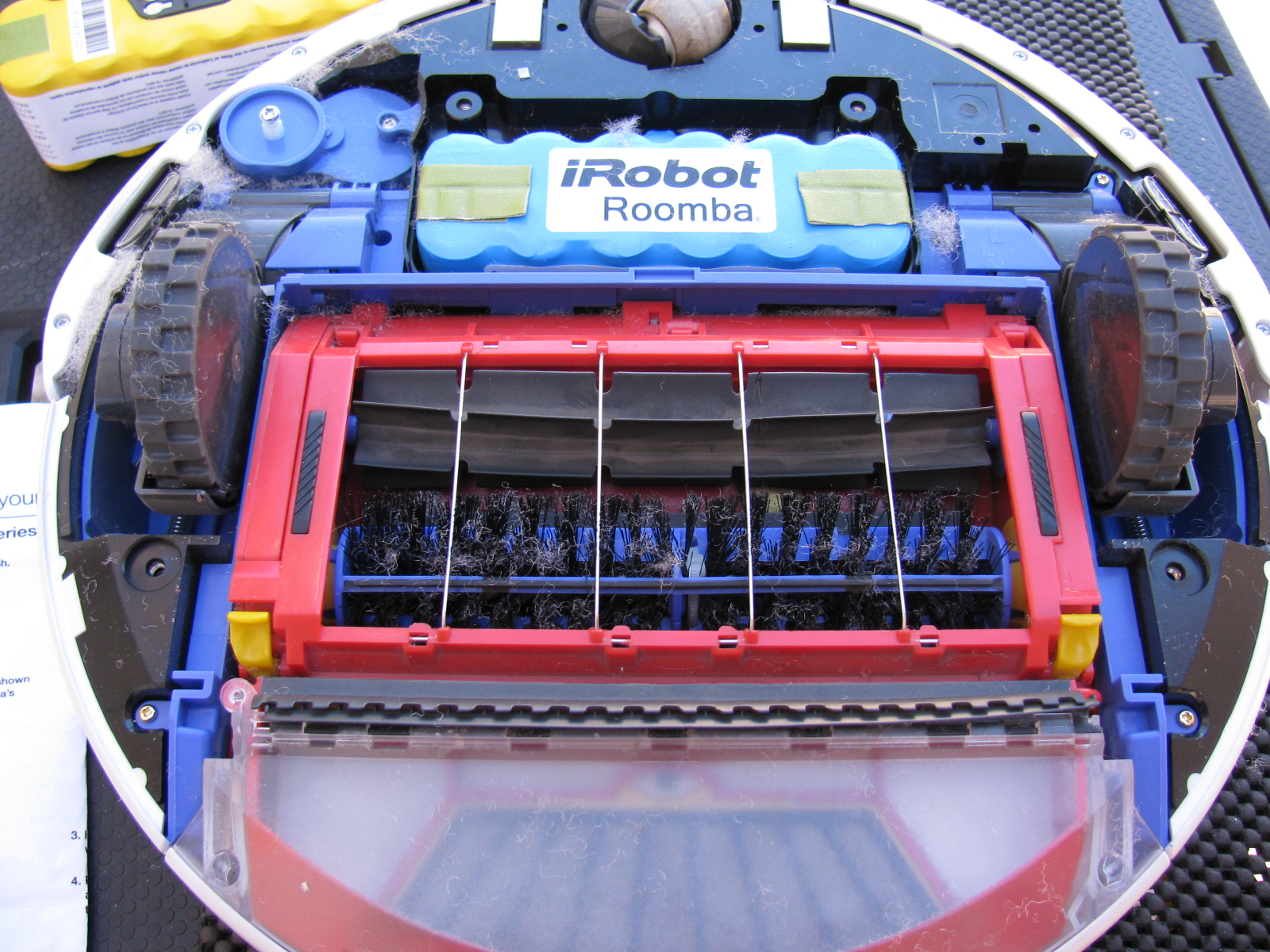
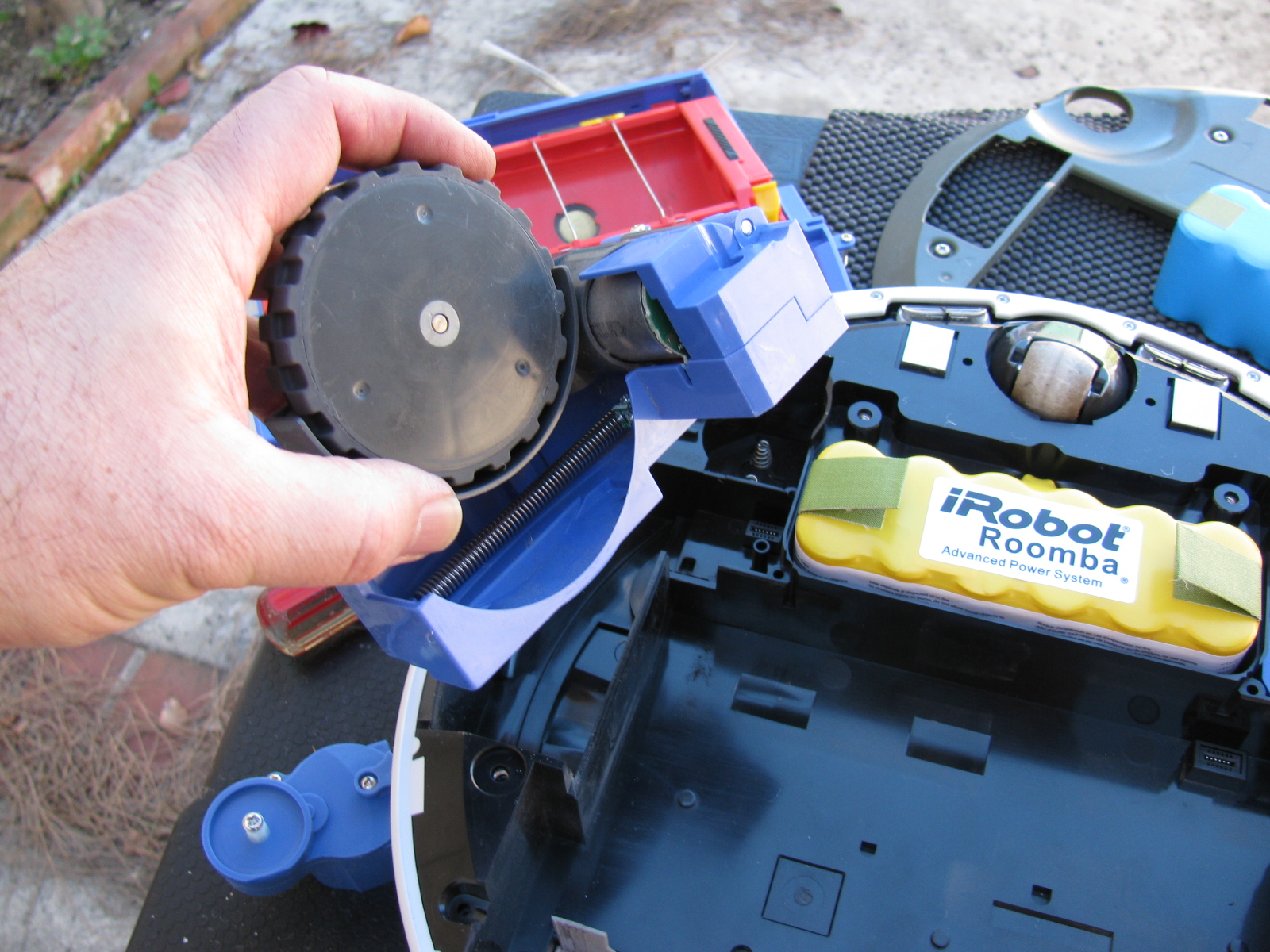
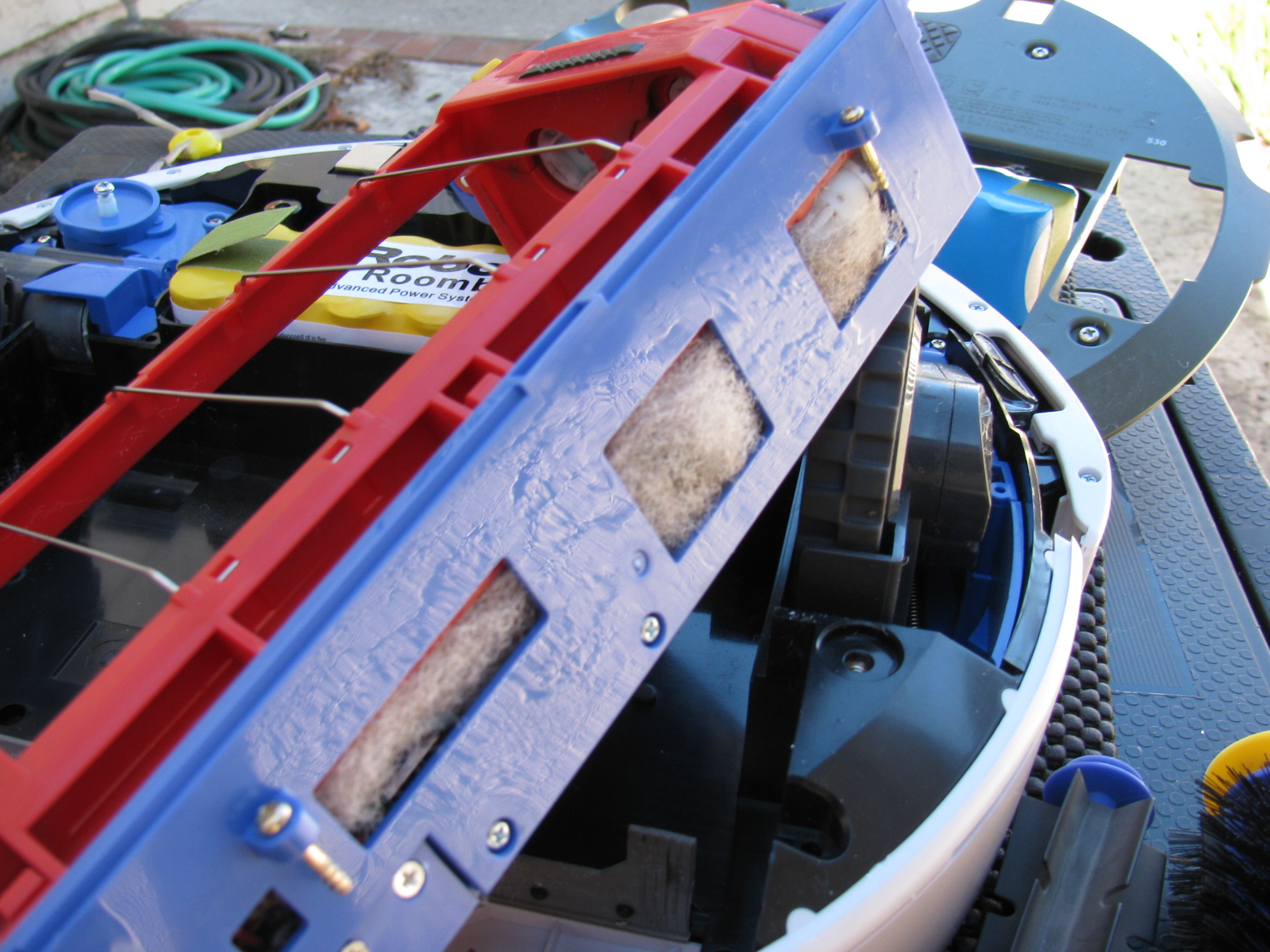
Roomba Battery-Ectomy – Vacuum Cleaner Battery Replacement
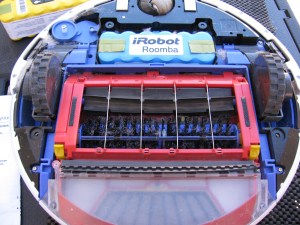
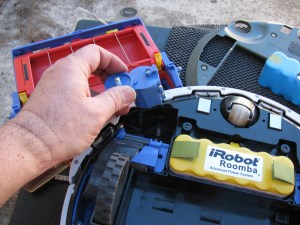
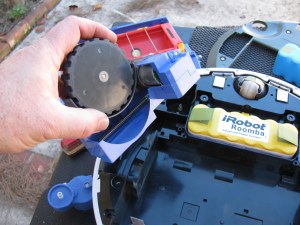
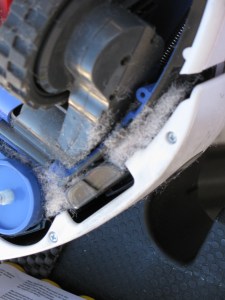
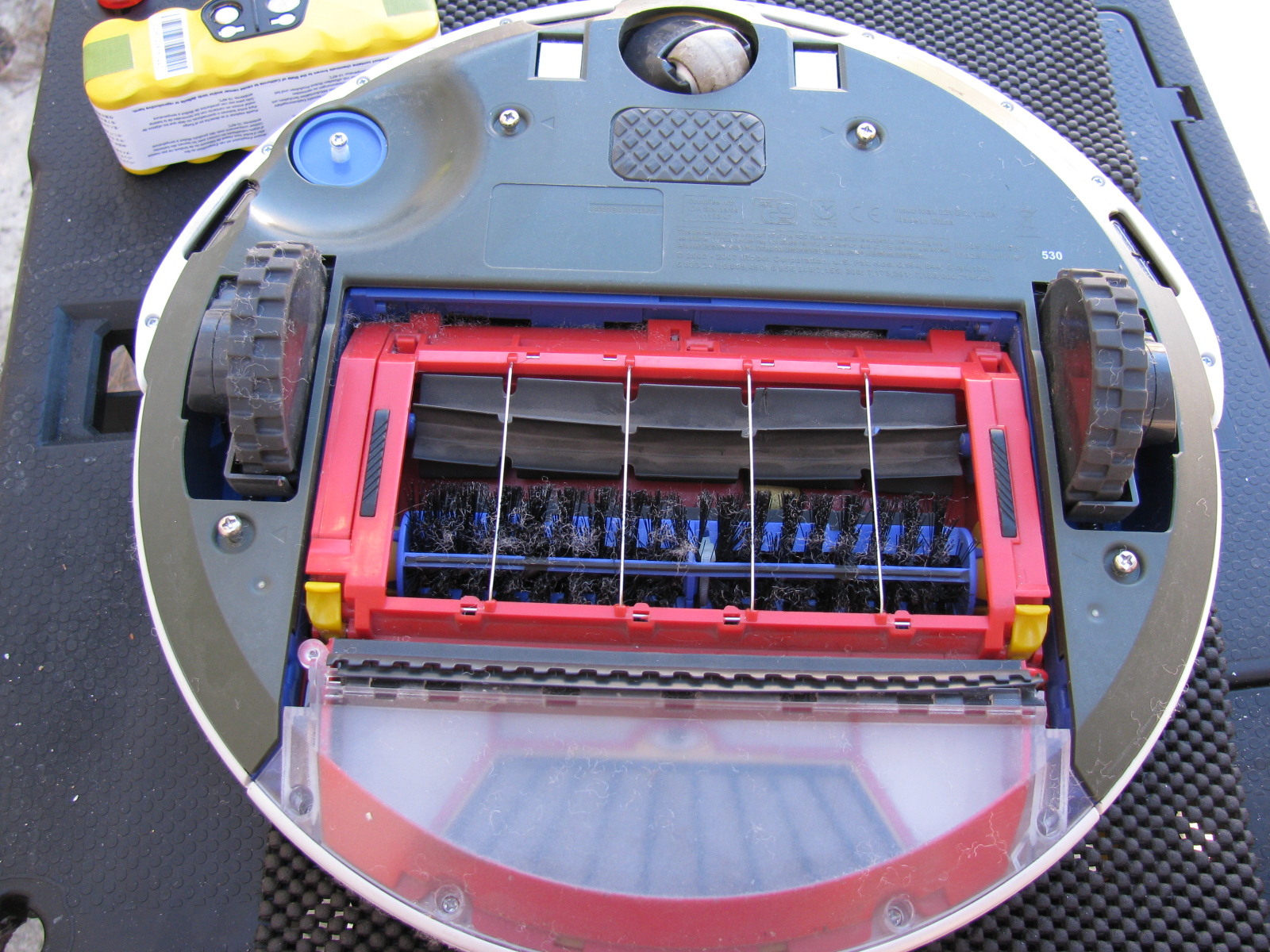
After almost three or four years, the battery pack in my Roomba 530 stopped taking a full charge. I re-newed the charge cycle several times, but the Roomba would run out of charge before completing a single room. So I performed a battery-ectomy on the Roomba. It needed a good cleaning inside the chassis anyway, so this was something I needed to do. You can see the debris inside the mechanisms that are impossible to clean unless you open the case. I used my shop vac to suck out the junk inside the various nooks and crannies inside the Roomba. The new battery has a larger capacity and should provide a longer running time. This will be good, since Roomba will help increase my time in the garage and other non-house cleaning activities. . . .
Here are some pictures. . .



I planned on doing more front end work this past weekend, including the installation of the steering rack, since I keep kicking that awkwardly long box on the garage floor. Then I wanted to move to the rear suspension, since the CV axles are finally on the way.
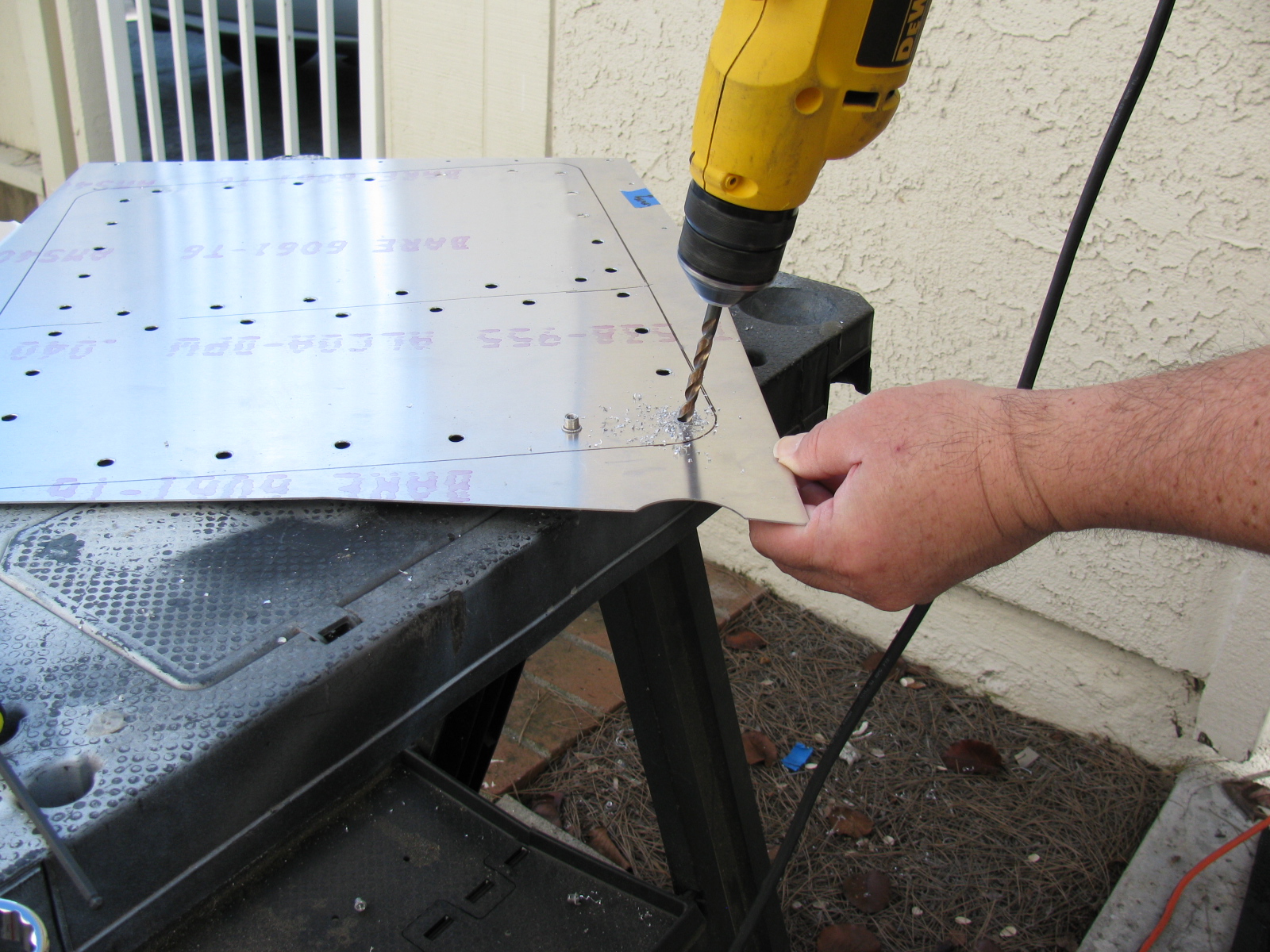
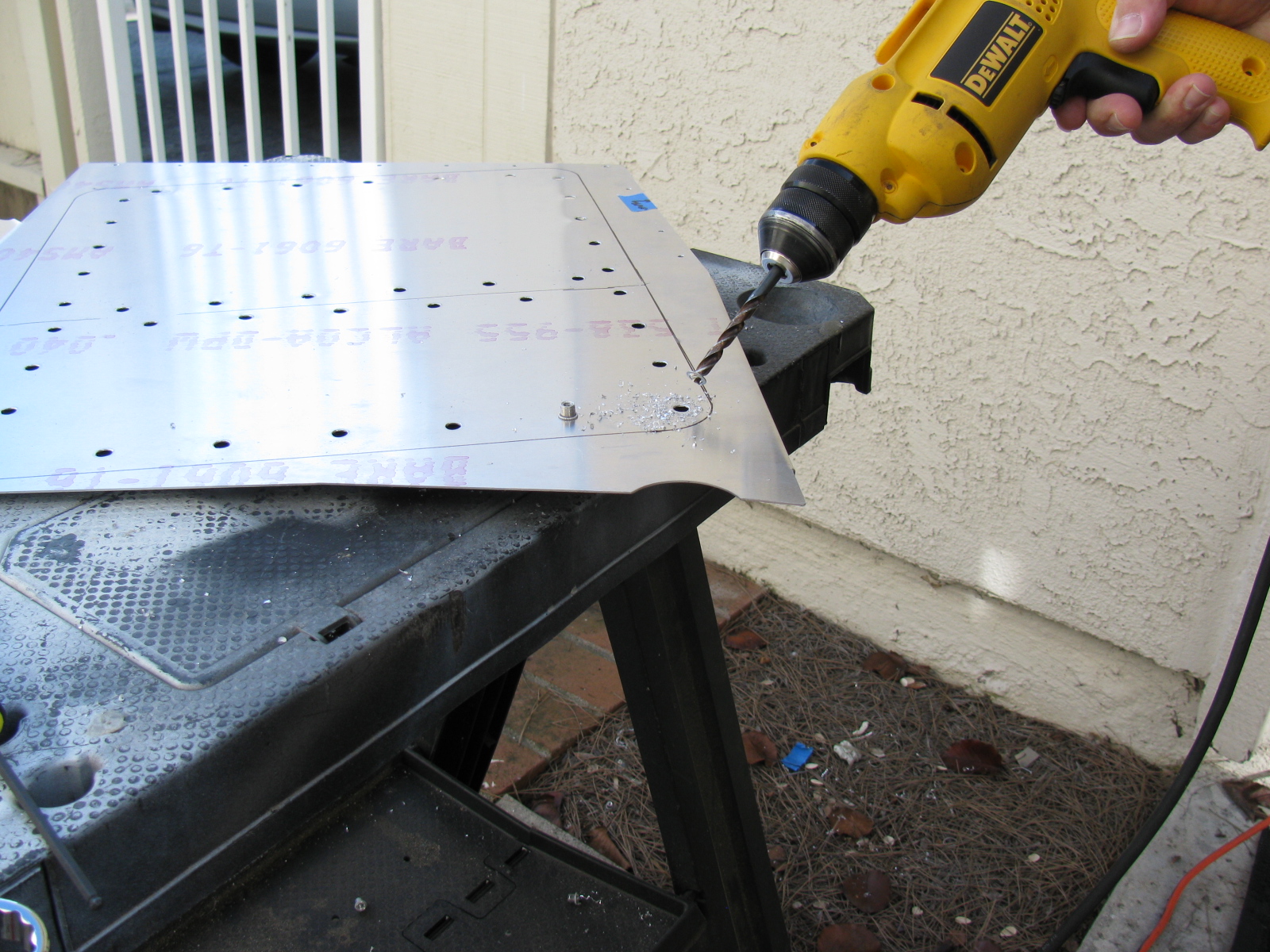
But as I thought about doing the work on the rear end, I decided to start drilling and fitting the rear trunk aluminum sheets. I wanted to avoid dropping aluminum and steel debris onto the new suspension and drivetrain components.
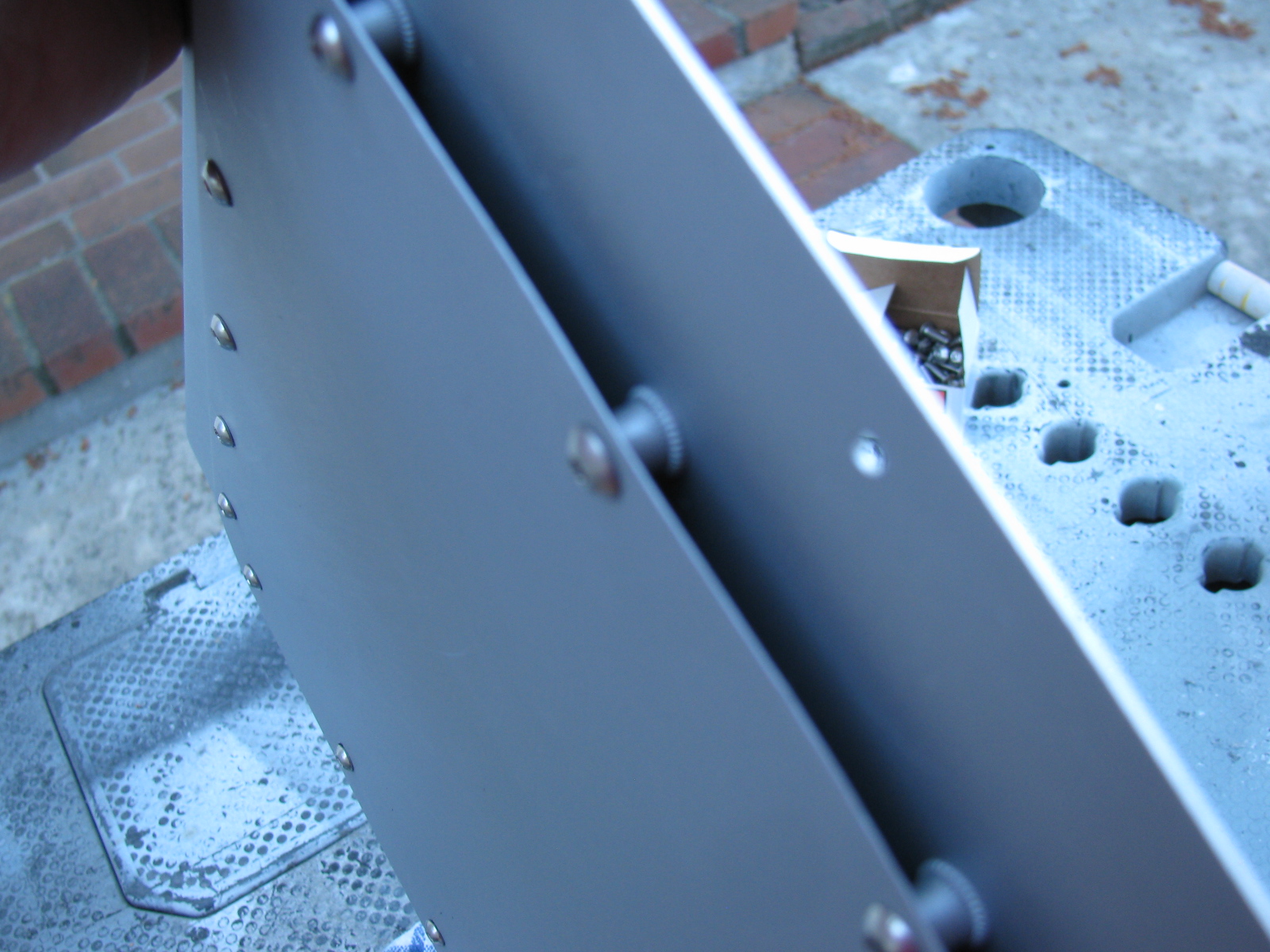
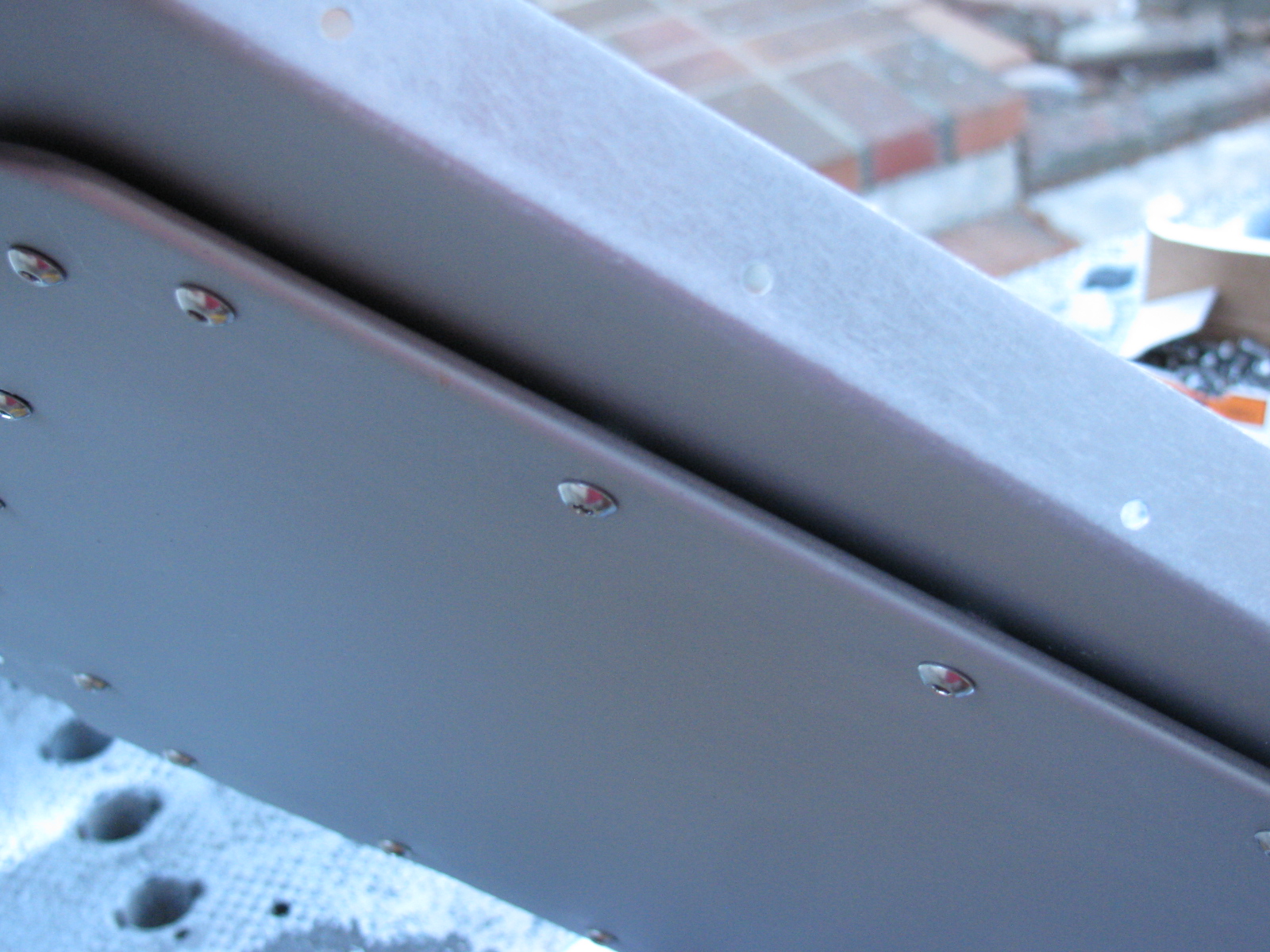
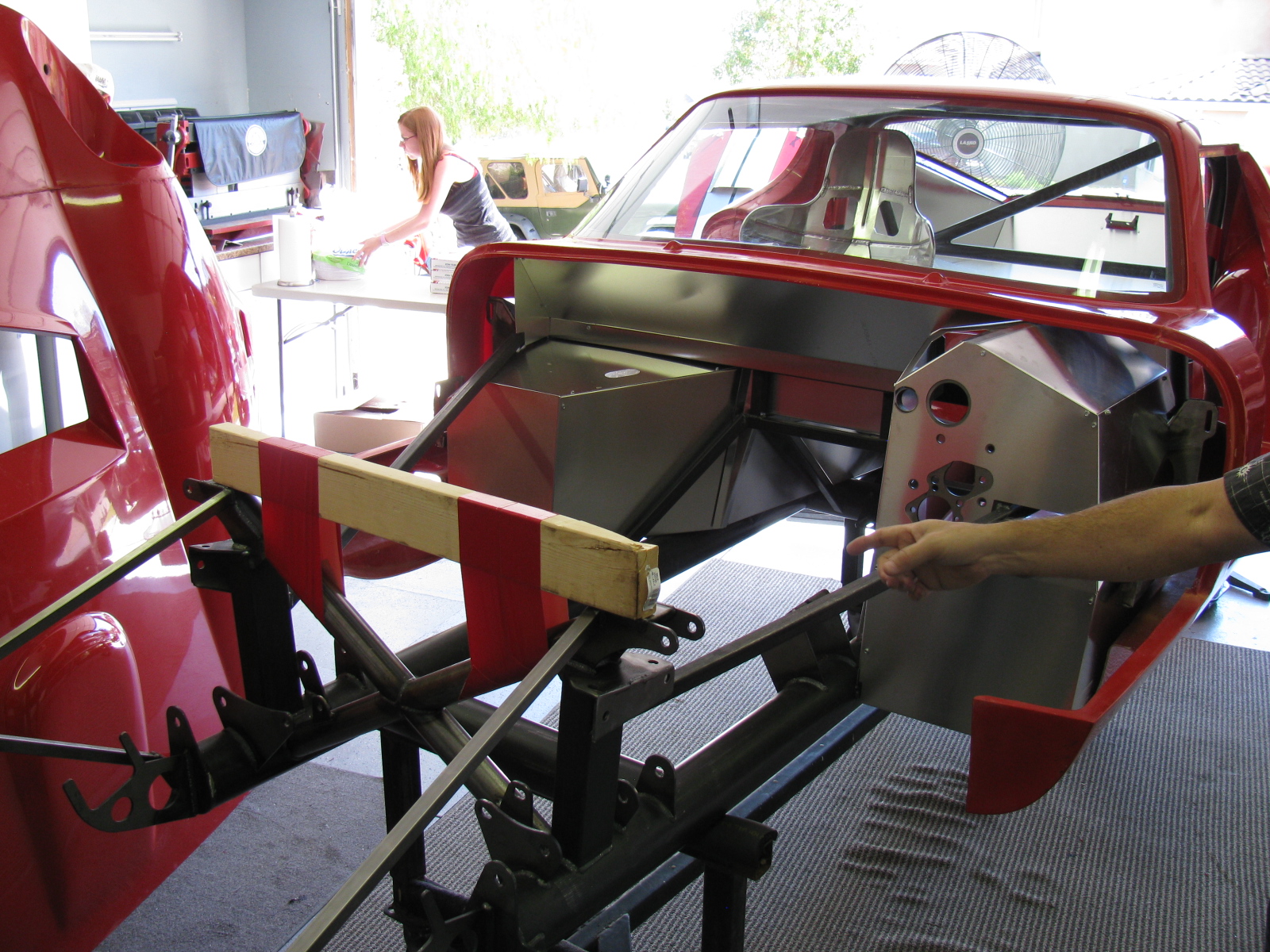
I want to drill and fit, not fasten and mount these panels, because they will be painted or powder coated later. This is always a messy and time-consuming task, and in the Coupe, a lot of the panels will be visible. Someone on one of the Factory Five forums said that if you count the number of holes you have to drill, you will lose the will to live. Funny. And true. Here are some pictures of the trunk aluminum.

Over all view of the Coupe trunk area. I used lots of Clecos on the back seam, because I had to pull the aluminum sheet on the rear panel tight against the floor.

The blue tape in this area is for a removable hatch to enable access for rear tail lights and the wiring harness. Better do that modification now, rather than later. Other access panels and storage boxes will be installed at various locations in the floor and the sides of the trunk.
I should draft a construction plan for this project, since I am almost randomly moving through the assembly manual.
My vintage-style Halibrand wheels still have not arrived, and I am missing some brake system fittings. When those parts arrive, I will have all the ingredients for the Factory Five Racing Type 65 Coupe Complete Kit. The engine and transmission should be done soon, delivery is sometime this month.
Having things from Factory Five on back order is not so bad. It just means that packages arrive every now and then, and it is sort of like having gifts to open and see. For example, earlier this week, the box containing the exhaust headers and rear view mirror finally came back to me. In addition, I received the rear brake kit and the rest of the rear end hardware and fasteners.
The headers are nicely polished aluminum and are surprisingly light for their size. It looks like they mount to the exhaust muffler assembly with these splice-connector sections. Other versions of this exhaust are joined with a flange arrangement. I am not sure if I like this method of connecting the headers to the muffler assembly. I will have to post a question on the Factory Five Forum to see what others have done.


The steering arms are still missing (FedEx tracking info indicates they are in transit and will arrive just before Thanksgiving – this is great timing, since I will have a few days off to do some more work on the car), so I cannot install the front disc brakes. The CV shafts are missing so although I can start on the rear end, I will have to stop in the middle and wait for those pieces before I complete the rear end assembly.
So, I decided to work on the aluminum panels this weekend. I marked, center-punched and drilled the driver’s side footbox first. I used my new cleco pins and pliers for this sheet metal project. I really like them – I wish we used these in Mr. Spence’s 7th grade metal shop class!


See the gap at the peak of the box? I will install a strip of thin bar stock over the entire top seam to make it look better.
Some of you are wondering – what’s a cleco? I wondered about that, too. Wikipedia says, “A cleko, also spelled cleco, is a fastener developed by the Cleveland Pneumatic Tool Company. . .”
http://en.wikipedia.org/wiki/Cleko
So the next thing you may be wondering is – why do I have to use temporary fasteners to put these sections together? Another good question. I have to trim, drill and assemble all of the sheet aluminum parts – and then take everything apart so I can de-burr the holes, remove all the marks and scuff the panels to get them ready for paint. Although some builders have left these panels un-coated and raw, I decided to apply a finish to all the panels to prevent corrosion. My plan is to paint all interior panels (except the dashboard) with silver Rust-Oleum high temperature barbecue paint. I will paint the dashboard with Gray Hammertone – a darker color than silver, and it will have a nice contrast against my AutoMeter gauges.
Everyone seems to talk about the high temperature part of this paint, but no one mentions the fact that no primer is needed. I think that is one of the best features of this paint – one less step to do.
An alternative to the BBQ paint is what I use for my electronic chassis project boxes – Rust-Oleum Appliance Epoxy. This is another paint that does not require a primer, and the stuff is pretty durable. I would use that instead, but the colors are limited to white, black and almond. Yuk. Too bad.
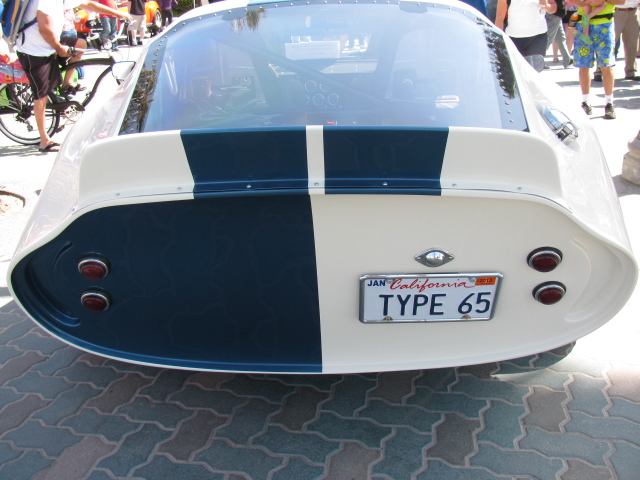
At least, that is the plan so far. I might change. I am also considering some color alternatives to my original plan of having a white body and black stripes. But that part is a long way off. I will make a final color selection when the Halibrand wheels arrive – they still have not shown up yet.
It looks like there are just three things missing from the kit: The front steering arms, the rear CV shafts and the Halibrand wheels. The 302 V8 and T5z transmission should be here in December – so some serious building is about to begin!









































 wayneyoshidakh6wz
