Archive for the ‘kh6wz’ Tag

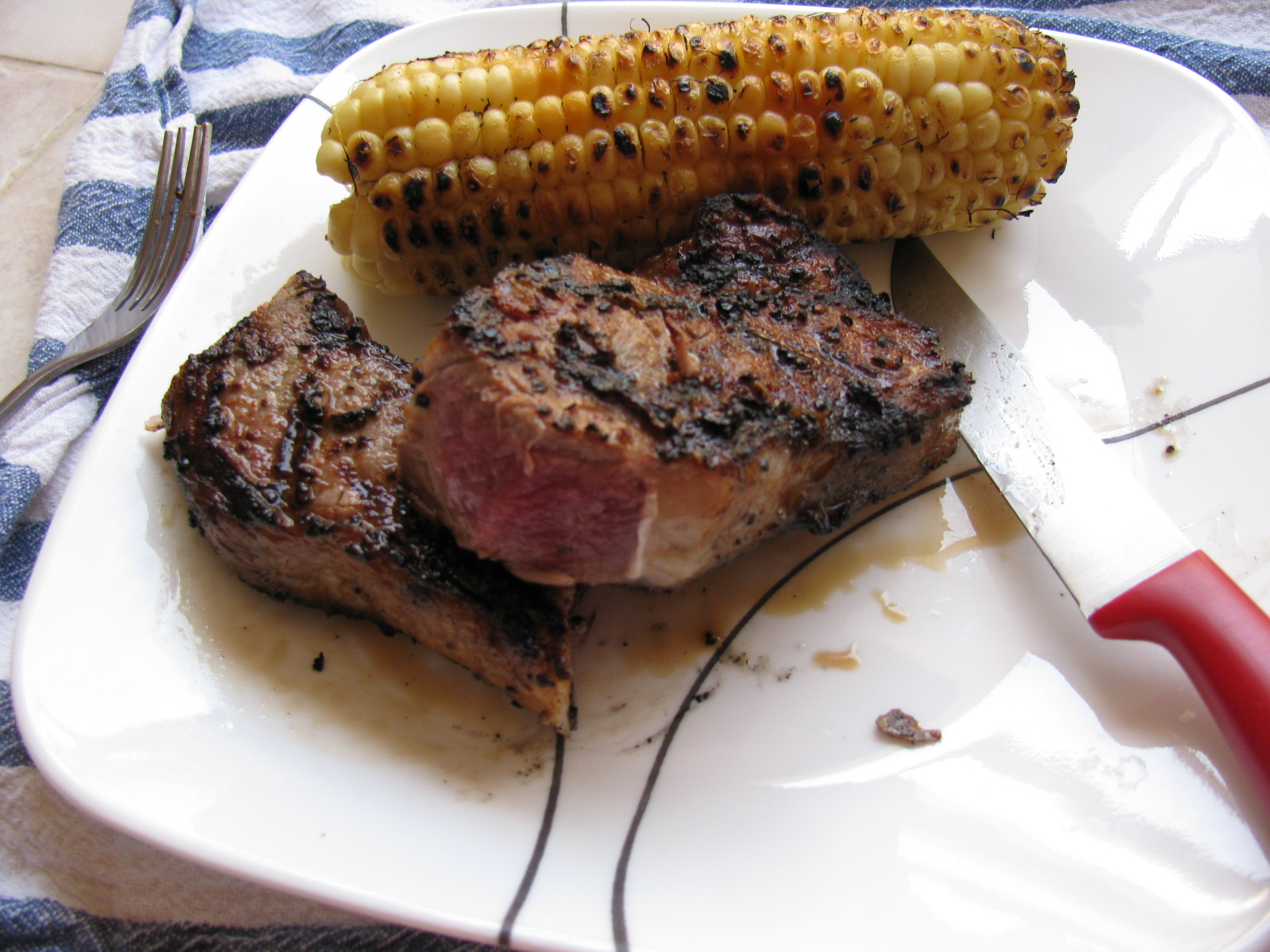
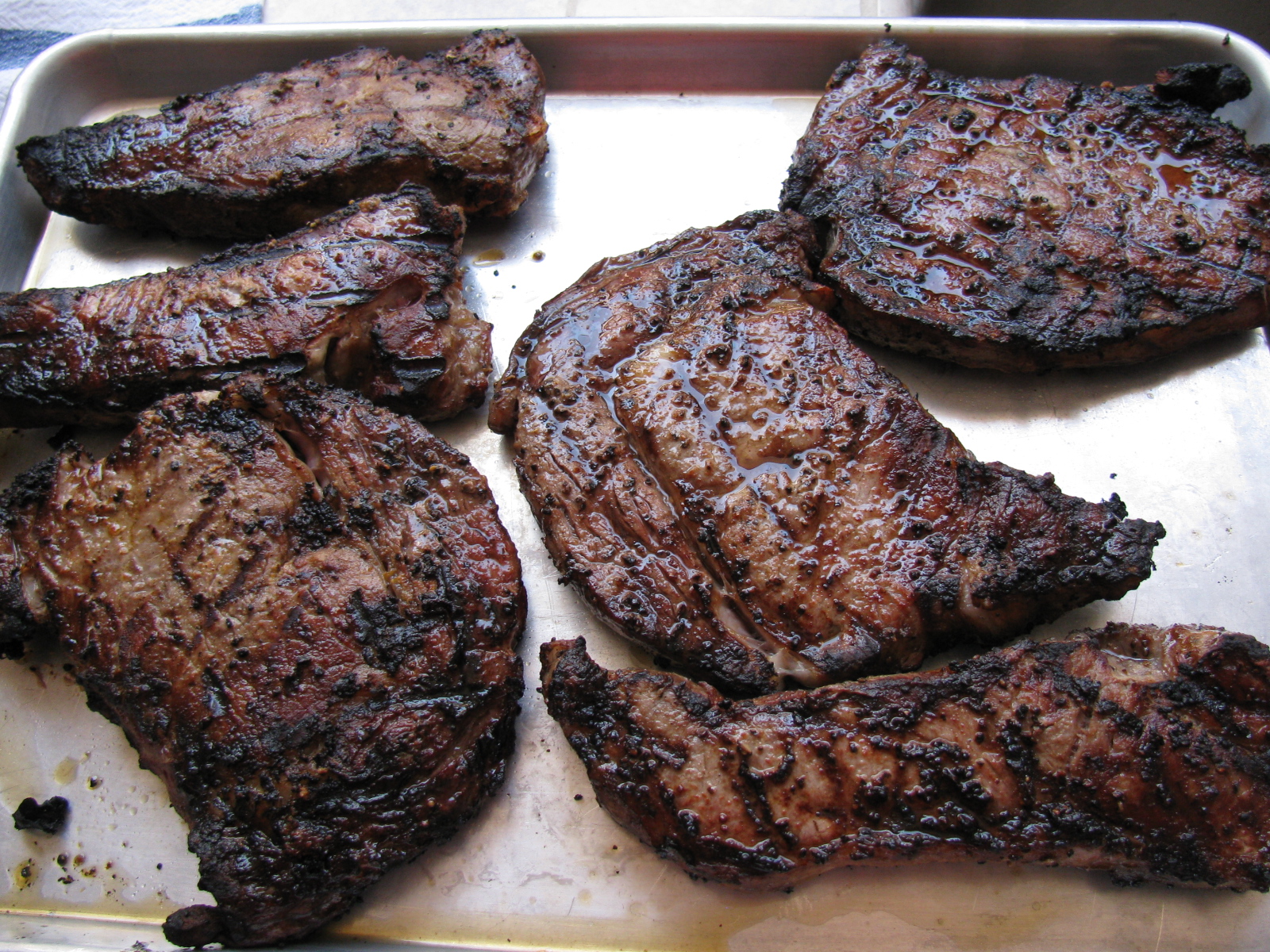
Hellfire strip steak with grilled corn on the cob
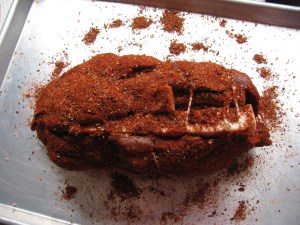
I had several strip and rib eye steaks taking up room in my freezer, and decided this would be a great time to stoke the Big Green Egg and cook ’em. Because anyone can direct grill steaks with the proper seasonings, I decided to do something different, and prepared the steaks using Steven Raichlen’s “Hellfire Steaks” recipe . The original recipe can be found here – and in Raichlen’s book, “How to Grill.”
http://www.primalgrill.org/recipe_details.asp?RecipeID=143&EpisodeID=19
I thought this crust – made of salt, pepper, powdered mustard and Tabasco sauce – would be very spicy, but I found out that this is not the case, and will add more Tabasco if I make this again. Here are some pictures of the steaks and some corn on the cob.


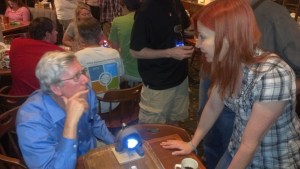
Maker Walt discussing something fascinating with Jeri Ellsworth, aka “Circuit Girl.” Photo by Tony KC6QHP
Here is a report on the 2013 Maker Faire by Tony Long (KC6QHP):
Another great Maker Faire is in the books, amateur microwave radio was well represented!
Thanks to the coordination efforts of Wayne KH6WZ, Brian W6BY, the 50 MHz and Up Group, the SBMS, and UC Davis, the “Not Your Grandpa’s Ham Radio 2” booth at the Maker Faire was a great success.
This year we shared a booth with UC Davis whose impressive student projects ranged from a radar demonstration, to video processing, audio sequencing, and mechatronics. Along with that, we had a 10/24 GHz SDR setup courtesy of Dennis W6DQ (on a big screen courtesy of Brian), some of Brian’s homebrew gear, Walt’s EM field demos and transceivers, and some of my stuff including a 10 GHz radio and beacon.
LA Times says that about 165,000 people were expected to attend this year, so at a minimum 10,000 people passed by our booth. Our raspy voices are an indicator that a great deal of talking was done! I personally interacted with a number of people who are really interested in amateur microwave radio and if even a fraction of them get involved or raise general awareness, I think it is a success.
Walt’s demos, owing in part to their elegant simplicity and visual nature attracted a lot of attention and interest. On Sunday night he took them to a post-fair get-together with the who’s who of the hardware hacking scene (Jeri Ellsworth, Ben Heckendorn, Diana Eng, Alan Yates and many many others). All were impressed!
Something I see very encouraging in the “maker” scene is a real interest in RF. This crowd includes a good deal of embedded systems engineers, talented software people, etc. There’s a real opportunity to make connections with this crowd and get more activity on the microwave bands.
As Software Defined Radios decrease in cost and become more open source, I predict massive interest in RF and likely in the microwave bands because of their large bandwidths. While they may not be interested in SSB mountaintop to mountaintop contesting (there will be those who are certainly), an increase in use of our bands will only help to further the cause of maintaining our spectrum to help further the state of the art.
I posted a gallery of pictures on Flickr: http://goo.gl/cAy3p
Tony KC6QHP”
Thanks for the report, Tony!
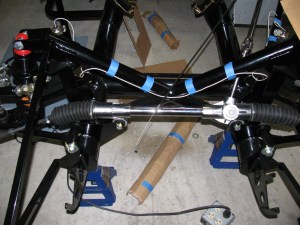
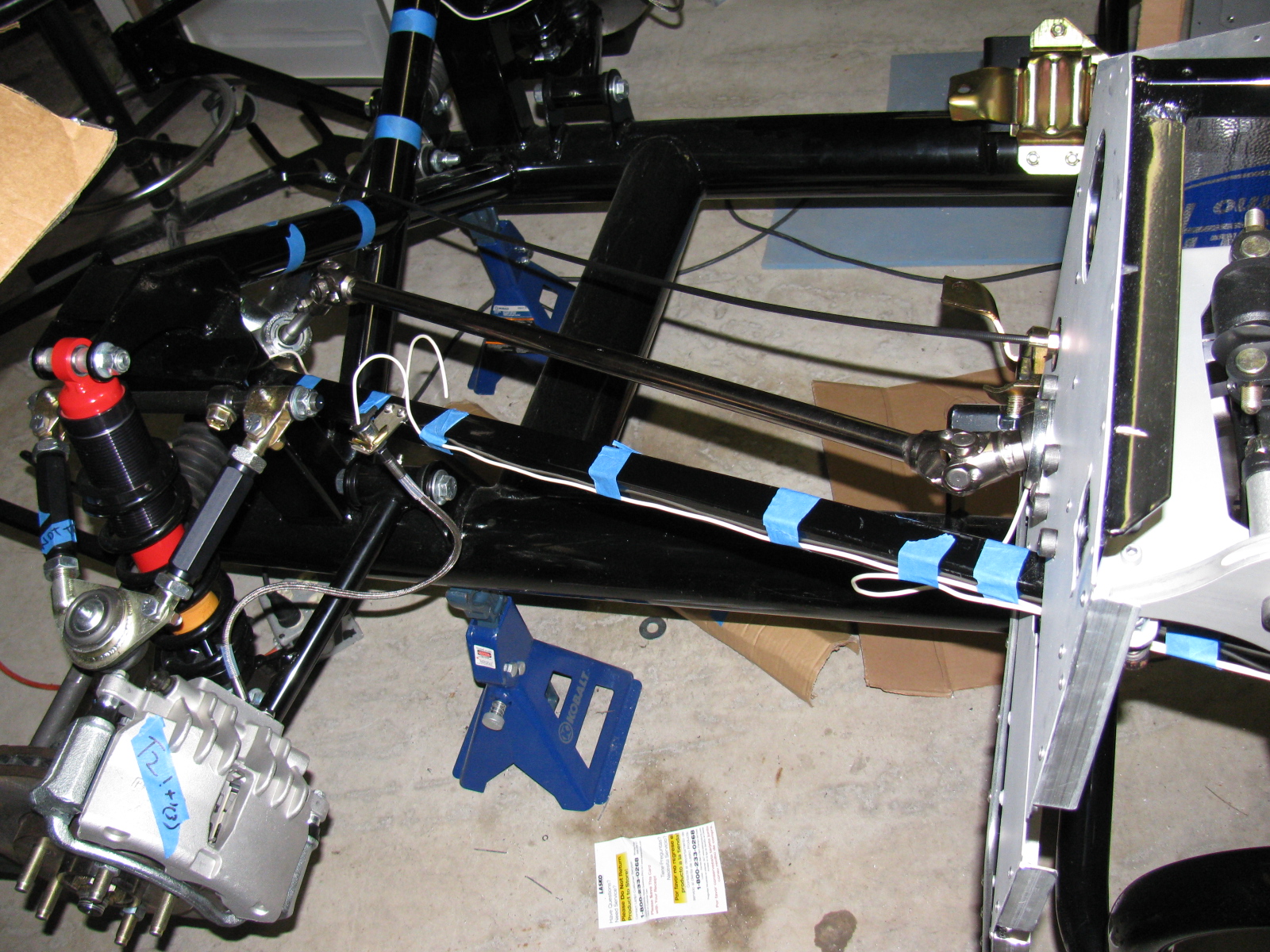
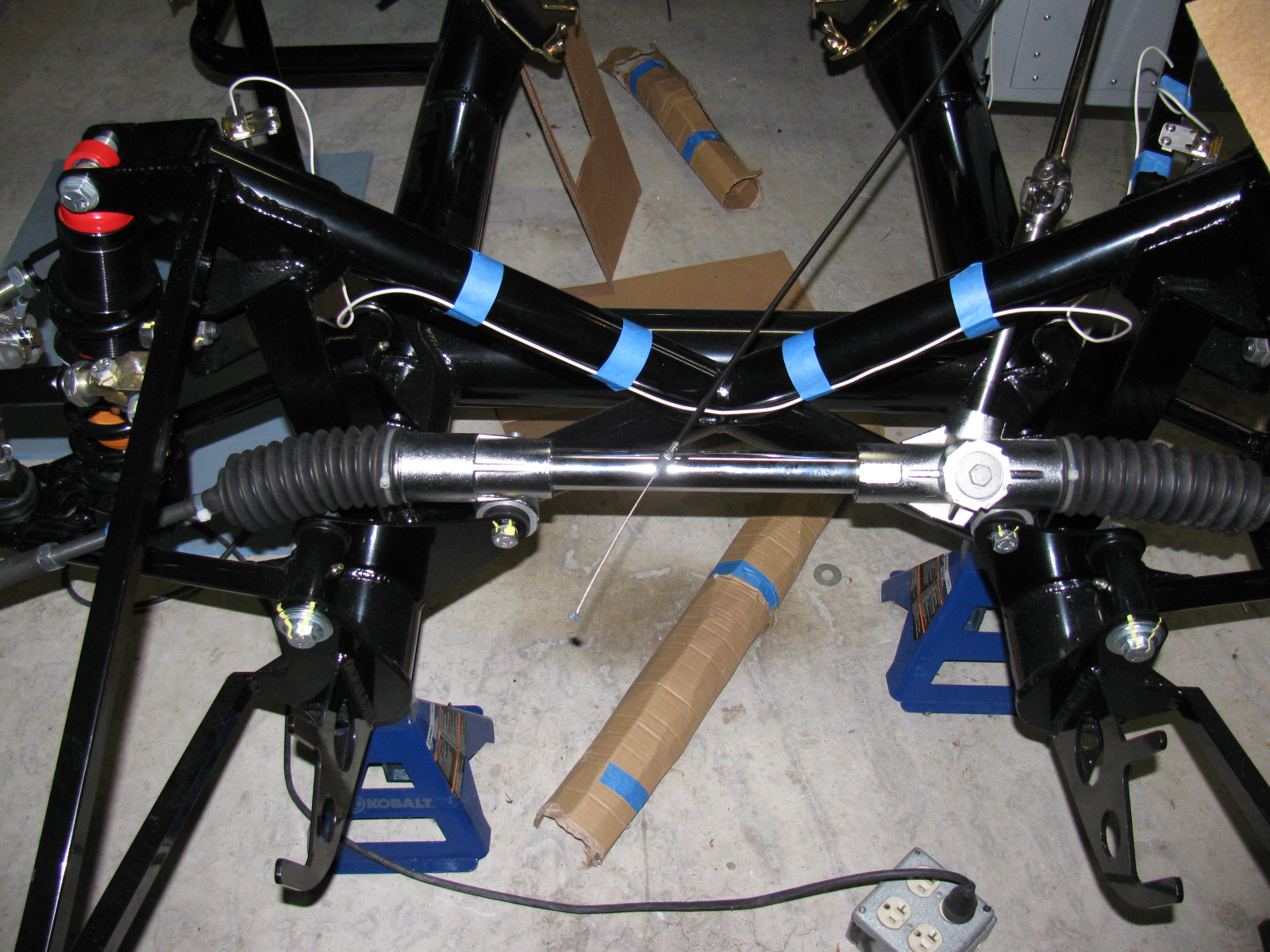
For some reason, things on the Coupe take much longer than I expect. I decided to practice running the brake lines today. I used some scrap number 12 wire, cut into five-foot lengths. The copper wire is much more flexible than the brake lines, but at least I can do a mock-up before I bend the real thing.
I am using the “FFR Type 65 Coupe build site,” by cbergquist1 on Flickr.com as a reference – click here to see Chris’ section on brake lines. http://www.flickr.com/photos/51103049@N00/sets/72157622122325431/
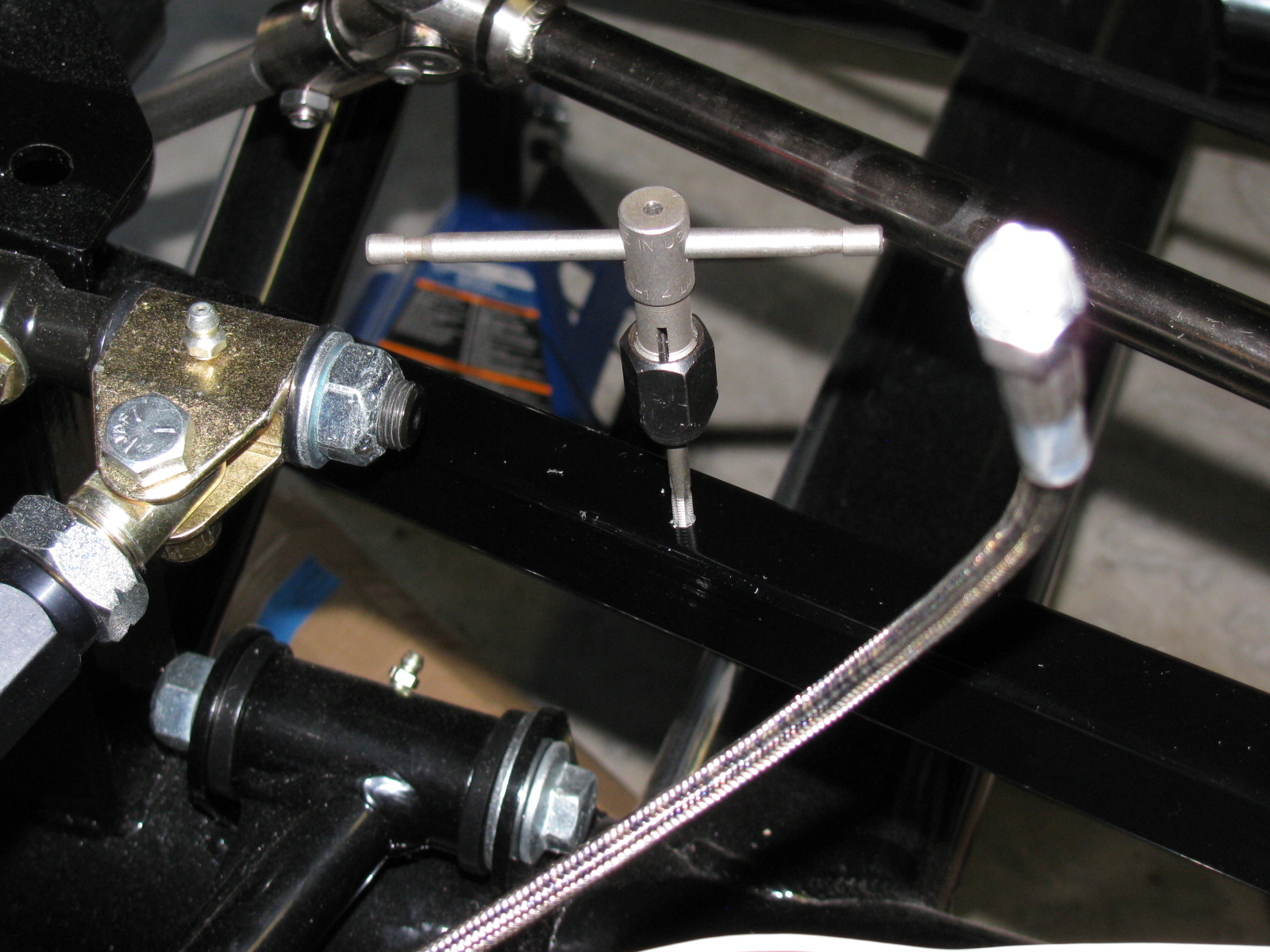
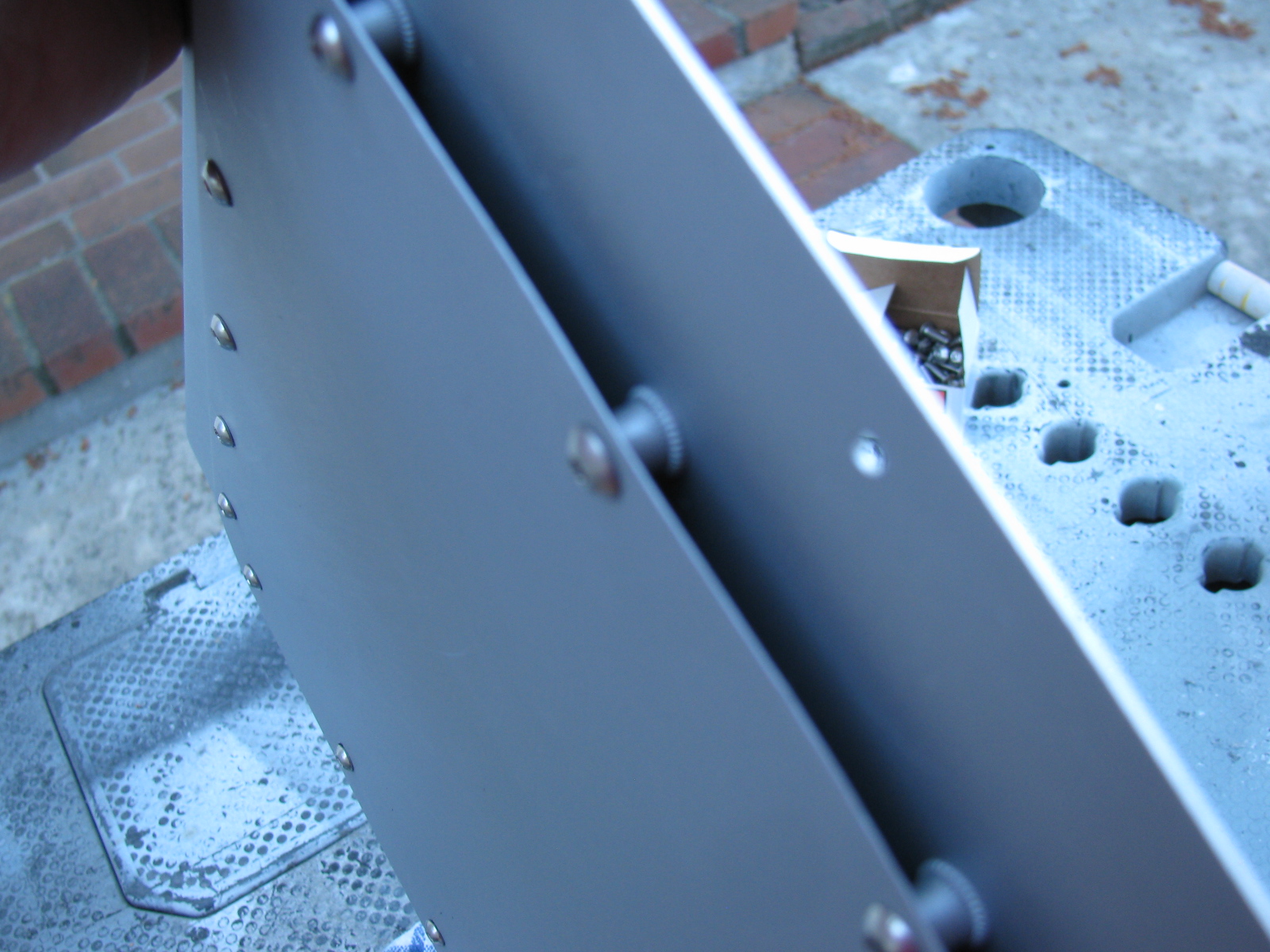
Just like Chris, I drilled and tapped holes for screws to mount the flex brake line mounts. I used 8-32 stainless steel button head screws. The Allen heads almost look like rivets.
Here are some pictures of my front brake line mock-up. . .


This is something weird. One of the mounting holes (on the left) was not punched out. I used an automatic center punch to knock the slug out.


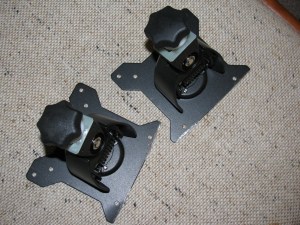
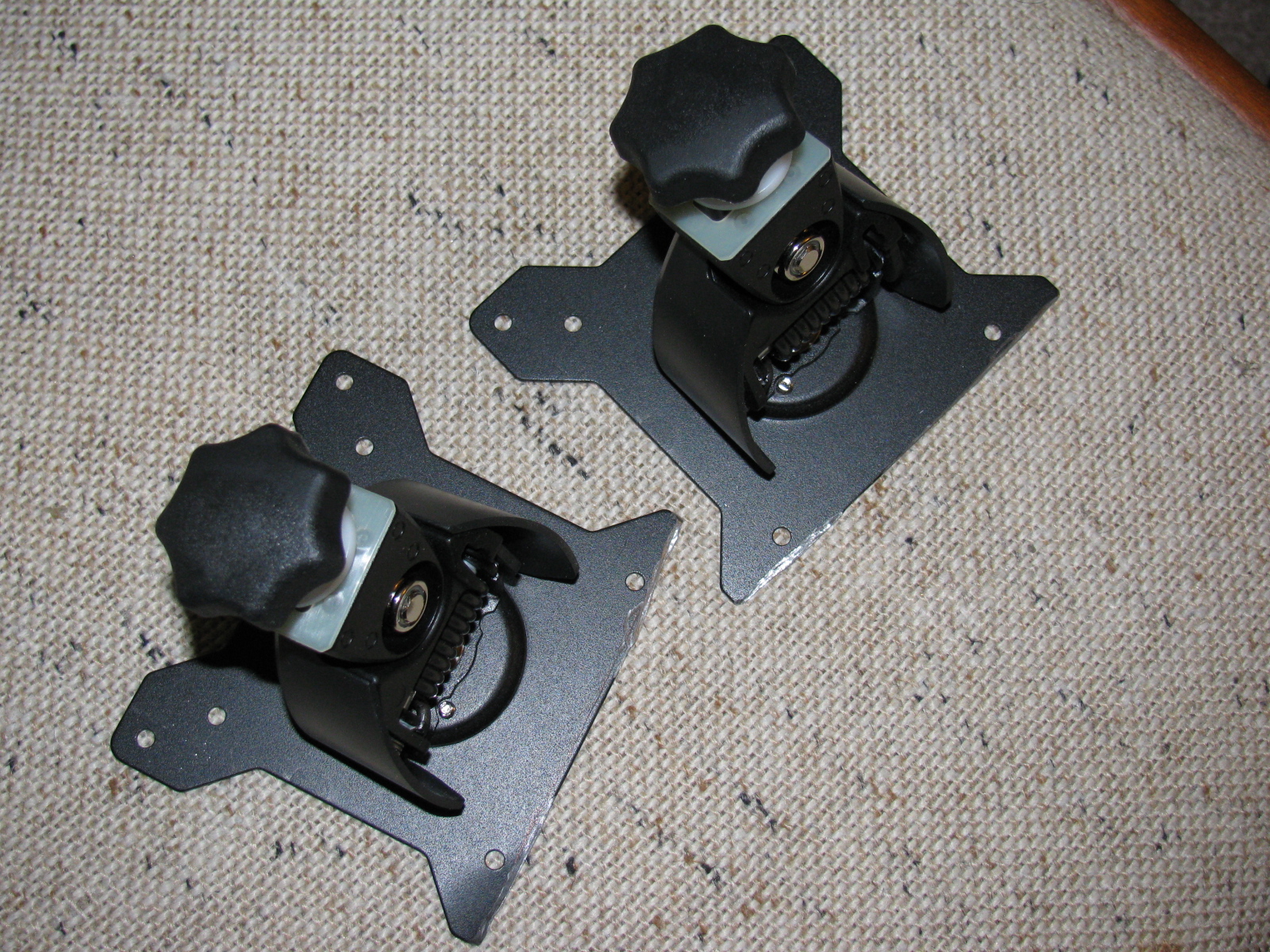
I took a time out to modify some monitor stand mounts for my office computer. The mounts were designed by monkeys, since they are useless and cannot be used out of the box. Actually, I should edit that statement, since I am not sure if the monitors or the monitor stands are wrong. In any case, some substantial cutting had to be done with my Dremel tool. I should have taken “before” and “after” pictures, but I wasn’t thinking. Here is a picture of the after-cutting operation. . . .
Make: Magazine reports there are over 900 displays this year. My team is setting up for the big event. I will post images and reports as soon as I receive them from my crew. I am not going this year. . . .
Here are some previews and some of the things I want to see. . .

Read more at: Belt-Driven, Hubless Rear Wheel Bicycle

Read more at: The Viper 2.0

And of course, my entry, Not Your Grandpa’s Ham Radio 2
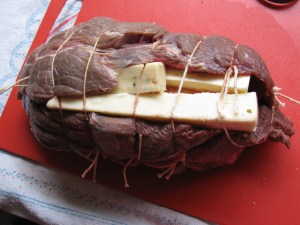
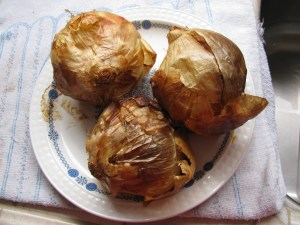
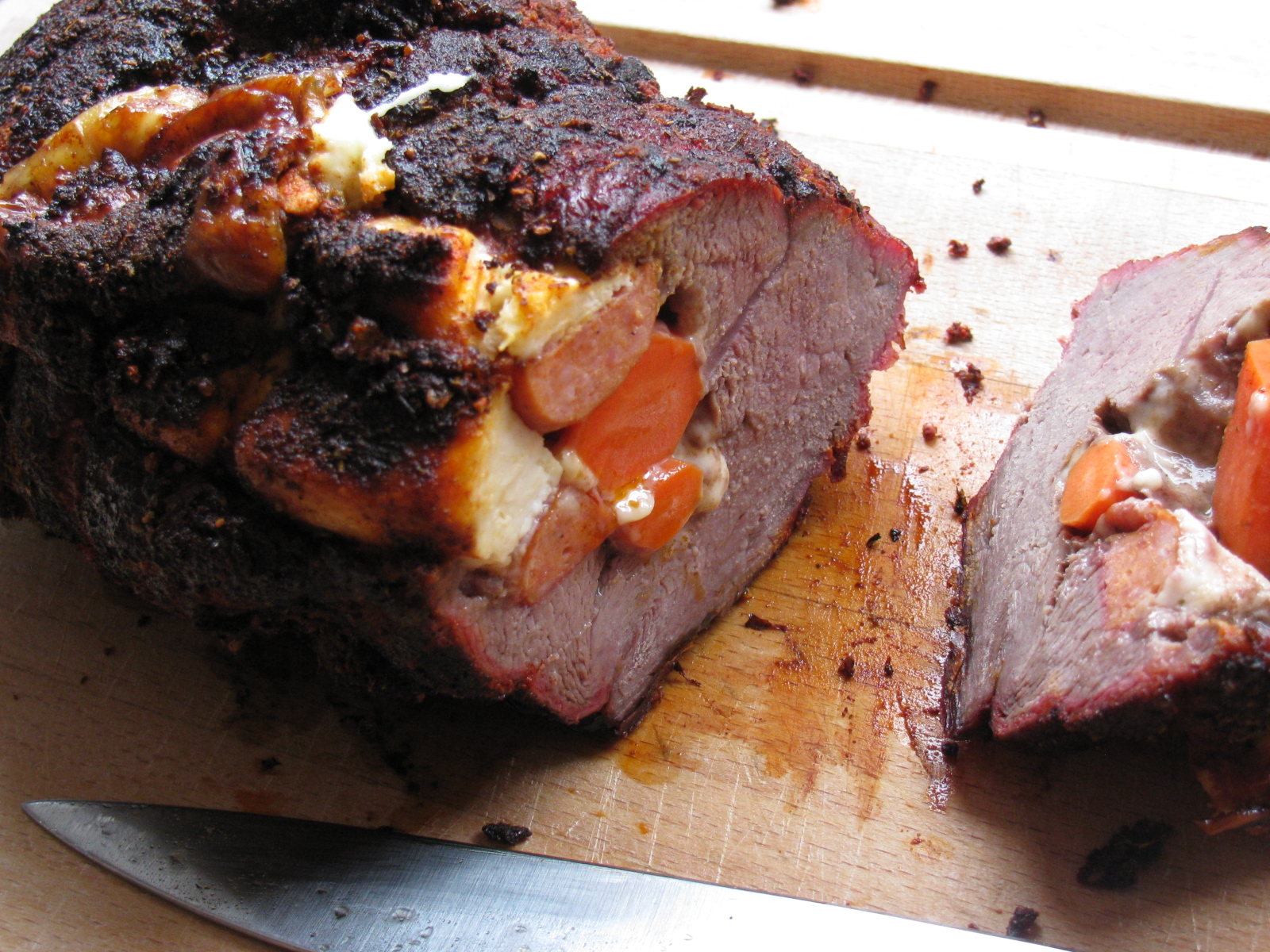
It’s been a while since I made something special on the Big Green Egg, so I decided to take out a four-pound rib roast taking up space in my freezer. This recipe is from Steven Raichlen’s Primal Grill, Season 2, and originally uses the rotisserie on a gas grill. However, since the Big Green Egg does not need (nor can it fit) a rotisserie, I used the indirect method, using the Platesetter.
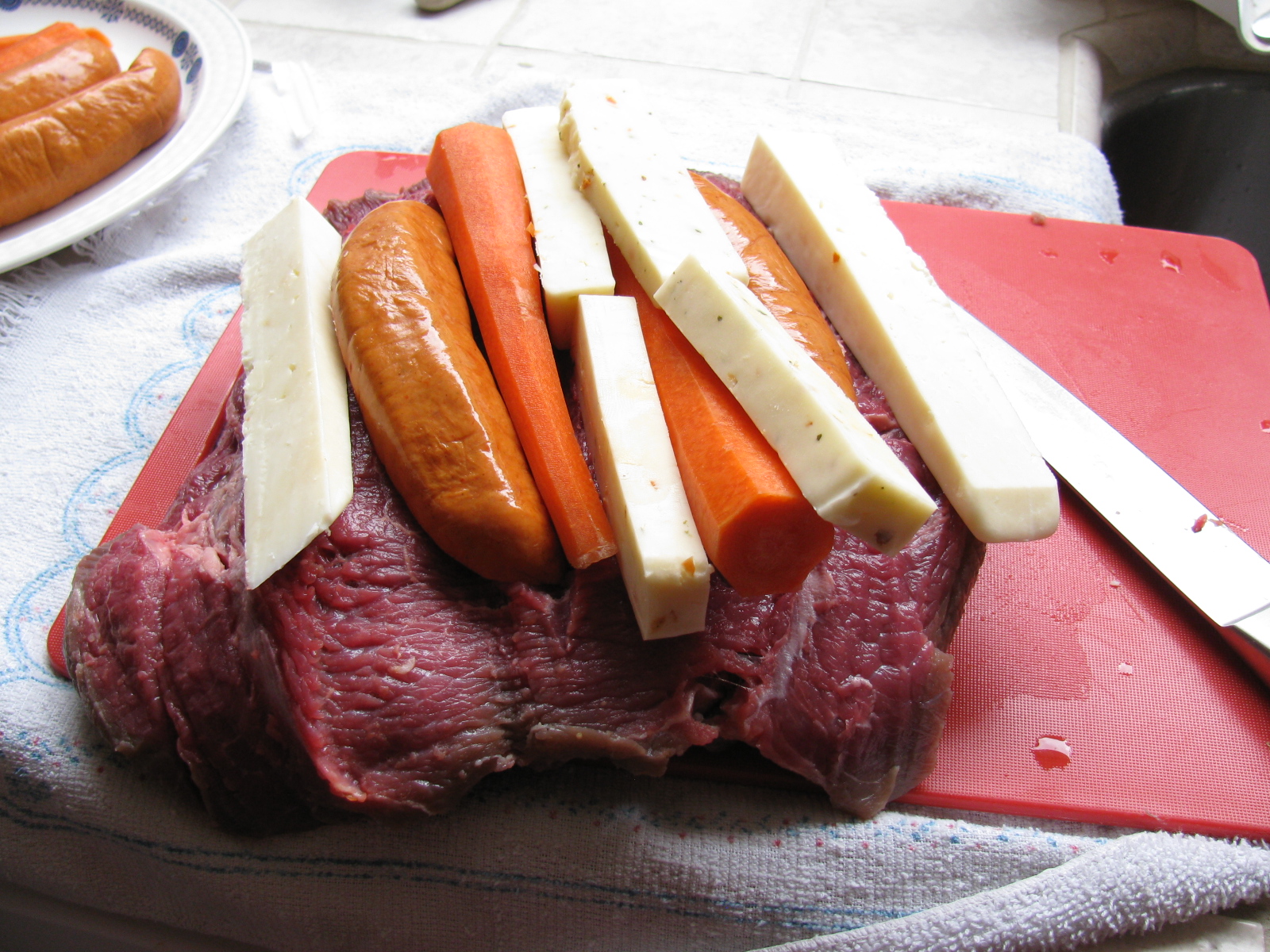
I substituted the romano cheese with some habanero jack cheese, since it was on sale, and I thought some hotness would taste good with the beef. For the sausage, I used some Louisana hot links, the same sausages I use when I make matambre.
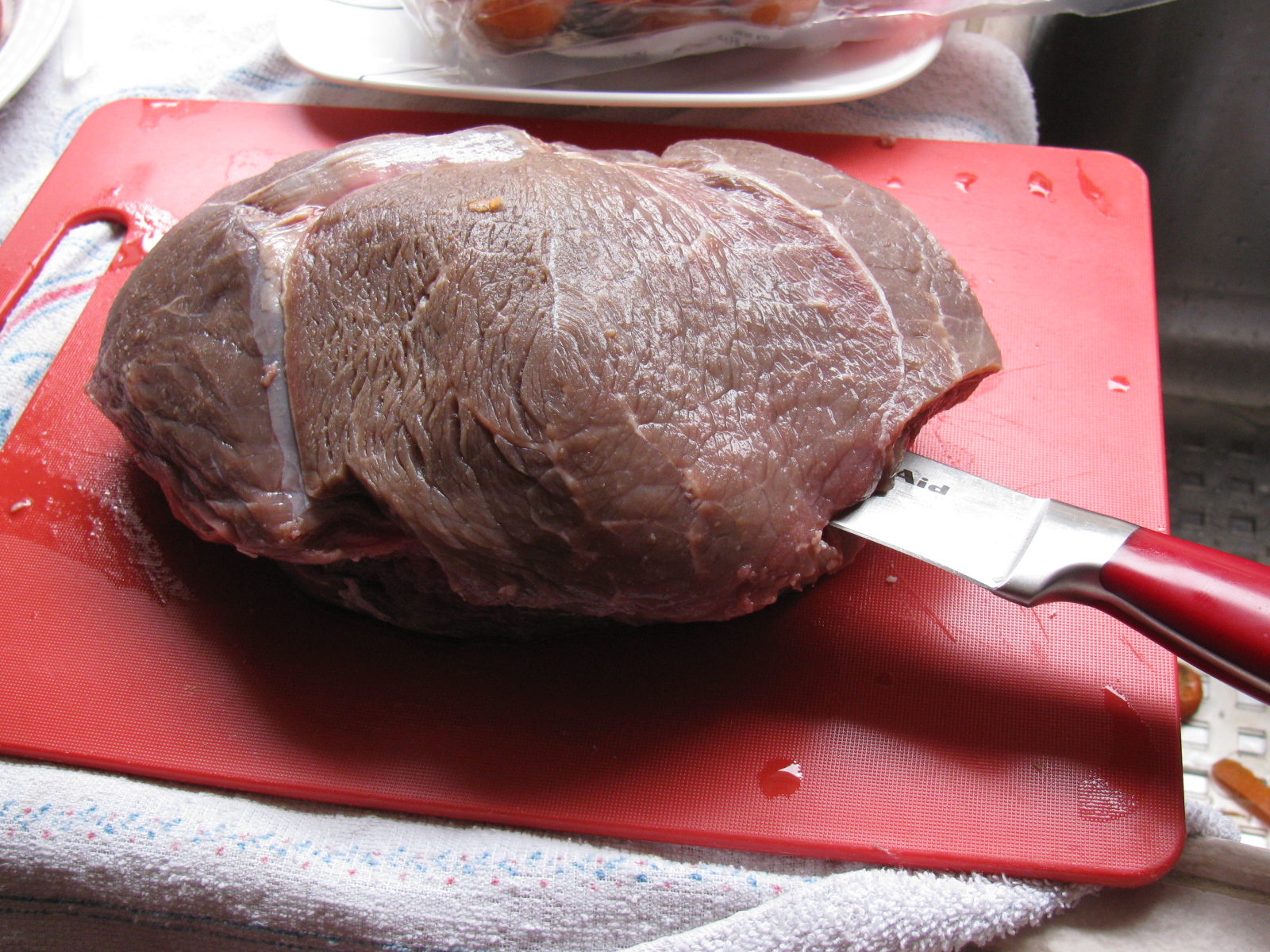
In Raichlen’s version, you poke a knife through the roast, then stuff the stuffing items in. After almost poking my hand with the knife, I decided to butterfly cut the roast, add the stuffing, and roll it, just like a matambre. Much easier.
Here is a link to Raichlen’s version – click here.
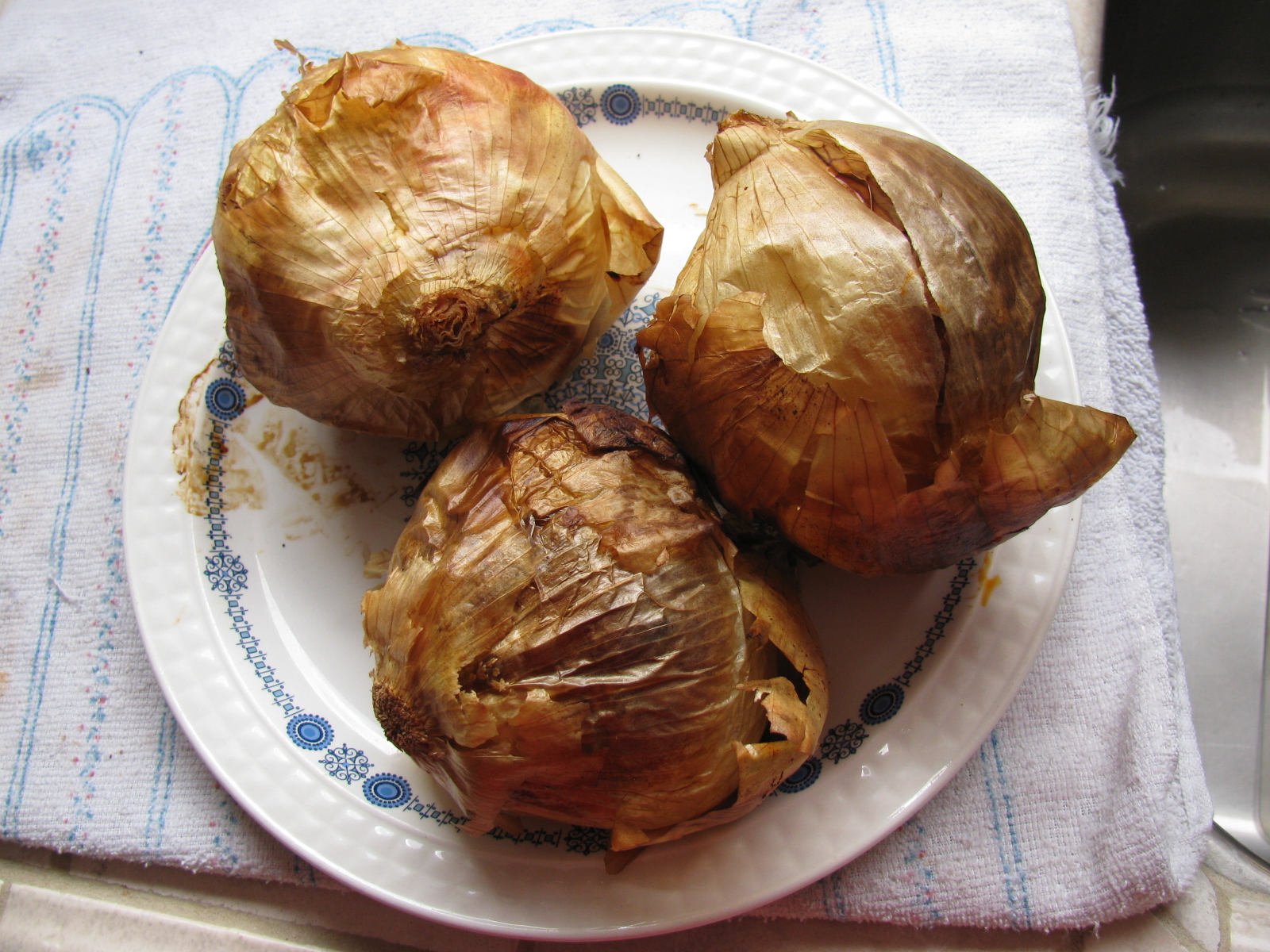
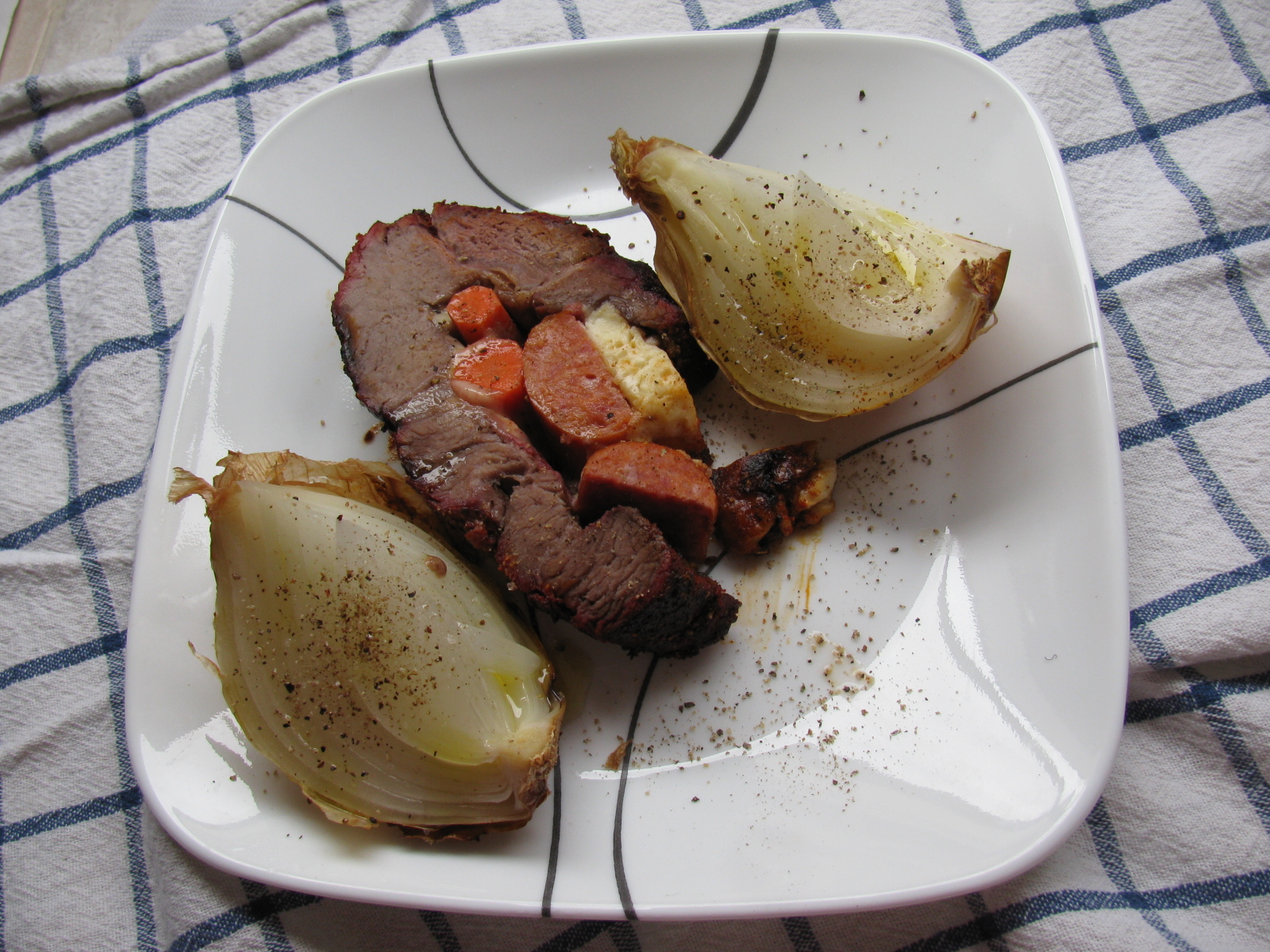
Here are some pictures for your enjoyment. . . .





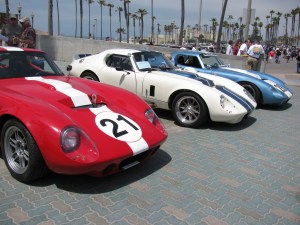
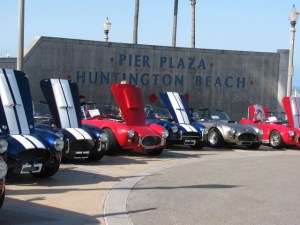
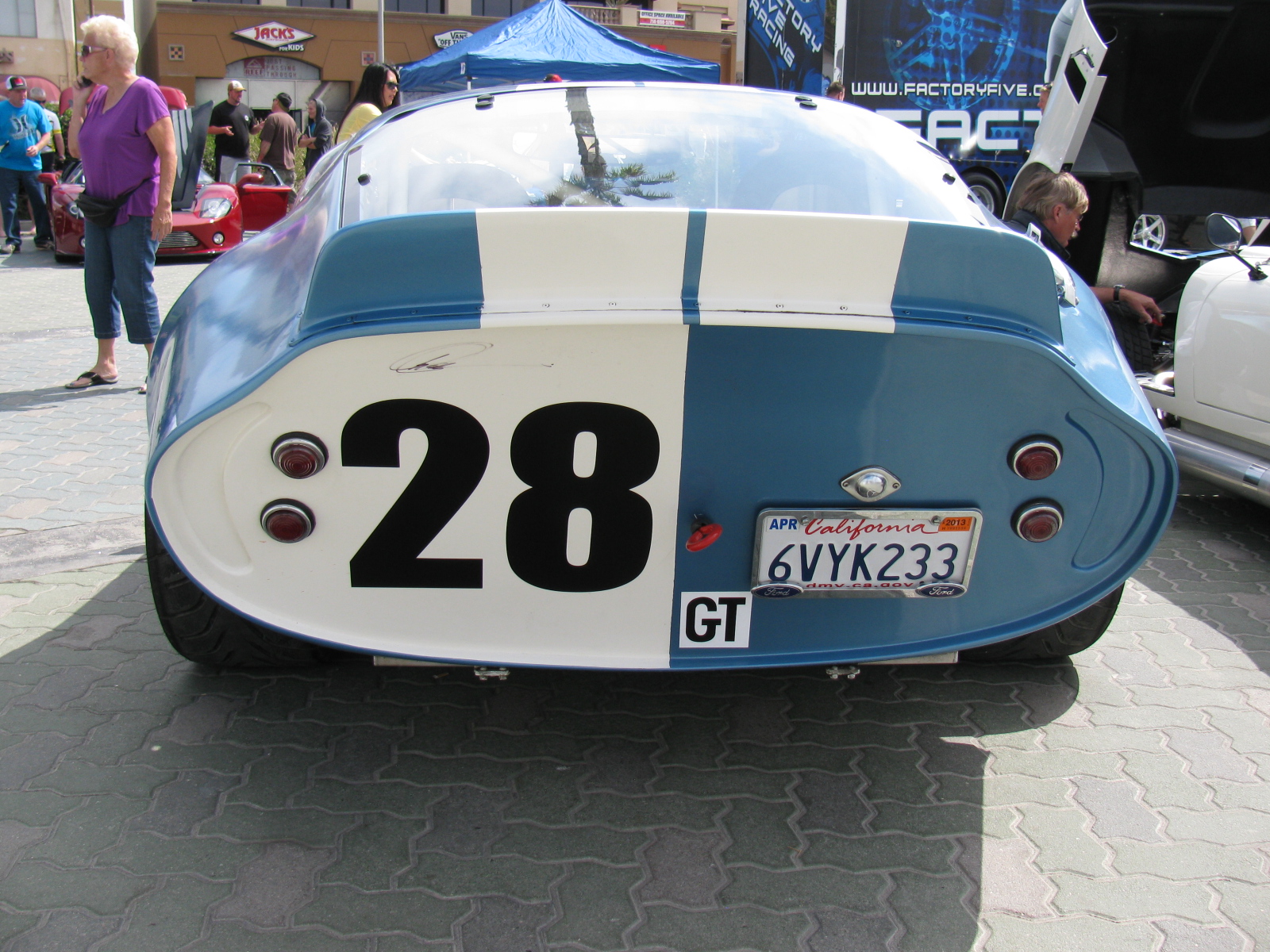
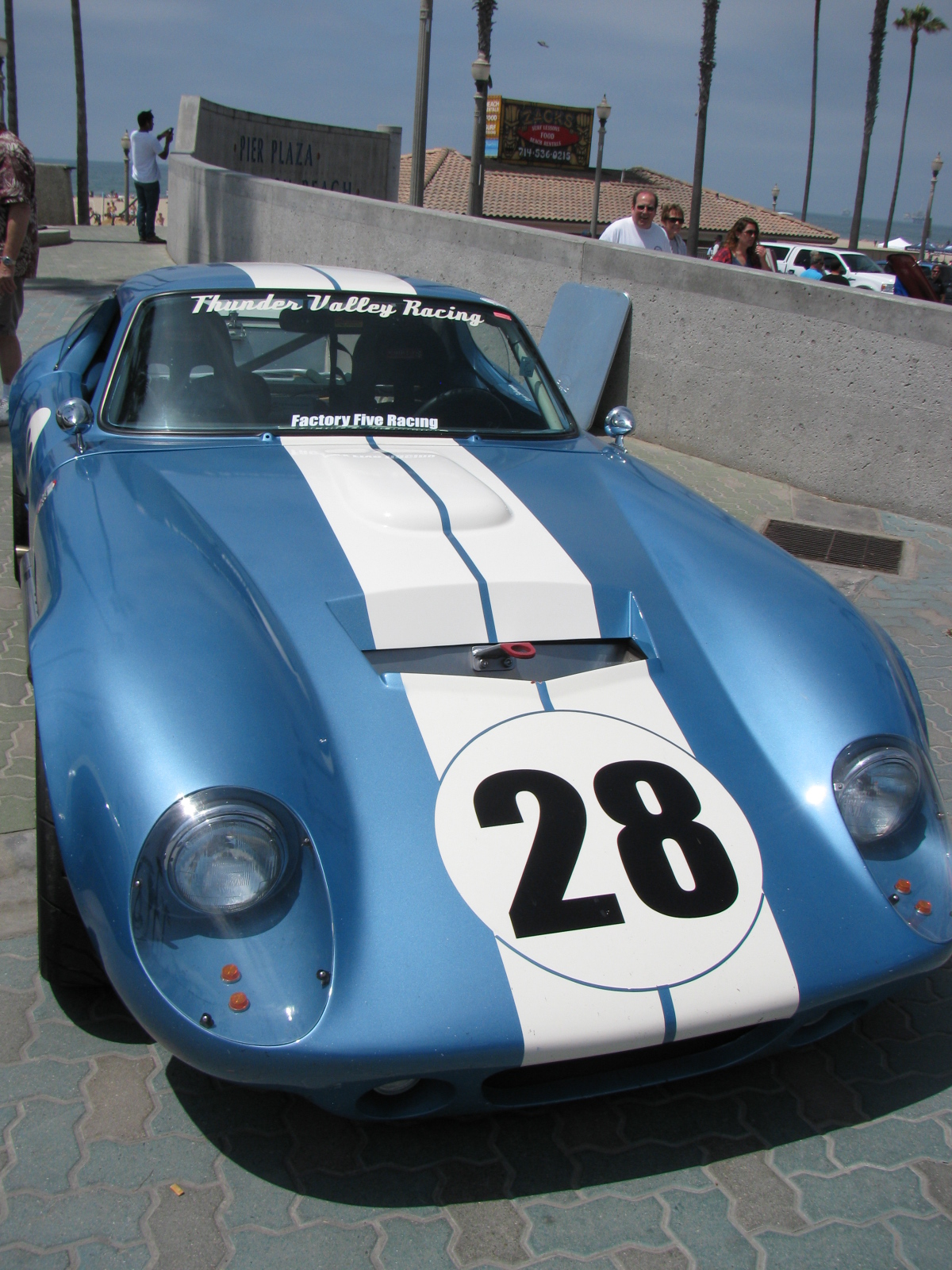
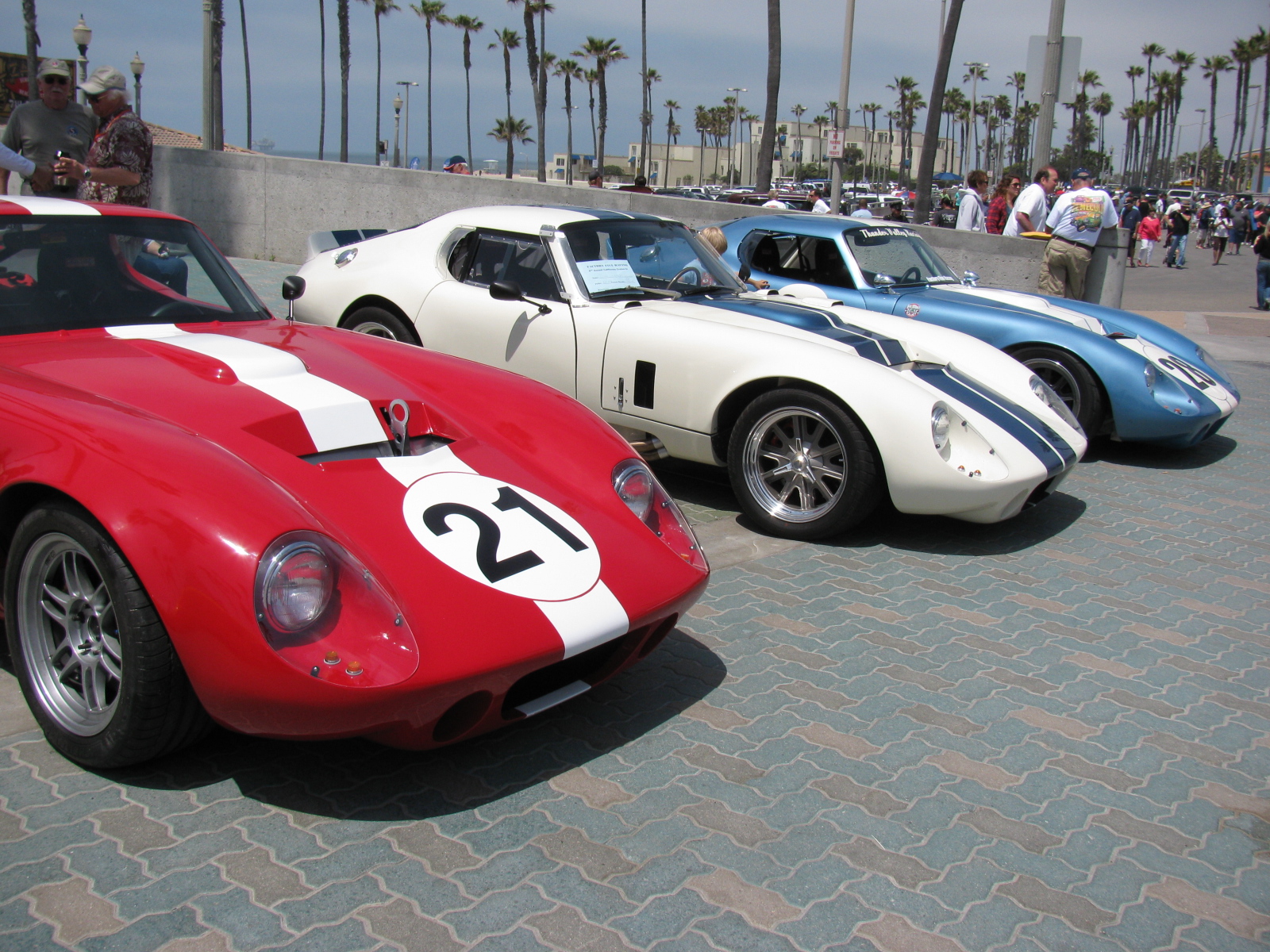
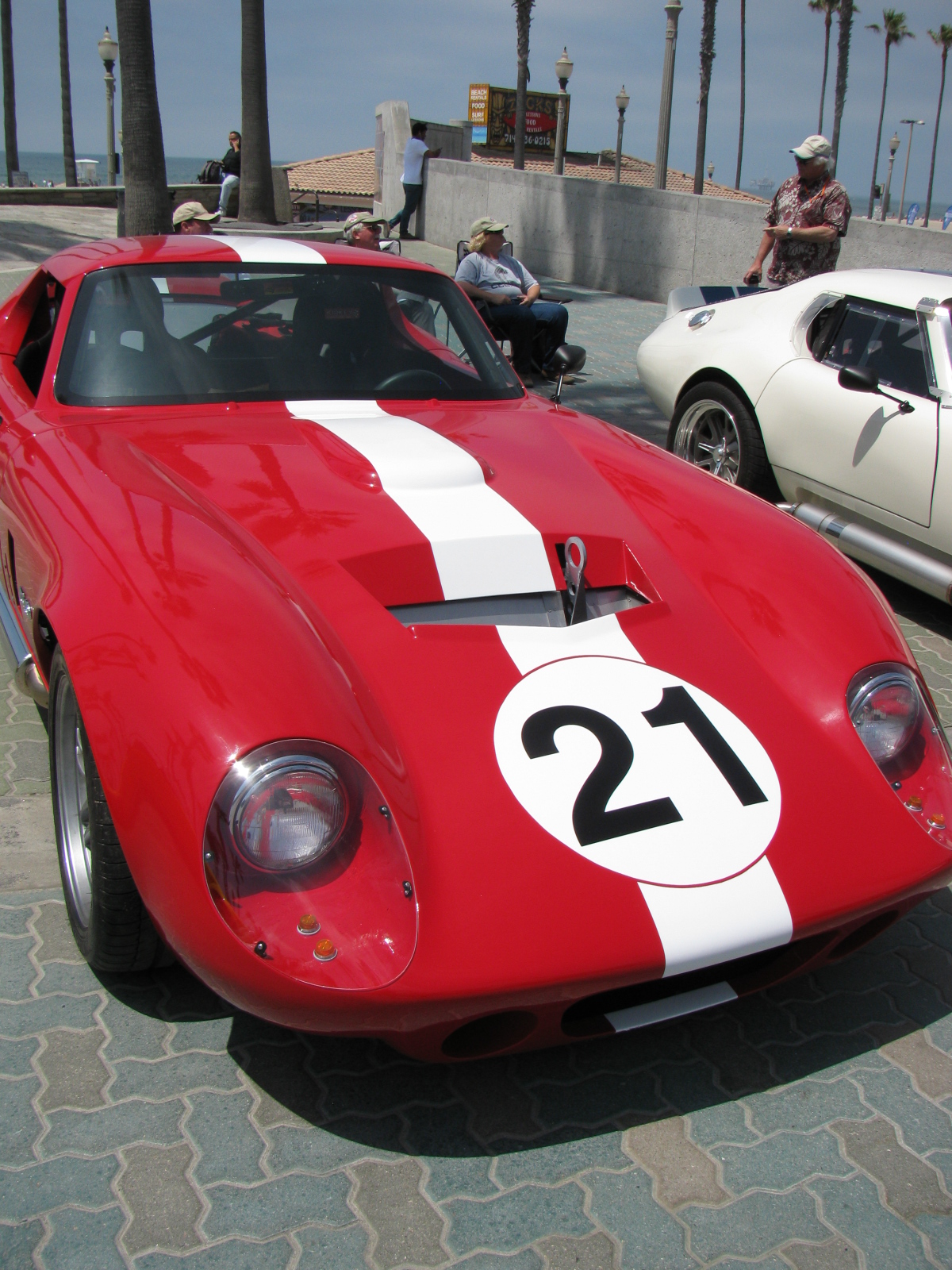
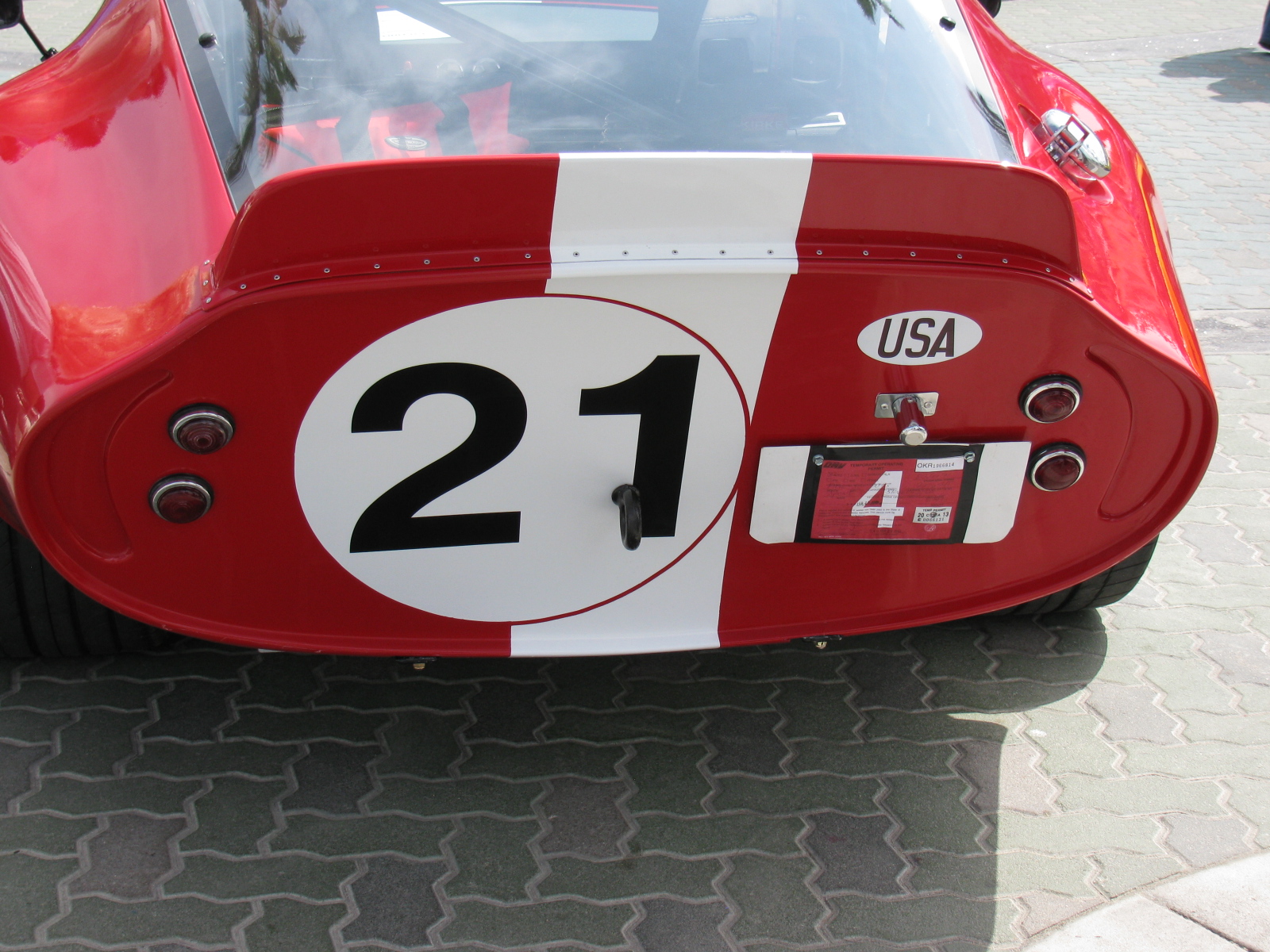
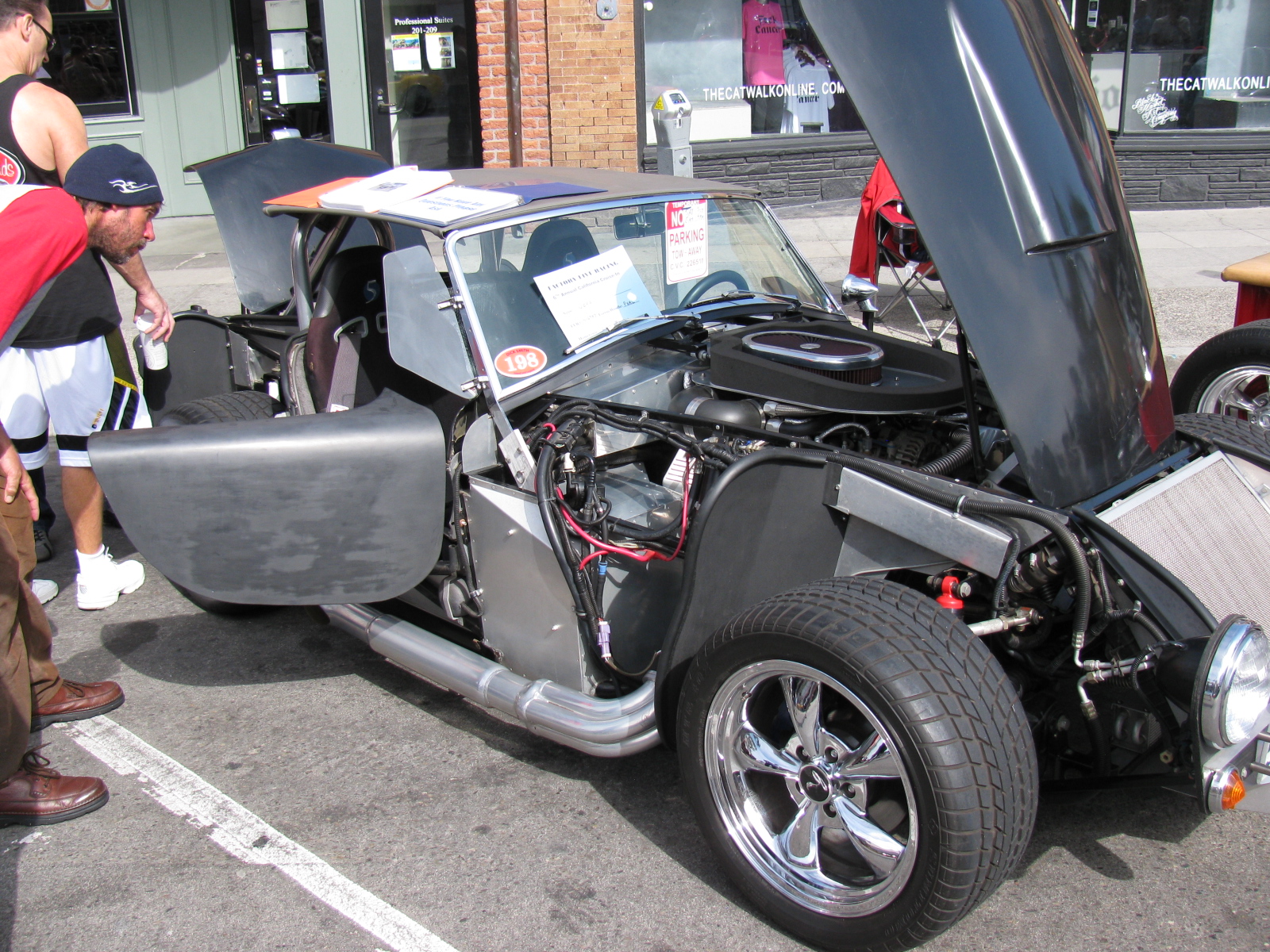
HUNTINGTON BEACH, Calif. — April 27, 2013 — Huntington Beach Pier Plaza and Main Street were filled with car enthusiasts and their hand-built sport cars from 9 am to 4 pm today. This was the sixth annual Factory Five Racing Huntington Beach Cruise-In which included over 100 Factory Five Racing cars, each one custom hand-built. Other custom and street cars were also on display, and included a vintage Chevrolet Corvette, and Ford GT.
Factory Five Racing is located in Wareham, MA and currently offers five component car kits, the Mk4 Roadster, the Type 65 Coupe, a classic ’33 Hot Rod, the GTM Supercar and the newest model called Project 818. Pricing varies depending on the kit configuration and accessories and options. In addition to the kit, builders supply their own engine, transmission, wheels and tires and finish and paint.
Dave Smith, president of Factory Five Racing, is a hands-on guy, and is involved in every aspect of his company… and is the friendliest person you’ll ever meet. He loves talking about his – and our – cars, and Dave says every time he meets people at these gatherings, he learns something new from each builder.
More information is available on the Factory Five Racing website, www.factoryfive.com
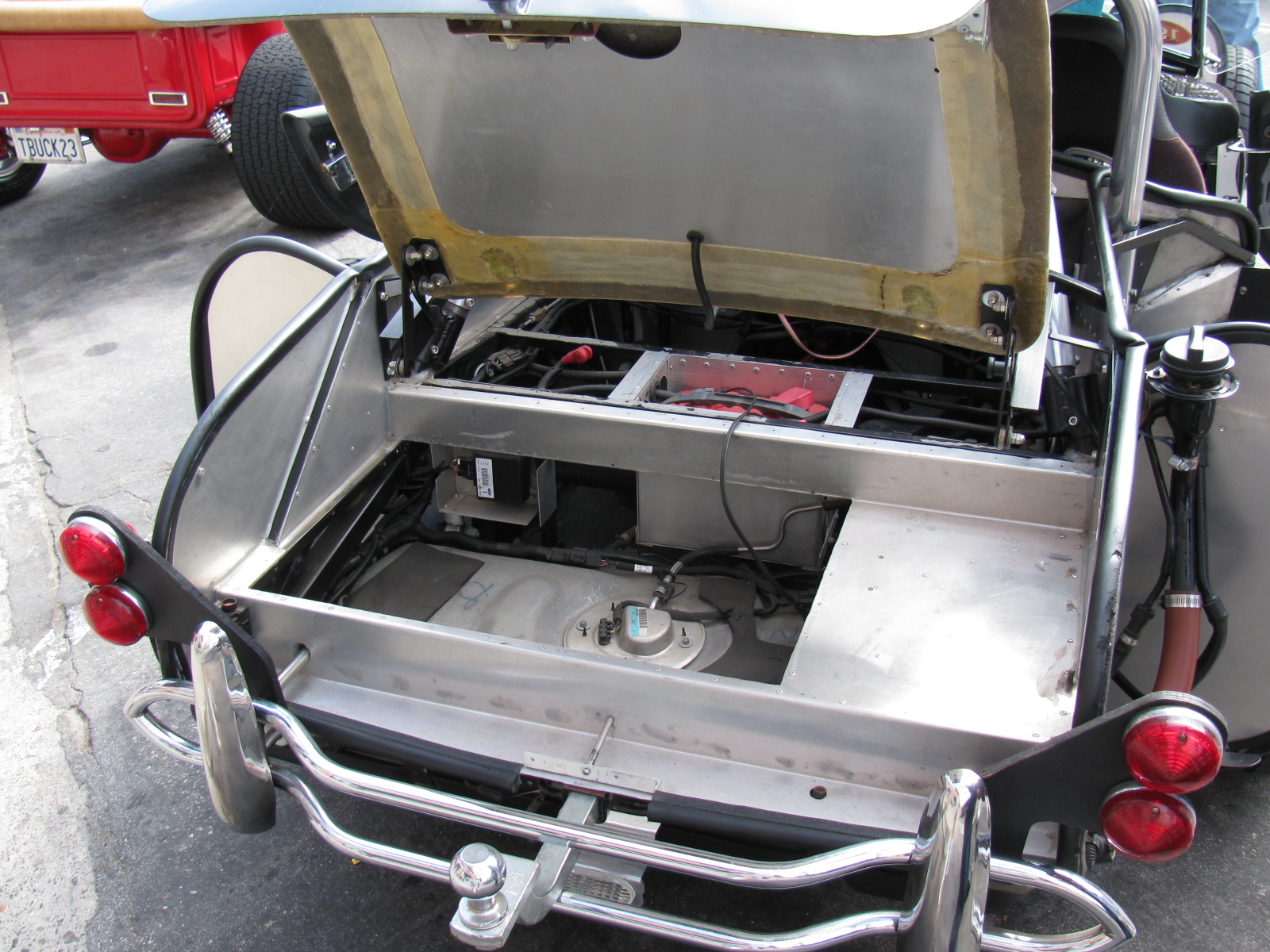
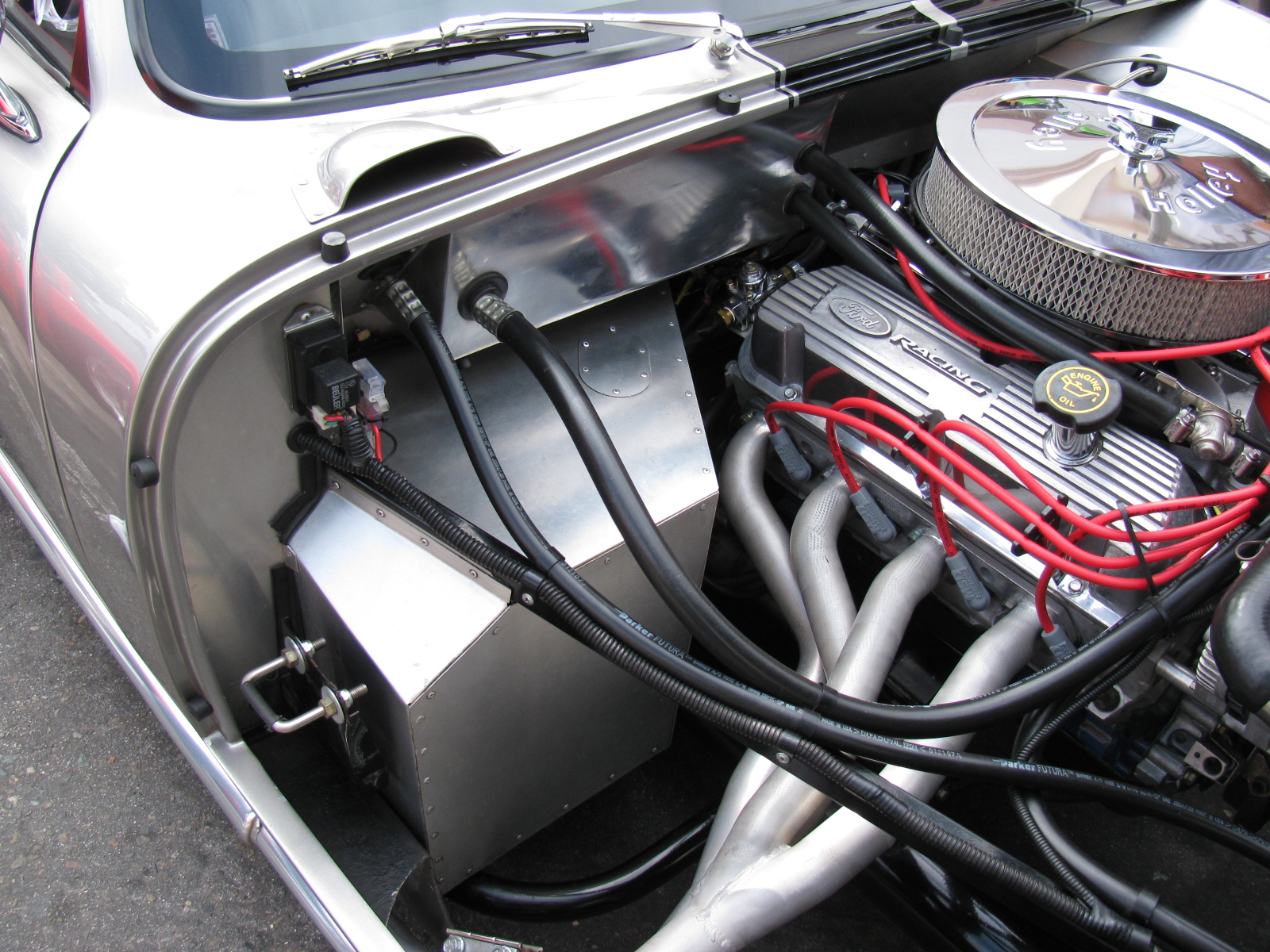
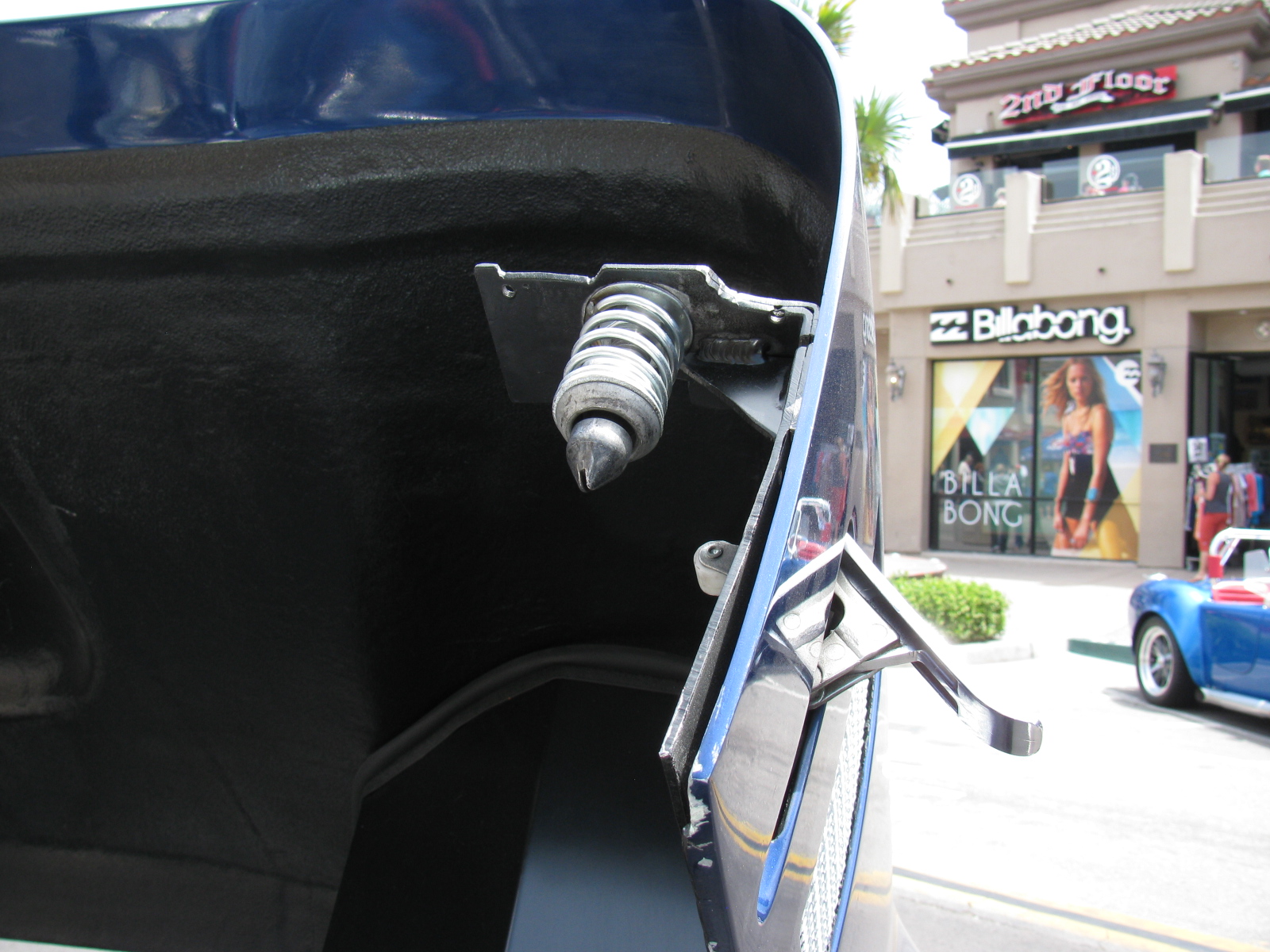
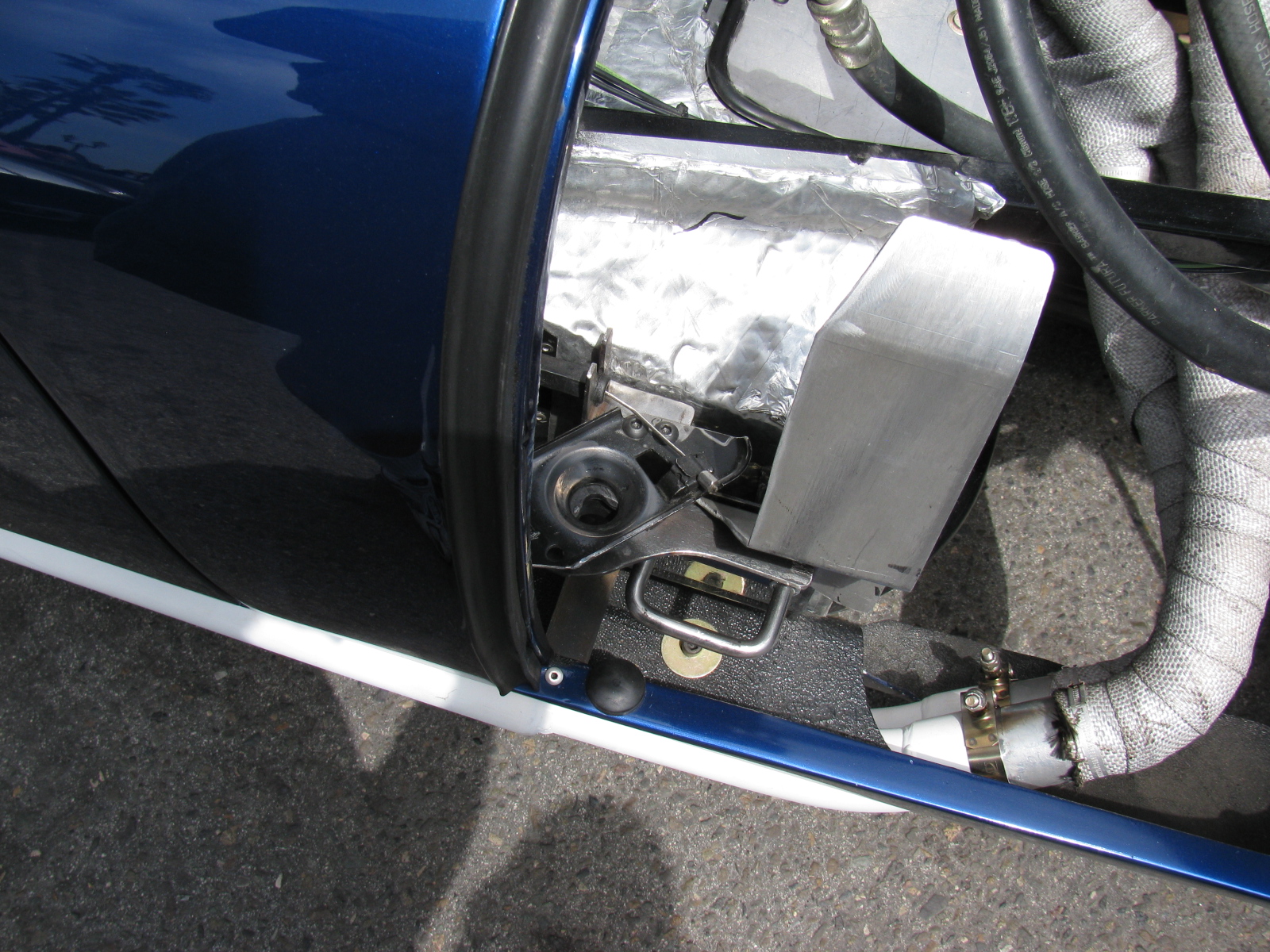
My mission at this year’s event: To gather more information on the E-brake cable routing, look at paint color combinations and get some more ideas for dashboard layouts.
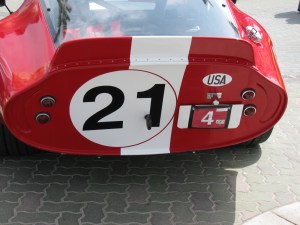
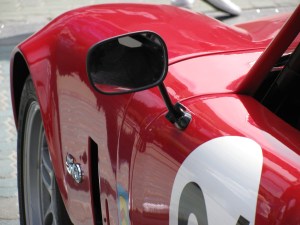
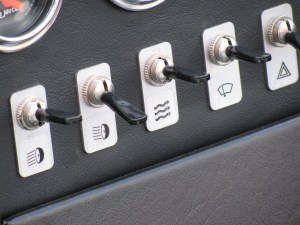
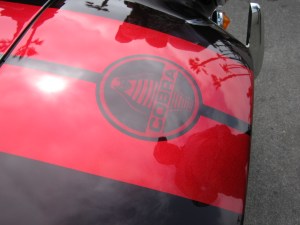
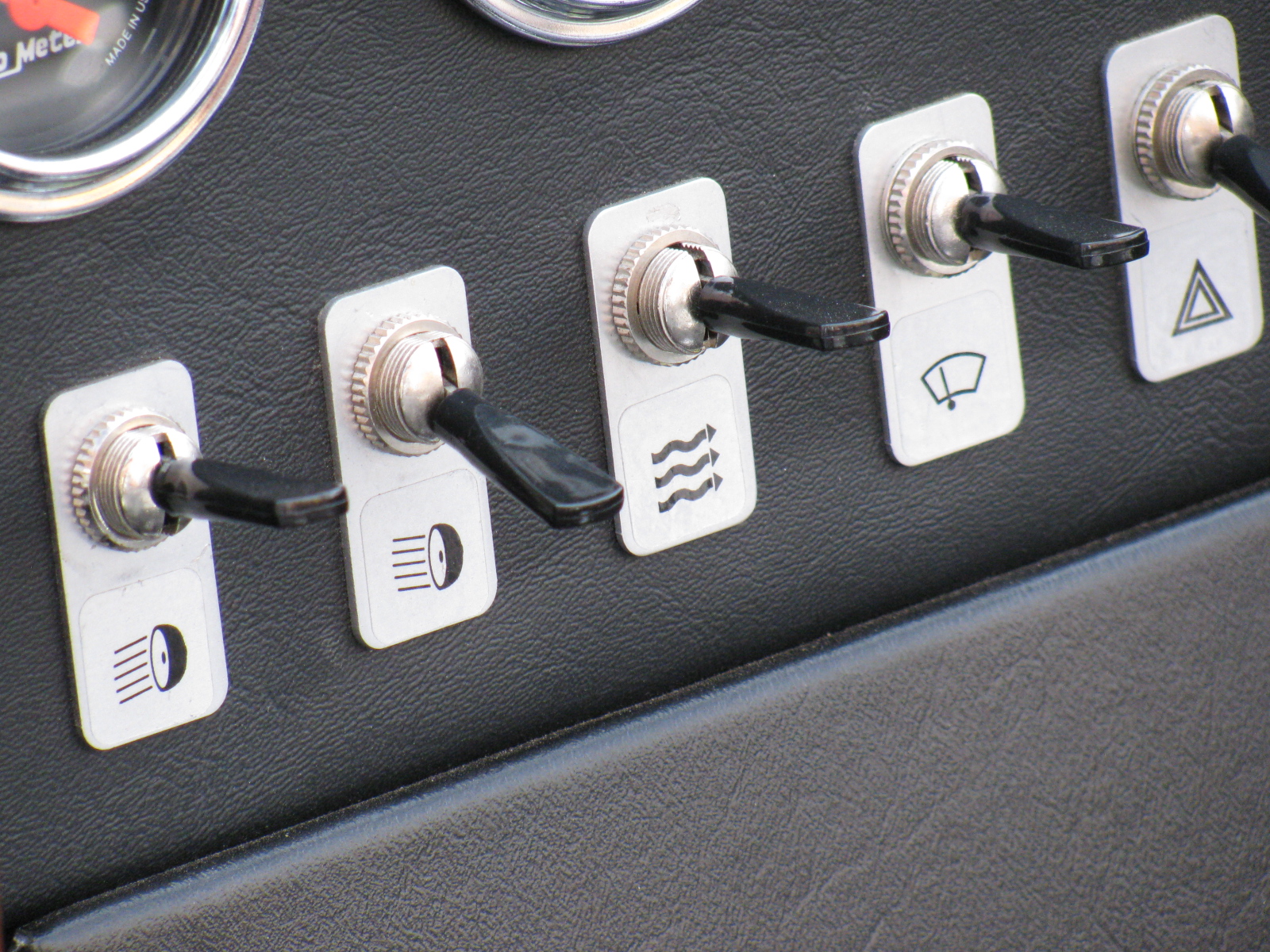
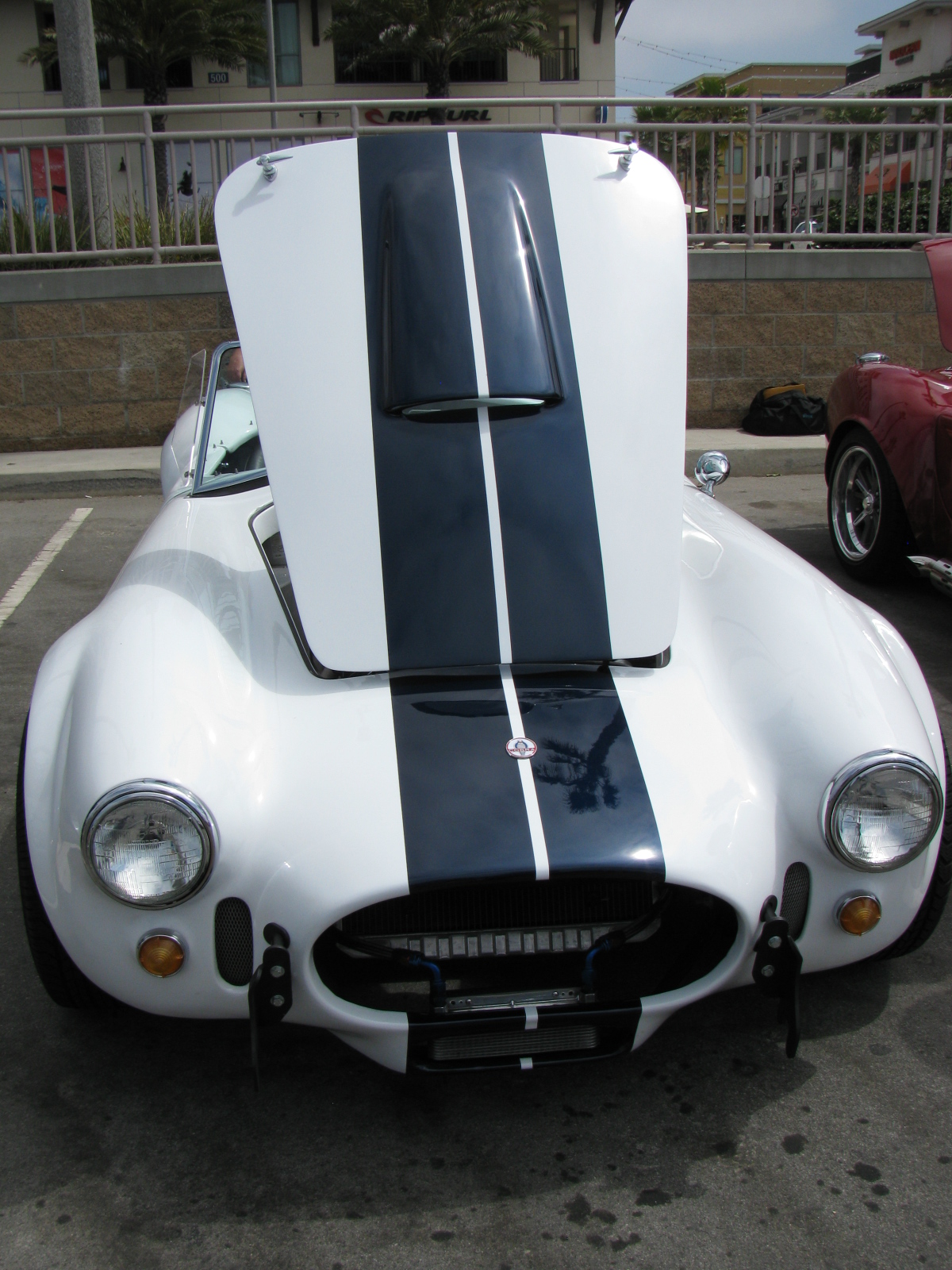
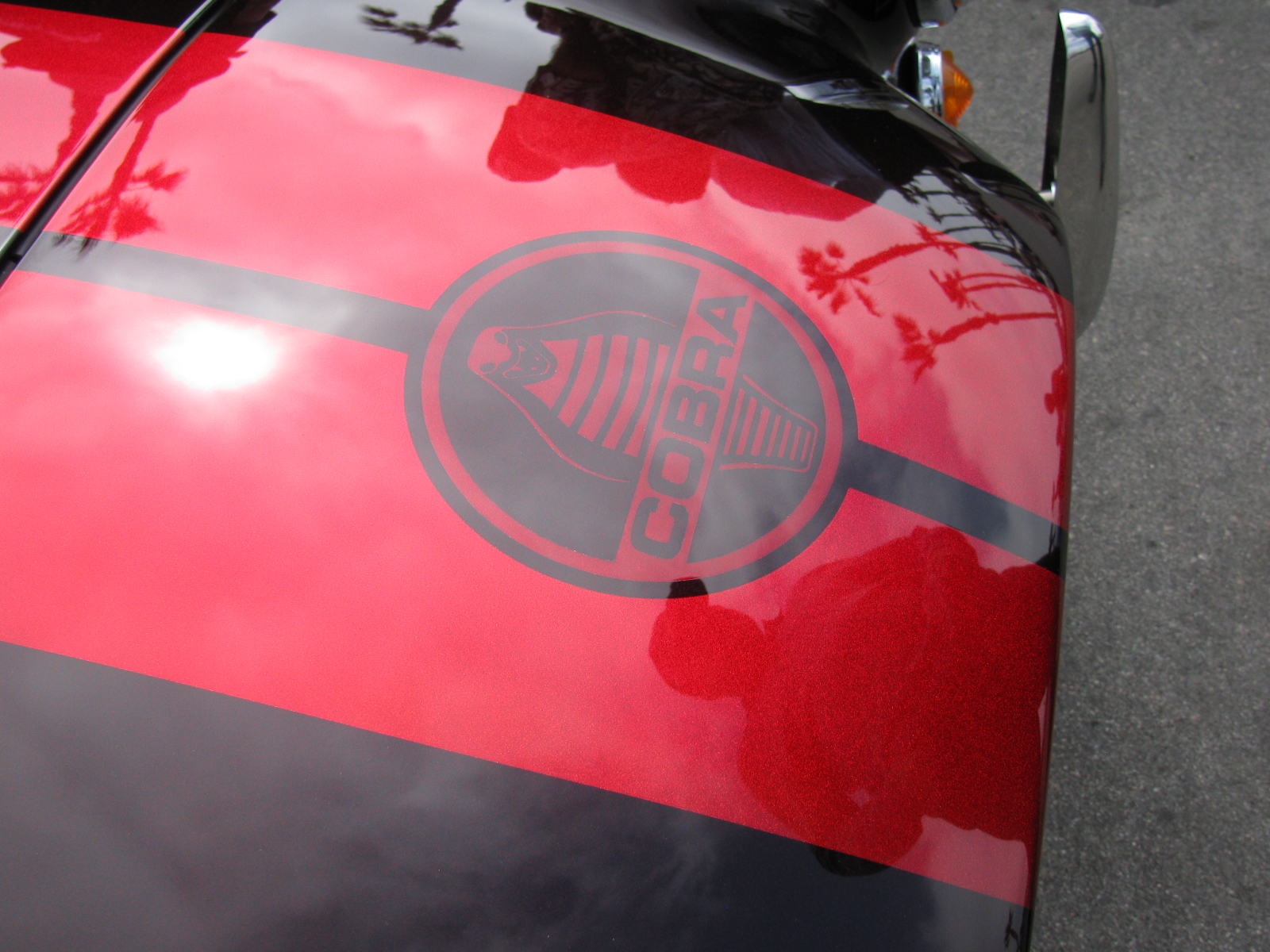
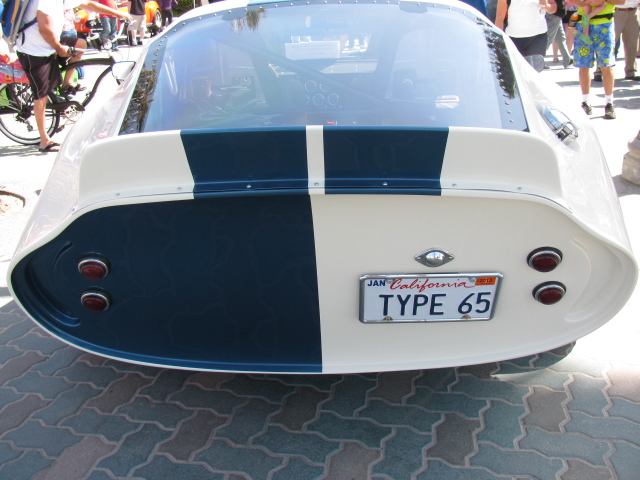
I had always planned on a white body/black or blue stripe Coupe, but after seeing these other paint jobs, I may change my mind. LED headlamps, cool-looking switch name plates, BRE side mirrors for the Coupe, honeycomb (hexagonal hole) screen for the side vents and other ideas are shown in these photos.
Thanks to everyone displaying and explaining and answering my questions about their cars today, and it was great to meet the Southern California – and other area – builders in person at this event.
Here are some random images from today . . .
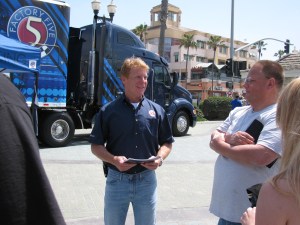

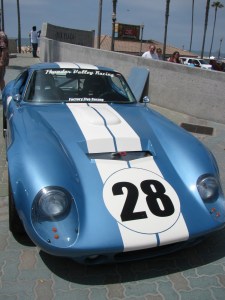
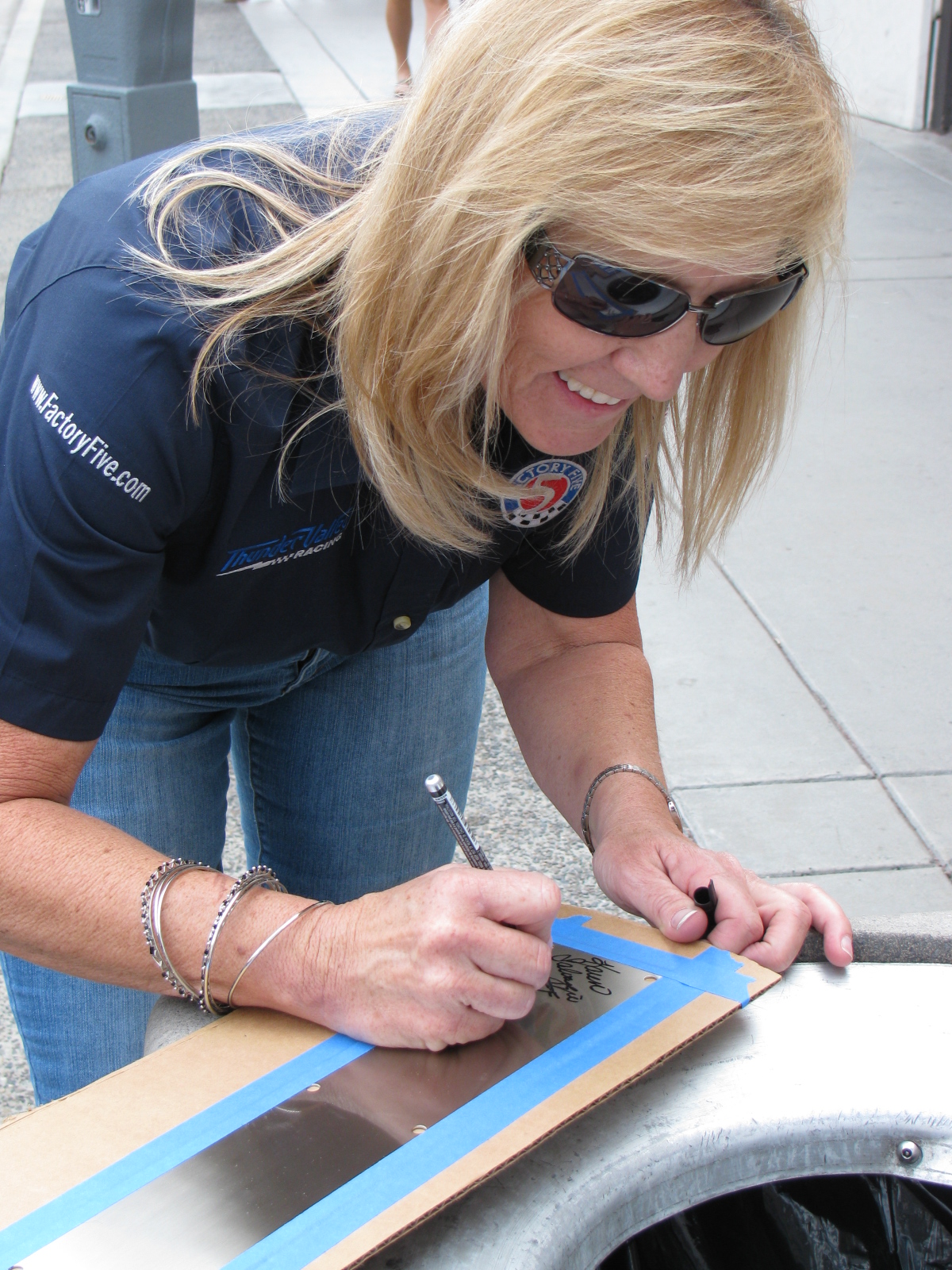
Above – Dave Smith, Factory Five Racing president, telling another great car story. . . Karen Salvaggio, Thunder Valley Racing Owner (and driver of the Type 65 Coupe number 28), signing my “signature plate” that will be mounted on my Type 65 Coupe dashboard – this will fill that big blank spot nicely. Take a look at Karen’s website and her blog posts for more informaton on her team and the cars they race. www.thundervalleyracing.com and http://thefactoryfiveforum.com/entry.php?346-Coupe-Challenge-Building-a-Legend






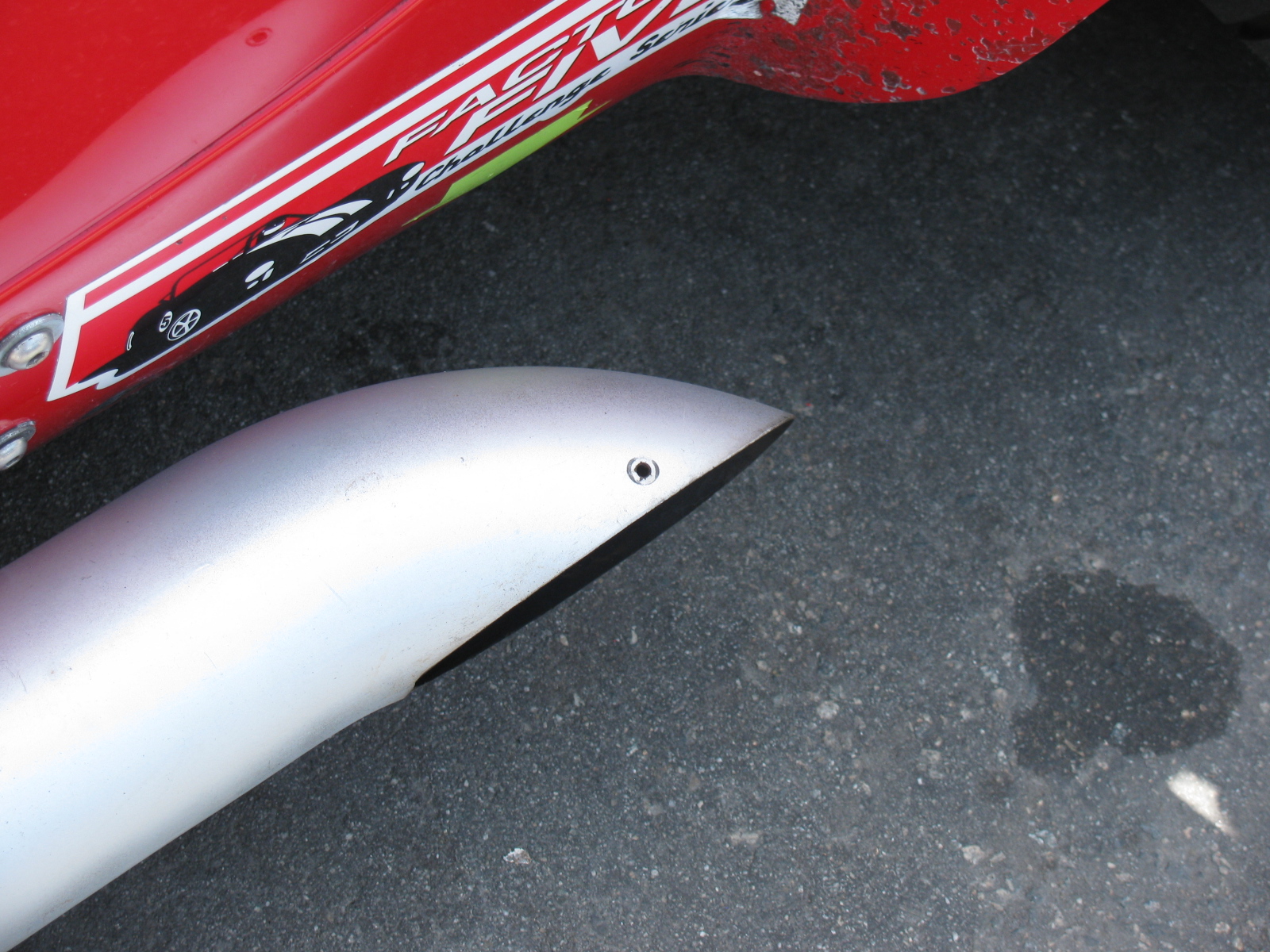
Anyone know what this hole is for on the Roadster exhaust?


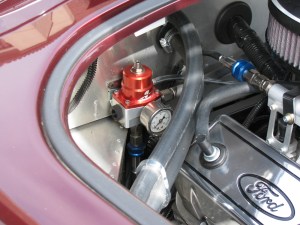


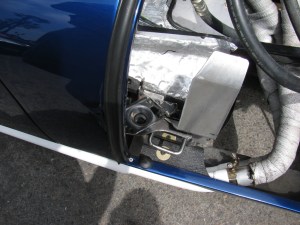


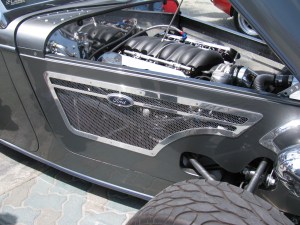
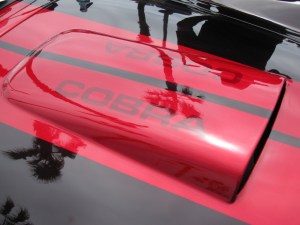
6TH ANNUAL FACTORY FIVE HUNTINGTON BEACH CRUISE-IN click here
Here’s a short video of last year’s Moment of Thunder – click here
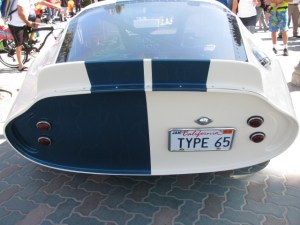
Some images from last year. . . .


. . . and a BBQ Dessert Experiment
Work on the passenger and driver side foot boxes continues on the Factory Five Racing Type 65 Coupe.
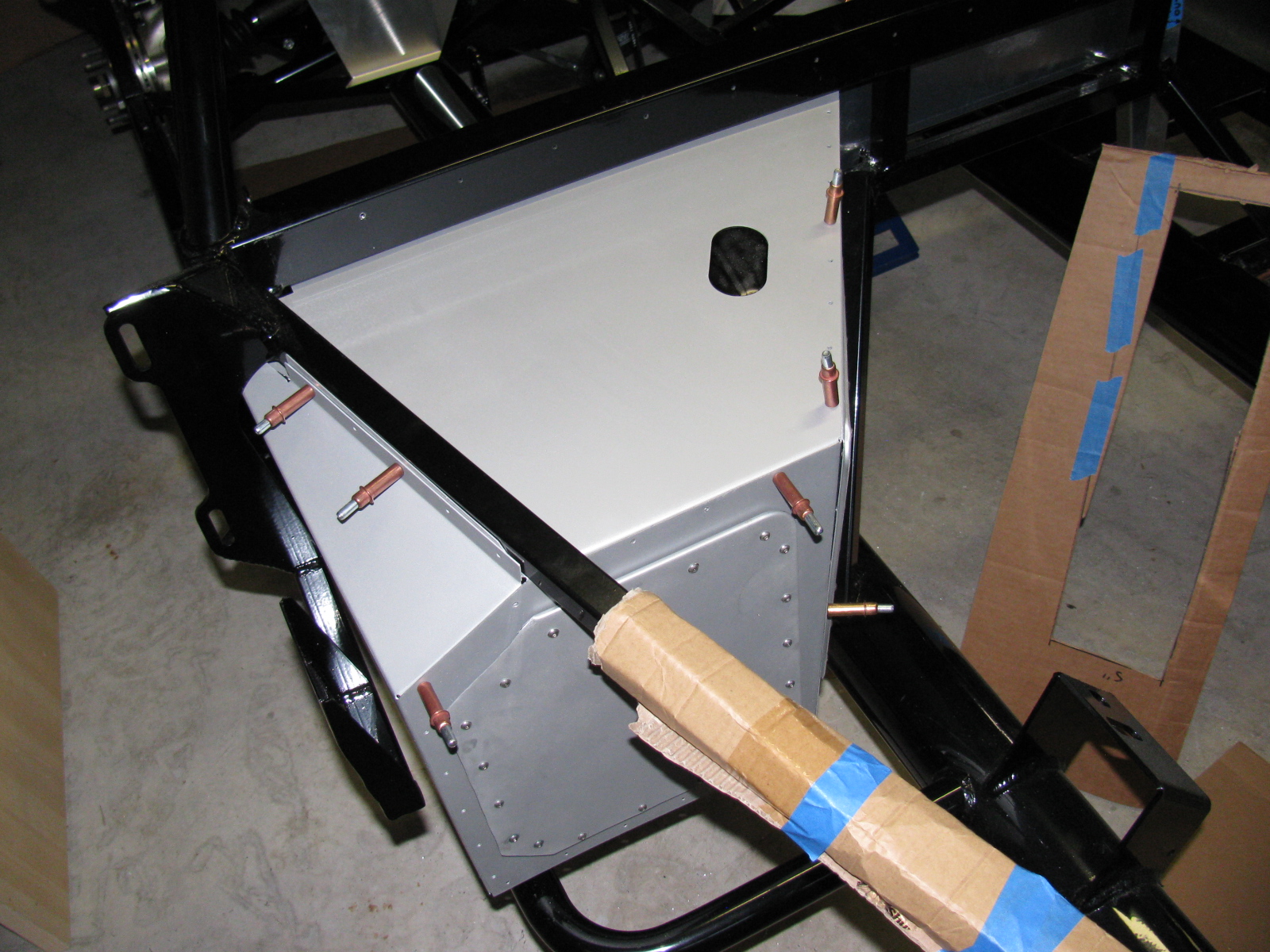
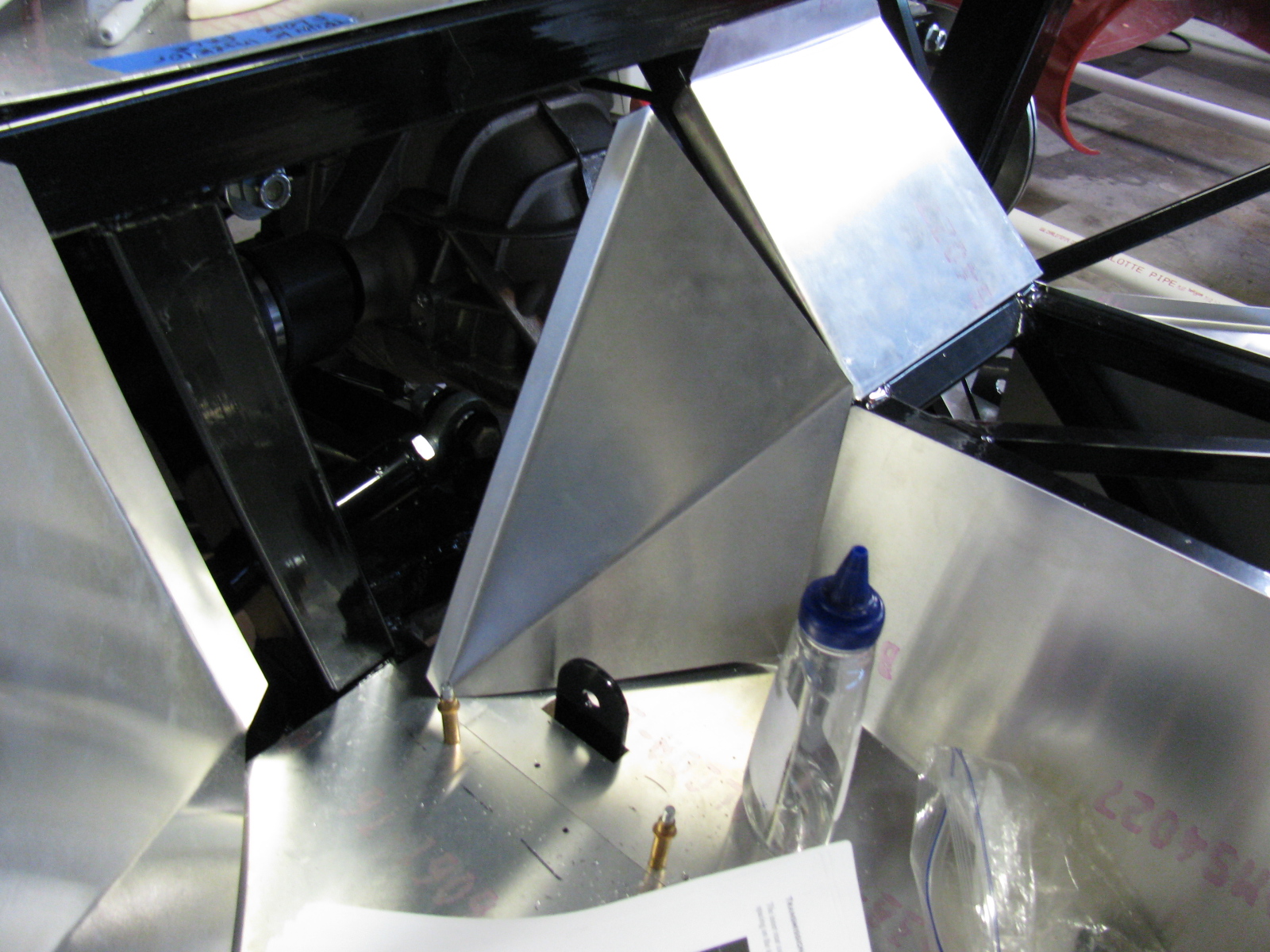
I painted the engine side of the panels with silver BBQ paint, and left the interior side un-painted, since all panels will be covered with Cool-It heat and sound barrier. Panels that face the exterior of the car – like the foot box floors and the trunk area, will be painted with RustOleum truck bed liner. It is a textured black finish that will also help reduce sound and noise. Here are some images. ..
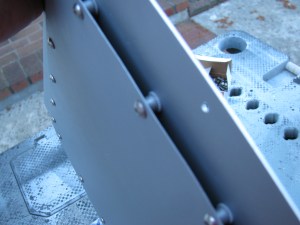

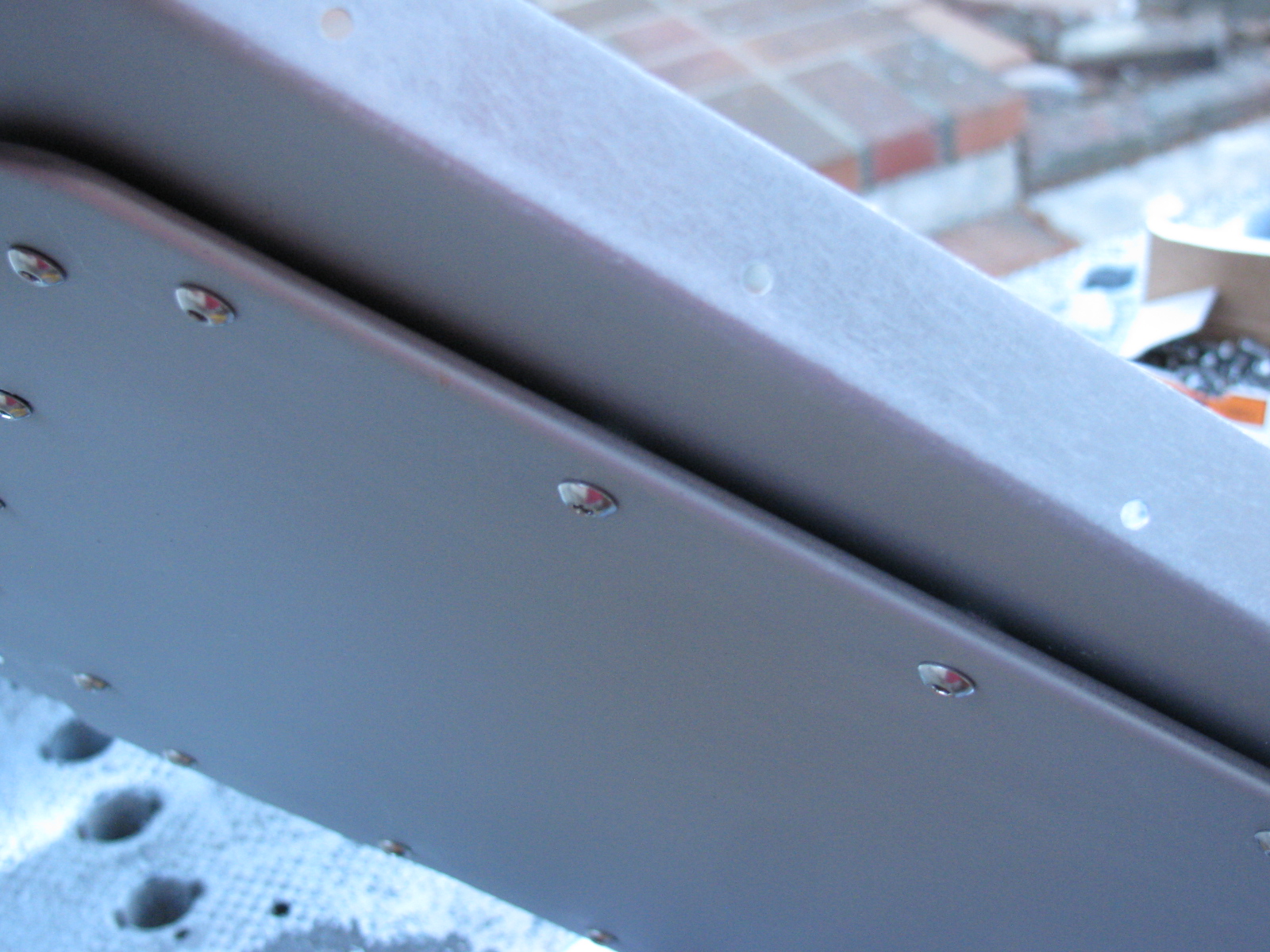
On the left is a detail of one of the cookie sheet heat shields, fastened to the firewall with 8-32 riv-nuts. The spacing is about one-quarter-inch. On the right is a view of the top of the heat shield, showing the nicely rolled edge.

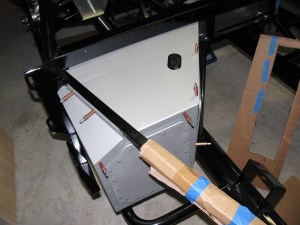
Passenger side foot box appears on the left of the photo above. The photo on the right shows a closer look at the passenger foot box.
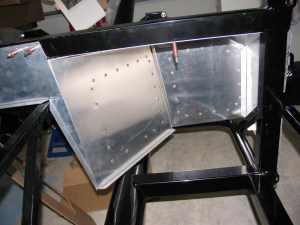
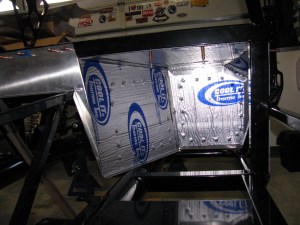
Photos above: Passenger foot box, before and after installing the Cool-It mats.
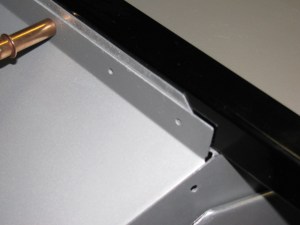

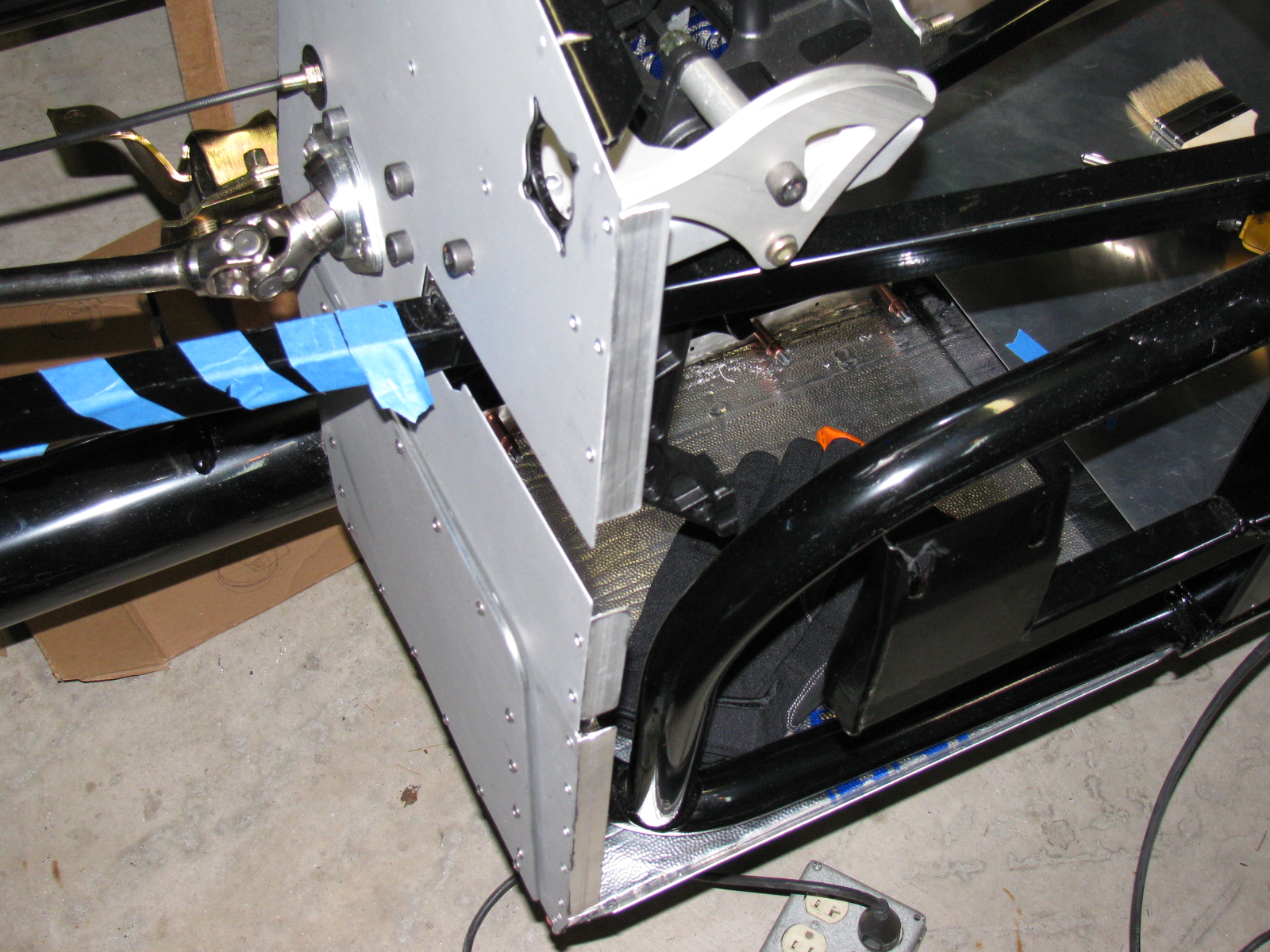
Above left: The top seam on the passenger foot box – this will be either trimmed or a strip of aluminum will be used to cover the mis-match. On the right, I added srtips of aluminum angle to the outer wall of the driver side foor box. This should make the outer wall easier to install.
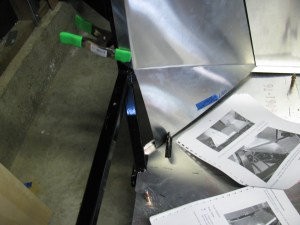
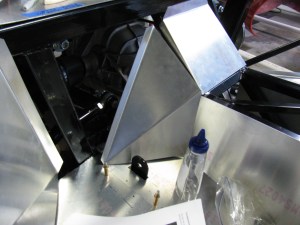
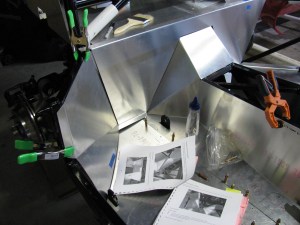
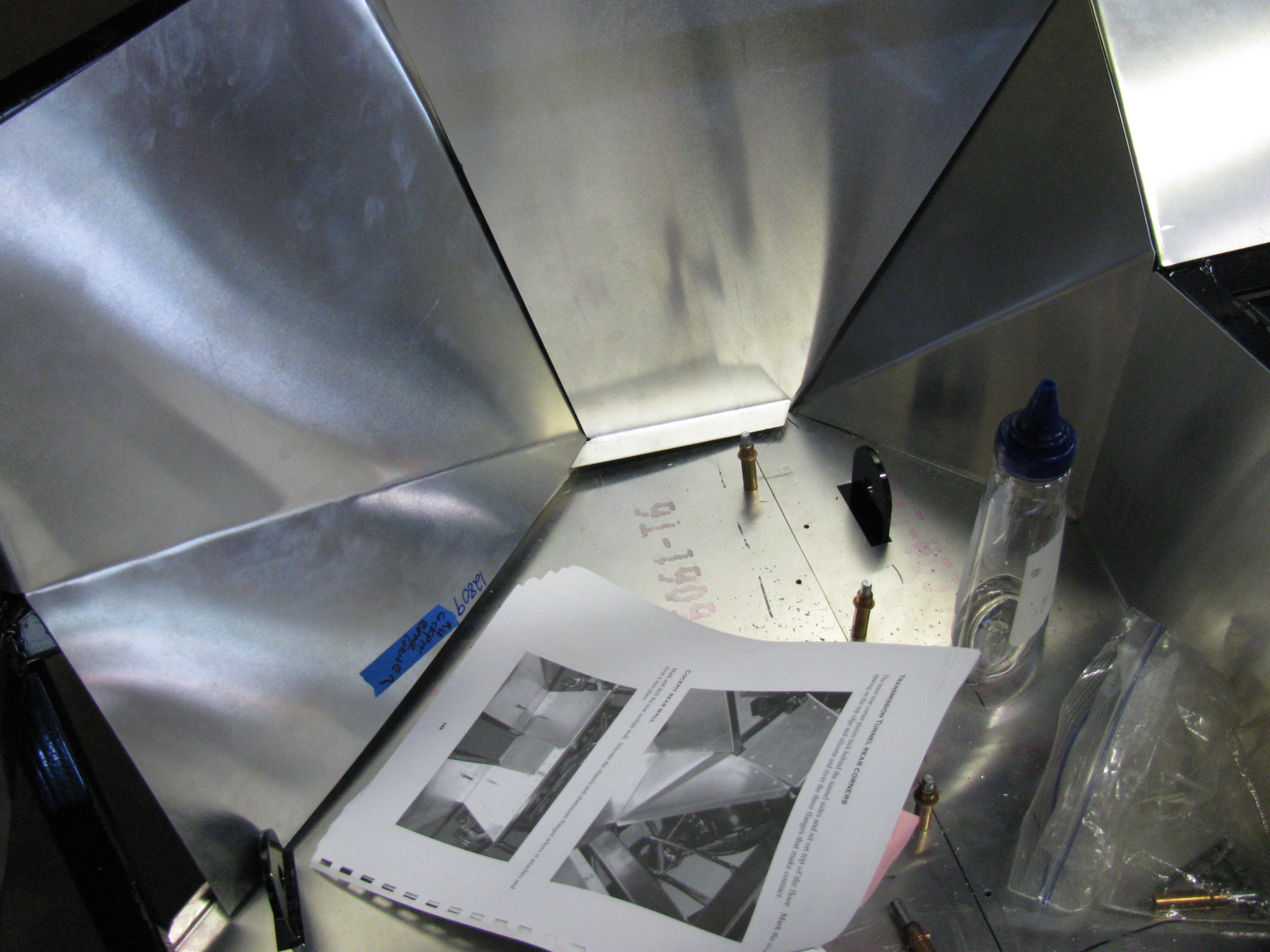
The next series of photos show how the interior panels go into place. The un-finished aluminum is difficult to photograph, I wish the manual would include an exploded view of the panels and how they fit into place. This is a complex jigsaw puzzle, and many of the parts must be flexed, trimmed and pulled into place. Clecos really help. This is one area where the manual offers good advice – the sections fit best when you follow the order outlined in the manual. Although many of the panels are marked with a part number, they do not indicate the orientation of the panel.
The foot box floors were very difficult to fit into place, so I sliced them into sections. If you look carefully you can see the saw kerfs (seams) on the floor panels. I chose the cuts carefully, in order to make sure I would have something solid to rivet to. In the areas without any supporting chassis tubes, I will install strips of aluminum bar stock.
The panels will be permanently attached later with silicone adhesive and rivets – at this stage, the panels are being “dry-fitted” with clecos to make sure everything is properly in place.



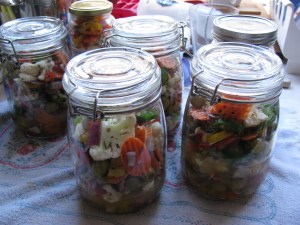
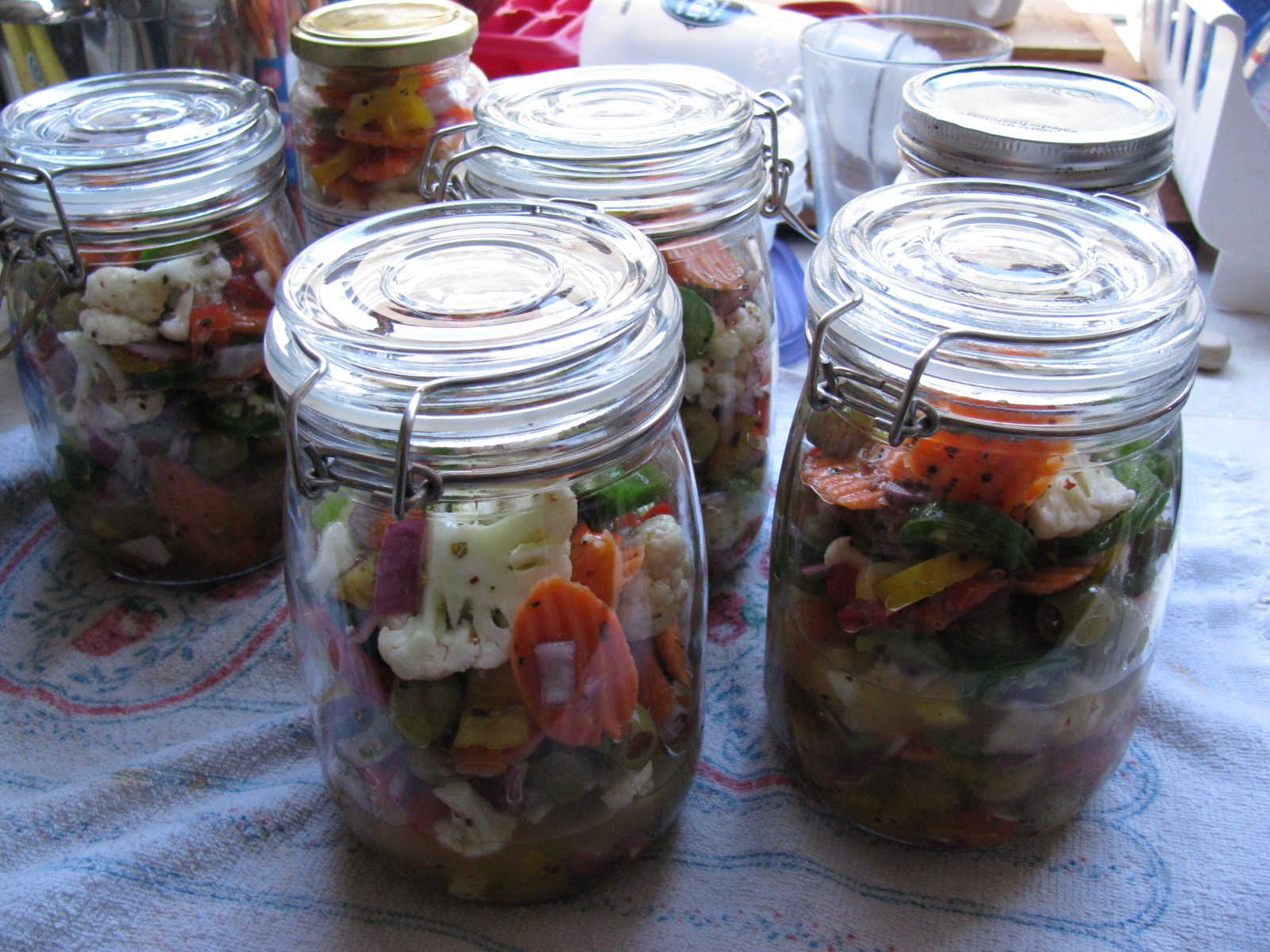
Somewhere during this building session, I made some time to pack my hot giardiniera into jars, and made a few deliveries. . .
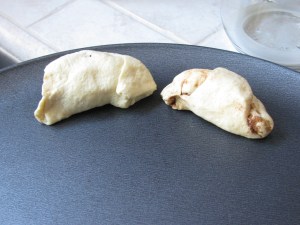
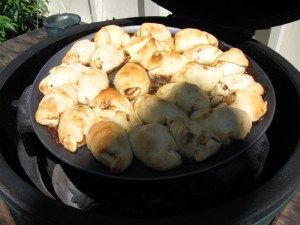
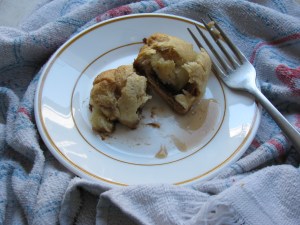
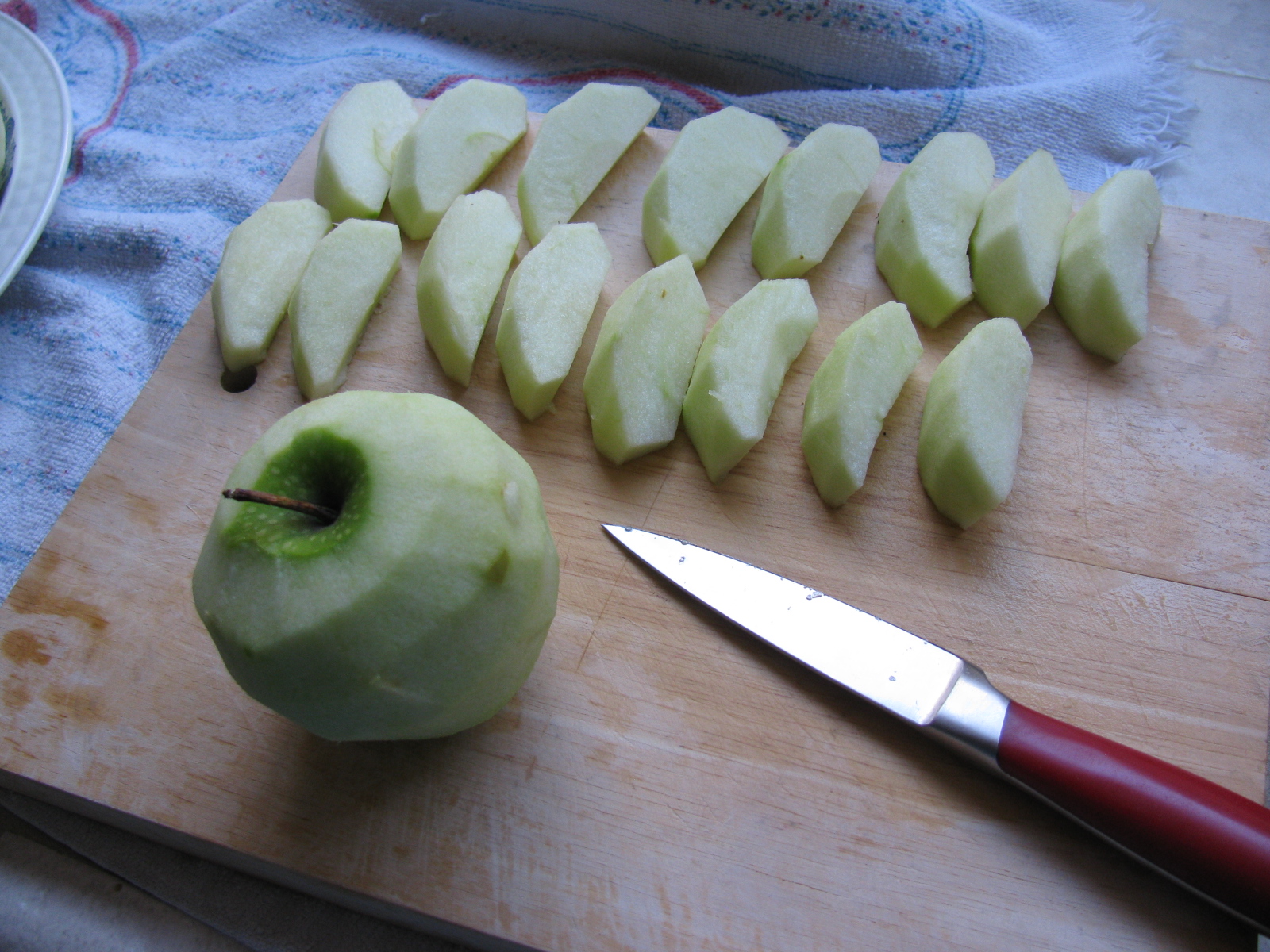
I also managed to do some BBQ experiments. This time I baked some apple turn-overs in the Big Green Egg. They turned out OK, but could be better. They are like just-right bites of apple pie. Here are some pictures. . .



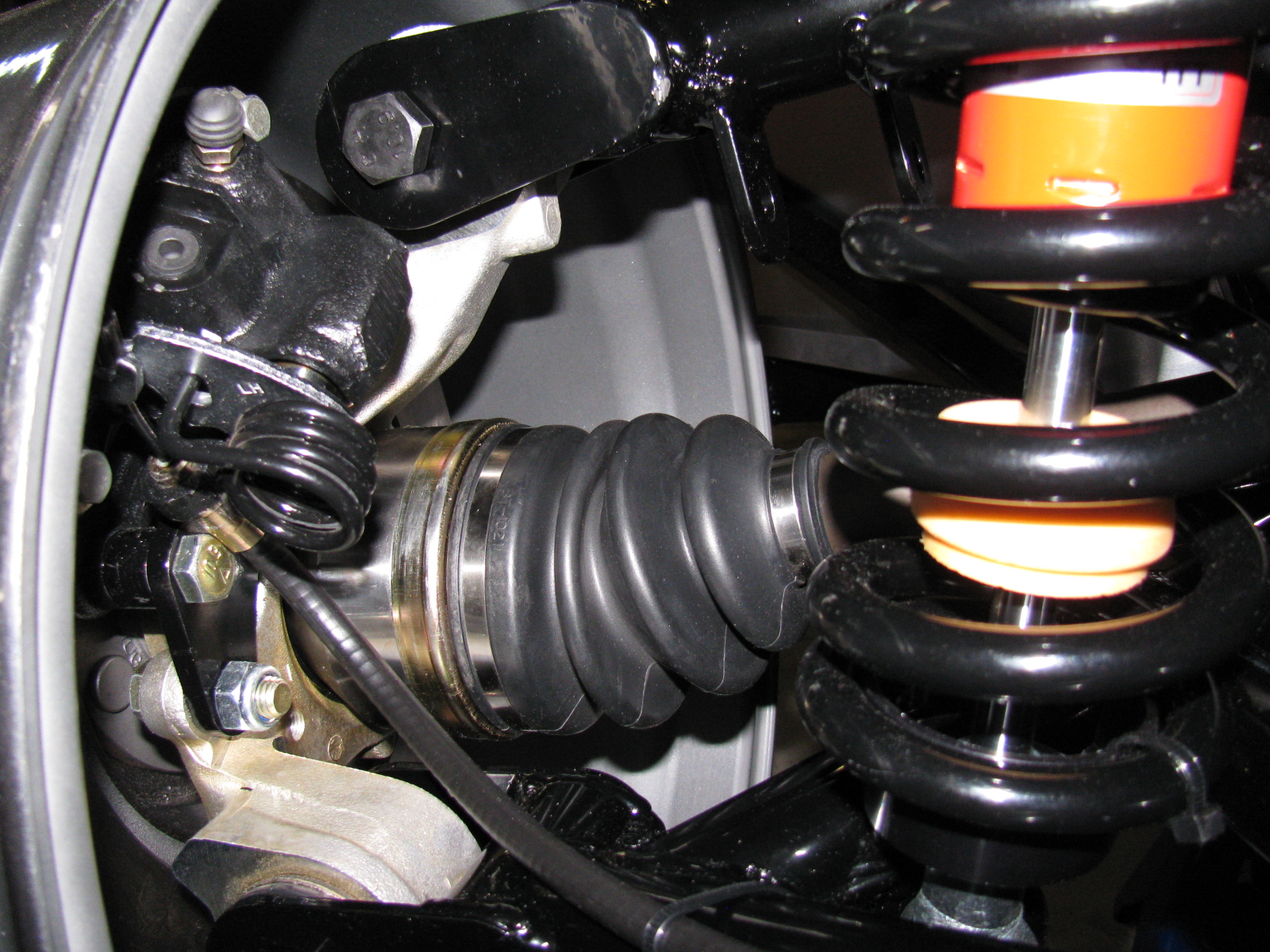
I forgot to add notes and images from the IRS (standard width) brake installation. Here are some images, plus a link to a YouTube video…


As you can see in the picture above left, an open end wrench can go onto the caliper mounting bolt. This was a button head Allen screw in the past. The emergency brake cable seems very tight and has a sharp bend, but this seems to work OK.


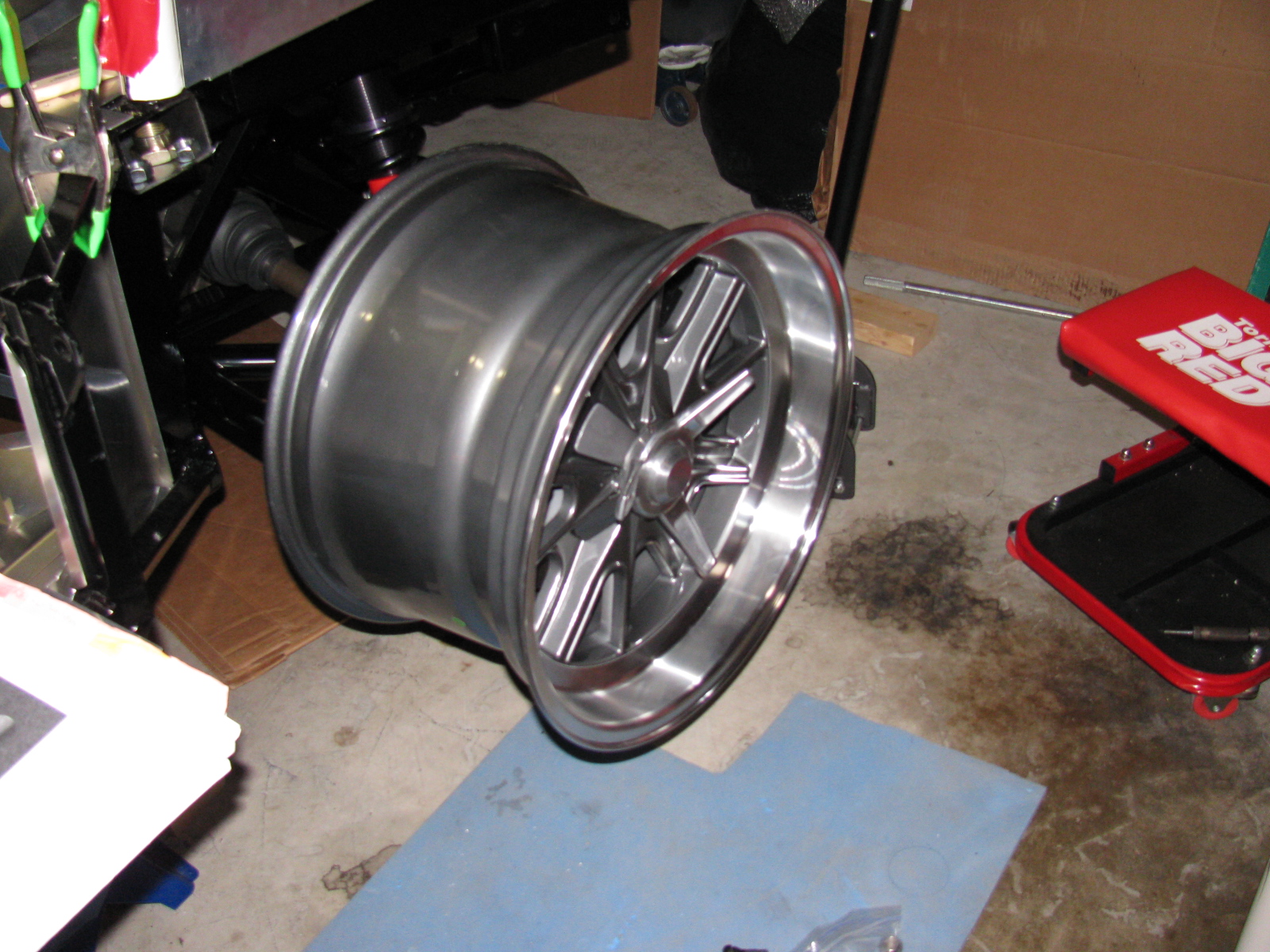
The vintage Halibrand replica wheels fit nicely over the axle-hub-brake assembly, but I don’t have tires yet.
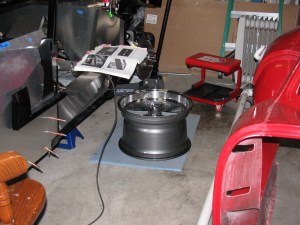
The rear wheels are 17-inches by 10.5-inches, and the tires will be 275 / 40ZR17, probably BF Goodrich g-Force Sport Comp 2, but not sure yet.
A Silent Movie: Rear Brake Installation
Oh – almost forgot. Here is a silent movie about the rear brake installation:
http://www.youtube.com/watch?v=bVcX8-Nnqfo
It’s been a few weeks since I posted an update. Some people have been asking for some news, so here we go. . .
I am preparing the chassis so I can install the engine and transmission. This means that I have to finish the firewall, which means prepping and painting the foot boxes and routing and mounting the brake and fuel lines.
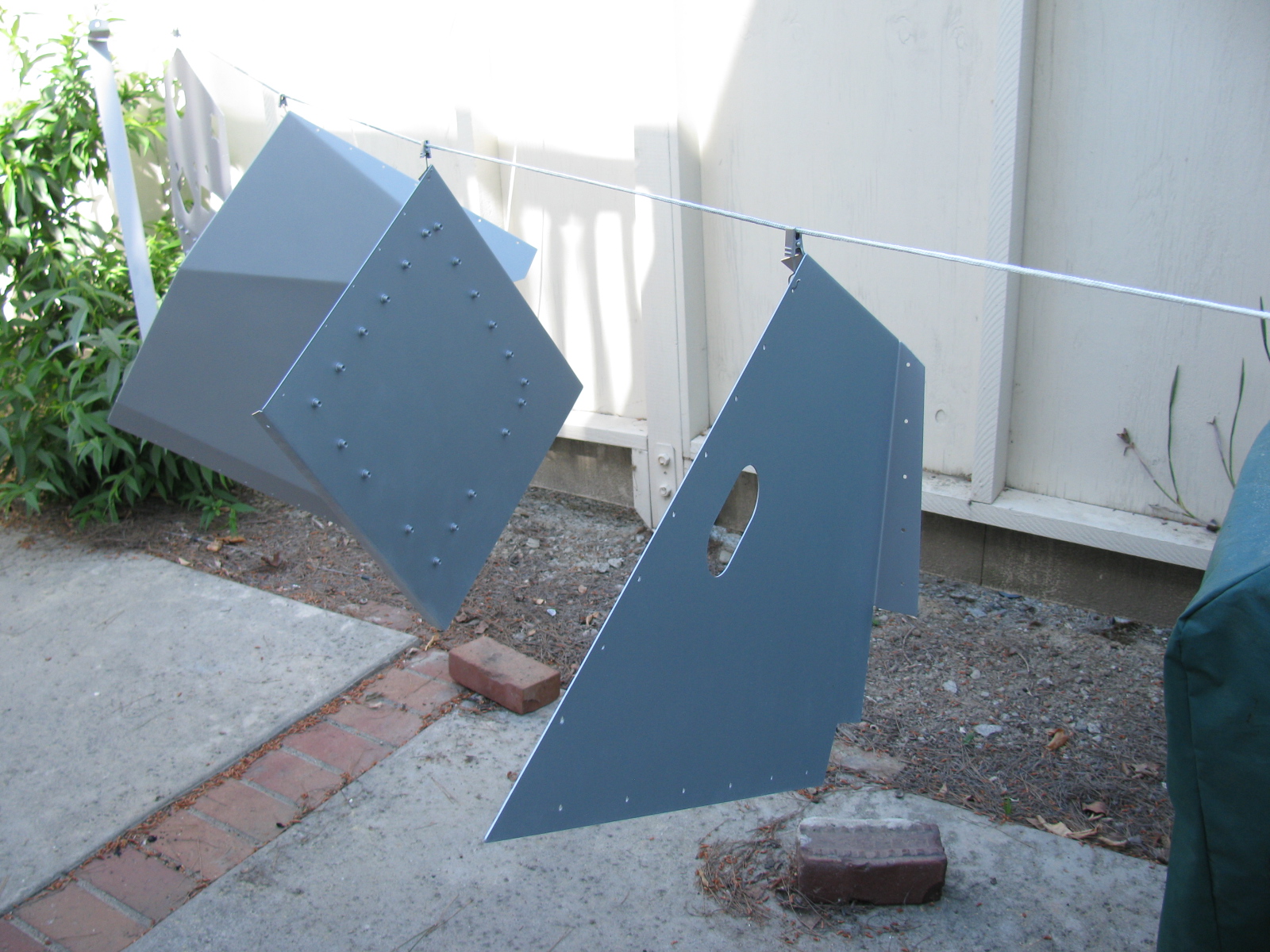
I decided to finish the engine bay with silver Rust-Oleum high temperature BBQ paint. This is a change from my thoughts on powder coating and appliance epoxy. . . The appliance epoxy has an upper temperature limit of 200 degrees F, and I think engine bay heat is higher than an oven. The BBQ paint is good for 1200 degrees F or something like that. Depending on how the engine bay looks, I may strip everything off and re-finish with powder coat later. But for now, the silver BBQ paint looks OK. The nice weather last week allowed me to do some rattle-can spraying outside.
I permanently mounted my first aluminum panel – the driver’s side foot box front. I am using Permatex Ultra Black number 2105 silicone adhesive. This is what Kirkham Motors uses for their builds, so I will use what they use. It can be used as an adhesive as well as a gasket, so this extends its usefulness around the shop.
References: Kirkham online build and Permatex Ultra Black goop

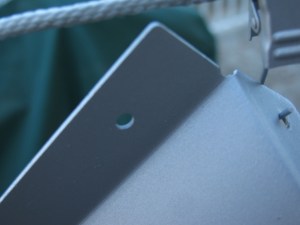
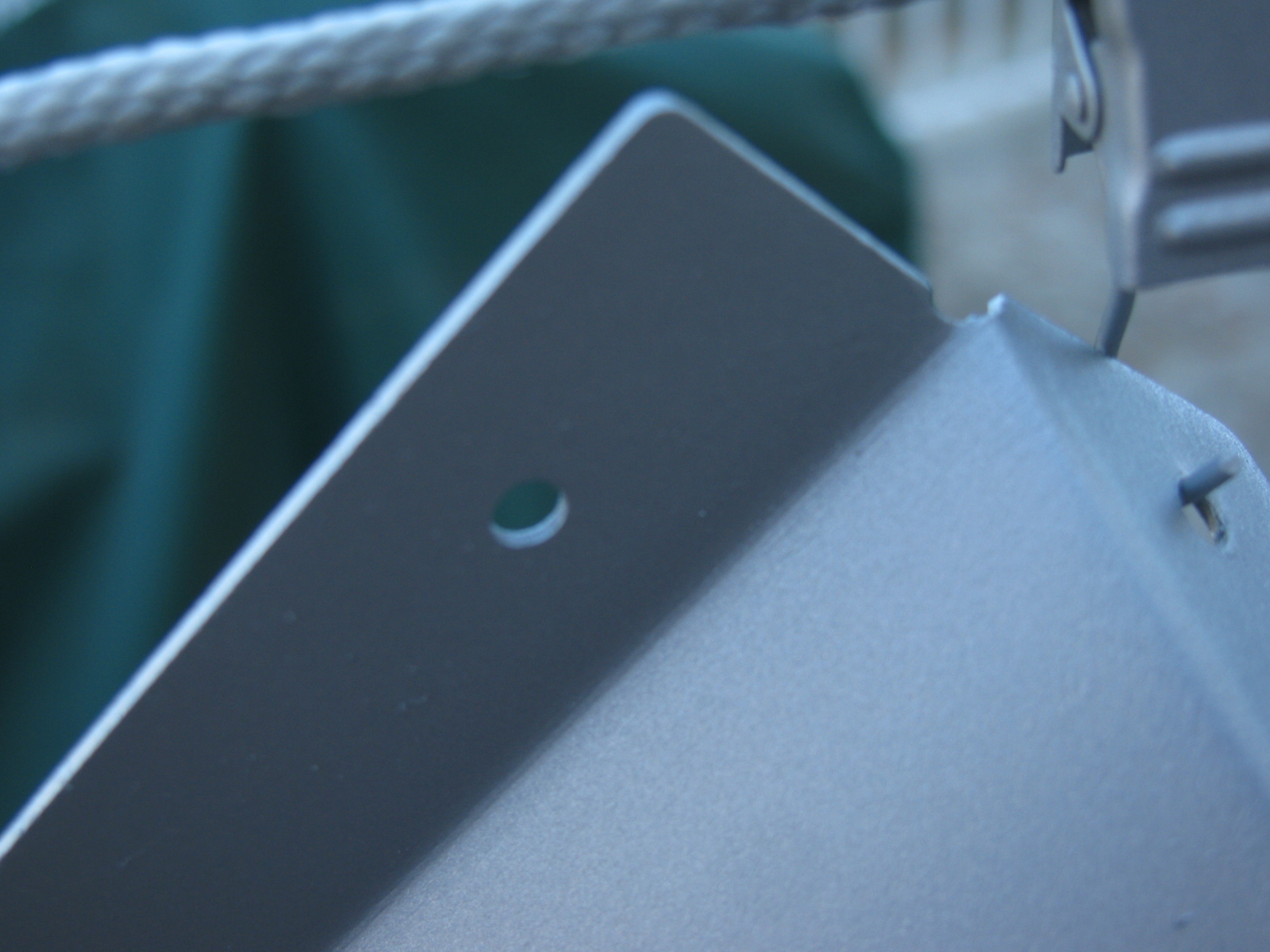
Above right is a close-up of the BBQ paint finish on one of the pedal box panels. Looks OK. There is a slight texture to the finish. The color is actually silver, the blue-ish tint is probably from sunlight diffracting from somewhere.

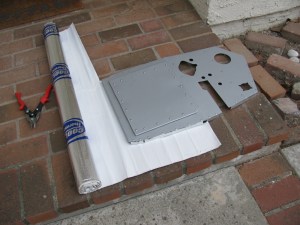
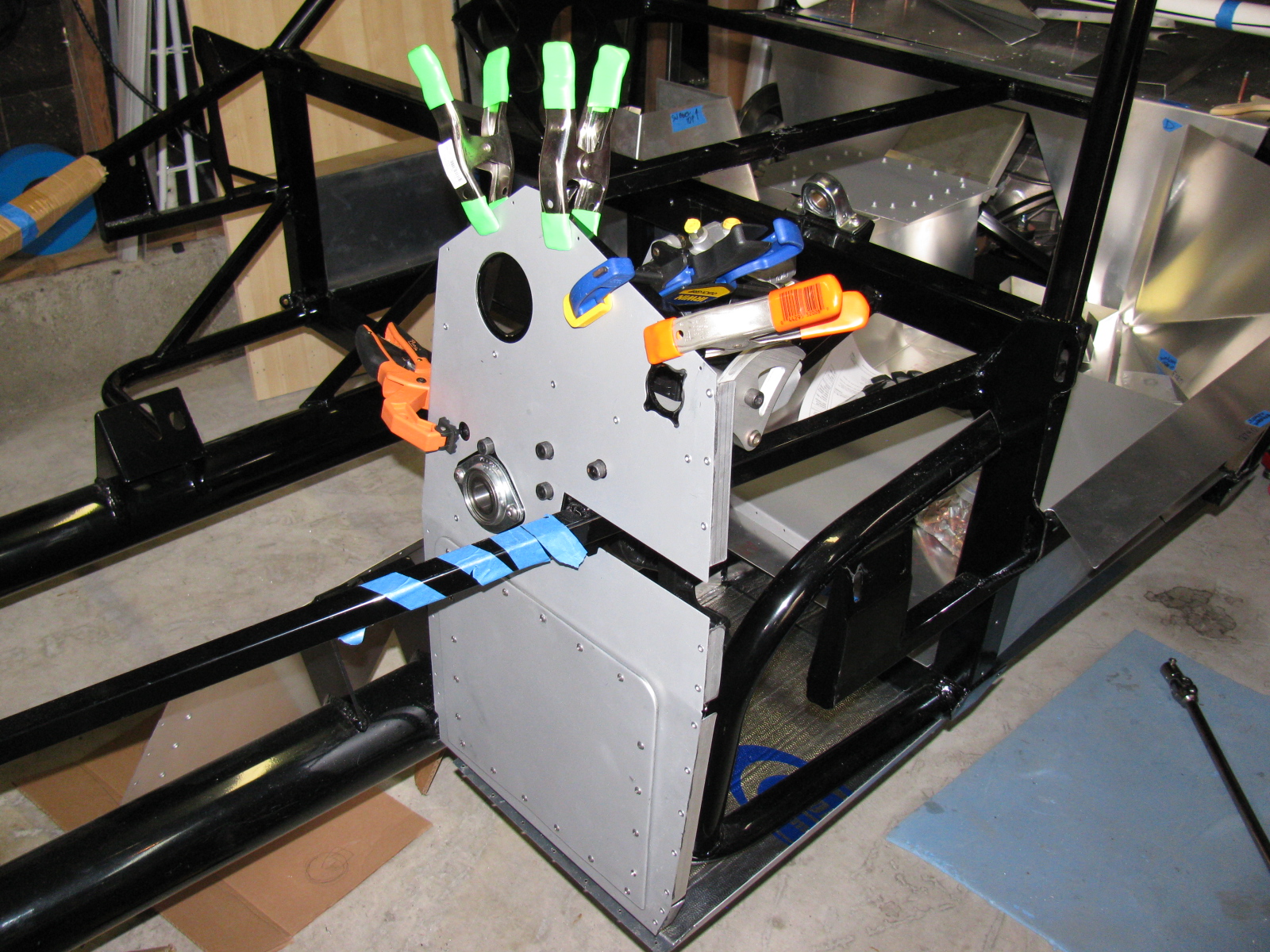
Above left, a “dry fit” of the driver side foot box front panel. You can see the cookie sheet heat shields in place. Above right, using the panel as a pattern to cut the insulation mat – just place the panel onto the backing side of the mat, press down and then cut with shears or a knife. Final trimming is done with a utility knife.
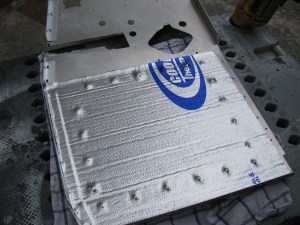
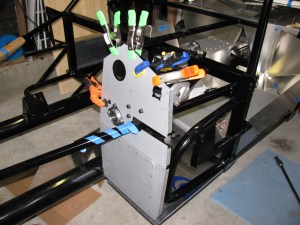
Cool-It heat and sound insulation is applied to the interior side of the foot box panel. The “bubbles” you see are from the riv-nuts and screws poking out from the other side. On the right, I wanted to make sure the adhesive stuck properly at the top of the panel, so I used some clamps to squeeze evenly. My good friend Norm Abram always says, “You can never have too many clamps.”
The Accelerator Cable and Pedal
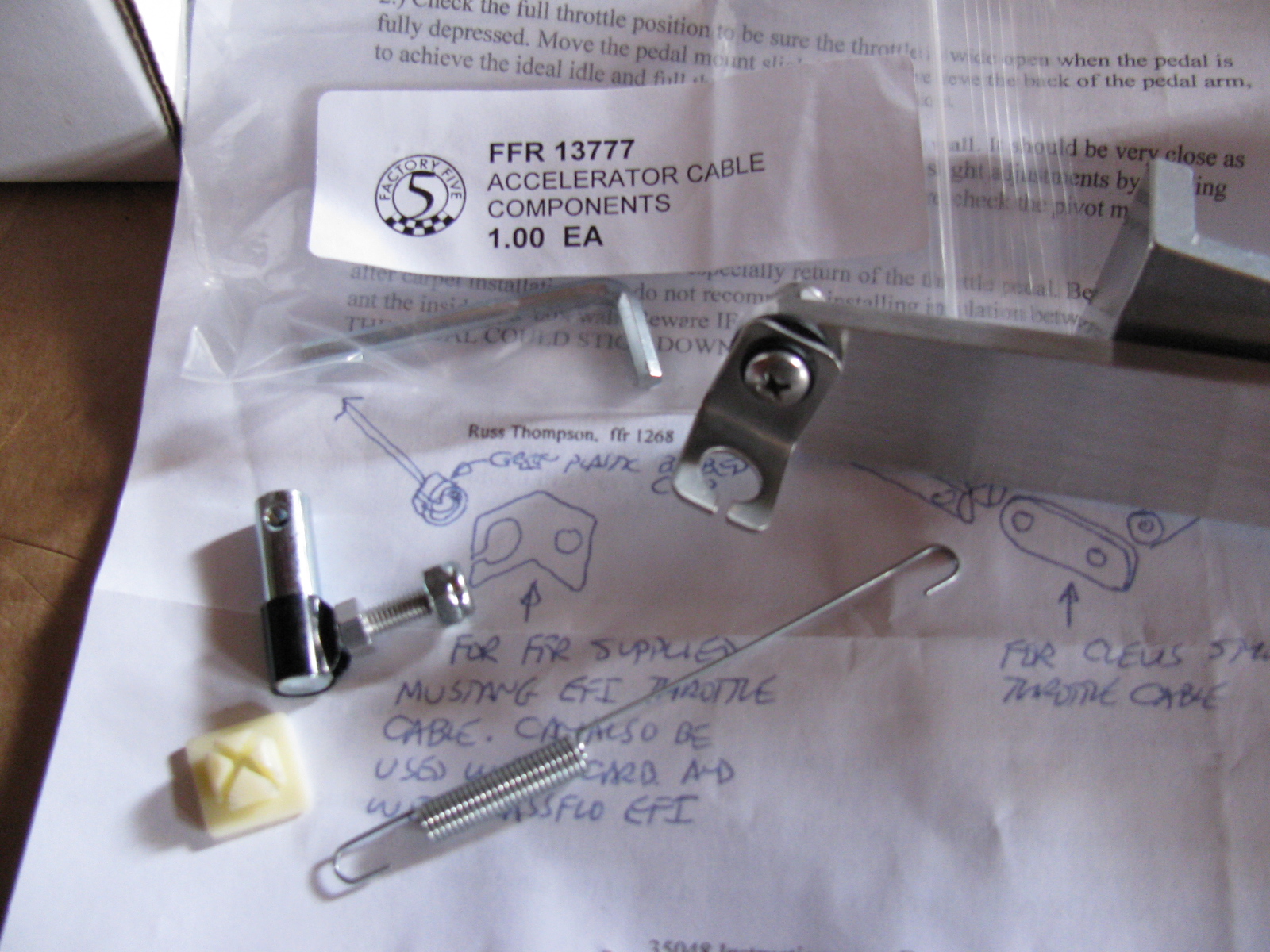
I mounted the accelerator cable as well as the Russ Thompson gas pedal, sold by Breeze Automotive. The instructions are different from what is being supplied by Factory Five Racing now. (I am getting used to this. . . )
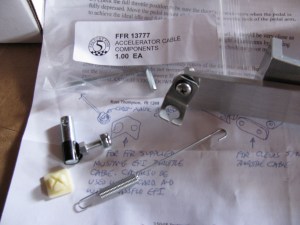
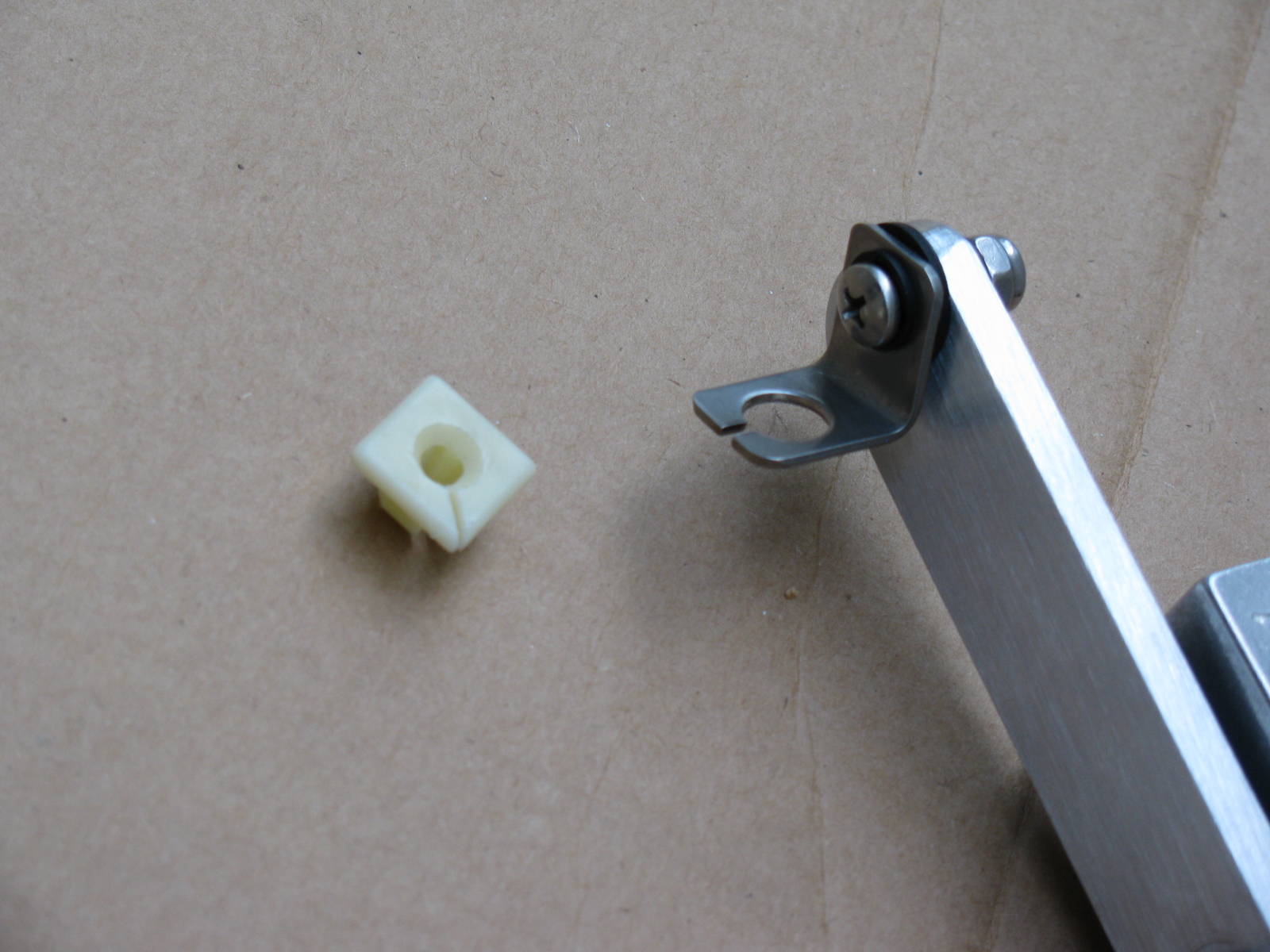
The picture above shows some of the gas pedal mounting parts that come with the Complete Kit. The Thompson / Breeze pedal instructions say something about a “green plastic barbed clip” at the end of the throttle cable. This green thing is no longer what comes with the kit. Instead, there is a little square “plug” that is too big to fit into the pedal mount.
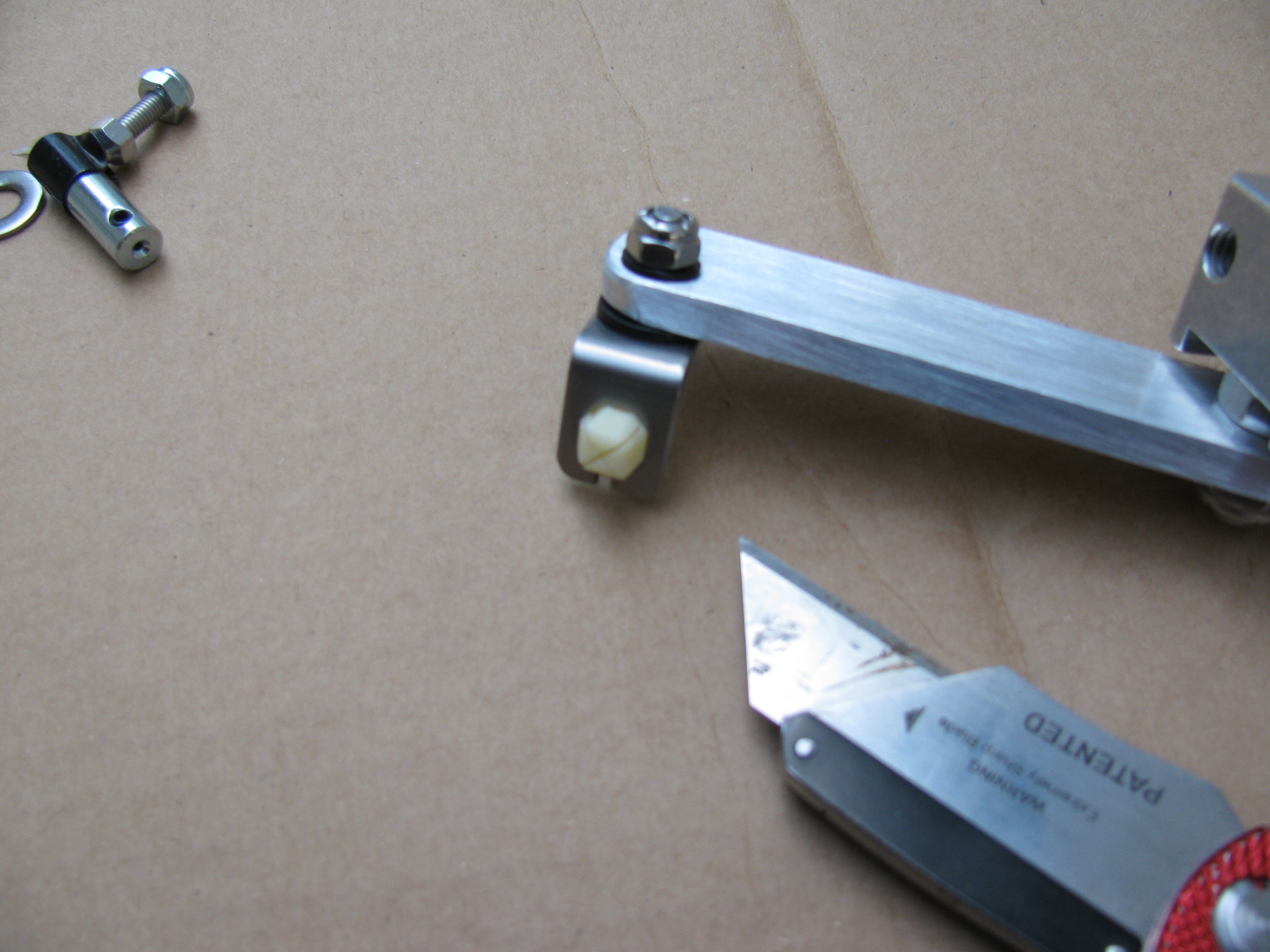
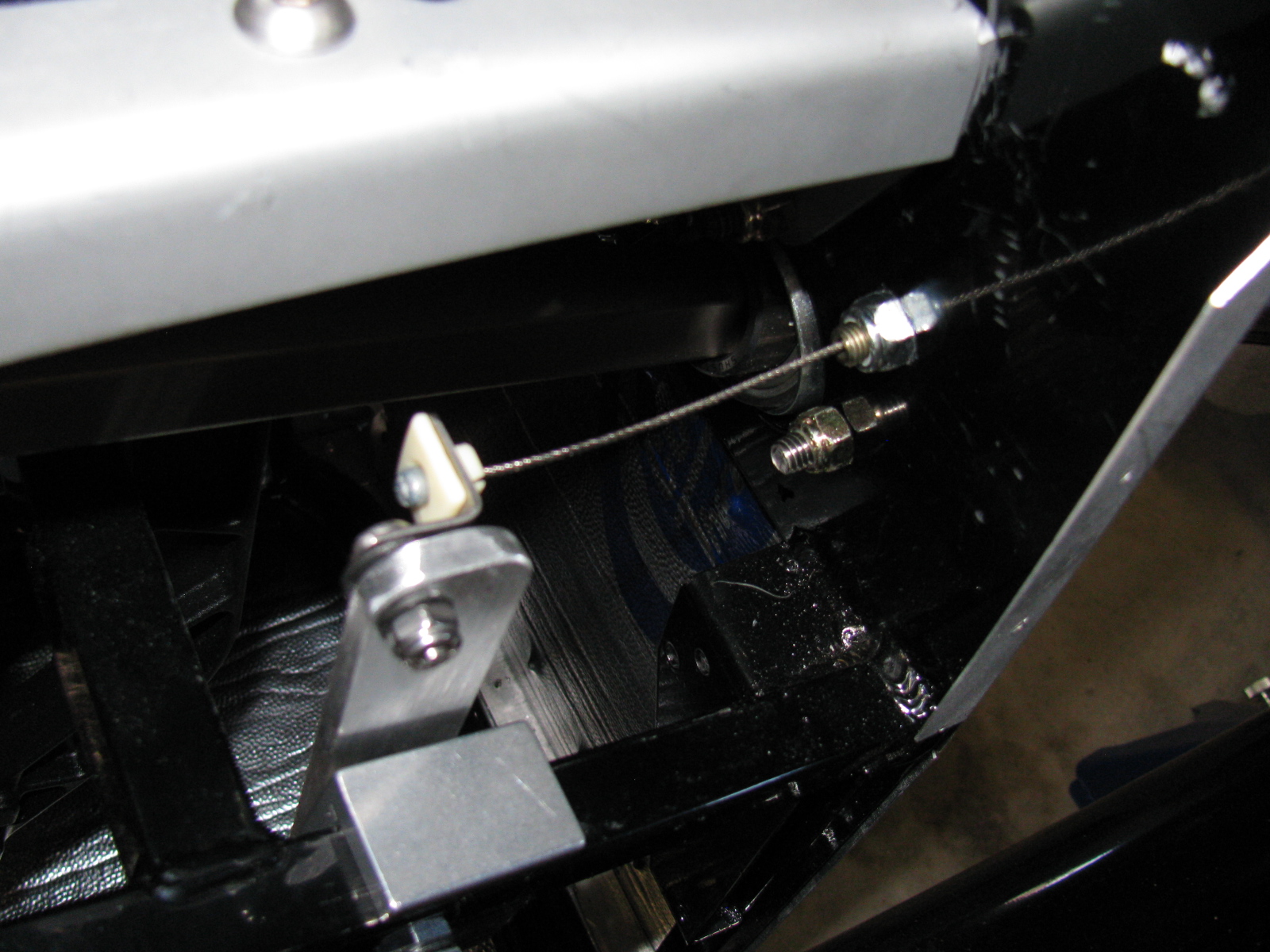
Rather than cutting off the ball-end at the throttle cable or drill a bigger hole in the mount, I decided to carefully cut some of the plastic from the center barb so it would fit snugly into the mounting hole – not much has to be shaved off, it is something like a sixteenth of an inch or so. Then I made a slit in the square plastic thing as shown so the cable could slip in with the ball intact.


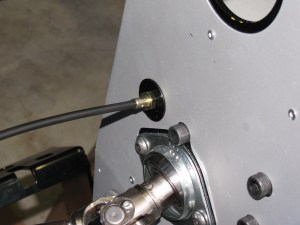
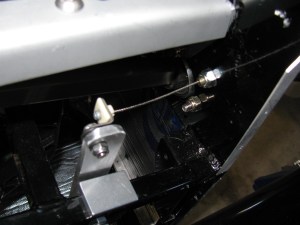
As you can see above, I added a fender washer (painted black) to the throttle cable mounting point, this is just for looks.
This is Irritating
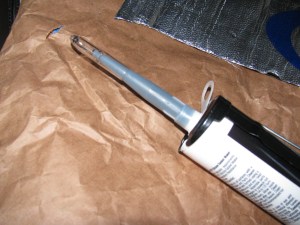
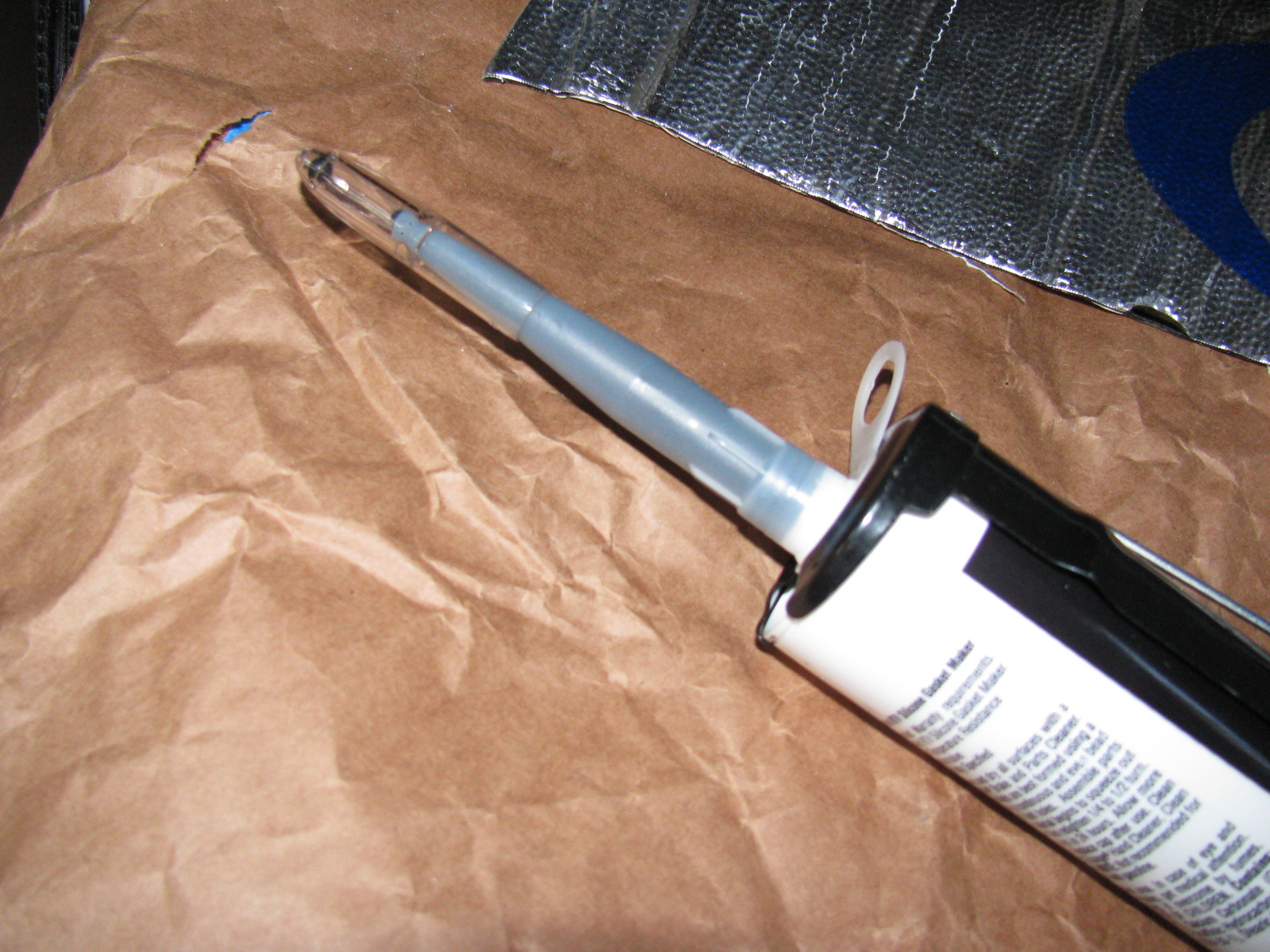
For some reason, this bothered me today, but then I realized not many tubes of caulk gun goop come with caps. Anyway, I used a pen cap to close the tube. I hope this works, I only needed a few beads for this build session.
Some Great Looking Door Panels on Order!
I ordered a set of leather door panels from Levy Racing earlier this week. They look like this:

























 wayneyoshidakh6wz