Archive for the ‘wayne yoshida technical writer’ Tag
Paella is a delicious rice dish. There was a reference to paella on a Seinfeld episode. I have eaten lots of paella, but never made it. So, after several Maker Faire events in the Bay Area, I really wanted to try making my own.
Based on a recommendation from a fellow Big Green Egg fan (Thanks Dale!), I bought a paella pan made in Spain and Bomba rice from La Española Meats, Inc. in Harbor City, CA.
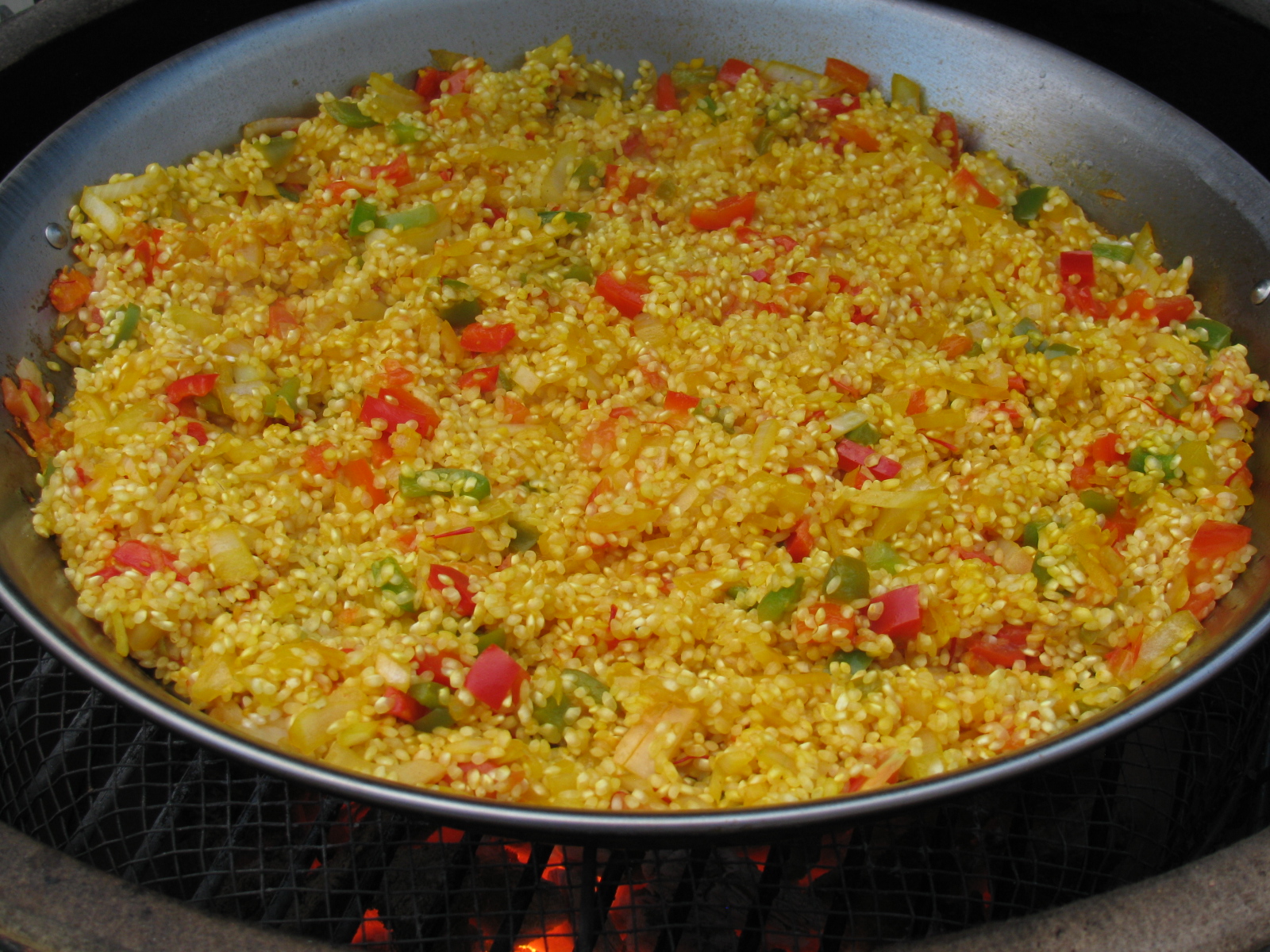
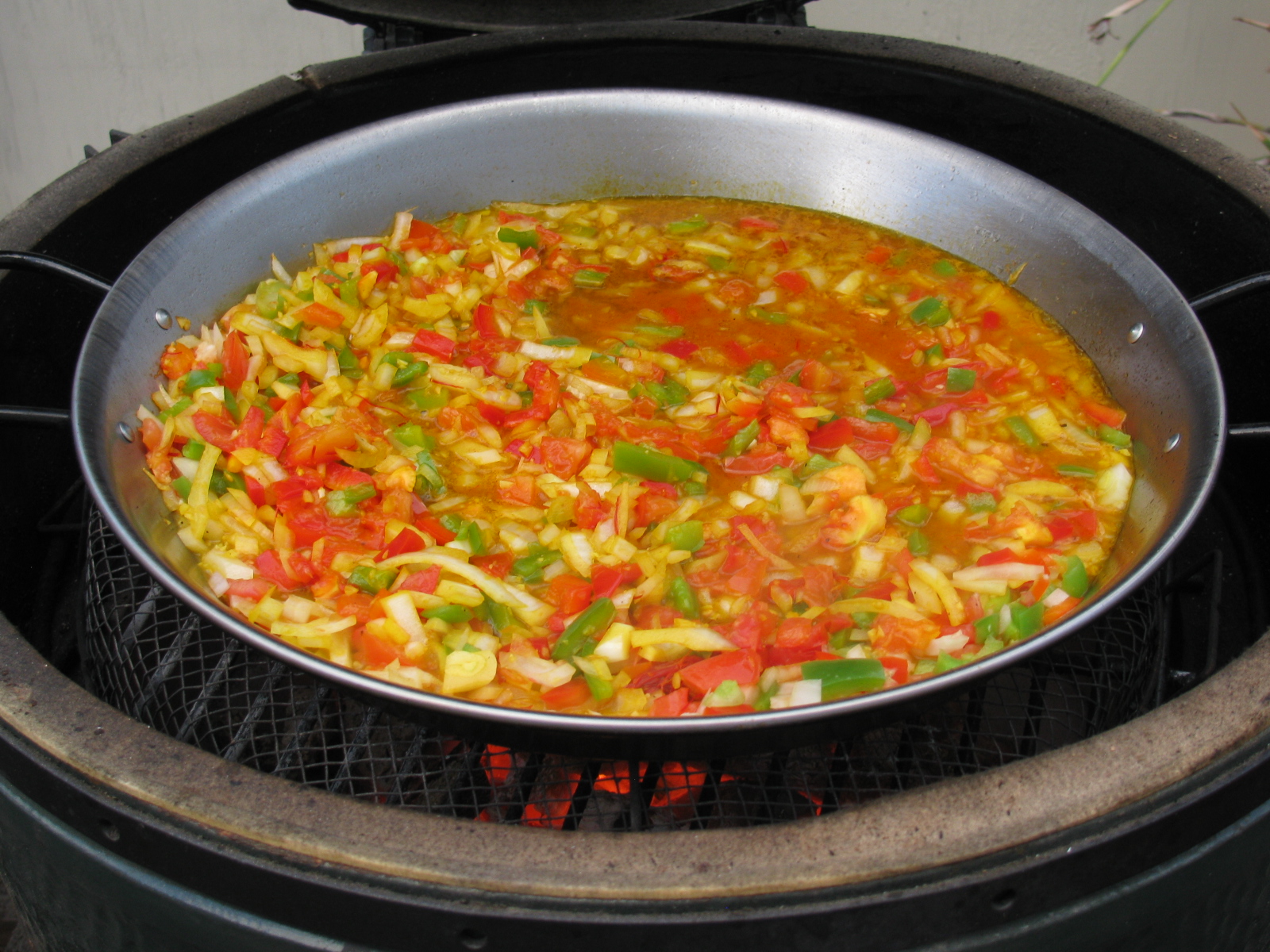
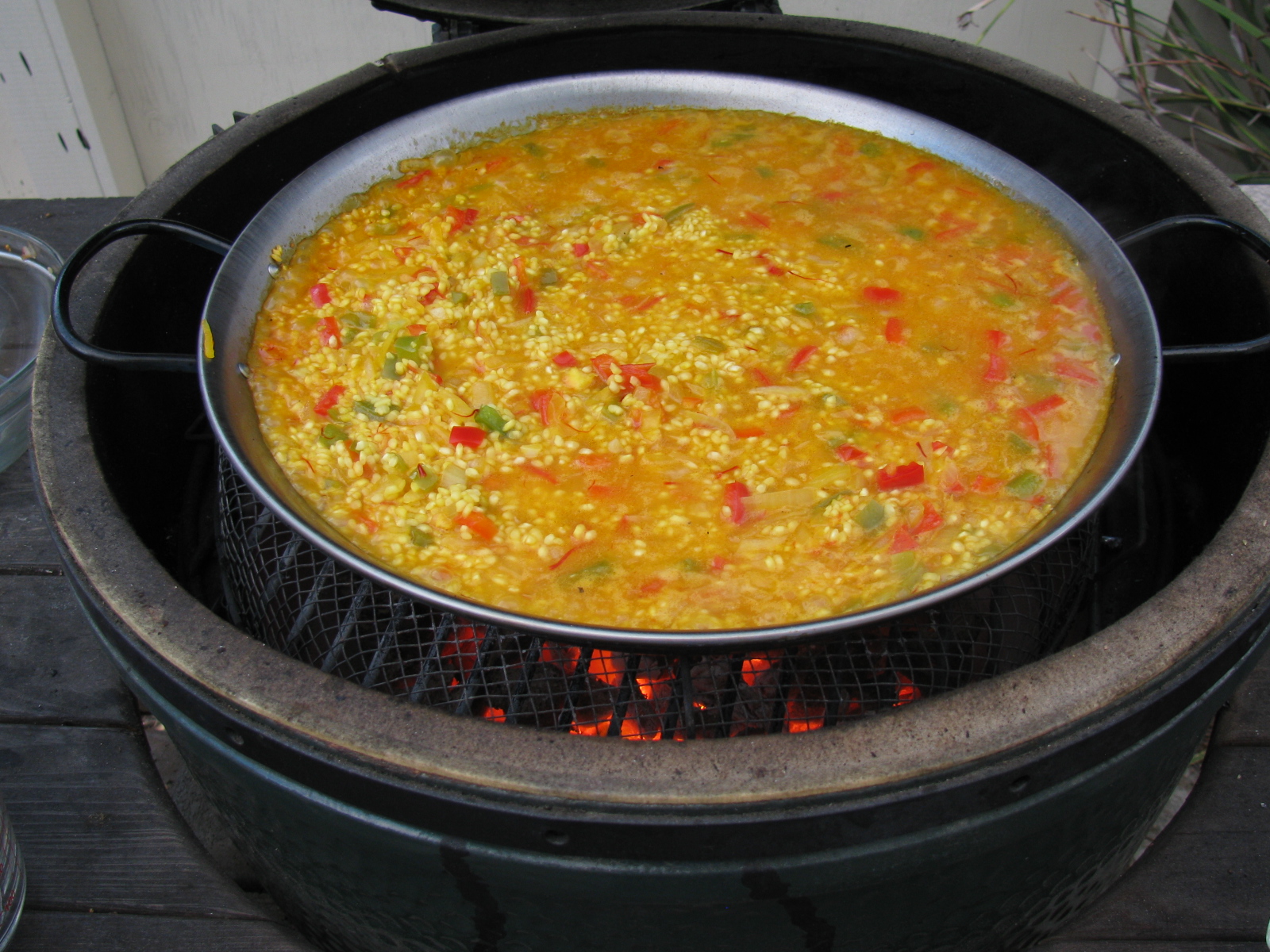
My 15-inch pan would be perfect for my Large Big Green Egg – except for the handles. They are too big and prevent the pan from sitting on the grill grate. I think I can bend the handles so it will fit the 19-inch grate on the BGE. I didn’t let this glitch stop me. I inverted the grill basket used for the vegetables, and put the paella pan on top. If you look closely at the pictures, you can see the basket under the paella pan. Seemed to work OK.
Of course, my paella pan is not as big as the giant ones used by Gerard’s Paella at the Maker Faire, but my pan is large enough to make 8 servings.
I used Steven Raichlen’s recipe from Primal Grill, Season One as a starter. (“Paella Primavera (with Vegetables and Beans But No Meat.”) His version is vegetarian, using all roasted veggies and vegetable broth. I had some Portuguese sausage in my freezer, and chicken stock, so I used them in my first attempt.
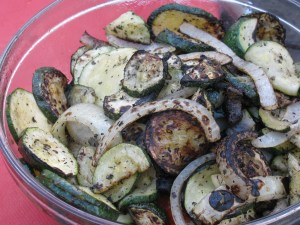
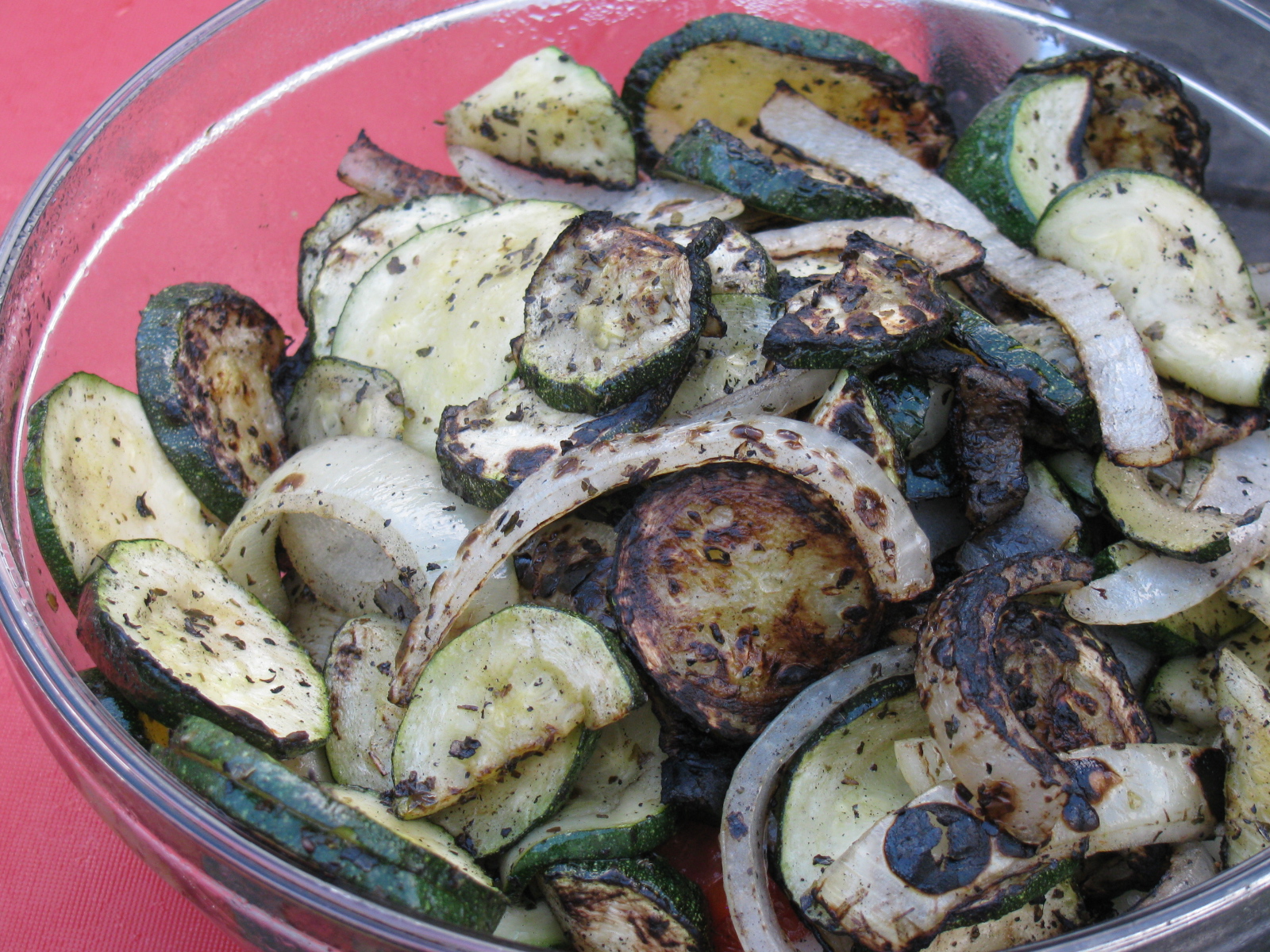
Here are the grilled veggies – Onions, garlic, red and green bell peppers, tomatoes, zucchini squash. These were direct-grilled in a basket. I used extra virgin olive oil and tossed on some sea salt, oregano, black pepper and basil.
Next, I direct-grilled the sausages in the basket. These were Hoffy brand Portuguese sausages. I wasn’t too pleased with this sausage. It was not bad, it was just a little too plain and mild for me. I still have several other brands of Portuguese sausages from Hawaii in my freezer. I need to test those soon.

I heated up the paella pan and added some olive oil. This is the chopped onion, garlic, peppers, saffron and chicken broth. . .
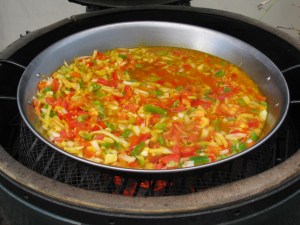
After several minutes, I added the Bomba rice. . . .

I almost panicked as the broth dried up – the rice was not fully cooked, and I was afraid of scorching the pan and ruining the dish. But, I quickly added some chicken bouillon to add more liquid. I had to add a total of four additional cups of liquid to get the rice just right. This is a total of 10 cups of broth. Not sure why this is so much more than Raichlen’s version. I do not recall how long I cooked this dish – I just cooked until the rice was tender.
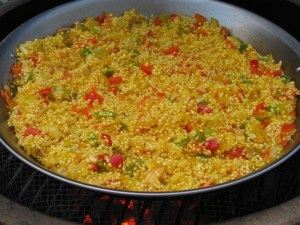
Here is the dish with all the liquid absorbed. Bomba rice is nice and tender, and very tasty. Bu wait – there’s more. . .
Next, I added the grilled vegetables and the sausage. . .

This would be a great one-pan party dish for a good sized and hungry group.
All of us should continuously be aware of new developments, trends, competitors and technologies in our fields of expertise. This “career maintenance” is a way to prevent skills obsolescence. Some people may call this a way to demonstrate passion for what they do, taking the time to keep their skills and knowledge well-honed. I call this trait curiosity, and one should enjoy this “extra work” not because it is mandatory or forced, but because it is enjoyable. In other words, one should enjoy the work they do, since work enjoyment benefits the employee as well as the employer.
One of the most memorable public television promotions was “Stay Curious,” a series of spots directed by filmmaker Errol Morris. In one spot, a young girl wakes up before dawn, grabs a flashlight and goes to a chicken coop. She sneaks up to the window and shines the light inside. The rooster wakes up, thinking it’s a new day, and crows. In another spot, another young girl wonders about raising fish. She goes into the kitchen, grabs a jar of caviar, and dumps it into a fish bowl.
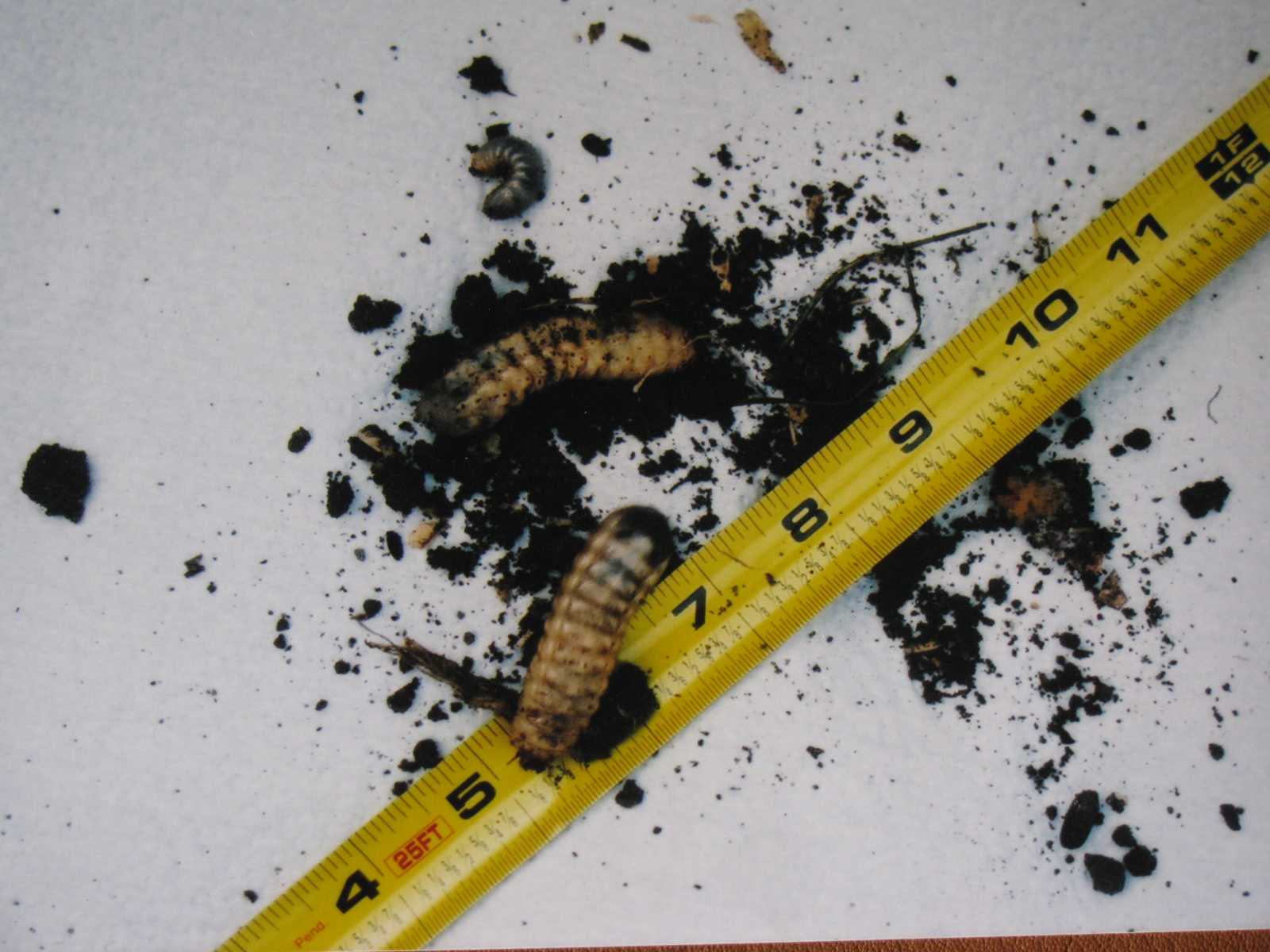
Here’s a wildly non-job skill, non-work related example of my curiosity. Earlier this summer, I wanted to know whether or not a bunch of really big, fat, ugly worms in my compost pile were hazardous to garden plants or the compost. I could have smashed them, or I could have just ignored them. But I decided to find out whether or not the grubs were helpful or harmful to my compost. So I typed “big ugly worms in compost” into Google, and found several links to describe what these things are. In case you are curious, the worms are soldier fly (Insecta: Diptera: Stratiomyidae) larva, and are aggressive composters, a good thing.

We should apply this idea of curiosity and fresh excitement to everything we do, including keeping up with the latest trends and technologies in our professional field. In addition, if you can find a way to apply multiple ways of learning to your everyday activities, you will increase your expertise even further.
As you learn something new, patience is the key to success. Since this is learning for pleasure, there is no hurry to get up to speed — the idea is to get to whatever level you want. This is an important point. There are some folks who are satisfied with having as much knowledge as they have right now, and have no need or desire to expand their knowledge. And that’s okay. But consider what can happen to your career if you don’t adapt to new things, and get left behind…
Learning by Teaching Others
Did you know that when you teach others something, it reinforces your knowledge of the topic? When I was a tutor for non-native English speaking (ESL) students, I had to twist my way of thinking to understand what they were talking about. Their questions made me think about various topics in a completely different way, and I had to use my knowledge of the subjects-at-hand to answer their questions. When you have the power of knowledge, you can teach others something new. And their questions will make you think about the topic or topics in new and different angles, reinforcing your knowledge even more. Sometimes a question can confuse you, which is okay. This just means that you have to search for another expert to supply knowledge, and the teacher (you) becomes a student.
Reading and Research
This method isn’t as exciting as some other ways to learn more about industry trends or new technology, but is certainly valid. In fact, with Internet access, there is almost no limit to the information you can find. However, like a lot of things in life, there is nothing like old fashioned, hands-on experience and learning by doing.
Making Mistakes, and Learning from Them
Making mistakes is one aspect of learning. I always say, “I know what not to do in this case. . . ,” since I make mistakes all the time. But the only way to turn mistakes into useful knowledge is to learn the proper way of doing the task. In other words, if we goof, we have to find out why we goofed, fix the goof, and remember the correct way of doing something to prevent the same goof in the future.
The Concept of Continuous Improvement
Continuous improvement is the search for excellence and perfection. And since nothing is “perfect,” we should always be on a quest to improve our skills and knowledge.
Here are some helpful books on networking and job-seeking skills, there are plenty of others. Do some research and find some more good ones.
Ferrazzi, Keith, “Never Eat Alone,” a great story about the networking process
Lathrop, Richard, “Who’s Hiring Who,” an old book from the 1980s, but has some useful information and words of encouragement
Yate, Martin, “Knock ‘Em Dead,” a whole series of books for each part of the job seeker
For more posts like this, visit my LinkedIn Publish page.
Anyone interested in young people education has probably heard of the Maker movement and the Maker Faire. Or, at least, they may have seen a copy of Make: magazine on the newsstands. Many educators understand the connection between science and technology education and how this Maker movement can be used to make learning fun.
Well, I have to say this is a lot of successful marketing hype – since so many people worldwide think this is a new and wonderful phenomenon. Here’s some news for everyone: This is not a new idea. Amateur radio operators (“hams”) have been among the original Makers since the early 20th century.
In case you have not heard about Makers, here is a brief description: The Maker movement is about making something rather than buying something, fixing it rather than throwing it away, pre-cycling or recycling instead of throwing it away and modifying something to make it work better or different.
This “making” refers to anything you can think of, from clothing and costumes and computers to bicycles and cars and aircraft. And for ham radio operators – it’s making or modifying radio communications equipment.
A Personal Passion and Mission
Since ham radio has been and continues to be one of my passions, I want to make sure people understand that today’s ham radio is not an outdated, dying hobby that no one uses any more. It is not necessarily a hobby for old retired engineers talking to strangers from their basements and closets. The Amateur Radio Service is much more chic and many of us are using today’s technology and applying it to ham radio activities. And as a science and an educational tool, ham radio has a lot to offer.
A Timely Showcase
The Bay Area Maker Faire is at the end of May each year. Sponsored by Make magazine, the Maker Faire website describes this event as, “A two-day, family-friendly festival of invention, creativity and resourcefulness and a celebration of the Maker movement.”
When you actually get there, you may describe it as a giant playground for everyone where science, art, food, clothing, bicycles, fire, machines, lasers, steam, electricity and music all crunch together into one giant gathering. And I can insert ham radio into this cornucopia of educational fun.
In 2012, my ham radio friend Dennis Kidder had some free passes to the Bay Area Maker Faire. Since the tickets were a great bargain, we had to make the all-day drive to the Silicon Valley to see this thing. We had such a great experience that year we decided to create our own display to show off our ham radio projects. Besides, we got to meet Grant Imahara from the Discovery Channel show “Myth Busters,” and a famous female hacker named Jeri Ellsworth. Adam Savage, also from the Myth Busters show, is the Maker Faire emcee.
Amazingly, Maker booths are free. Considering how much commercial exhibitors pay for booth space, electricity, water, compressed air and cleaning for tradeshow booths, this is an incredible deal.
For 2014, my Maker Faire theme, “Not Your Grandpa’s Ham Radio!” continues for the third consecutive year. Our displays include a wide range of experiments, demonstrations and practical wireless communications equipment using a mixture of traditional and the most modern techniques. Here are some examples of our projects from previous Maker Faire events…
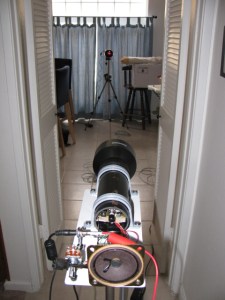
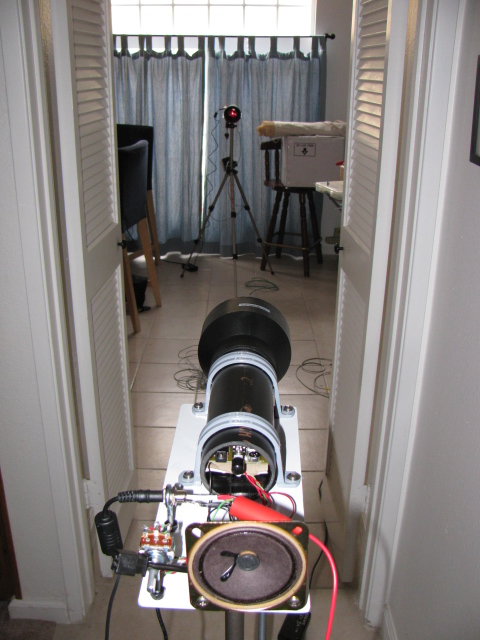
Ramsay Electronics KH6WZ laser communicator
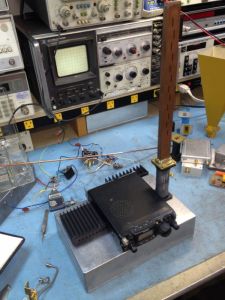
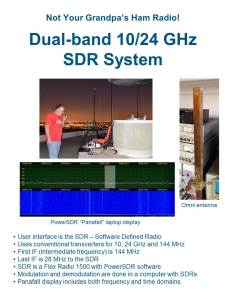
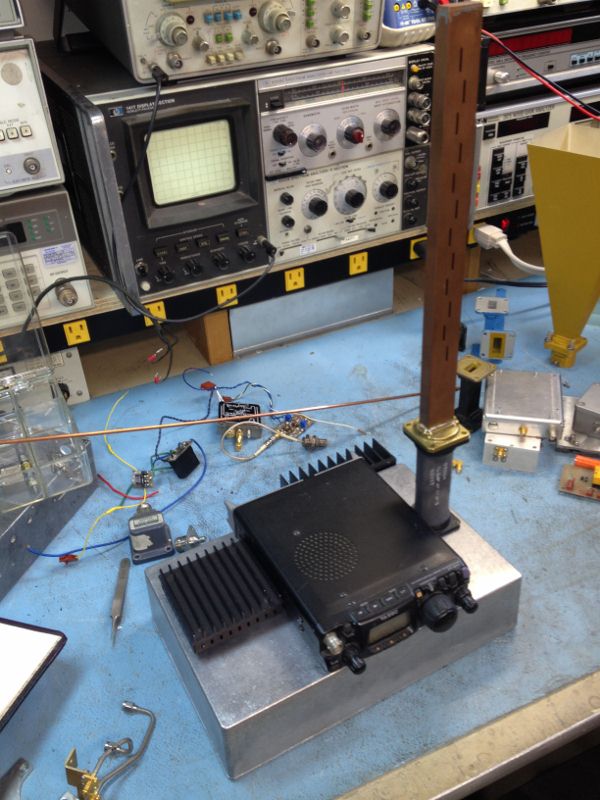
W6DQ – Dennis 10 GHz transmitter-receiver with software defined radio (SDR)

79 GHz transmitter-receiver system by Tony KC6QHP

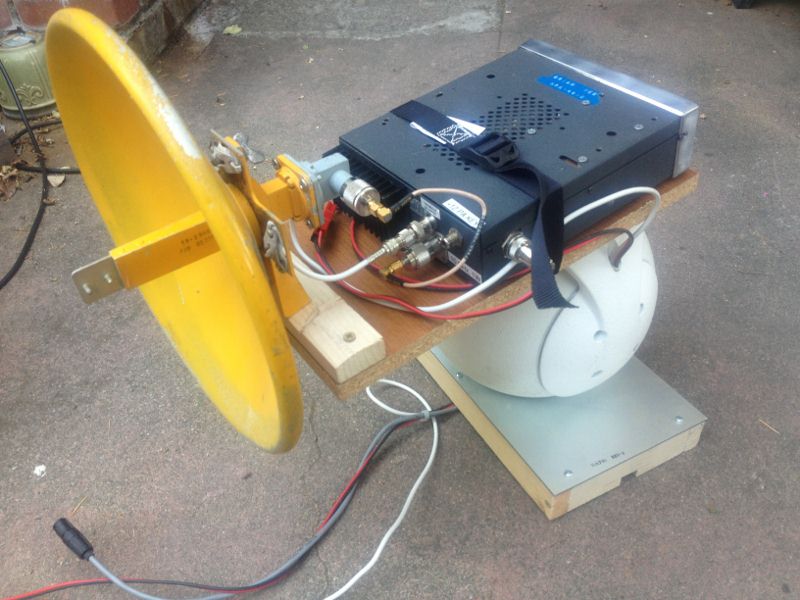
Antenna positioning system by Brian W6BY
See more stories on my LinkedIn pages. . .
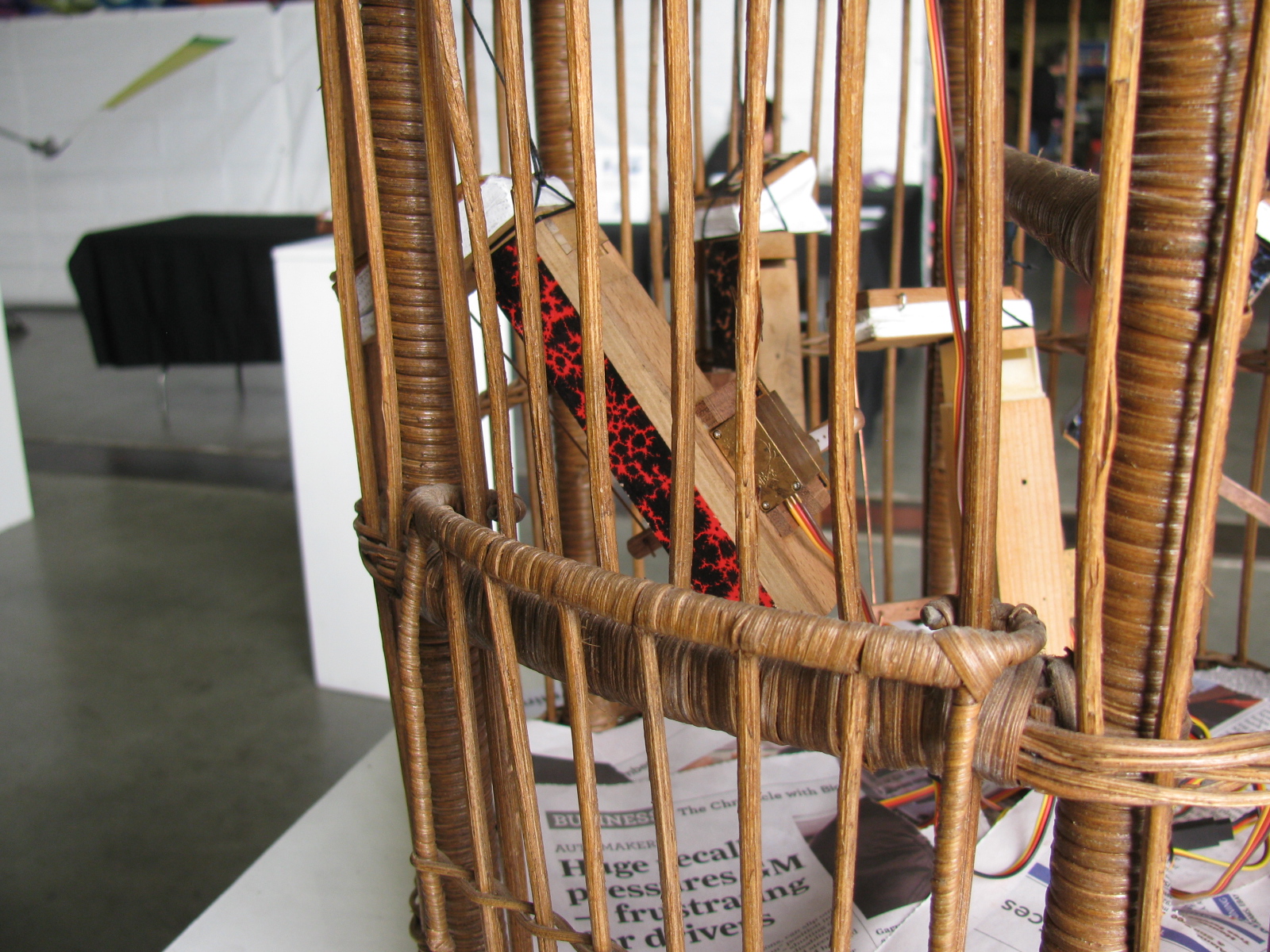
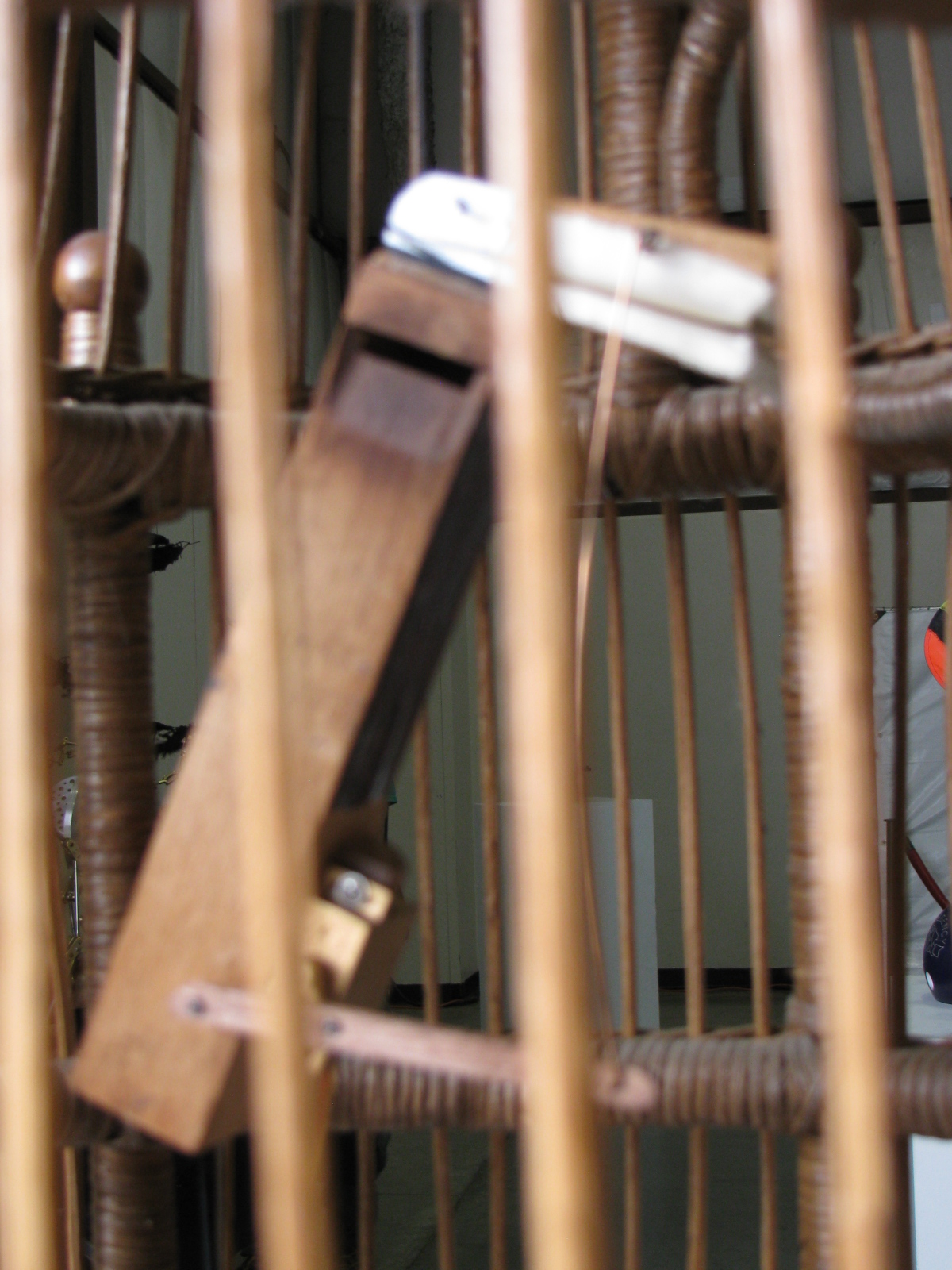
Here is a wonderful musical sculpture crafted by Christopher T. Palmer on display at the Maker Faire. The piece is called “Nicht mit dem Titel, ein” Google translate says this means “Not with the title, a” or something like that.
It uses restored cuckoo clock whistles, a microcontroller, some model servos. It plays every 15 minutes.


More information on Chris and his studio can be found here.
Watch the video on YouTube Channel KH6WZ!
More Maker Faire pictures and stories to come! Stay tuned!
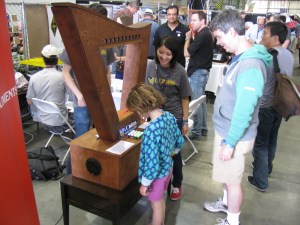
The laser harp drew a lot of attention from little kids. The string less musical instrument features laser beams, laser sensors and an electronic harp that can actually teach how to play a tune.
Click here for more information on the UC Davis Laser Harp Project.
Watch the video on KH6WZ.
More Bay Area Maker Faire pictures and stories coming soon!
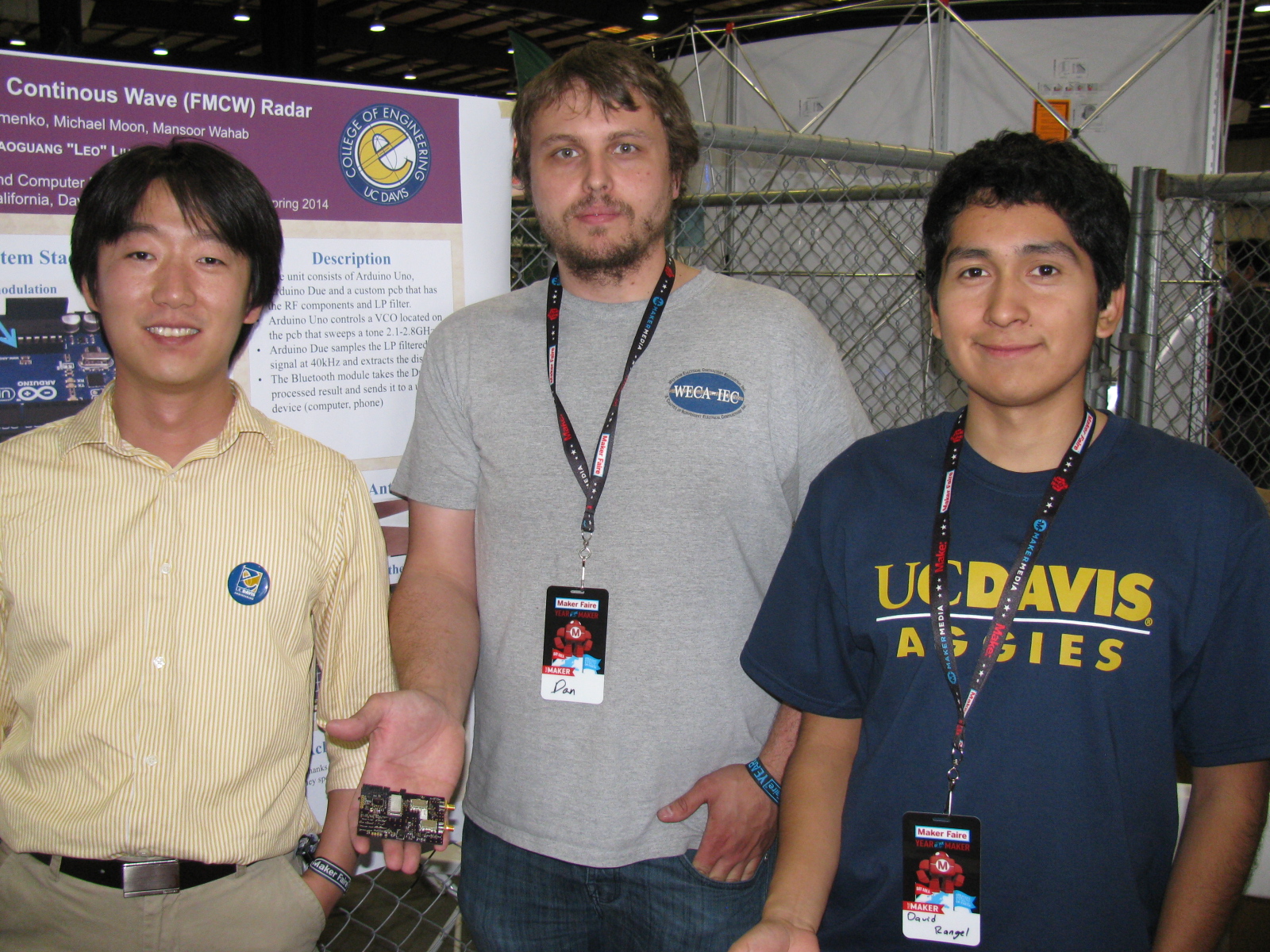
University of California, Davis Engineering Project at Maker Faire Bay Area 2014

This radar system operates at 2GHz (S-band). The Arduino stack consists of a radio front end, controlled by an Ardunio Uno and signal processing is performed using an Arduino Due. A Bluetooth link moves the data from the radar system to the notebook computer, where the radar information can be seen using a “waterfall” visual display.


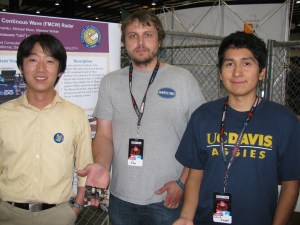
The DART lab is located in Kemper Hall on the UC Davis campus and is led by Dr. Xiaoguang “Leo” Liu, pictured at left. Daniel (center) and David on the right demonstrated the 2GHz radar system to the Maker Faire visitors. For more information on the UC Davis Engineering programs, visit
The Davis Adaptive RF Technology (DART) Lab
UC Davis College of Engineering Electrical and Computer Engineering
2014 UC Davis Picnic Day
Not Your Grandpa’s Ham Radio
Maker Faire Bay Area 2014
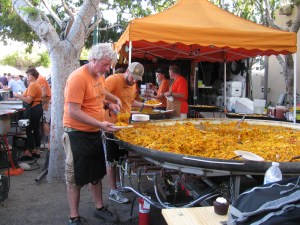
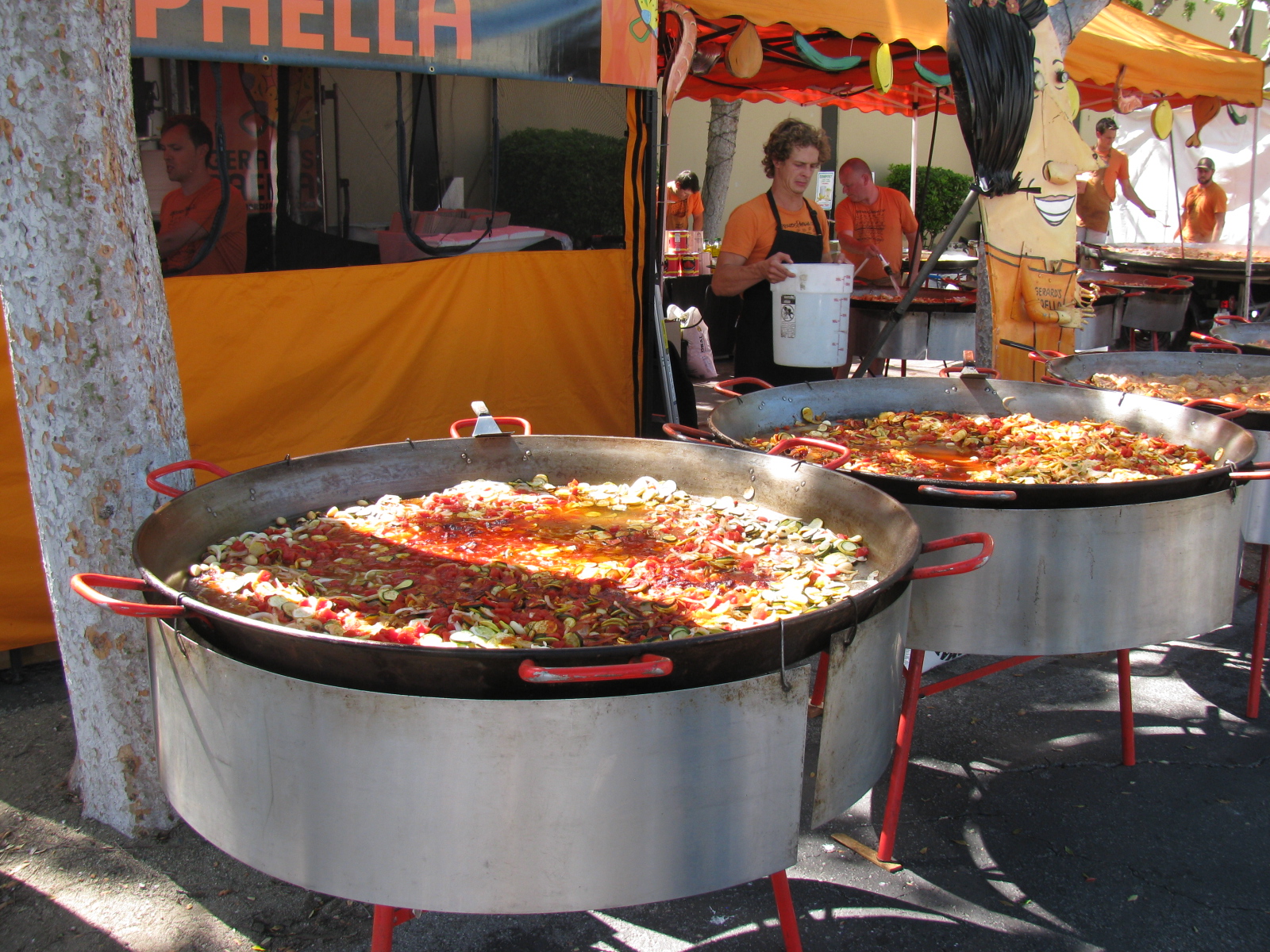
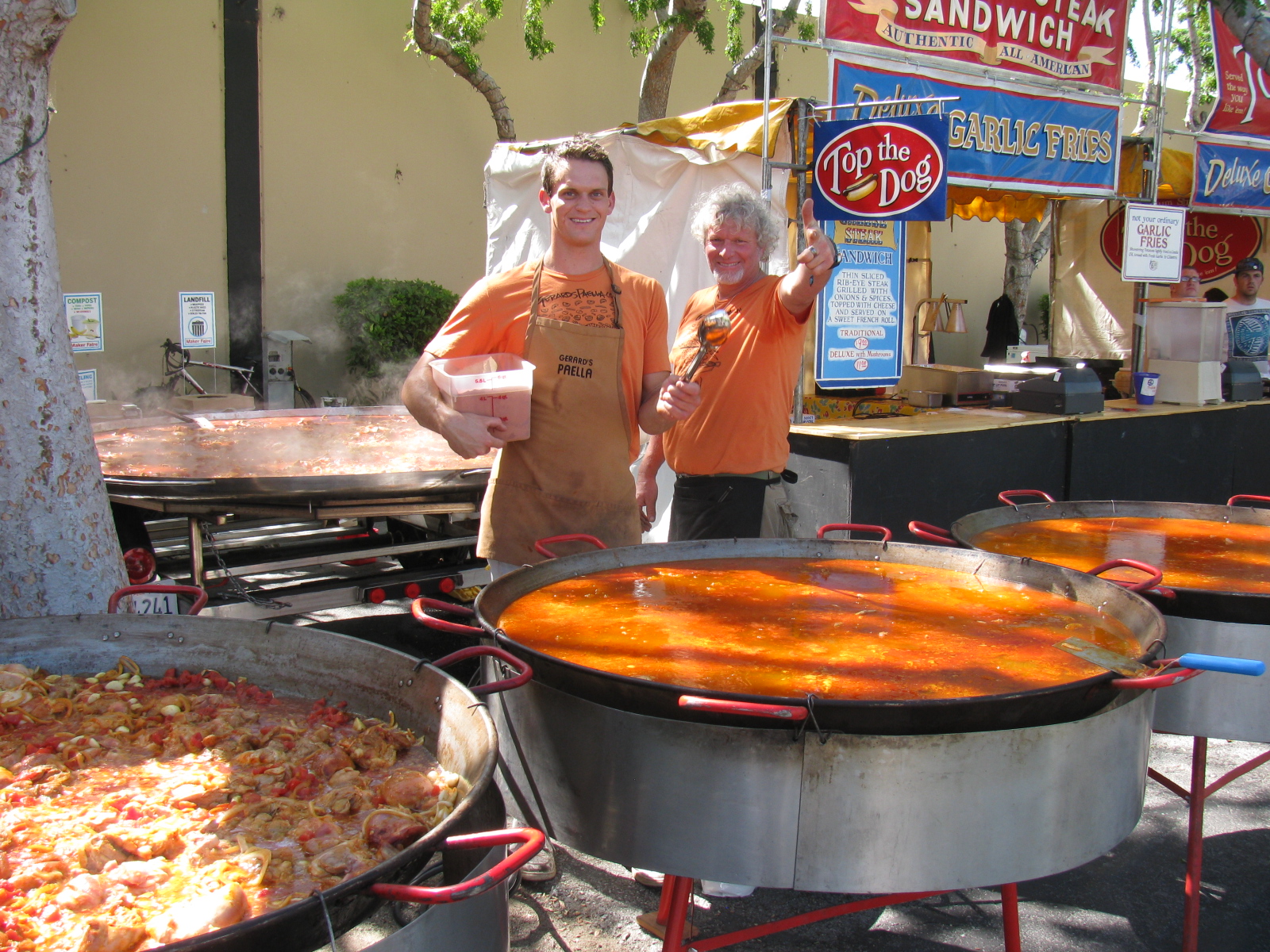
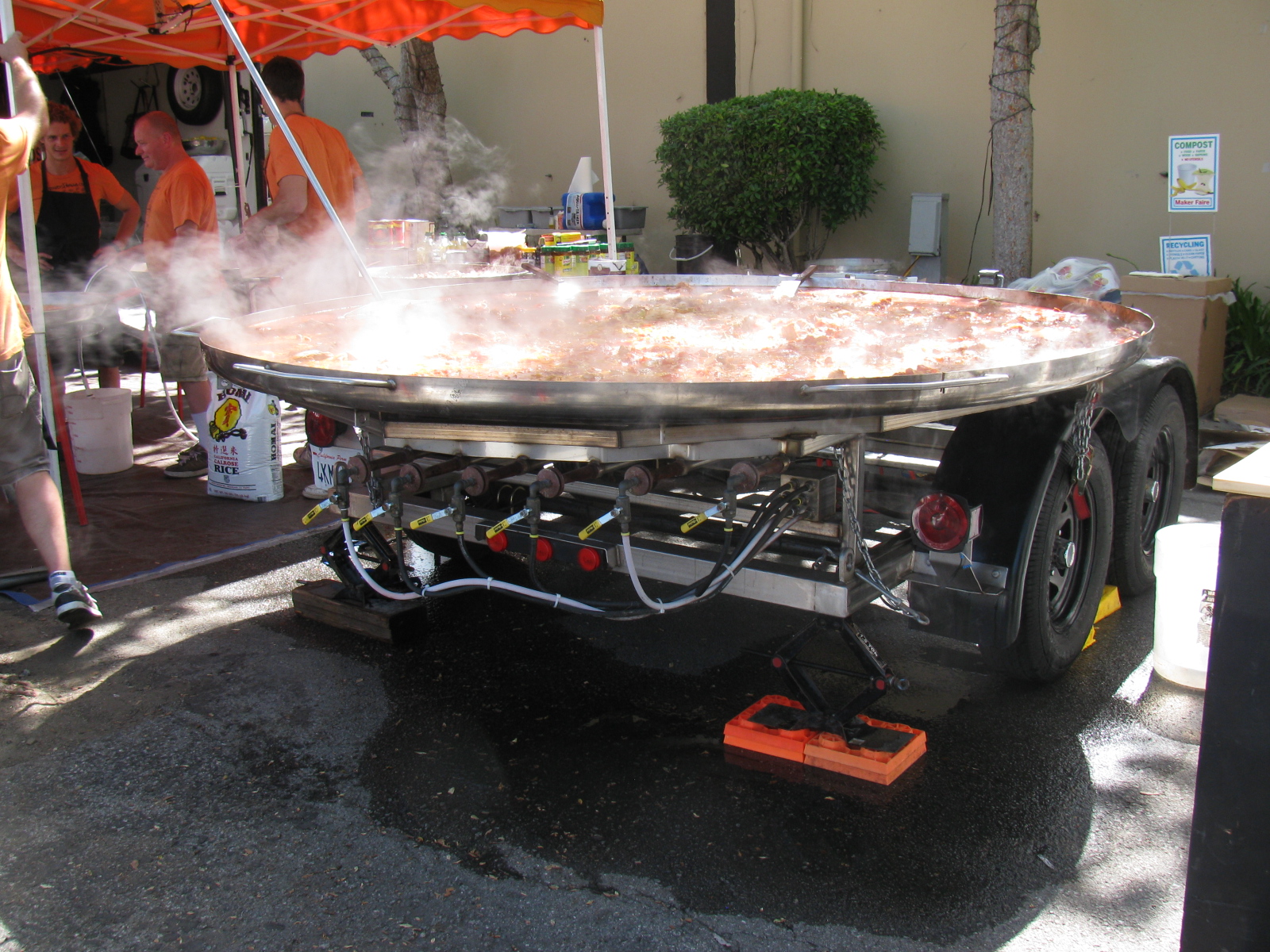
Every year, the Maker Faire hosts a paella dinner for the Makers. This year, the event was sponsored by Liquid Wrench. Here are some images, and you can watch the Paella video on channel KH6WZ. . .
Gerard’s Paella feeds 2,500 people very quickly!


Not Your Grandpa’s Ham Radio
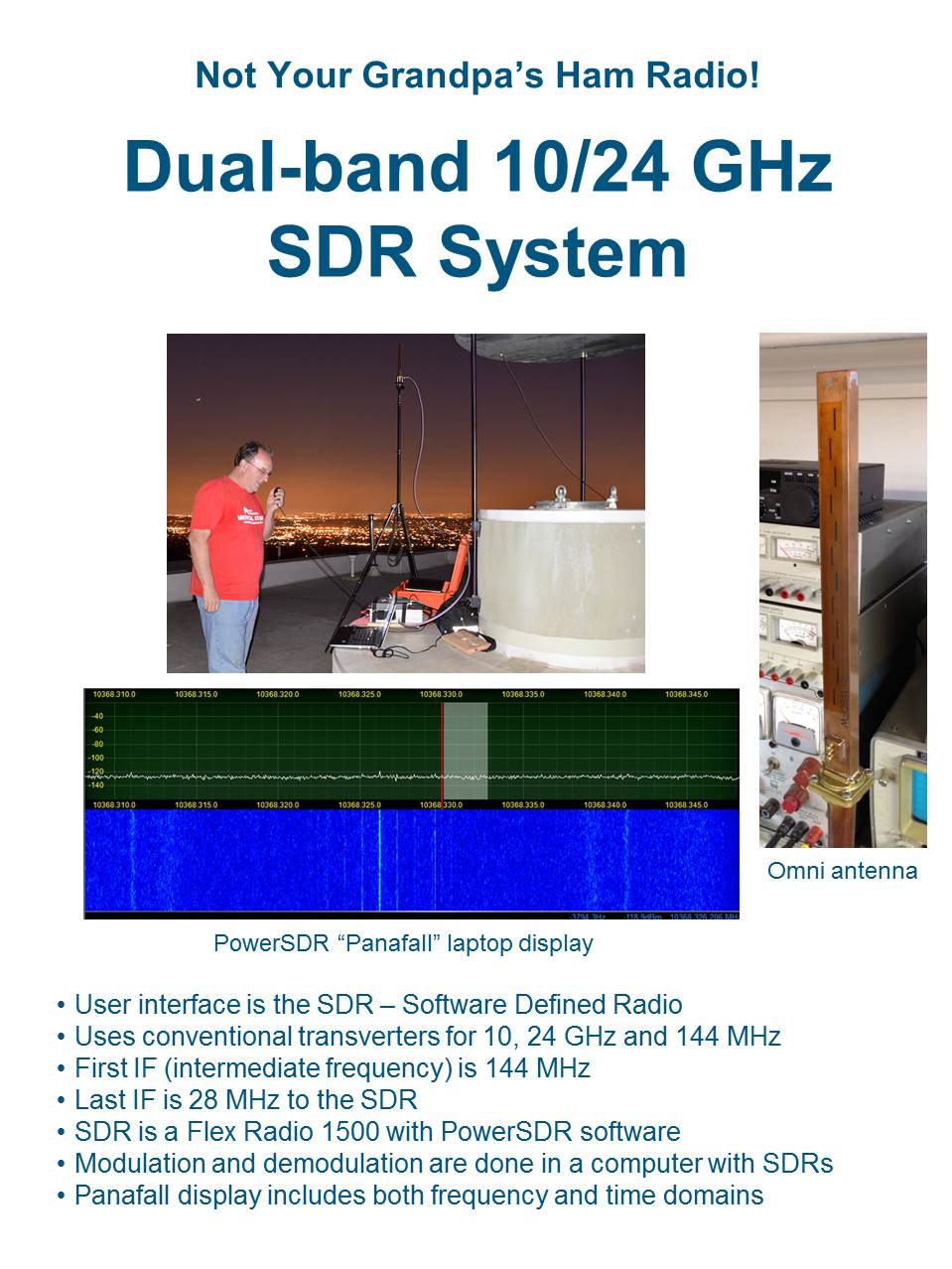
Dennis W6DQ displayed his Flex 1500 software defined radio with 10 GHz and 24 GHz transverters. There were many questions about SDRs and many visitors were surprised to learn ham radio operators have this technology. But this is another example of what radio hams are using these days. The system Dennis showed is actually three systems in one: The SDR, which is being used as the “intermediate system,” and transverters (transmitter-receiver-converters) for 10 GHz and 24 GHz microwave ham radio. The posters briefly explain the transverter system:
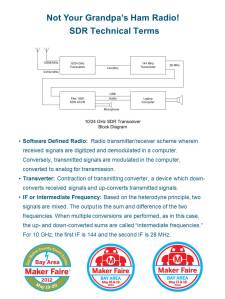

The SDR is a Flex-1500, made by FlexRadio Systems
APRS: Automatic Packet Reporting System – and High Altitude Ballooning
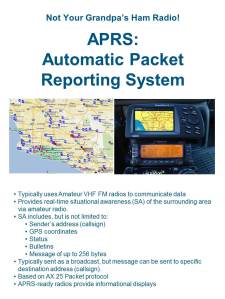
Someone asked if it would be possible to track a high altitude balloon using ham radio. It is possible to track a vehicle, aircraft or person using the amateur radio application called APRS, the automatic packet reporting system. Basically, the system consists of a two-way radio (usually for the 2m ham band), a GPS receiver, a modem to interface/control the data to and from the GPS, and an antenna for the radio and the GPS.
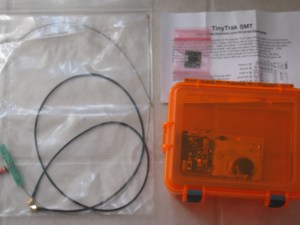
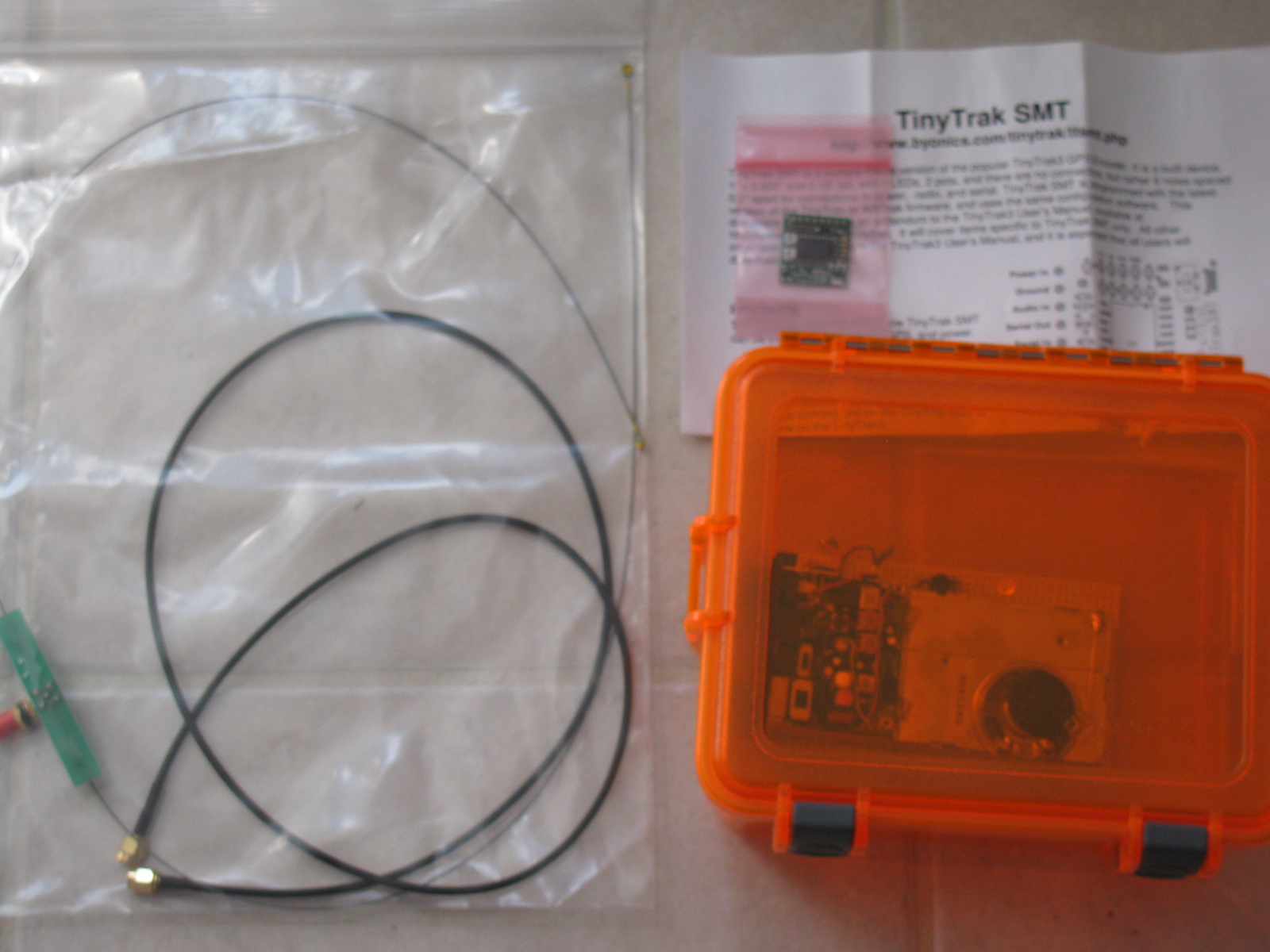
By coincidence, I am collecting parts for such a system, see the photo above. The radio antenna is on the left – it is a piano wire dipole for the 2 meter ham band. On the upper right is a Byonics Tiny Trak SMT – the interface between the two-way radio and the GPS. Inside the orange plastic box is an old 2m handie-talkie, with its cabinet parts and battery pack removed. Not shown in the picture are the other ingredients, which include a tiny GPS module and the video cameras for Amateur Television (ATV).
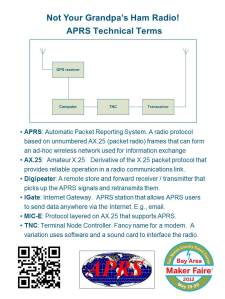
Here are some links I used in my research.
Byonics – Makers of the Tiny Trak series of APRS beacons
Amateur Radio High Altitude Ballooning
Sparkfun – High Altitude Balloon Launch
Low-cost Near Space Without HAM Radios or Cellphones
Breaking the Amateur Radio Balloon Altitude Record
BEAR (Balloon Experiments with Amateur Radio)
Watch this space for more Bay Area Maker Faire stories and pictures!

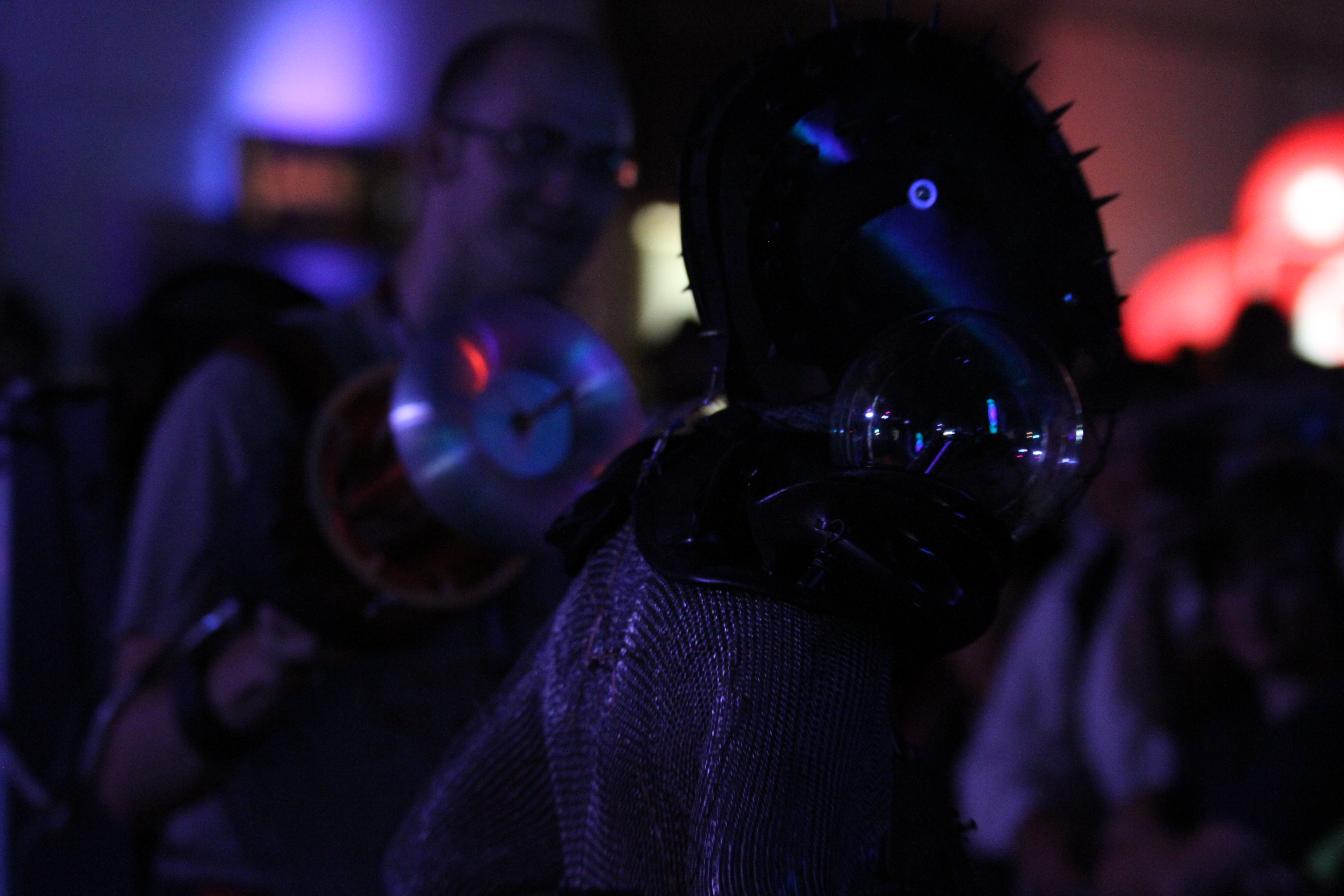
Photo by Kyle Cothern of CrashSpace
Here are some amazing photos of Anouk Wipprecht and some of her costumes at the Maker Faire Bay Area. The photos were taken by Kyle Cothern of CrashSpace, in Culver City, CA
In these photos, you can see lightning effects created by a giant Tesla coil, made and “played” by ArcAttack!
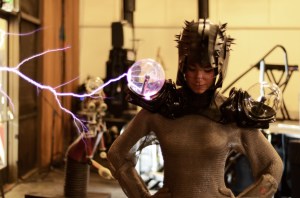
Photo by Kyle Cothern of CrashSpace
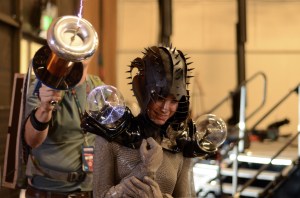
Photo by Kyle Cothern of CrashSpace

Photo by Kyle Cothern of CrashSpace

Photo by Kyle Cothern of CrashSpace

Photo by Kyle Cothern of CrashSpace
Learn more about Anouk Wipprecht in this CNN article!
Stay tuned for more Bay Area Maker Faire images and stories!










 wayneyoshidakh6wz
