Archive for the ‘GPS’ Tag
APRS: Automatic Packet Reporting System – and High Altitude Ballooning
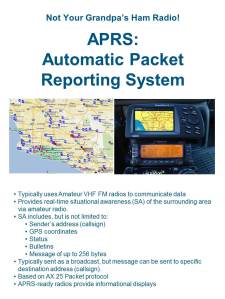
Someone asked if it would be possible to track a high altitude balloon using ham radio. It is possible to track a vehicle, aircraft or person using the amateur radio application called APRS, the automatic packet reporting system. Basically, the system consists of a two-way radio (usually for the 2m ham band), a GPS receiver, a modem to interface/control the data to and from the GPS, and an antenna for the radio and the GPS.
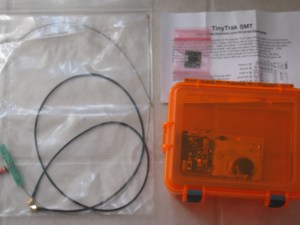
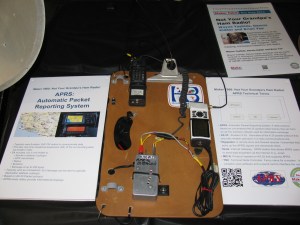
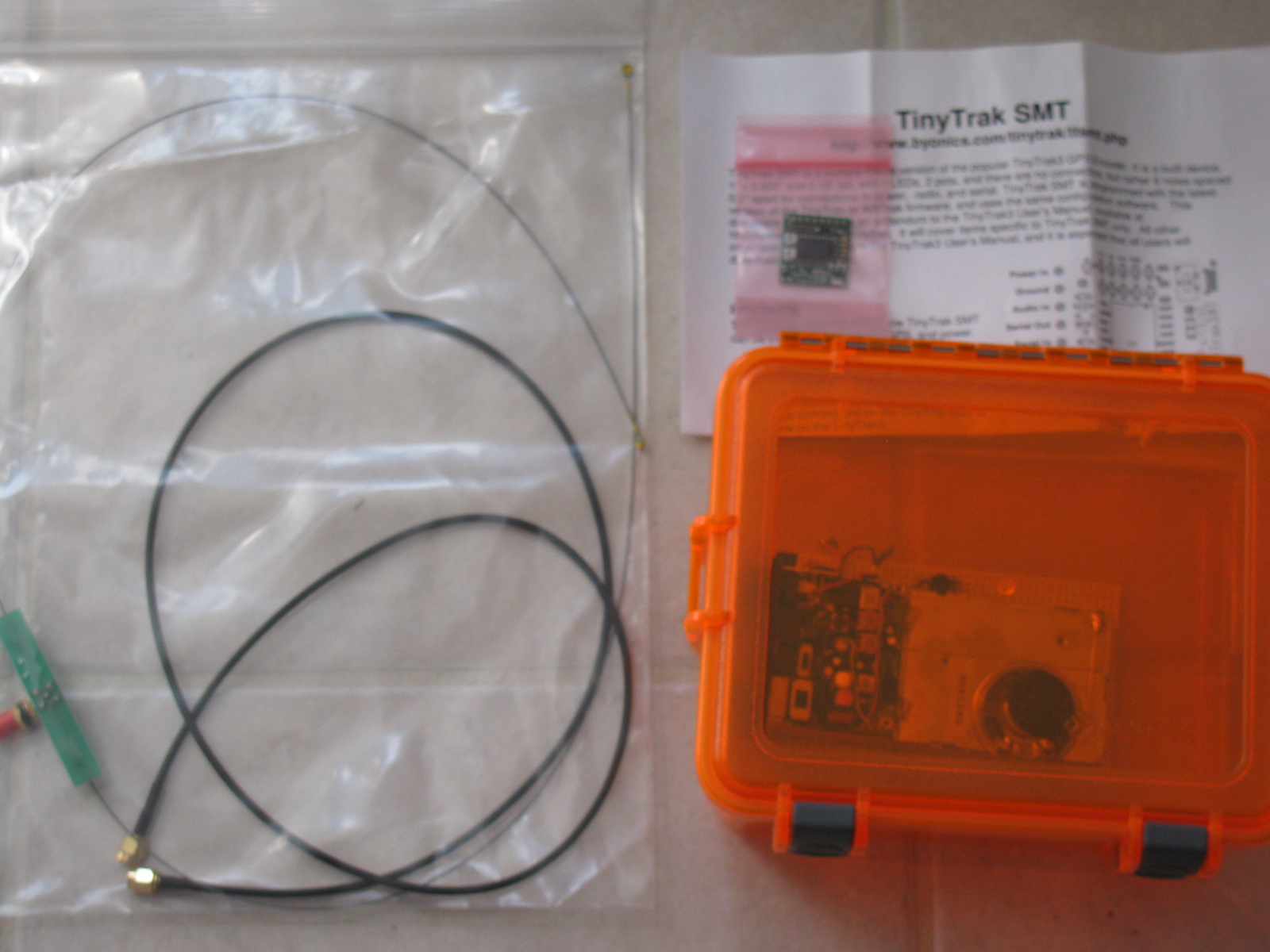
By coincidence, I am collecting parts for such a system, see the photo above. The radio antenna is on the left – it is a piano wire dipole for the 2 meter ham band. On the upper right is a Byonics Tiny Trak SMT – the interface between the two-way radio and the GPS. Inside the orange plastic box is an old 2m handie-talkie, with its cabinet parts and battery pack removed. Not shown in the picture are the other ingredients, which include a tiny GPS module and the video cameras for Amateur Television (ATV).
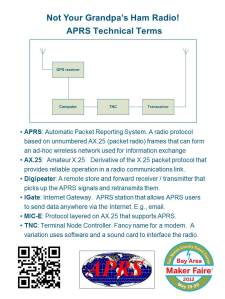
Here are some links I used in my research.
Byonics – Makers of the Tiny Trak series of APRS beacons
Amateur Radio High Altitude Ballooning
Sparkfun – High Altitude Balloon Launch
Low-cost Near Space Without HAM Radios or Cellphones
Breaking the Amateur Radio Balloon Altitude Record
BEAR (Balloon Experiments with Amateur Radio)
Watch this space for more Bay Area Maker Faire stories and pictures!
The 2014 Bay Area Maker Faire is now history.
One of the Maker Faire team members, Brian Yee, W6BY, was not able to join us – we are all hoping Brian recovers quickly from his injury.
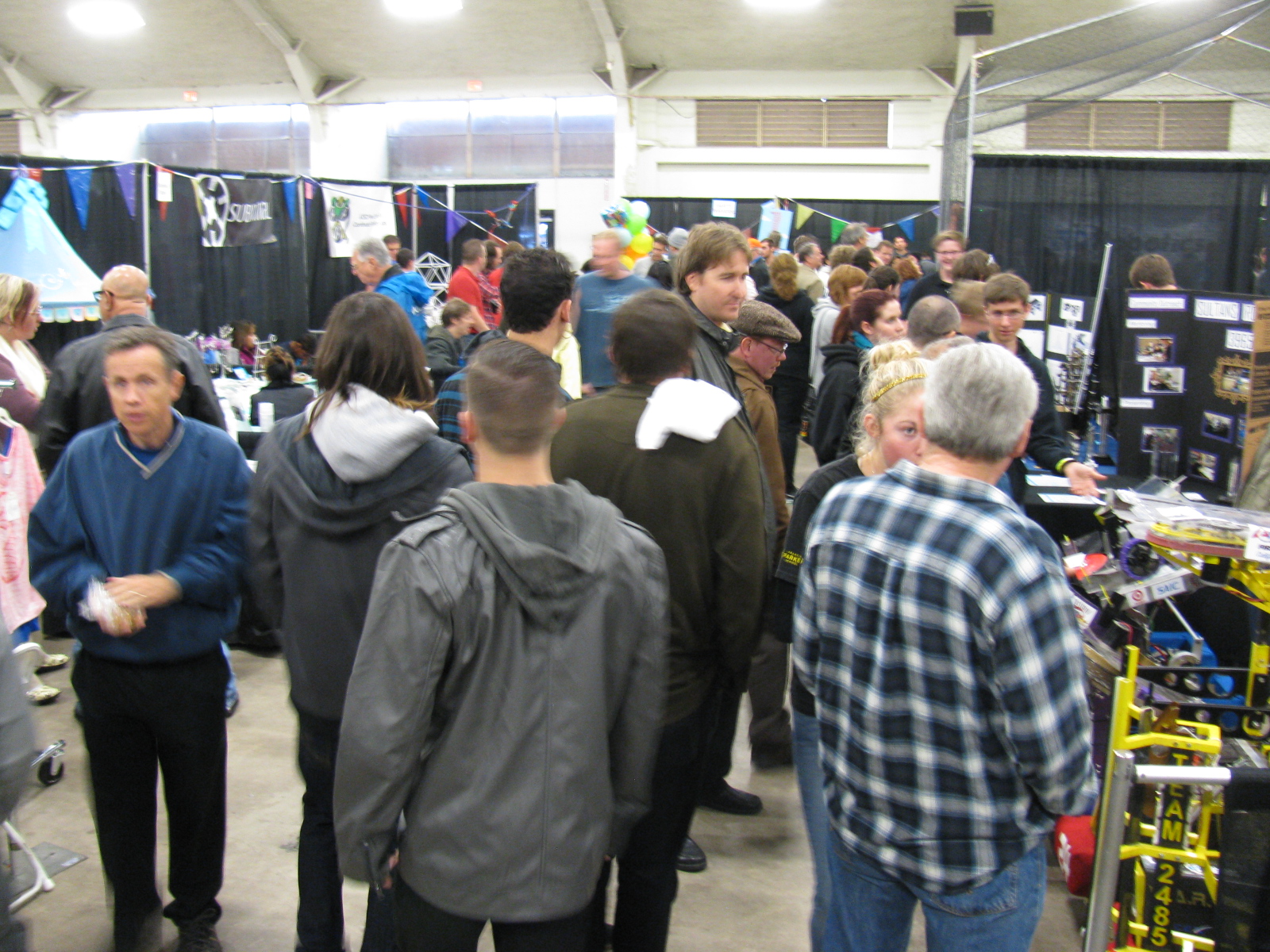
Dennis Kidder, W6DQ and Marty Woll, N6VI (ARRL Southwestern Division Vice Director) – along with several University of California, Davis engineering students and their faculty advisor, Professor Leo Liu, displayed and demonstrated their projects to the Maker Faire crowd. Estimated attendance: 120,000.
Here’s a two minute “drones eye view” of the Maker Faire 2014
Highlights during setup day included meeting Anouk Wipprecht, the fashion designer; Tenaya Hurst, the Arduino Woman; and the paella dinner, sponsored by Liquid Wrench.
This year, I included a handout of frequently asked questions about Amateur Radio, and it turned out to be useful. However, we quickly ran out of copies, so I am pasting the text here:
What Are We Doing at Maker Faire 2014
Not Your Grandpa’s Ham Radio
Thank you for your interest in our Maker Faire display. We are radio communications experimenters using the microwave Amateur Radio (ham) frequencies.
Who are we?
We are licensed Amateur radio operators (“hams”).
Is this like CB?
Yes and no. Ham radio is similar to CB because we use two-way radios to talk to each other, but hams can communicate using Morse code and computers in addition to voice, and we even have our own satellites. Ham radio requires a license issued by the Federal Communications Commission (FCC) in the USA.
How far can you talk?
We can communicate with other ham stations around the corner or across the globe, depending on a variety of factors that affect the way radio waves travel. The equipment we are using here operates on frequencies that generally follow line-of-sight paths. However, through experimentation, we find that signals can be reflected against objects such as buildings, trees, islands and mountains, to extend the range. Using these techniques, we are able to contact other stations hundreds of miles away.
What kind of radios are you using?
No commercially-built, “off-the-shelf” equipment for these frequencies exists, so we must build our own equipment, or modify commercially-made equipment meant for other services, such as cell phone, wireless links and radar systems.
How much does this equipment cost?
Like any other hobby, people spend as much or as little as they can afford. Most people involved in ham radio spend as much as any serious stereo enthusiast, amateur photographer or woodworker.
Where can I get more information?
Wayne Yoshida KH6WZ
http://wayneyoshida-kh6wz.com/
http://www.linkedin.com/in/waynetyoshida
American Radio Relay League (ARRL)
http://www.arrl.org
CQ, and CQ-VHF Magazines
http://www.cq-amateur-radio.com
The 50 MHz and Up Group
Meetings are held on the first Thursday of the month at 7pm at the TI (formerly National Semiconductor) Conference Center, Building E, in Sunnyvale, CA
http://www.50mhzandup.org/
The San Bernardino Microwave Society (SBMS)
Meets on the first Thursday of each month at 7pm at the American Legion Hall, 1024 Main St., Corona, CA
http://www.ham-radio.com/sbms/
The Microwave Group of San Diego
Workshops and informal meetings are held each month on the third Monday at 7pm in La Mesa, CA
http://www.ham-radio.com/sbms/sd/mgsd.htm
Here are some images from setup day, Friday May 16.
. . . More to follow. . .
This is our third consecutive appearance at the Bay Area MF, and continues my theme of showing how some ham radio operators continue the tradition of “teaching, mentoring, making, modifying, repairing and improving” radio and radio-related technology. Read my post about ham radio and the Maker movement.
Today’s ham radio operators have an incredible amount of exotic surplus material that can be converted into everyday use on the ham radio bands. Grandpa certainly never heard of surface-mount technology, talking on homemade 47 GHz transmitter-receiver systems or pocket-sized, satellite navigation systems (GPS). But he sure did mentor, make, modify, repair and improve the equipment in his bedroom radio station…..
Not Your Grandpa’s Ham Radio – Maker Faire 2014 Team
Wayne Yoshida KH6WZ
Dennis Kidder W6DQ
Brian Yee W6BY
Marty Woll N6VI
More information on the Maker Faire Bay area.
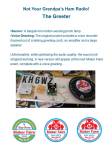
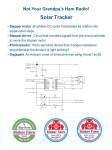
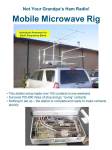
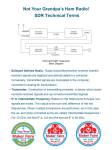
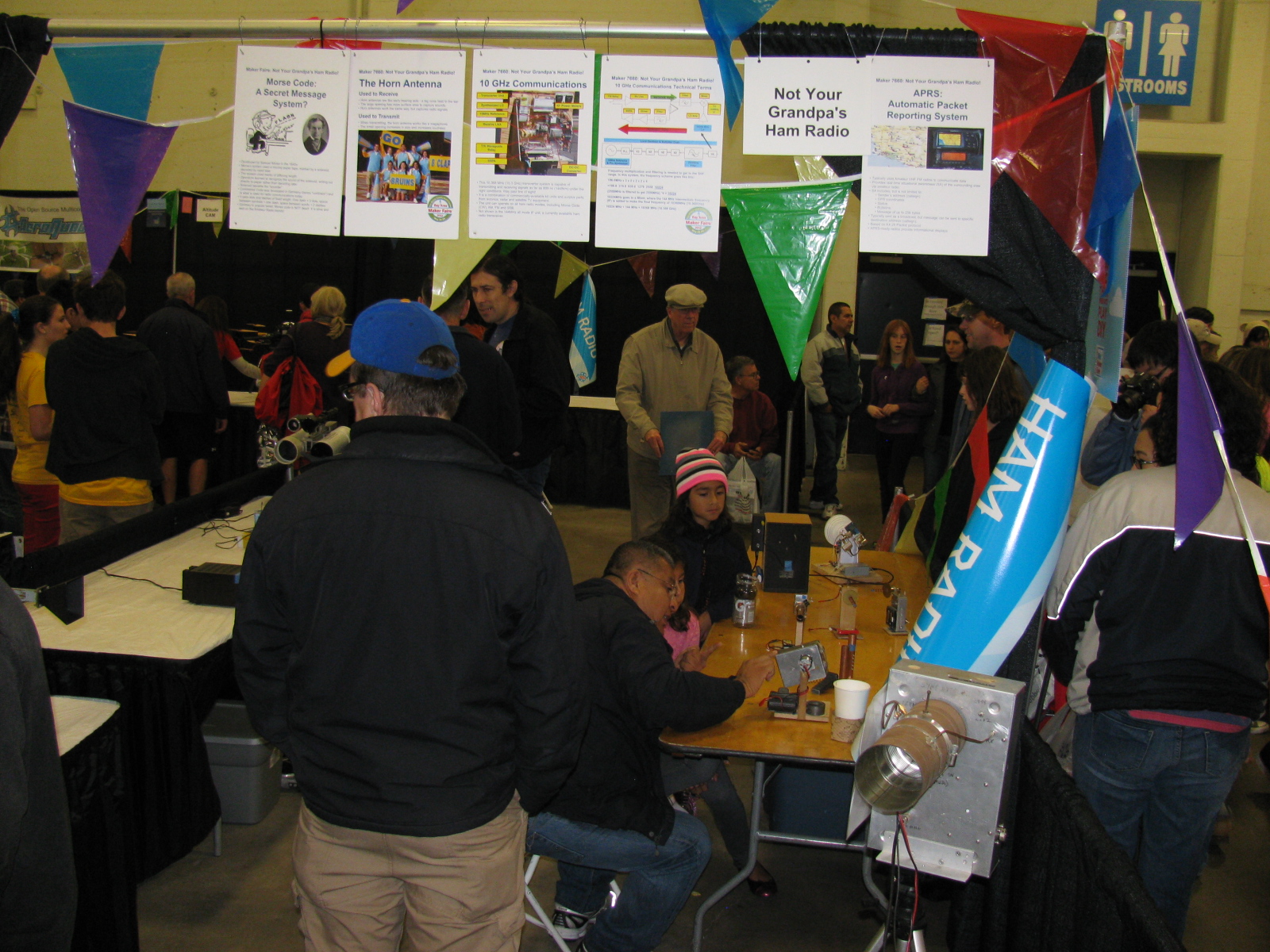
Here is a gallery of our booth posters for the 2014 Bay Area Maker Faire. More photos, videos and stories will follow. . . . .
UPDATE: Articles on San Diego’s First Maker Faire:
Inventors Show Off DYI Drones, Robots
Maker Faire Celebrates 100 Faires Around the Globe in 2013
Crowd Deluges San Diego’s First Mini Maker Faire: An Xconomy Slide Show
The First San Diego Mini Maker Faire Takes Off!
A Mini Maker Faire makes its debut in San Diego at the Del Mar Fairgrounds. Despite the sometimes heavy rain, most all of the exhibitors (Makers) showed up. San Diego Mini Maker Faire organizers kept the weather forecast updates on a positive note: “…Forecast: 100% Chance of Great Exhibits” – an excellent promotional phrase.
There were around 5,000 tickets purchased, amazing for a first run in inclement weather. Another positive indicator of interest in San Diego area “Making” is the number of Learn to Solder kits that were made during the event – all 350 of the blinky LED boards were built on Saturday.
The San Diego Not Your Grandpa’s Ham Radio team
Dave WA6CGR (San Bernardino Microwave Society – SBMS)
Dennis W6DQ (SBMS)
Jason W6IEE (SBMS)
Kerry N6IZW (San Diego Microwave Group – SDMG and SBMS)
Walt (SBMS)
Wayne KH6WZ (SBMS)
In addition to visitors from our own radio clubs (Rein W6SZ and his XYL, Larry K6HLH and his XYL, Ed W6OYJ, Michelle W5NYV and Paul KB5MU) many other San Diego area hams stopped by. As in previous exhibits, there is a pattern: Those who have a callsign but are not on the air, those who have callsigns and are active on the FM repeaters but not much else.
But this is one of the reasons I developed the Maker Faire theme called Not Your Grandpa’s Ham Radio – I want to show something new to licensed (active as well as inactive) hams, and I want to expose those not familiar with ham radio to what some of us are doing with twenty-first century technology in our hobby – we are embracing and doing hands-on experiments with microprocessors/microcontrollers, GPS, micro- and millimeter-wave construction techniques and other exotic radio-related technologies. We are having fun while learning new skills and expertise.
I hope this idea spreads to other active ham radio groups in other locations – surely there are other hams like us who are doing something more interesting than just talking to strangers, friends and family, right? If you are a ham radio operator and are involved in doing something interesting, let me know and we should join forces to help each other increase interest and participation in this concept – since – as most all hams know – being a Maker is certainly not a new idea!
Here are some pictures from the San Diego Mini Maker Faire. I have two videos posted on my YouTube channel: Walt’s Radio Wave Demonstration and The Electric Giraffe
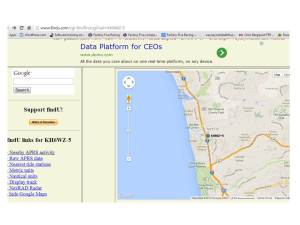
Map showing the KH6WZ APRS beacon location. The location is approximate, I had to simulate the GPS coordinates since signals were blocked in the steel and concrete exhibit hall.
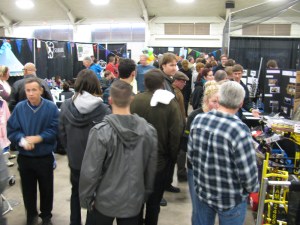
Despite the rain, there was a constant crush of people in, near and around the Not Your Grandpa’s Ham Radio booth at the 2013 San Diego Mini Maker Faire
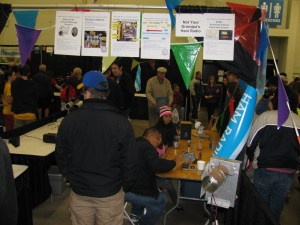
Not Your Grandpa’s Ham Radio at the San Diego Mini Maker Faire – We were lucky there was a no-show next to us, so we combined the empty space with ours at the end of an aisle – good show!
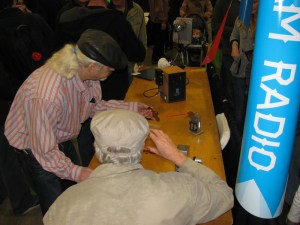
A visitor (striped shirt and black hat) tries some of the hands-on microwave physics demonstrations made by Walt
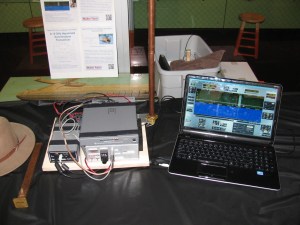
Dennis brought his 10 GHz / 24 GHz dual band station with software defined radio and notebook computer. The “waterfall” display is used to visually indicate very weak to very strong signals across the receive band. The digital signal processing in this system can improve signal reception

Two more projects by Dennis – On the left, a transmit/receive sequencer, used to turn on or turn off circuit modules (or functions) in a specific order. To the right is a circuit under construction/proof of concept receive system using direct synthesis.

Jason W6IEE brought his airplane IFF detector. I will get a better description of his display in a later update.
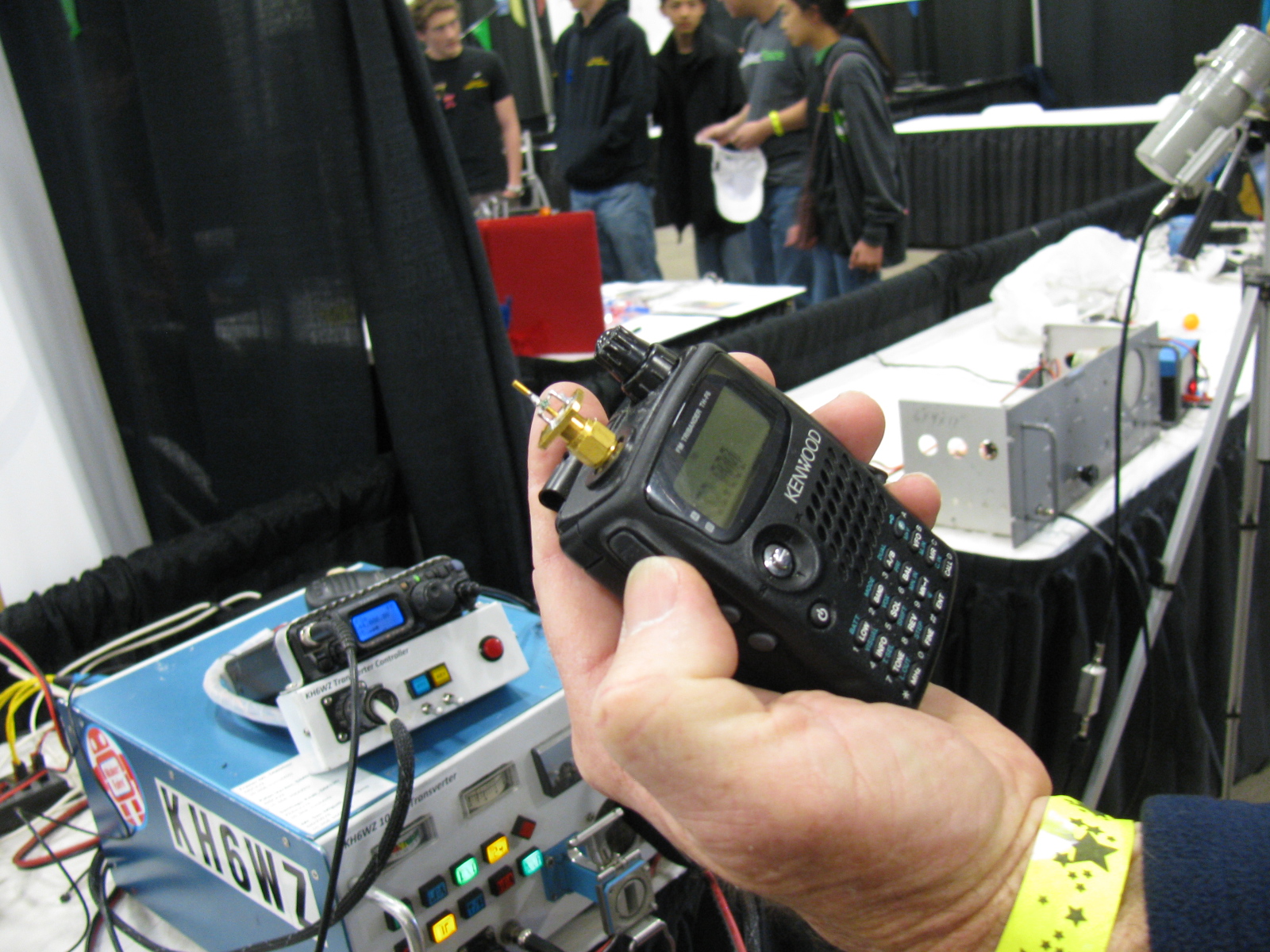
Here’s one of Kerry’s gadgets – a surplus QualComm microwave diode being used to generate a wideband microwave signal. Intended to be used to detect a microwave signal to verify transmitter operation, it can also transmit a signal for voice communication – in this case, to my 10 GHz transverter system shown in the background.
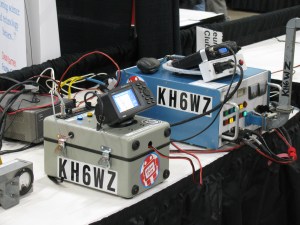
Here are three of my projects. On the far left, is a microwave field strength detector, this is used to demonstrate vertical or horizontal polarization, the KH6WZ unit in the middle is an APRS beacon, transmitting GPS coordinates (this unit generated and transmitted the GPS coordinates used to generate the location on the APRS locator map at the top of this page) and at the far right is my distance record-setting 10 GHz microwave transmitter-receiver system.
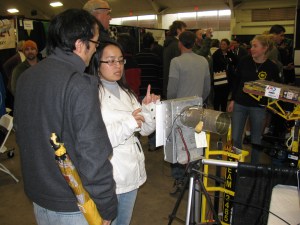
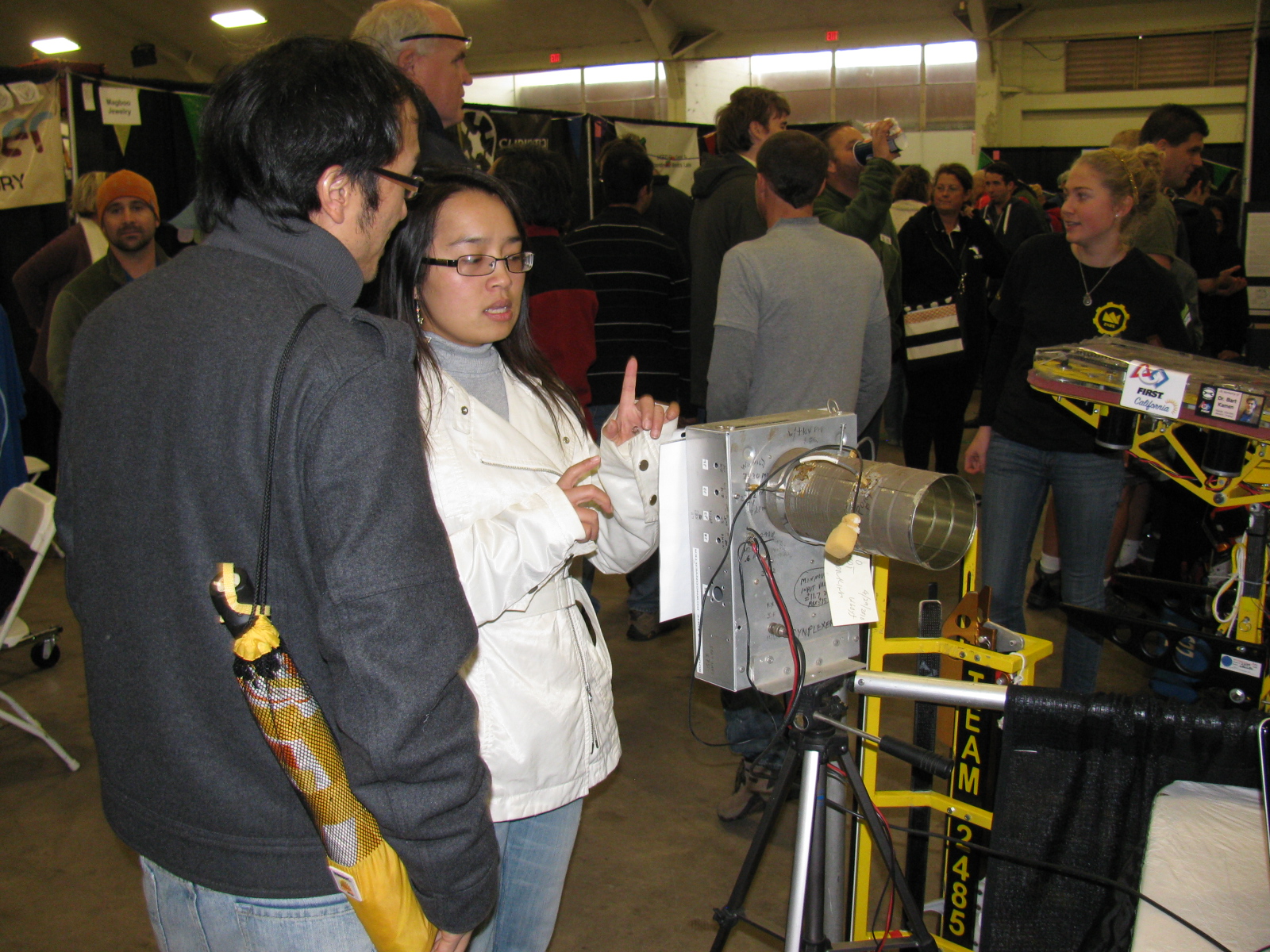
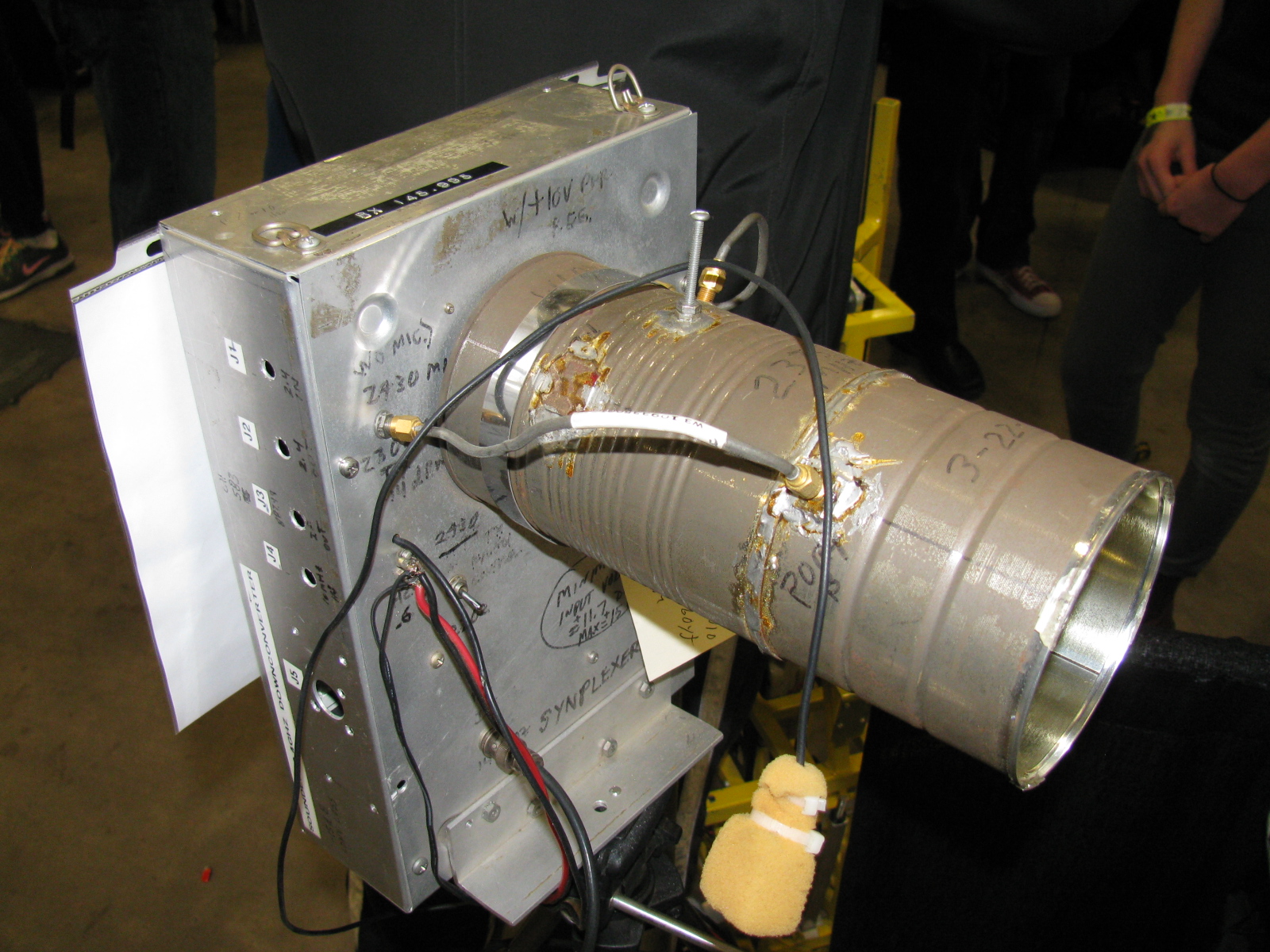
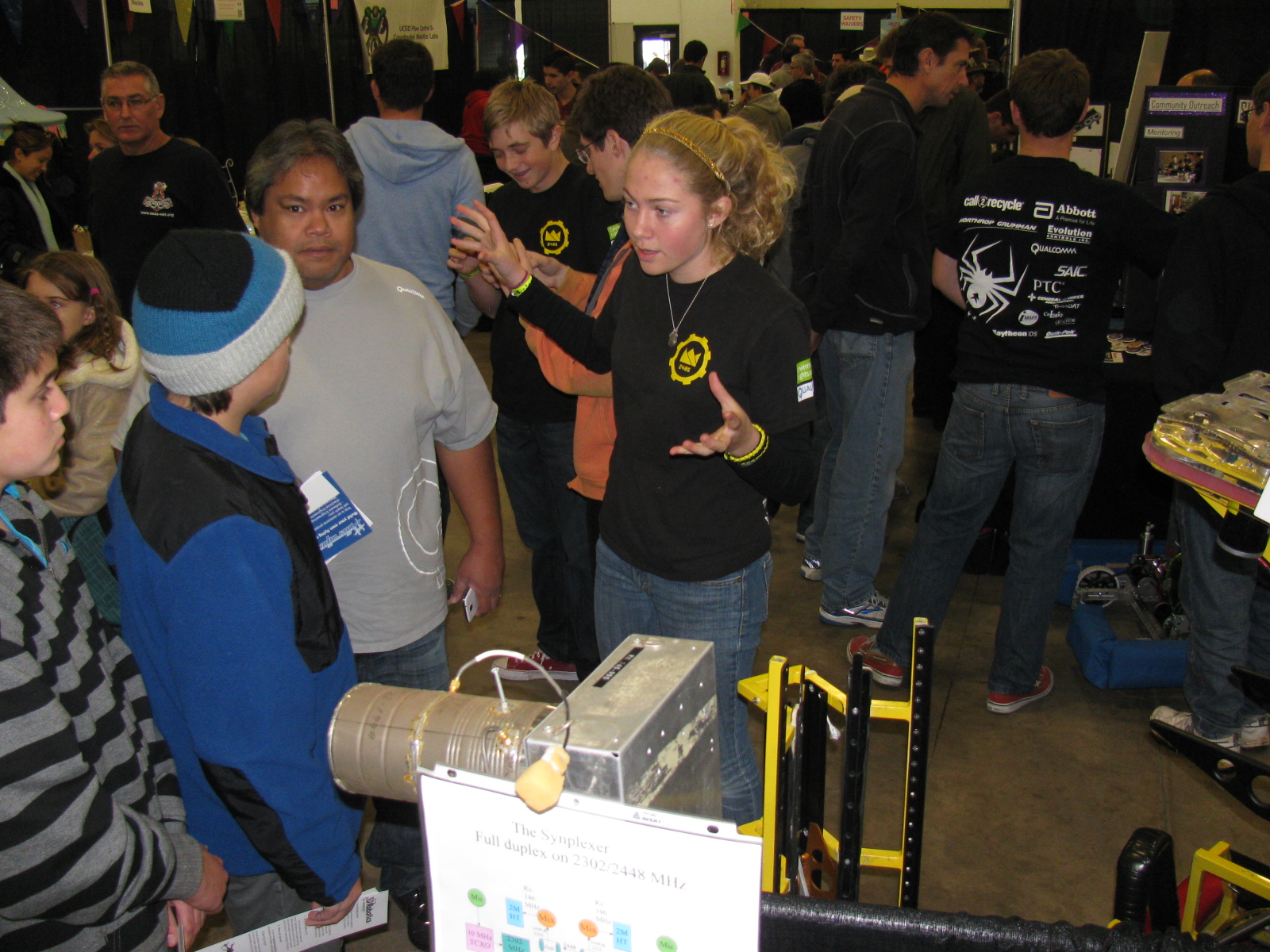
Visitor’s to Not Your Grandpa’s Ham Radio at the San Diego event were able to see some vintage 1960s microwave ham radio units – like this “Synplexer” built by Ed Munn W6OYJ. A pair of these units were on display so we could demonstrate full duplex wide band communication on 2.4 GHz (2400 MHz)
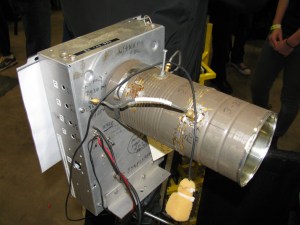
Here’s a closer look at the Synplexer
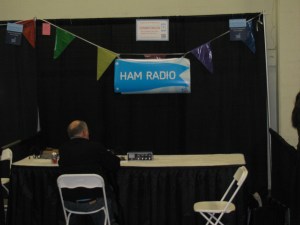
Who’s that?
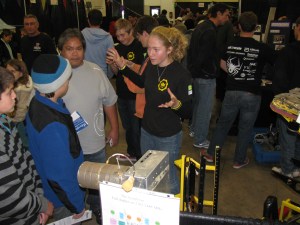
It’s great to see young ladies get excited about technical things. There’s a San Diego area high school program that includes a robotics class and competition
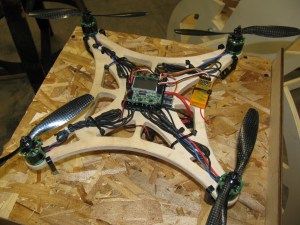
Quadcopters seem to be trendy with Makers. Maybe this is where Jeffery Bezos got that idea for small package delivery?

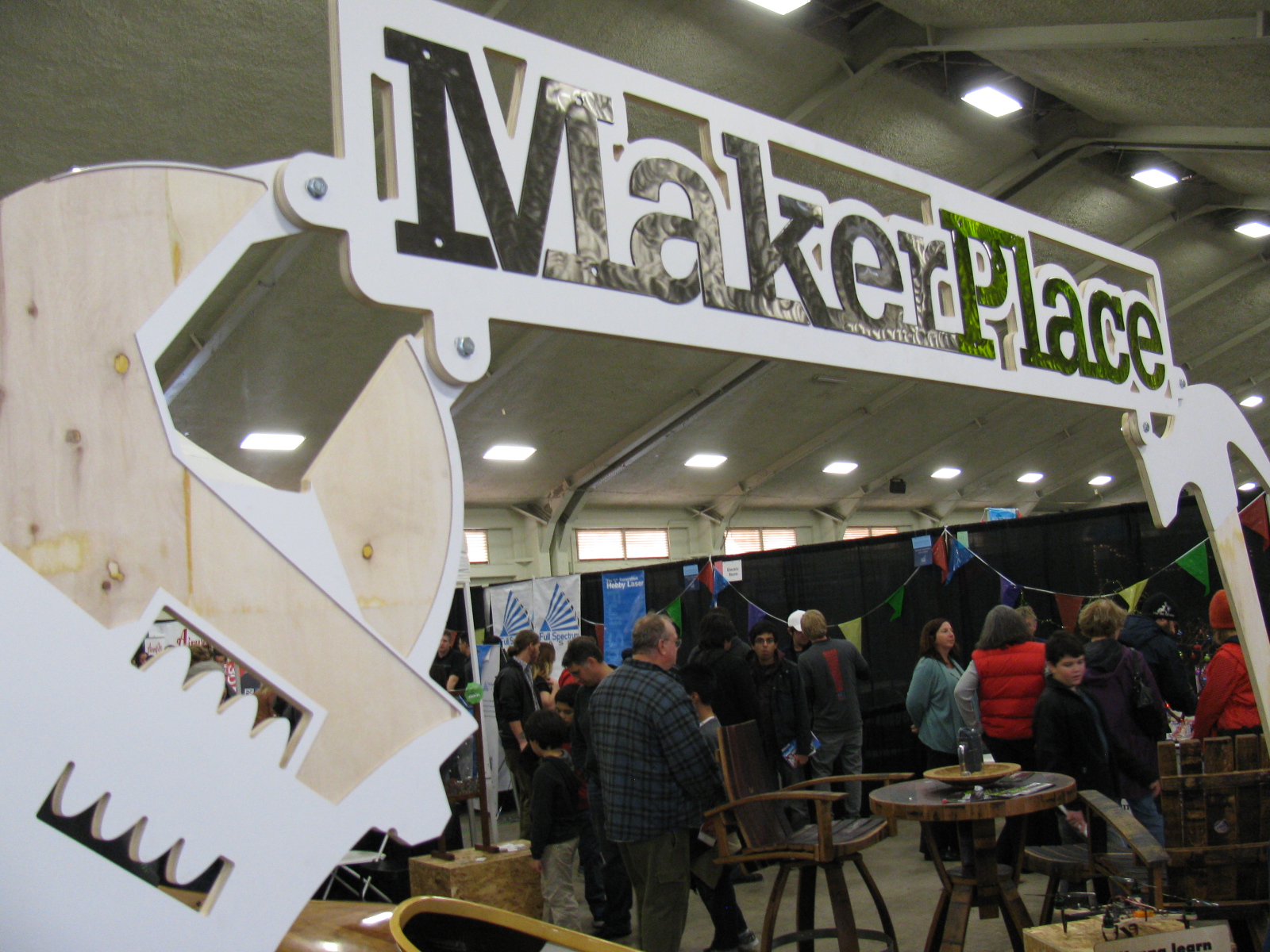
MakerPlace – a place where fellow Makers can gather and make, share and borrow tools and ideas to make things. Funny, it sounds like what a good and active ham radio club should be
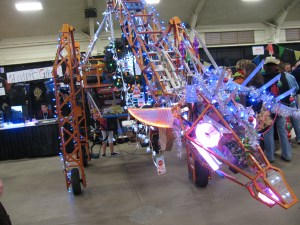
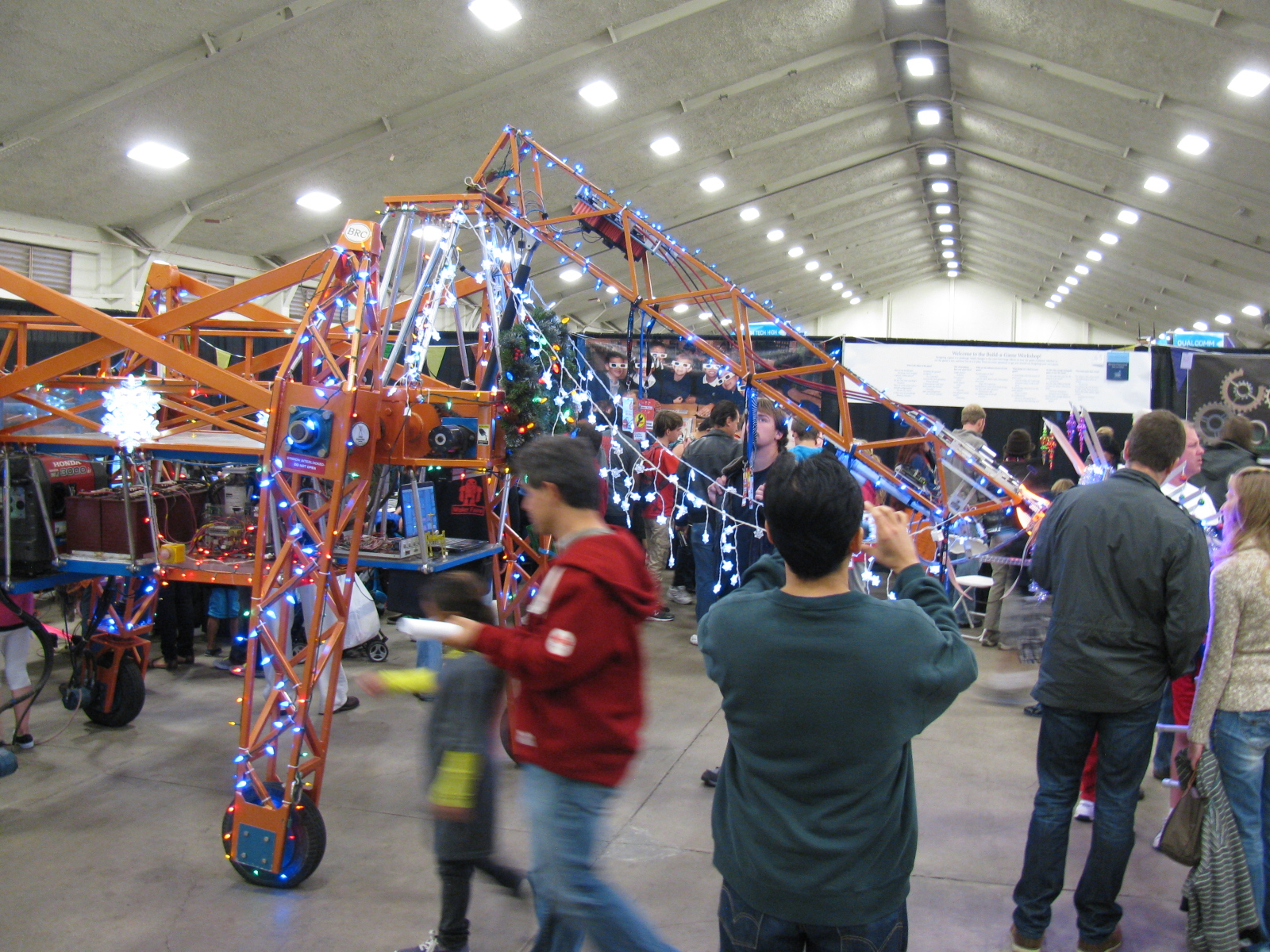
Russell – the Electric Giraffe at the 2013 San Diego Mini Maker Faire. Russell and its builder Lindsay, are San Diego residents
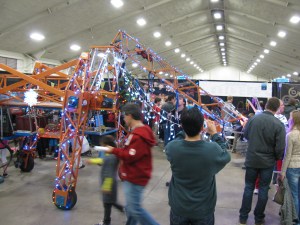
The Electric Giraffe – This image may give you some idea of Russell’s size – this is the “down” position, with head lowered for crowd interaction
Links to More Information
Amateur Radio General Information
CQ Amateur Radio Magazine
American Radio Relay League (ARRL)
Polaplexer for 2.3GHz (2300 MHz) – a Vintage Microwave Transceiver
Another Polaplexer Article
APRS – Automatic Packet Reporting System -Beacons
Byonics – I Use TinyTrak Beacon Kits
Microwave Ham Radio Clubs in Southern California
San Bernardino Microwave Society (SBMS)
Microwave Group of San Diego / San Diego Microwave Group
San Diego Area Radio Clubs
Go here and search for ham radio clubs in your area
Russell the Electric Giraffe

Announcing San Diego Mini Maker Faire 2013 – Visit the Maker Booth called “Not Your Grandpa’s Ham Radio”
Here’s a quick overview of Maker Faire projects from past “Not Your Grandpa’s Ham Radio” exhibits. . .
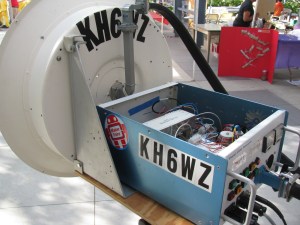
The KH6WZ 10 GHz (X-band) transmitter-receiver unit on display at the Orange County Mini Maker Faire on the UCI campus

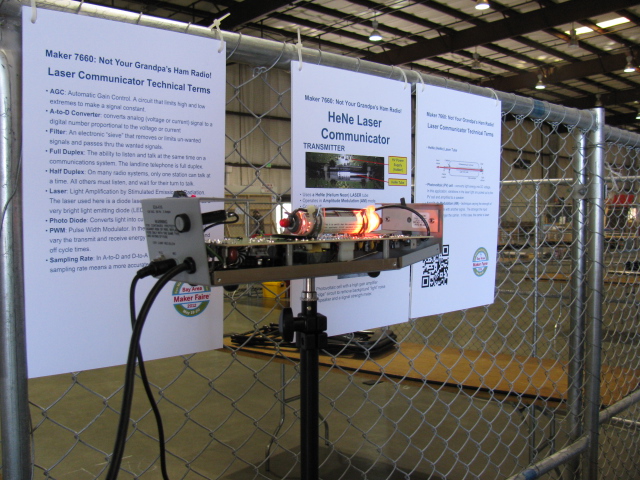
A vintage Helium-Neon (HeNe) laser communicator by Dennis W6DQ – from the 2012 Bay Area Maker Faire
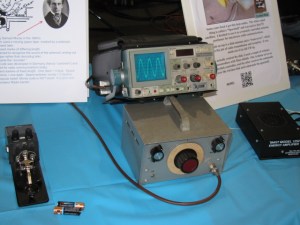
An audio frequency test station with an oscilloscope, signal generator and audio amplifier. A microphone inserted into the amplifier input became a popular function for kids and adults – Speak into the microphone and see what you sound like!

KH6WZ-5 APRS beacon – active and sending position data at the 2013 OC Mini Maker Faire at UCI. The beacon message included the Faire’s URL.

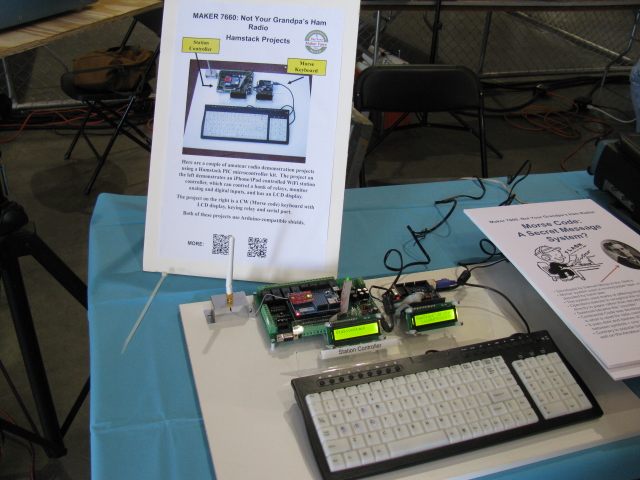
Morse Code reader/sender with wireless keyboard and radio interface by Brian W6BY. This setup uses Ham Stack modules available from Sierra Radio
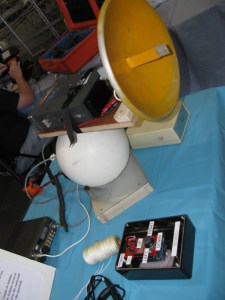
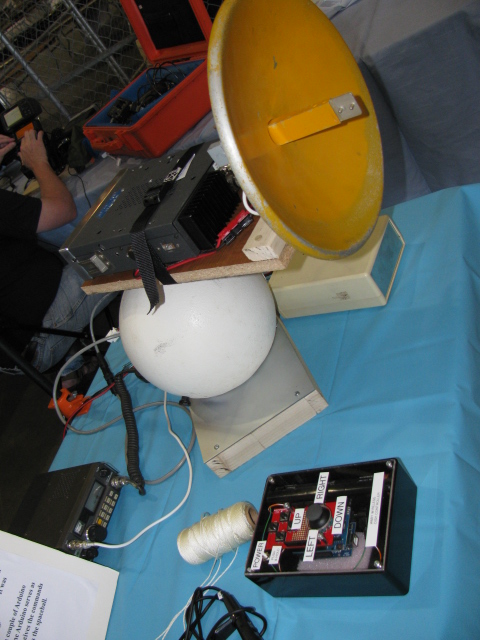
“Space Ball” azimuth-elevation antenna positioner, with wireless remote control and iPhone interface, by Brian W6BY

KH6WZ APRS beacon sending out the Discovery Science Center location
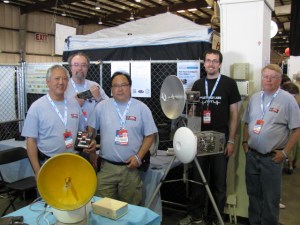
Not Your Grandpa’s Ham Radio 2012 Bay Area Maker Faire team – Left to Right: Brian W6BY, Dennis W6DQ, Wayne KH6WZ, Tony KC6QHP, and Mike Lavelle K6ML

Jeri Ellsworth – aka Circuit Girl – at the 2012 Bay Area Maker Faire. She’s playing her 8-bit bass key-tar.
More projects coming soon, so stay tuned!
Some friends at the office launched a helium balloon last weekend (Sunday 25 August). We talked about tracking the balloon and of course, I have several ham radio “tracker boxes” that interface a GPS unit to ham radio and then the Internet. Making something small and lightweight could be something that can be part of the payload for a high altitude balloon.
Interestingly, I had a project in my mind ever since I started my various beacon projects many years ago: It is a 21st century message in a bottle – build a disposable, waterproof, floating APRS beacon that I can throw overboard and into the ocean. Then the world can track this thing as it floats around. It will have some instructions on what to do with it if it is found. And, if the finder is or knows a ham radio operator, I will ask that they throw it back into the ocean so it can be found and tracked again.
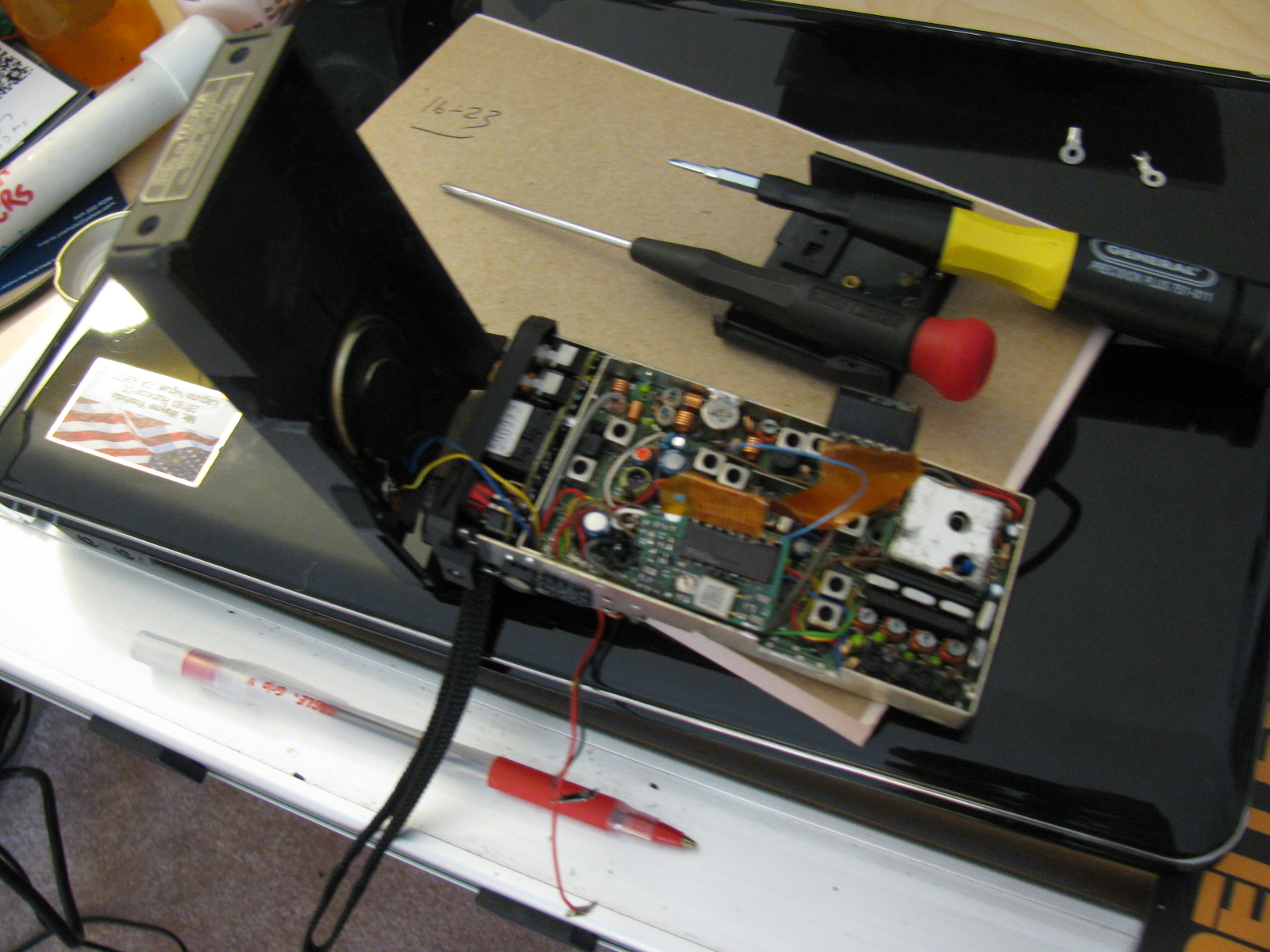
Here is a picture of one of the main ingredients I will be using:
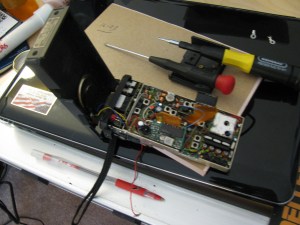
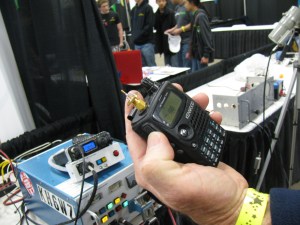
An old but working 2 meter HT can be put to good use as the RF portion of an APRS beacon.
The plastic case, battery pack and rubber duckie antenna will be discarded to reduce weight. LED indicator lights will be disconnected to reduce current consumption. Other parts or functions will be deleted to conserve space, weight and power consumption.
The APRS modem will be a TinyTrak unit, as with my other APRS projects.
I may build two of these, one for balloon flights and one for message in a bottle use.
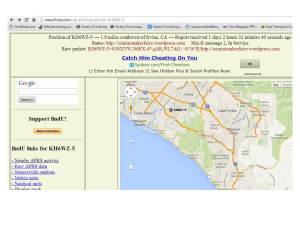
APRS display of the KH6WZ-5 location beacon at the 2013 OC Mini Maker Faire at UCI. Notice the beacon message at the top of the screen capture includes the URL of the event – a great publicity tool!
This past weekend, the second OC Mini Maker Faire happened. And it just so happens to be the second running of my ham radio demonstration called, “Not Your Grandpa’s Ham Radio (2)!” This is my continuing mission to remind people of two things:
First, “The Maker Movement” is nothing new, Amateur Radio operators have been doing this for a almost a century, and nearly 2 million people worldwide are involved in ham radio in some way.
Second, Ham radio is not necessarily an old man’s hobby where weird guys talk to strangers from garages and basements. We are skilled wireless communicators and use today’s technology, from GPS and microprocessors to lasers and microwave frequency linking.
This time I added static and working displays of my various APRS beacons (KH6WZ, KH6WZ-5, and others). I programmed the OC Mini Maker Faire’s URL to the beacon message so people can take a look at what was happening – an excellent publicity tool!
I also planned on making some 10 GHz contacts with my rig, since this was also the same weekend as the ARRL 10 GHz and Up Contest. The transverter covers were removed so people can see the system’s guts.
Based on previous experience at the Discovery Science Center “Meet the Makers” event, I demonstrated radio wave polarization- horizontal vs vertical – with my rig and the microwave strength meter.
Since I had plenty of space, I shared my booth with a company that makes interesting computer and microprocessor related items. This may sound trivial, until you realize this company is run by these three young guys . . .
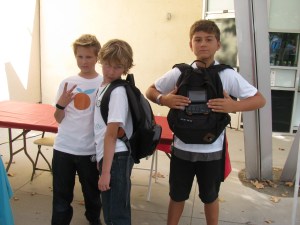
Huxley, Max and Ethan showing one of their products called the SmartPac.
There seemed to be more people at this Faire, probably since not too many other events were happening nearby. The 405/605/22 freeway closure did not affect the MF, since it started after the event ended.
More than a dozen hams – either active or at least licensed – stopped by to visit. We talked about this event as well as the Bay Area Maker Faire, and what ham radio activities we are involved with.
One more thing: I met several guys from the San Diego area – they are finalizing the plans to have a Mini Maker Faire in the San Diego area – this is great news. Stay tuned and I will announce an update as soon as I hear something from the committee!
Here are some pictures from the event. I am already thinking of building some new displays for next year.
-
-
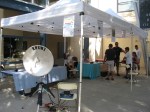
The 24-inch M/A-COM dish with the KH6WZ logo makes a pretty decent sign for the booth, eh?
-

-
The KH6WZ 10 GHz transmitter-receiver unit on display at the Orange County Mini Maker Faire on the UCI campus
-

-
KH6WZ horn antenna and microwave field strength meter at the OC Mini Maker Faire 2013
-

-
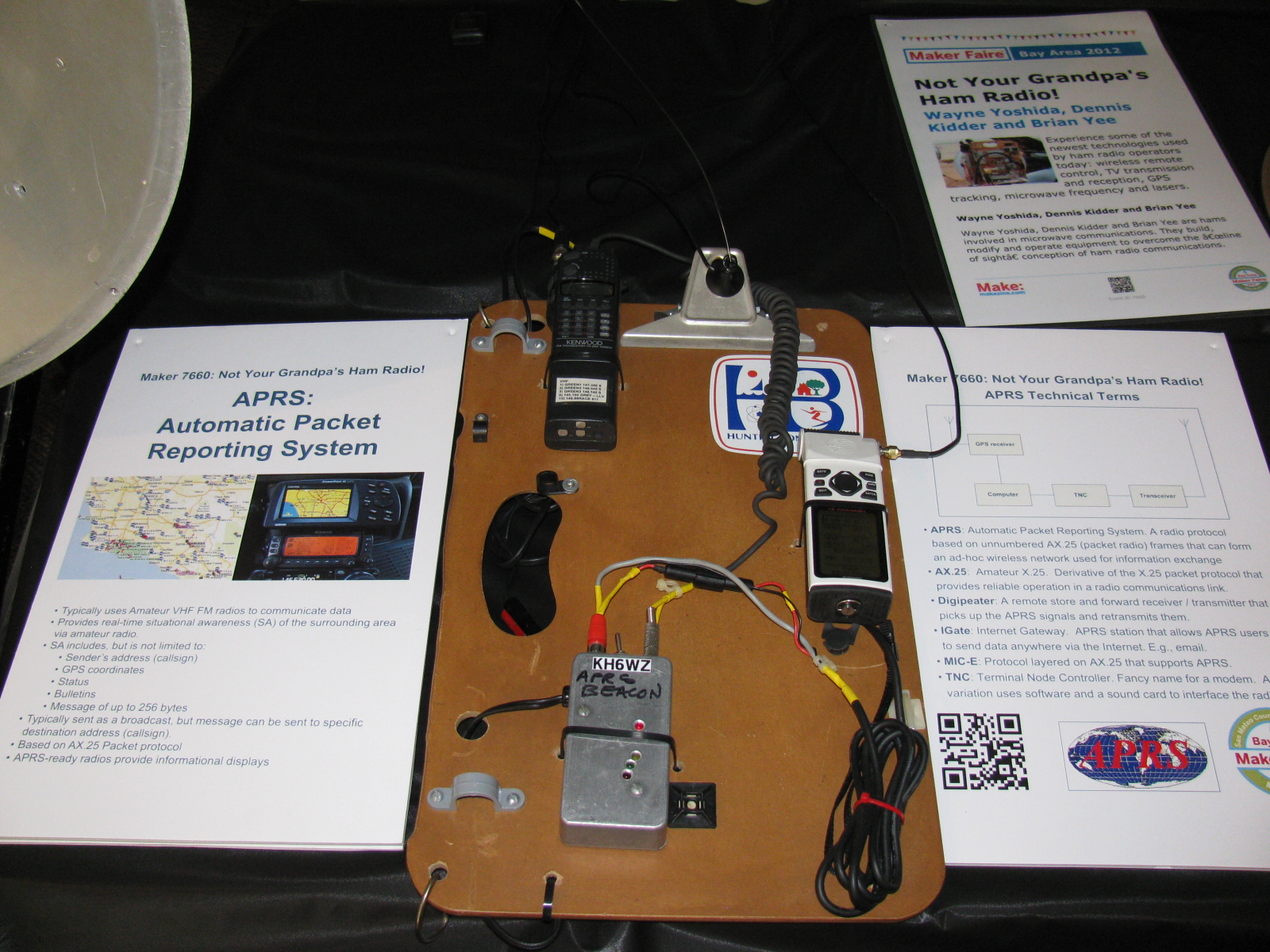
The KH6WZ APRS beacon (unit 1) at the OC Mini Maker Faire 2013. This was a static display unit to show components and construction.
-
-
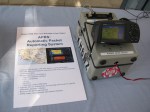
KH6WZ-5 APRS beacon – active and sending position data at the 2013 OC Mini Maker Faire at UCI. The beacon message included the Faire’s URL.
-

-
This familiar unit makes an appearance at the Maker Faire. . .
-

-
The robot “Titan” was a crowd pleaser – it throws flying discs and comes to you for a refill.
-

-
Track Roamer robot at the OC Mini Maker Faire. Notice the Nerf gun. When you come to next year’s event, remember to wear a red shirt.
-
-
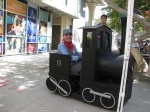
One of the “roving displays” at the OC Mini Maker Faire 2013.
-
-
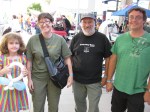
Some ham visitors at the Orange County Mini Maker Faire 2013: Haliey, Michelle W5NYV, Paul KB5MU and John KJ6HZ.
-

-
Michelle W5NYV wearing her daughter’s alpha wave ears. The ears move and react to pulses from a sensor clipped to her left ear.
-
-
An unknown couple wearing Vocademy shirts. What a great slogan: Eat, Sleep, Make.
KH6WZ APRS Unit Two (KH6WZ-5)
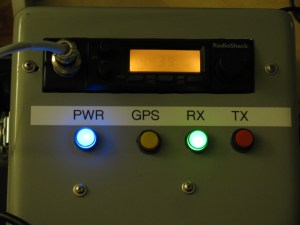
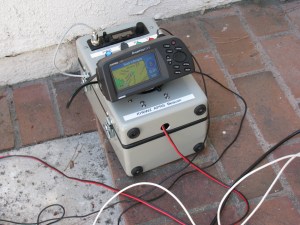
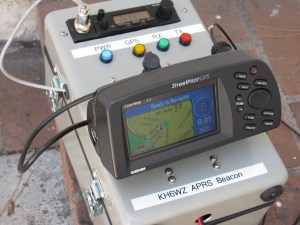
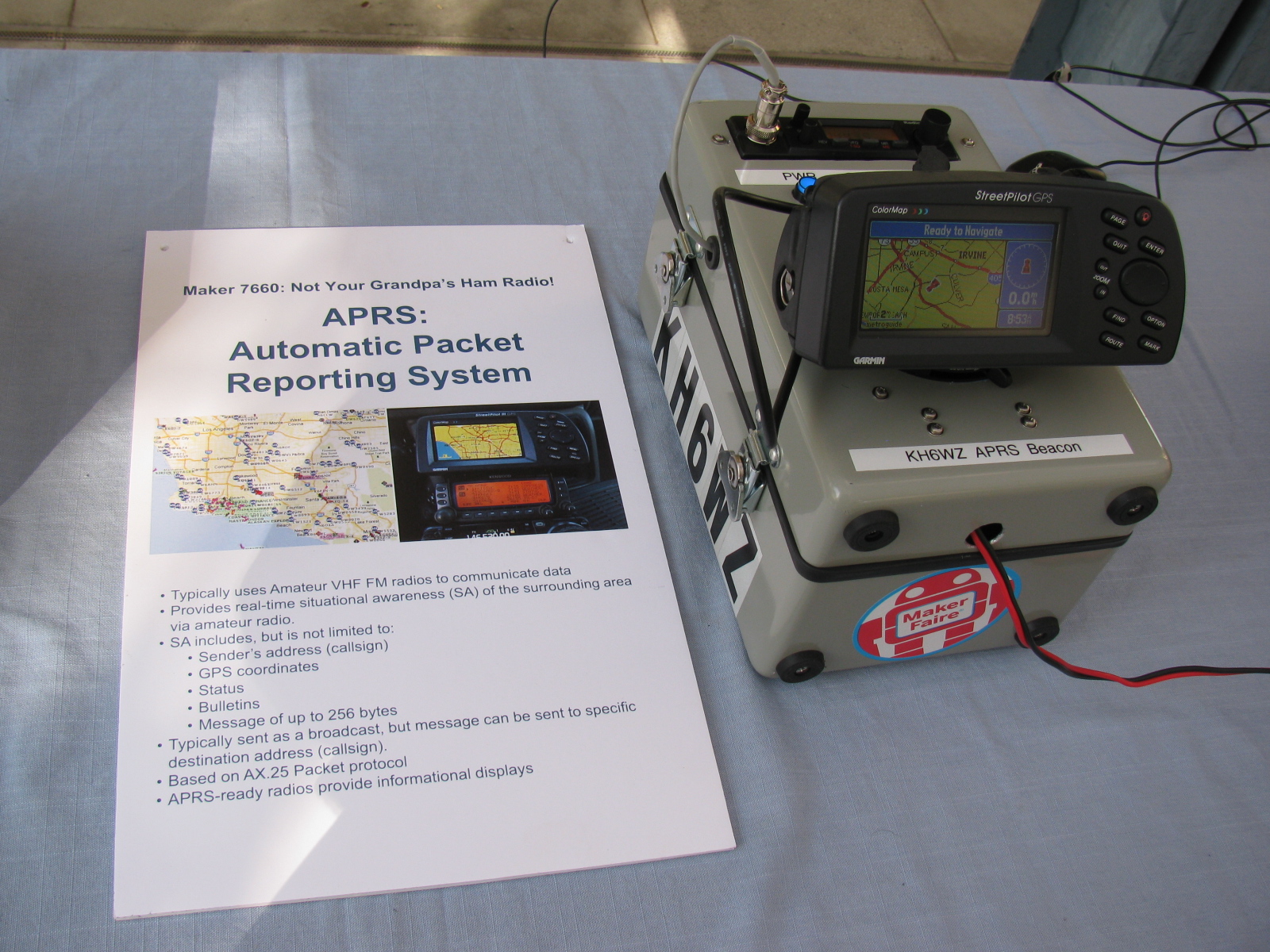
My “high power” version of the tracker box is complete. This unit is housed in an aluminum instrument case, and uses a mobile radio (Radio Shack HTX-252) with 10W and 25W capability for remote locations. The GPS unit is an old Garmin Street Pilot Color Map.
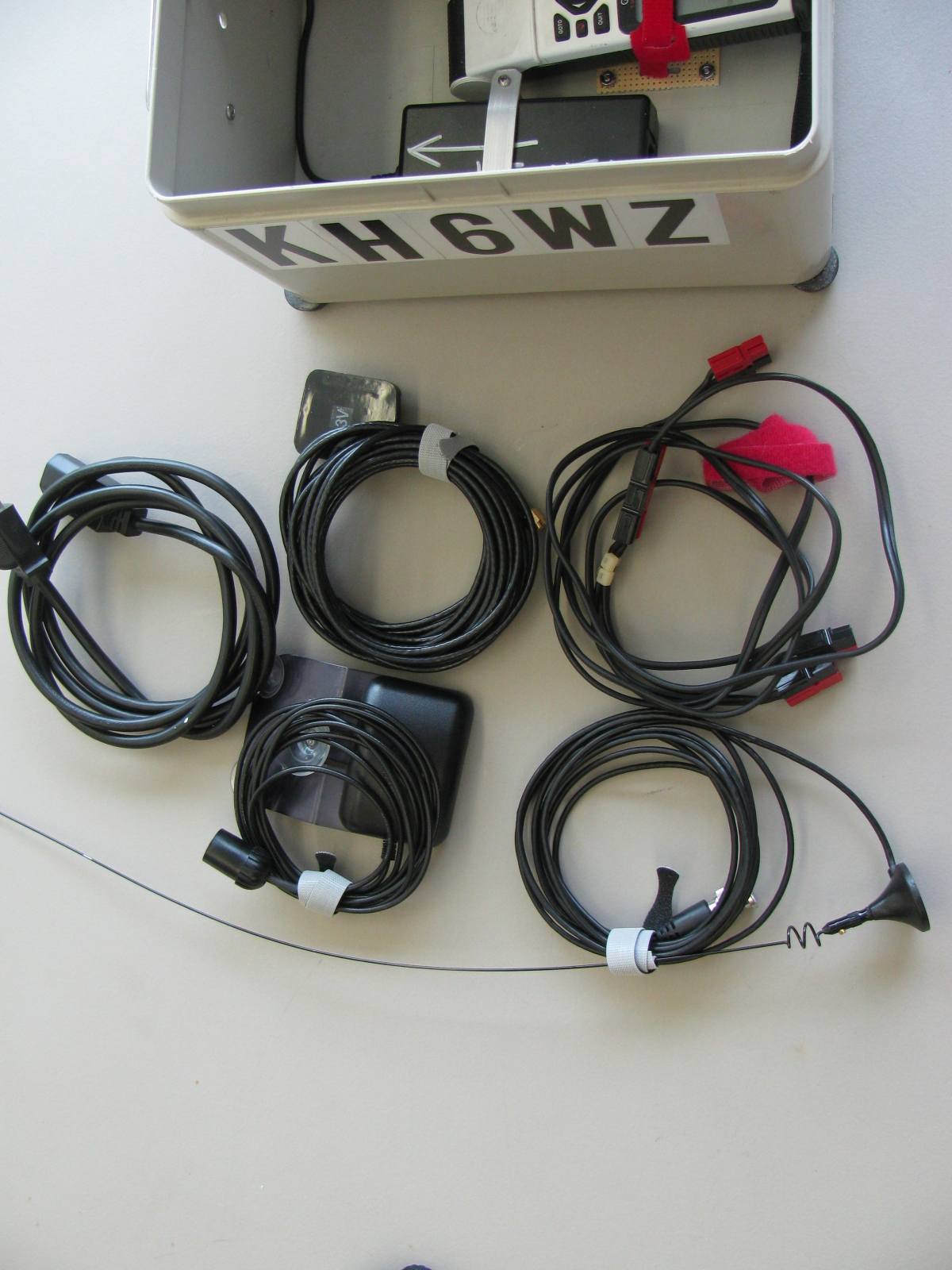
The bottom of the box (on the left) is used to store cables, the original microphone in case I need to use it as a “radio,” a GPS and a two meter whip antenna. A gel-cell would fit nicely in this space for “truly portable” operation.

After Field Day and the demonstration at the Discovery Science Center in Santa Ana, CA last month, I decided to add information on my TinyTrak APRS units on this site.
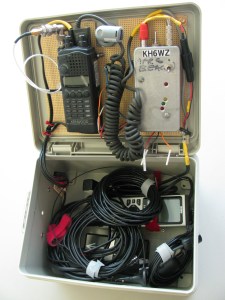
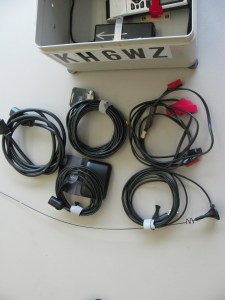
I re-packaged the unit to simplify deployment and to make it more practical for a “grab and go” event. On the left is a two meter (144MHz) hand-held radio, with the battery pack removed, and powered by external 12V via the DC IN jack. The TinyTrak 2 is next to the HT, in a die cast aluminum case (Hammond 1590B). On the bottom of the box is an old Garmin GPS 45XL and a 12V wall-wart type AC power supply. The bottom of the box also stores a magnet mount antenna for radio, an external GPS antenna and a DC power cable. There’s plenty of room for a gel-cell.

Under Construction
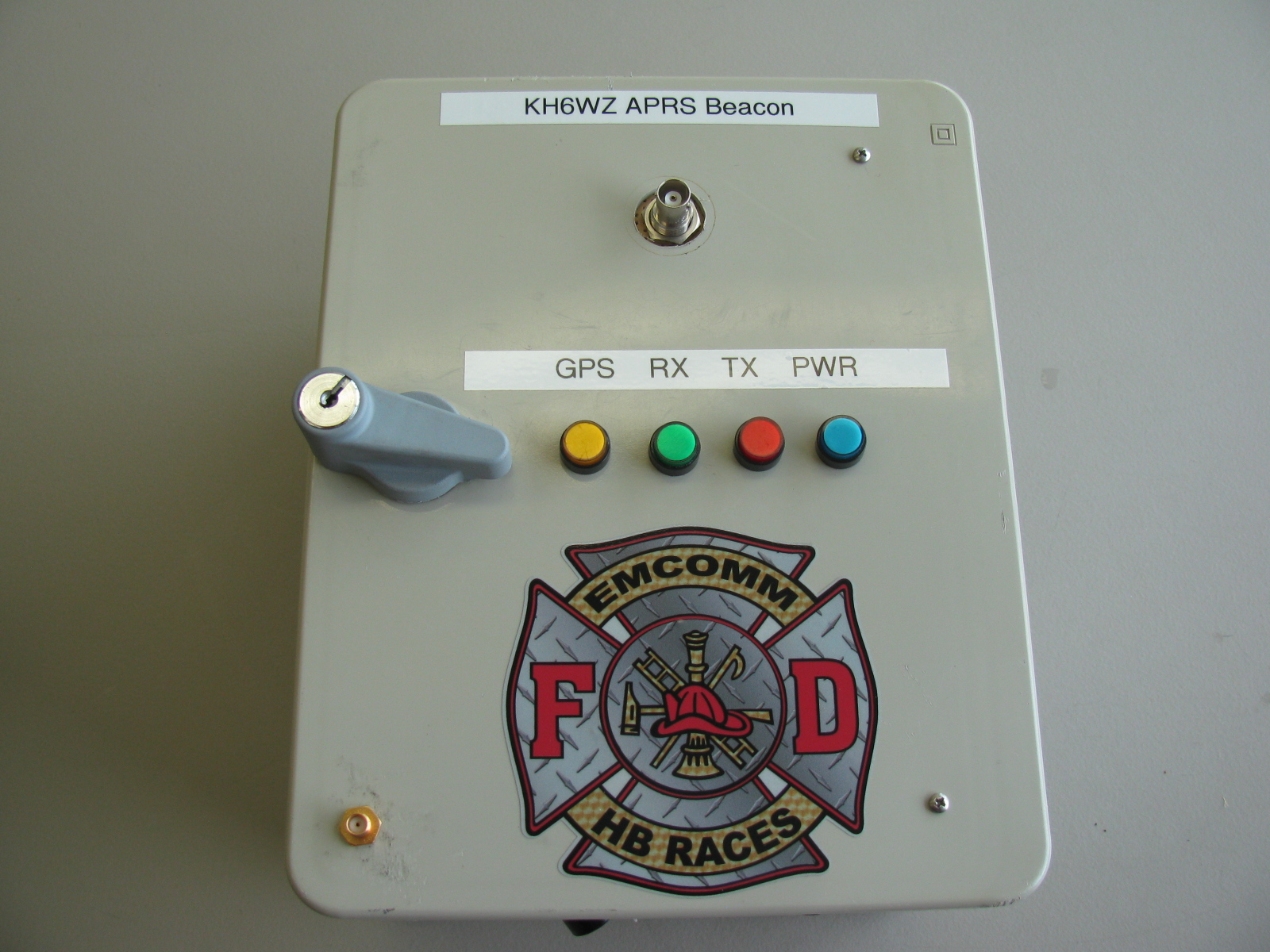
After completing the HB RACES KH6WZ APRS Beacon above, I decided to do a similar thing for my old Garmin Street Pilot. In this version, the GPS unit will be mounted on the outside of the cabinet so the map display will be visible. An inexpensive Radio Shack HTX-252 two meter mobile rig (bought new on a close-out sale years ago) is mounted to the top panel. This unit will be capable of high power operation (10 Watts low power, 25 Watts on high power) to get the signals out in fringe areas. Here are some pictures of the unit under construction. The aluminum chassis box is a surplus instrument case. It is nice and rugged, with a handle on the top.
Here you can see the mobile rig at the top left, a row of LEDs to indicate APRS status, the TinyTrak unit and a small perf board with RCA jacks for the GPS signals coming out of the Street Pilot.

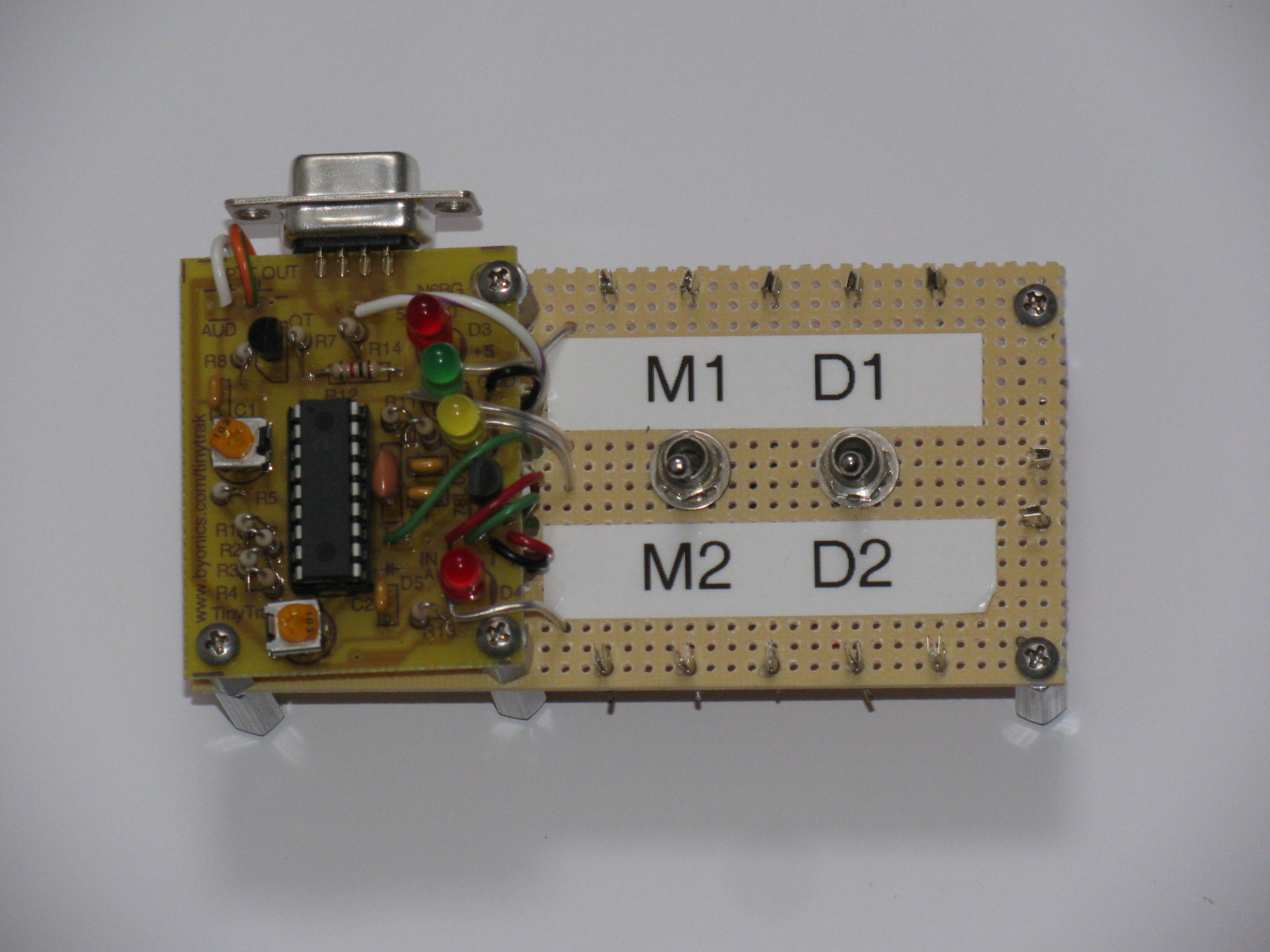
Here is a close-up of the TinyTrak PCB and a break-out board for the unit. Switch M1/M2 selects the primary or secondary message programmed in the TinyTrak; switch D1/D2 selects internal display (D1) or the external display (D2). More details on these functions appear below in “One Way to APRS Beaconing.”
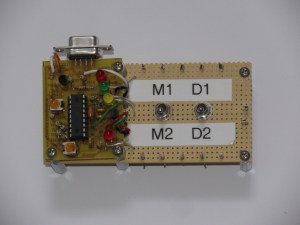
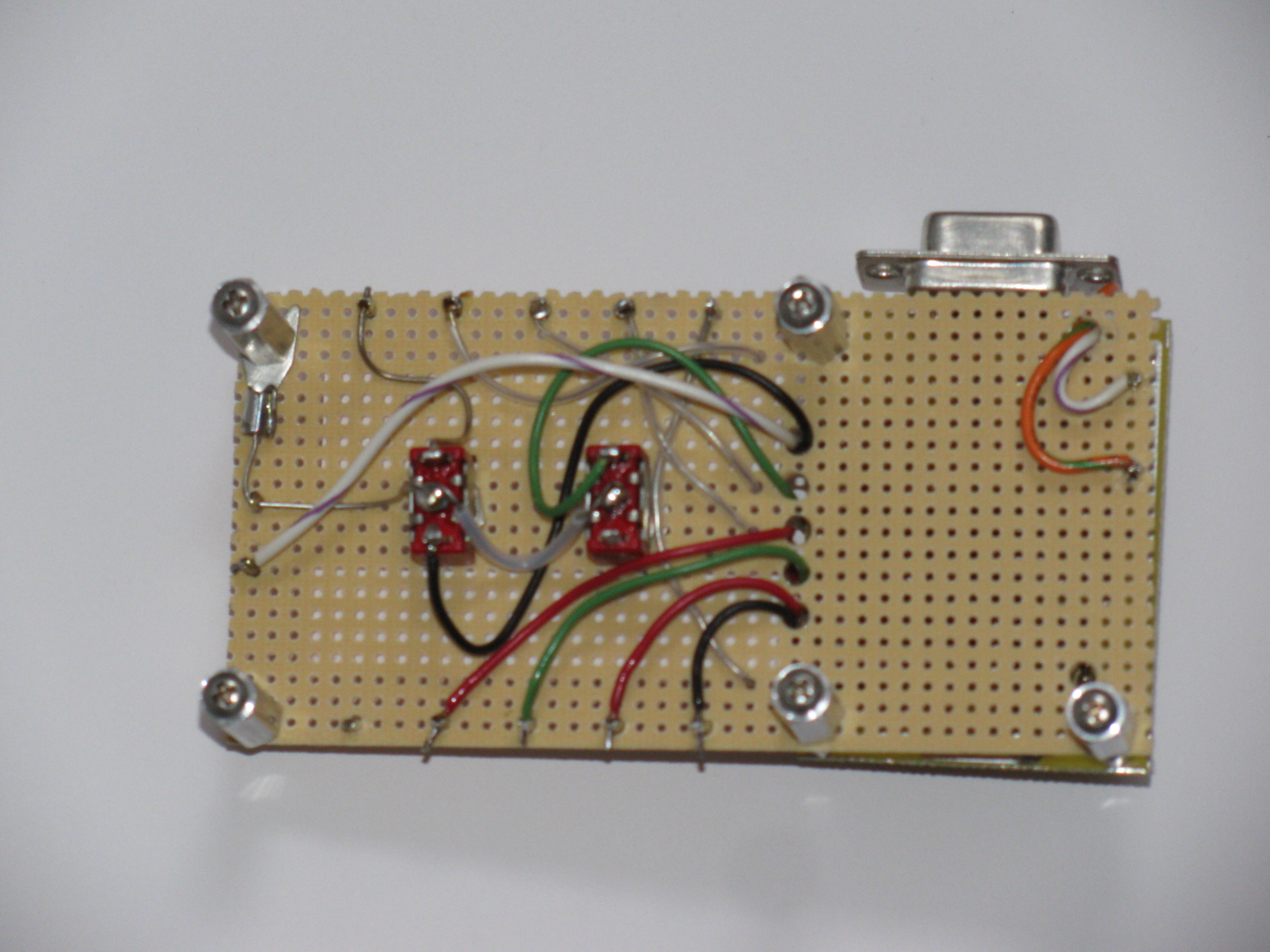
Here is a bottom view of the TinyTrak motherboard…. Mounting the TinyTrak this way will help preserve the PCB trace pads and should help simplify access to the wiring when and if it needs repair.

The following information is based on my original article called “Where in the World – A Look at APRS” in the CQ Magazine Beginner’s Corner for November 2003. Click here to see the table of contents of this issue.
I’ve always been fascinated by those “tracker systems” used in the movies and television. You know, like the scene in the movie “Armageddon,” where the ground controllers are watching each member of the “A” and “B” Shuttle teams. Or the “homer” made by “Q” in the James Bond movie “Goldfinger.” I found an expensive and fake homer here, but it is just a fancy sound maker with an LED – take a look at this thing. . .
Today, and in the real world, hams have access to this interesting technology: It’s called the automatic position reporting system (APRS), developed by Bob Bruninga, WB4APR. Basically, it uses latitude and longitude information from the global positioning system (GPS) satellites and transfers the data via packet radio on 2 meters. Mix an APRS station with the Internet, and we have a system in which hams can keep track of moving objects remotely. Interfaced with a suitable weather station, local “micro-weather reports” can be viewed. If you know anyone into APRS, take a look at the N1BQ Web site and plug in their callsign into the search field. You’ll be able to see what he or she has been up to (or at least where they went) lately.
Several members in the local radio amateur civil emergency service (RACES) group made “tracker boxes” and use them for special events, like the Baker-to-Vegas Challenge Cup Relay race. When I saw their APRS systems for the first time, I thought, “Hey, that’s really neat.” Then I went, “Hmmm. What would I do with such a thing?”
Like a lot of hi-tech gadgets, if you think hard enough, you will come up with a lot of reasons to build, buy or otherwise own one. Here are some examples of what you can do with an APRS tracker box:
- When interfaced with a compatible weather station, the APRS beacon can also transmit weather information
- If you are involved with a public service group, you can watch where a person or vehicle is in near real time
- You can re-trace and display your driving, sailing or boating routes via the Internet, and friends and relatives can watch, too
- Put that working but old and un-used 2M HT or mobile radio to good use
Remember that an APRS unit is an Amateur Radio beacon, and must comply with FCC Rules on Beacons, One Way Transmissions, Station Identification and Stations Under Remote Control.
In order to have a moving APRS station, you will need a 2 meter station (rig, antenna, power source), a terminal node controller (TNC) with APRS capability, a computer and a GPS unit. If you are doing packet radio now, or have some packet gear in the closet someplace, you are already more than half way there. By the same token, if you enjoy boating or camping, you may already have a GPS unit.
2013 UPDATE: Many VHF mobile rigs – and some HTs too – come with an APRS capability either built-in or have this feature available as an internal option. This is pretty amazing and shows how fast technology can change.
Here are some notes about what you need to make a simple APRS beacon.
The GPS Receiver and Antenna
The GPS unit does not have to be new – and, in fact, older units might actually be better, since the newer units have gone to the small MCX and other exotic connectors, rather than the easy to use and adapt BNC or SMA connector. I use an old Garmin GPS 45XL and a Street Pilot Color Map, both units have been discontinued many years ago.
Almost any GPS receiver can be used for APRS, but a critical feature the GPS unit must have is a connector port for serial data output in the National Marine Electronics Association (NMEA) format. Just about all “camping” and “marine” GPS units have this data interface.
I suggest looking for the following features, in this order of importance:
1) Ability to access the GPS data output via a serial port. Check to see if the data interface cable is available, or can be easily made or modified. See an interesting alternative source for Garmin-compatible accessory plugs in the Reference section.
2) Ability to use an external antenna. In essence, all GPS units are radio receivers, and, just like your radios, require a good antenna for the best performance.
I have found amplified GPS antennas on eBay and other places for as little as $20. Some GPS modules include a patch type antenna built-in. This may or may not be optimum for use in the field, but today’s GPS units have much more channels than the 10-plus year old units I am using for my system.
3) Ability to apply external 12VDC power. Small penlite cells can get expensive after a while, so the ability to plug into an alternative power source would be good. Be aware that some units need a power source lower than 12V to 15V, and can be damaged if 12V is applied directly to the unit. But do not fret, if your GPS unit needs something other than 12V, you can build or buy a suitable voltage converter to handle this. The simplest way to use external power is to see if the unit has a cigarette lighter accessory or some other external DC cable, and use that. For non-automotive use (like pedestrian mobile), you can remove the cigarette lighter plug and use a gel-cell or other 12V power source.
Garmin seems to be the most popular GPS units for APRS. I think their excellent customer service contributes to this, based on personal experience.
Full-featured GPS units might be a bit extravagant for just APRS applications, so if you are not into flying, backpacking, sailing or other activities requiring navigation, you might want to consider a GPS “module,” rather than a GPS “receiver.” The GPS module is just a “plain data receiver box” with no display, and is intended for use with some other gadget, such as a computer. Because no other “support electronics” is involved, prices for GPS modules are much cheaper than GPS navigation units.
The Interface and the Rest of the Components
An APRS interface is the “brain” that transfers the digital location data from the satellites and instructs the radio transceiver when to transmit and when to receive. More sophisticated units can interpret more GPS information, and transmit more than simple latitude and longitude. For example, on a moving vehicle, the APRS unit can send not only position, but also speed, rate of climb or rate and direction of turn, altitude, a station identifier and an icon.
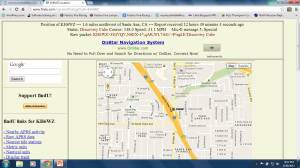
There are dozens of different symbols used in APRS to indicate what sort of object is being tracked. For example, my friend Peter Barbour, N6RAS, is an avid sailor, and uses a boat icon when he is “beaconing.” Bill Honeyman, KG6CNL, uses a jeep, and Steve Graboff, W6GOS uses a “running man” symbol during the Baker to Vegas race. The eye icon was used during the demonstration at the Discovery Science Center, see the screen capture below.
One Way to APRS Beaconing
There is a simple way to try APRS. The TinyTrak unit, by Byon Garrabrant, N6BG, is a wonderful little circuit that eliminates the packet TNC. If you have a “TT,” all you need is a GPS receiver, a two-meter radio, antennas for the GPS and radio and a power source. The unit is configured via the serial port in your personal computer.
Now in its fourth generation, the TinyTrak units are available in a “fully-assembled” version, complete with a small 2 meter transceiver. The older generation small PC board versions of the TinyTrak are still available.
My units vary somewhat from the “out-of-the-book” instructions. I added an SPDT, center-off toggle switch to make a “test” function: In the test mode, the unit is powered up normally, and the LEDs blink to verify operation. After checking the blinking lights and verifying the two meter rig transmits data, the switch is thrown into the “operate” mode, which simply cuts off the ground connection to the LEDs (making them go off) to conserve battery power.
I recently added another modification: I added another SPDT switch (not center-off) so I can select either the small internal LEDs or the large front panel mounted LEDs when the unit is in operation. This is done to create a “light show” to attract attention during demonstrations.
Remember that the TinyTrak is a simplified beacon device. It will not receive and decode APRS data for display purposes. It is the “data transmitter beacon” or “homer” part of an APRS set up, but they are fun nonetheless.
Once you get your APRS beacon going, I am sure you will want to do more. In the meantime, the simple starter system will enable you to beacon your position while you do your favorite radio-activity, from public service to outdoor events. James Bond’s homer technology is here for hams, and is an exciting and interesting bit of technology we can use just for kicks or for serious public service assistance.
Links to More Information
General APRS info
http://web.usna.navy.mil/~bruninga/aprs.html
http://www.aprs.net
http://www.tapr.org
APRS Symbols
http://www.aprs.net/vm/DOS/SYMBOLS.HTM
See Beacon Locations on the Internet
http://www.wulfden.org/APRSQuery.shtml
TinyTrak “TNC-less” APRS kits
http://www.byonics.com
Carter, Jim WB6HAG, “Build an APRS Encoder Tracker,” QST, February, 2002, page 28
GPS Modules
http://www.makershed.com/default.asp
An Interesting Connector Source for Garmin GPS Units
http://pfranc.com
Baker to Vegas Challenge Cup Relay
http://www.bakervegas.com

































 wayneyoshidakh6wz