Archive for the ‘CQ magazine’ Tag
APRS: Automatic Packet Reporting System – and High Altitude Ballooning
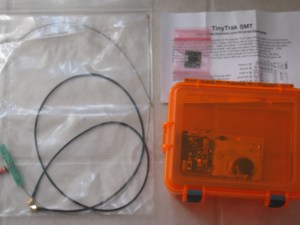
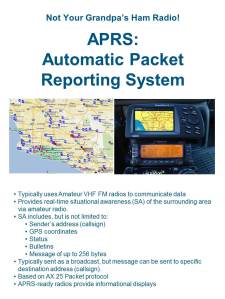
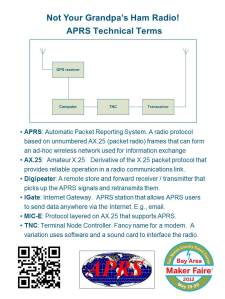
Someone asked if it would be possible to track a high altitude balloon using ham radio. It is possible to track a vehicle, aircraft or person using the amateur radio application called APRS, the automatic packet reporting system. Basically, the system consists of a two-way radio (usually for the 2m ham band), a GPS receiver, a modem to interface/control the data to and from the GPS, and an antenna for the radio and the GPS.
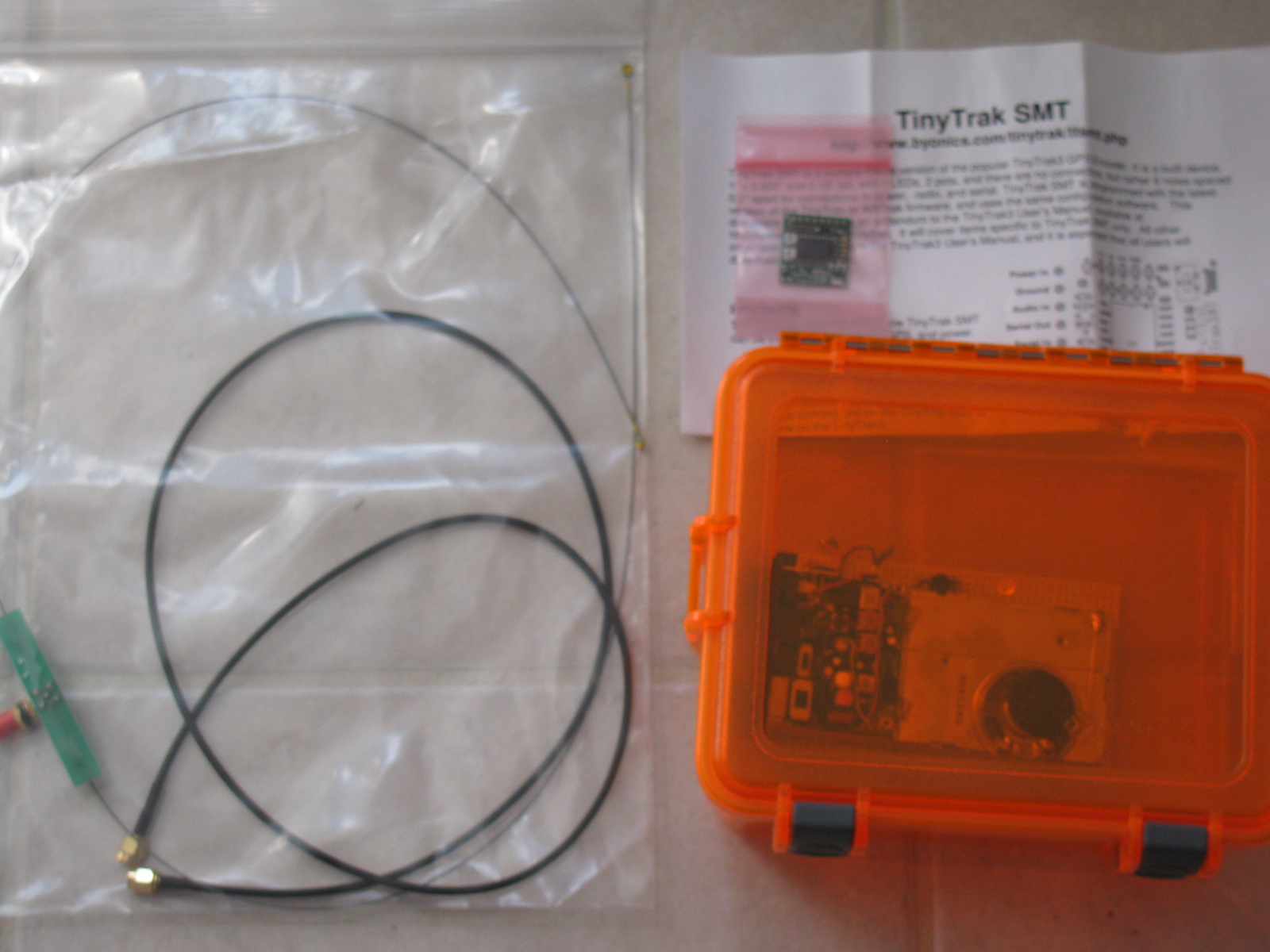
By coincidence, I am collecting parts for such a system, see the photo above. The radio antenna is on the left – it is a piano wire dipole for the 2 meter ham band. On the upper right is a Byonics Tiny Trak SMT – the interface between the two-way radio and the GPS. Inside the orange plastic box is an old 2m handie-talkie, with its cabinet parts and battery pack removed. Not shown in the picture are the other ingredients, which include a tiny GPS module and the video cameras for Amateur Television (ATV).
Here are some links I used in my research.
Byonics – Makers of the Tiny Trak series of APRS beacons
Amateur Radio High Altitude Ballooning
Sparkfun – High Altitude Balloon Launch
Low-cost Near Space Without HAM Radios or Cellphones
Breaking the Amateur Radio Balloon Altitude Record
BEAR (Balloon Experiments with Amateur Radio)
Watch this space for more Bay Area Maker Faire stories and pictures!
The 2014 Bay Area Maker Faire is now history.
One of the Maker Faire team members, Brian Yee, W6BY, was not able to join us – we are all hoping Brian recovers quickly from his injury.
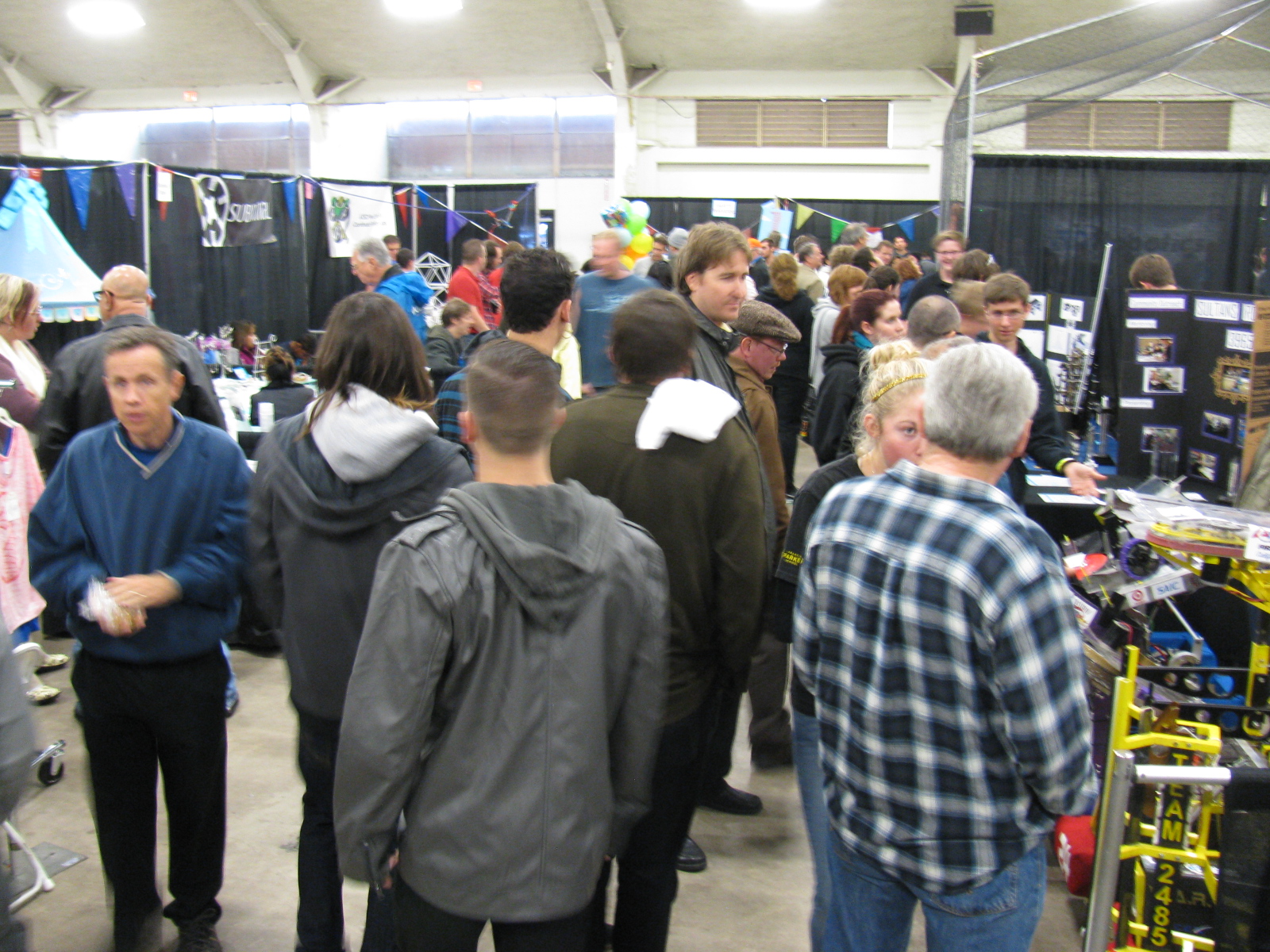
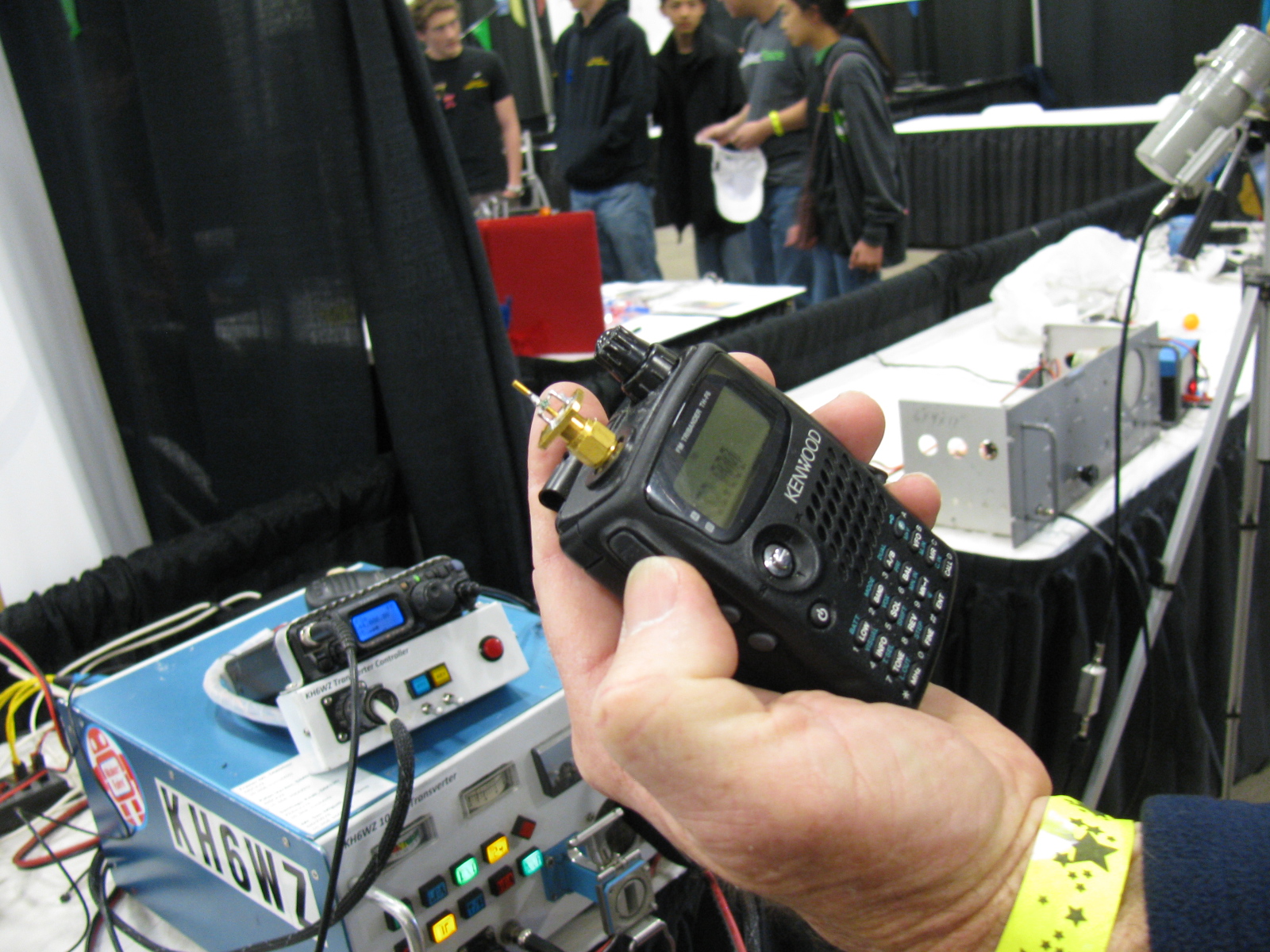
Dennis Kidder, W6DQ and Marty Woll, N6VI (ARRL Southwestern Division Vice Director) – along with several University of California, Davis engineering students and their faculty advisor, Professor Leo Liu, displayed and demonstrated their projects to the Maker Faire crowd. Estimated attendance: 120,000.
Here’s a two minute “drones eye view” of the Maker Faire 2014
Highlights during setup day included meeting Anouk Wipprecht, the fashion designer; Tenaya Hurst, the Arduino Woman; and the paella dinner, sponsored by Liquid Wrench.
This year, I included a handout of frequently asked questions about Amateur Radio, and it turned out to be useful. However, we quickly ran out of copies, so I am pasting the text here:
What Are We Doing at Maker Faire 2014
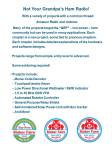
Not Your Grandpa’s Ham Radio
Thank you for your interest in our Maker Faire display. We are radio communications experimenters using the microwave Amateur Radio (ham) frequencies.
Who are we?
We are licensed Amateur radio operators (“hams”).
Is this like CB?
Yes and no. Ham radio is similar to CB because we use two-way radios to talk to each other, but hams can communicate using Morse code and computers in addition to voice, and we even have our own satellites. Ham radio requires a license issued by the Federal Communications Commission (FCC) in the USA.
How far can you talk?
We can communicate with other ham stations around the corner or across the globe, depending on a variety of factors that affect the way radio waves travel. The equipment we are using here operates on frequencies that generally follow line-of-sight paths. However, through experimentation, we find that signals can be reflected against objects such as buildings, trees, islands and mountains, to extend the range. Using these techniques, we are able to contact other stations hundreds of miles away.
What kind of radios are you using?
No commercially-built, “off-the-shelf” equipment for these frequencies exists, so we must build our own equipment, or modify commercially-made equipment meant for other services, such as cell phone, wireless links and radar systems.
How much does this equipment cost?
Like any other hobby, people spend as much or as little as they can afford. Most people involved in ham radio spend as much as any serious stereo enthusiast, amateur photographer or woodworker.
Where can I get more information?
Wayne Yoshida KH6WZ
http://wayneyoshida-kh6wz.com/
http://www.linkedin.com/in/waynetyoshida
American Radio Relay League (ARRL)
http://www.arrl.org
CQ, and CQ-VHF Magazines
http://www.cq-amateur-radio.com
The 50 MHz and Up Group
Meetings are held on the first Thursday of the month at 7pm at the TI (formerly National Semiconductor) Conference Center, Building E, in Sunnyvale, CA
http://www.50mhzandup.org/
The San Bernardino Microwave Society (SBMS)
Meets on the first Thursday of each month at 7pm at the American Legion Hall, 1024 Main St., Corona, CA
http://www.ham-radio.com/sbms/
The Microwave Group of San Diego
Workshops and informal meetings are held each month on the third Monday at 7pm in La Mesa, CA
http://www.ham-radio.com/sbms/sd/mgsd.htm
Here are some images from setup day, Friday May 16.
. . . More to follow. . .
This is our third consecutive appearance at the Bay Area MF, and continues my theme of showing how some ham radio operators continue the tradition of “teaching, mentoring, making, modifying, repairing and improving” radio and radio-related technology. Read my post about ham radio and the Maker movement.
Today’s ham radio operators have an incredible amount of exotic surplus material that can be converted into everyday use on the ham radio bands. Grandpa certainly never heard of surface-mount technology, talking on homemade 47 GHz transmitter-receiver systems or pocket-sized, satellite navigation systems (GPS). But he sure did mentor, make, modify, repair and improve the equipment in his bedroom radio station…..
Not Your Grandpa’s Ham Radio – Maker Faire 2014 Team
Wayne Yoshida KH6WZ
Dennis Kidder W6DQ
Brian Yee W6BY
Marty Woll N6VI
More information on the Maker Faire Bay area.
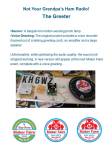
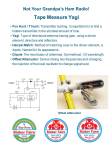
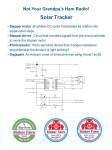
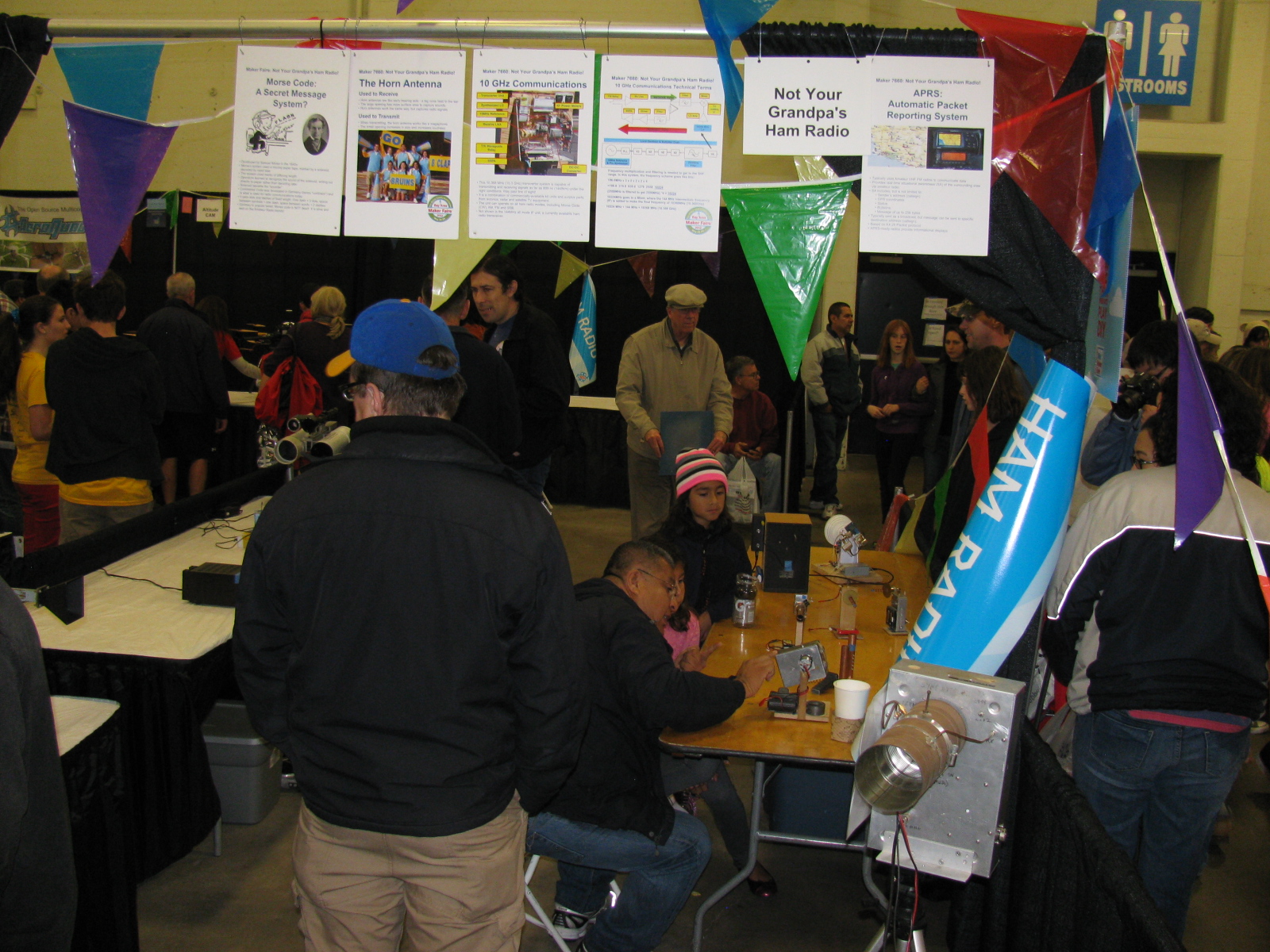
Here is a gallery of our booth posters for the 2014 Bay Area Maker Faire. More photos, videos and stories will follow. . . . .
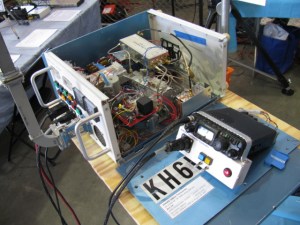
The big show is coming soon. Last year, over 120,000 people attended this science-art-food-engineering-fun-educational event.
This year, my team (Dennis Kidder W6DQ, Brian Yee W6BY and Marty Woll N6VI) will bring their newest ham radio projects to show. We will continue with my original theme called “Not Your Grandpa’s Ham Radio.”
A group of University of California, Davis (UCD) engineering students will join us to demonstrate their experiments and projects. These new engineers are getting a great head-start by doing hands-on, practical experiments and projects that go beyond their lecture and textbook learning.
Read my LinkedIn post to understand my personal passion about amateur radio, Makers, the Maker Faire and education.
UPDATE: Articles on San Diego’s First Maker Faire:
Inventors Show Off DYI Drones, Robots
Maker Faire Celebrates 100 Faires Around the Globe in 2013
Crowd Deluges San Diego’s First Mini Maker Faire: An Xconomy Slide Show
The First San Diego Mini Maker Faire Takes Off!
A Mini Maker Faire makes its debut in San Diego at the Del Mar Fairgrounds. Despite the sometimes heavy rain, most all of the exhibitors (Makers) showed up. San Diego Mini Maker Faire organizers kept the weather forecast updates on a positive note: “…Forecast: 100% Chance of Great Exhibits” – an excellent promotional phrase.
There were around 5,000 tickets purchased, amazing for a first run in inclement weather. Another positive indicator of interest in San Diego area “Making” is the number of Learn to Solder kits that were made during the event – all 350 of the blinky LED boards were built on Saturday.
The San Diego Not Your Grandpa’s Ham Radio team
Dave WA6CGR (San Bernardino Microwave Society – SBMS)
Dennis W6DQ (SBMS)
Jason W6IEE (SBMS)
Kerry N6IZW (San Diego Microwave Group – SDMG and SBMS)
Walt (SBMS)
Wayne KH6WZ (SBMS)
In addition to visitors from our own radio clubs (Rein W6SZ and his XYL, Larry K6HLH and his XYL, Ed W6OYJ, Michelle W5NYV and Paul KB5MU) many other San Diego area hams stopped by. As in previous exhibits, there is a pattern: Those who have a callsign but are not on the air, those who have callsigns and are active on the FM repeaters but not much else.
But this is one of the reasons I developed the Maker Faire theme called Not Your Grandpa’s Ham Radio – I want to show something new to licensed (active as well as inactive) hams, and I want to expose those not familiar with ham radio to what some of us are doing with twenty-first century technology in our hobby – we are embracing and doing hands-on experiments with microprocessors/microcontrollers, GPS, micro- and millimeter-wave construction techniques and other exotic radio-related technologies. We are having fun while learning new skills and expertise.
I hope this idea spreads to other active ham radio groups in other locations – surely there are other hams like us who are doing something more interesting than just talking to strangers, friends and family, right? If you are a ham radio operator and are involved in doing something interesting, let me know and we should join forces to help each other increase interest and participation in this concept – since – as most all hams know – being a Maker is certainly not a new idea!
Here are some pictures from the San Diego Mini Maker Faire. I have two videos posted on my YouTube channel: Walt’s Radio Wave Demonstration and The Electric Giraffe
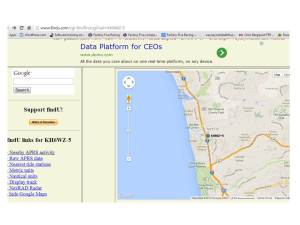
Map showing the KH6WZ APRS beacon location. The location is approximate, I had to simulate the GPS coordinates since signals were blocked in the steel and concrete exhibit hall.
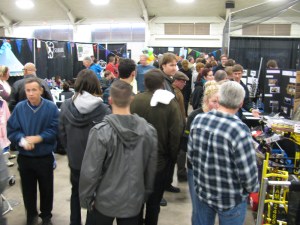
Despite the rain, there was a constant crush of people in, near and around the Not Your Grandpa’s Ham Radio booth at the 2013 San Diego Mini Maker Faire
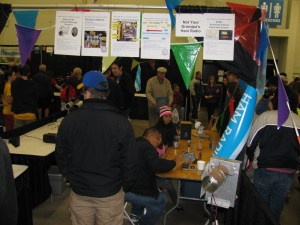
Not Your Grandpa’s Ham Radio at the San Diego Mini Maker Faire – We were lucky there was a no-show next to us, so we combined the empty space with ours at the end of an aisle – good show!
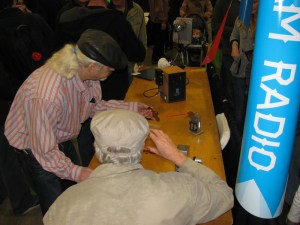
A visitor (striped shirt and black hat) tries some of the hands-on microwave physics demonstrations made by Walt
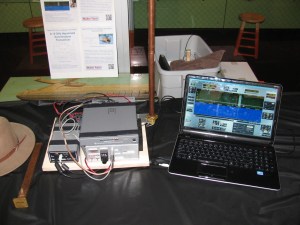
Dennis brought his 10 GHz / 24 GHz dual band station with software defined radio and notebook computer. The “waterfall” display is used to visually indicate very weak to very strong signals across the receive band. The digital signal processing in this system can improve signal reception

Two more projects by Dennis – On the left, a transmit/receive sequencer, used to turn on or turn off circuit modules (or functions) in a specific order. To the right is a circuit under construction/proof of concept receive system using direct synthesis.

Jason W6IEE brought his airplane IFF detector. I will get a better description of his display in a later update.
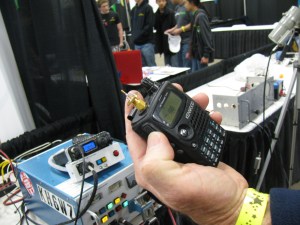
Here’s one of Kerry’s gadgets – a surplus QualComm microwave diode being used to generate a wideband microwave signal. Intended to be used to detect a microwave signal to verify transmitter operation, it can also transmit a signal for voice communication – in this case, to my 10 GHz transverter system shown in the background.
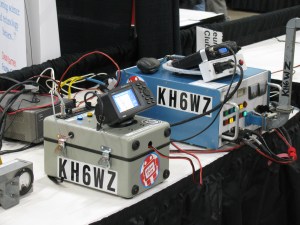
Here are three of my projects. On the far left, is a microwave field strength detector, this is used to demonstrate vertical or horizontal polarization, the KH6WZ unit in the middle is an APRS beacon, transmitting GPS coordinates (this unit generated and transmitted the GPS coordinates used to generate the location on the APRS locator map at the top of this page) and at the far right is my distance record-setting 10 GHz microwave transmitter-receiver system.
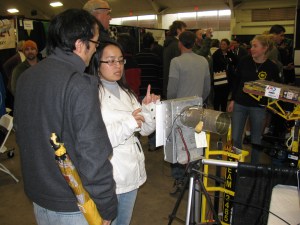
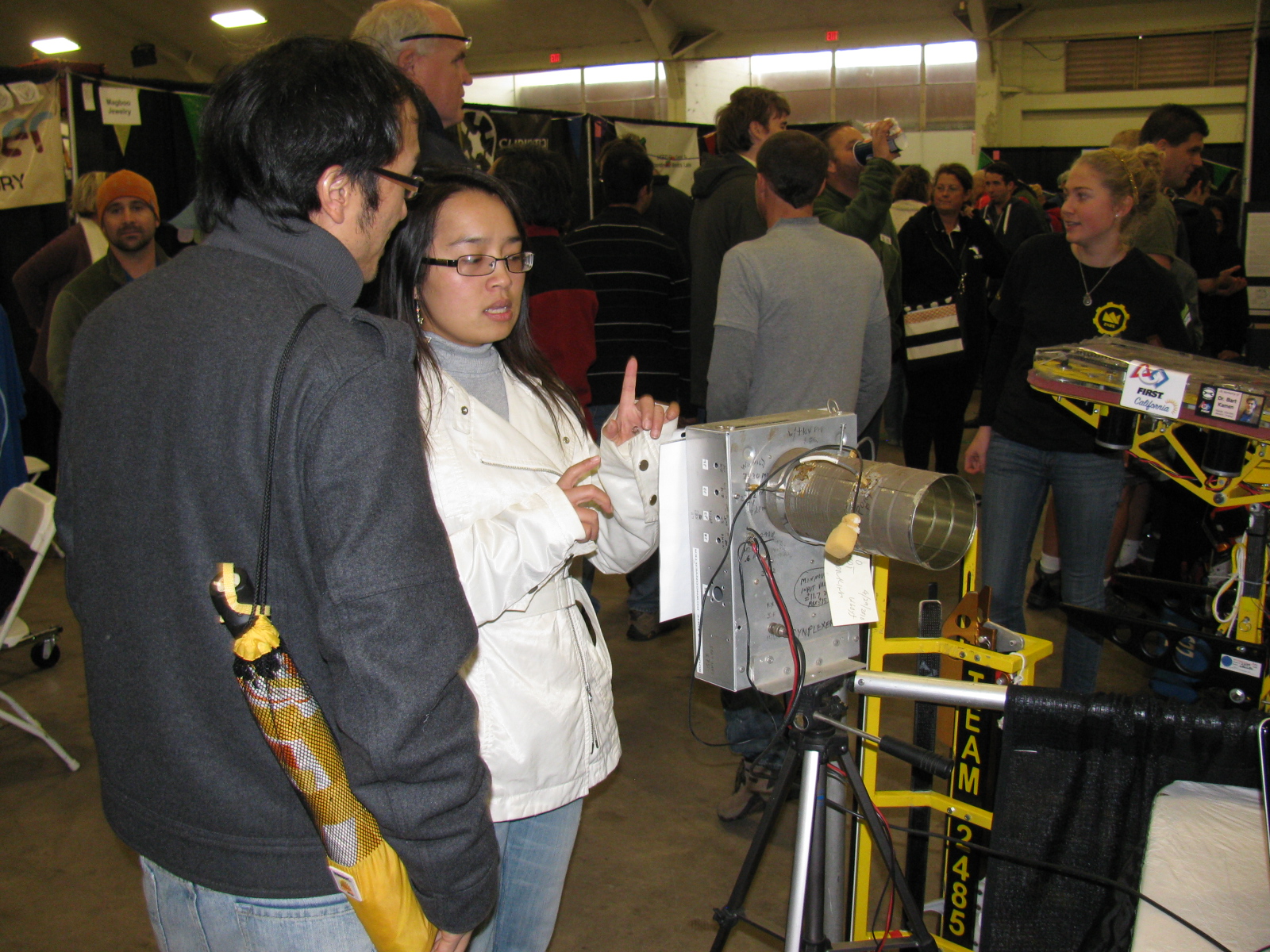
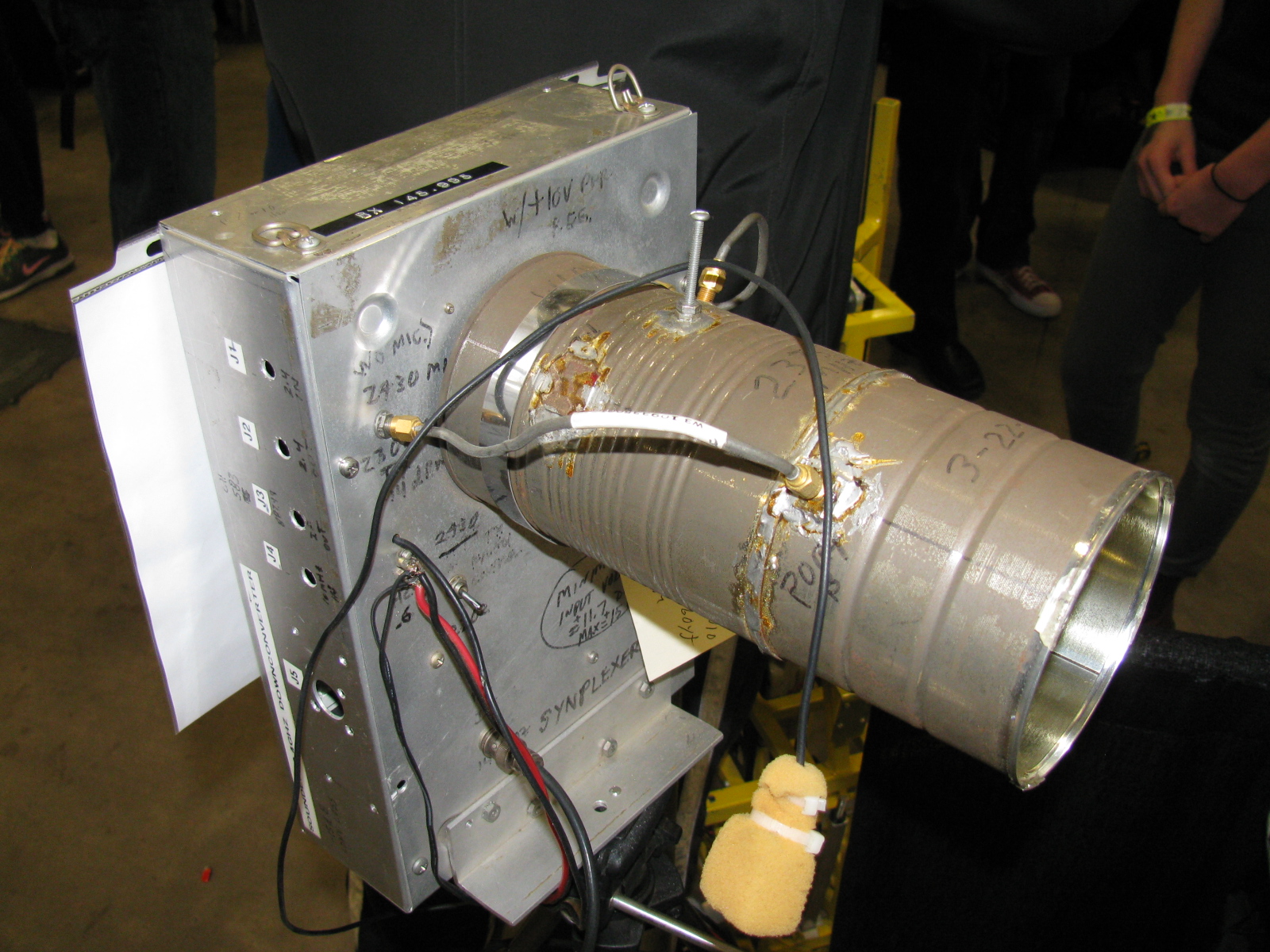
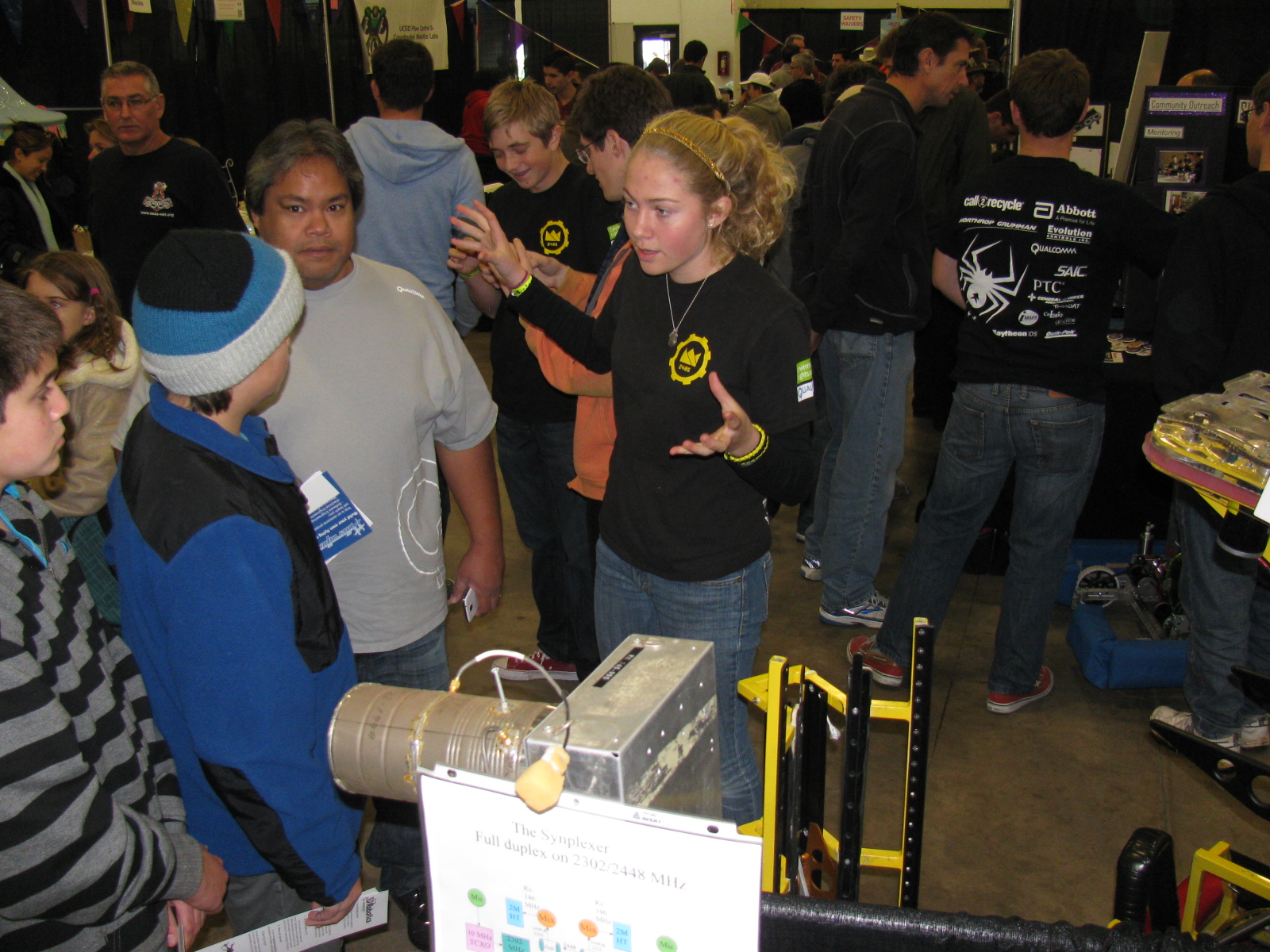
Visitor’s to Not Your Grandpa’s Ham Radio at the San Diego event were able to see some vintage 1960s microwave ham radio units – like this “Synplexer” built by Ed Munn W6OYJ. A pair of these units were on display so we could demonstrate full duplex wide band communication on 2.4 GHz (2400 MHz)
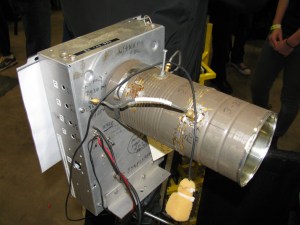
Here’s a closer look at the Synplexer
Who’s that?
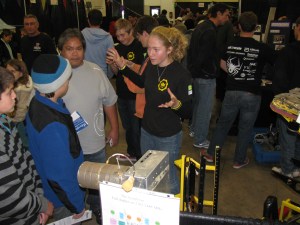
It’s great to see young ladies get excited about technical things. There’s a San Diego area high school program that includes a robotics class and competition
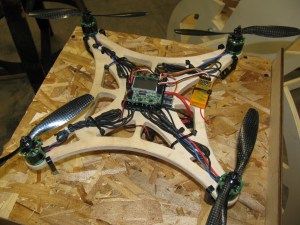
Quadcopters seem to be trendy with Makers. Maybe this is where Jeffery Bezos got that idea for small package delivery?

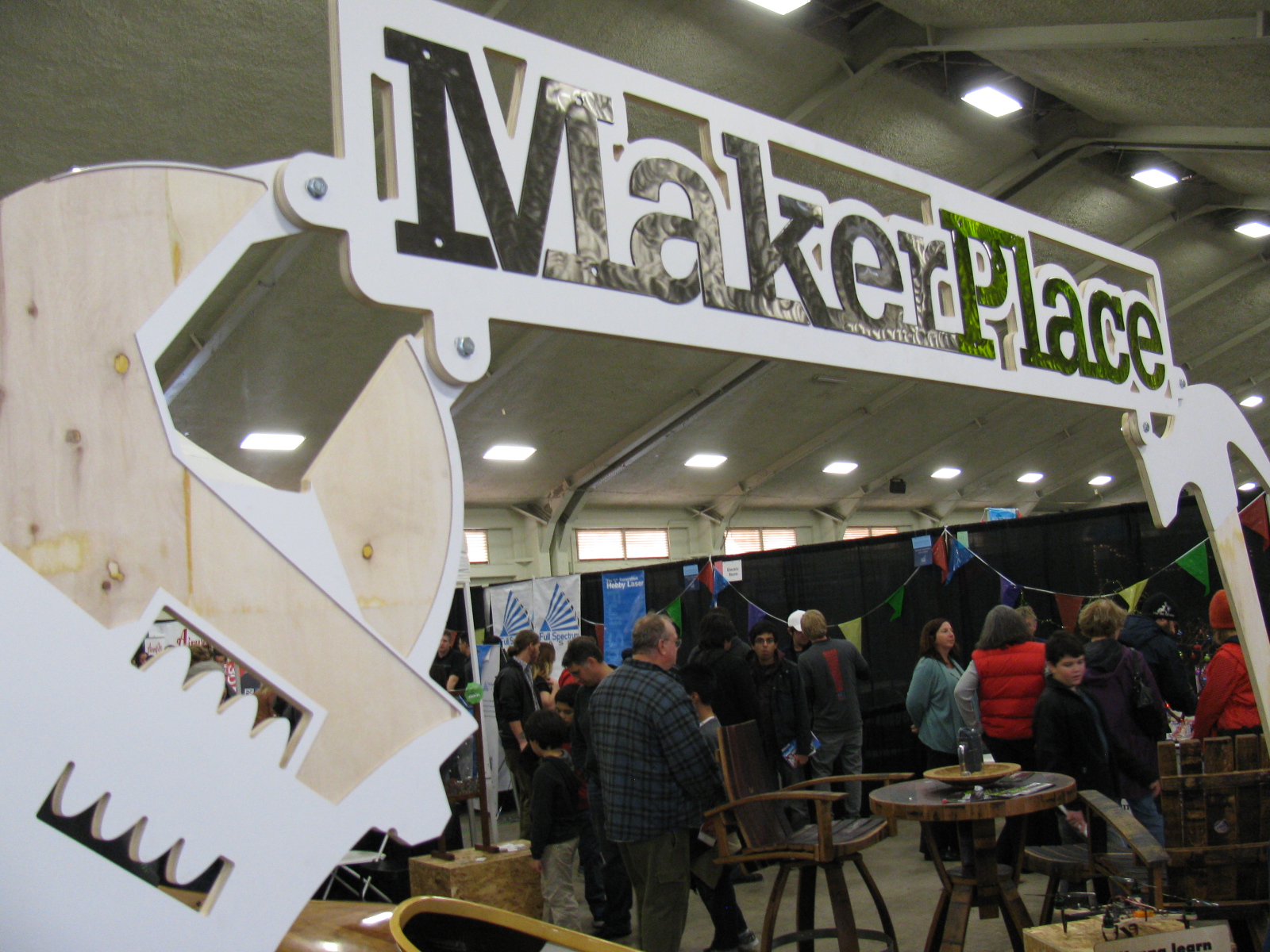
MakerPlace – a place where fellow Makers can gather and make, share and borrow tools and ideas to make things. Funny, it sounds like what a good and active ham radio club should be
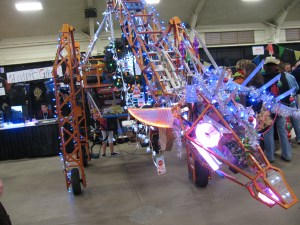
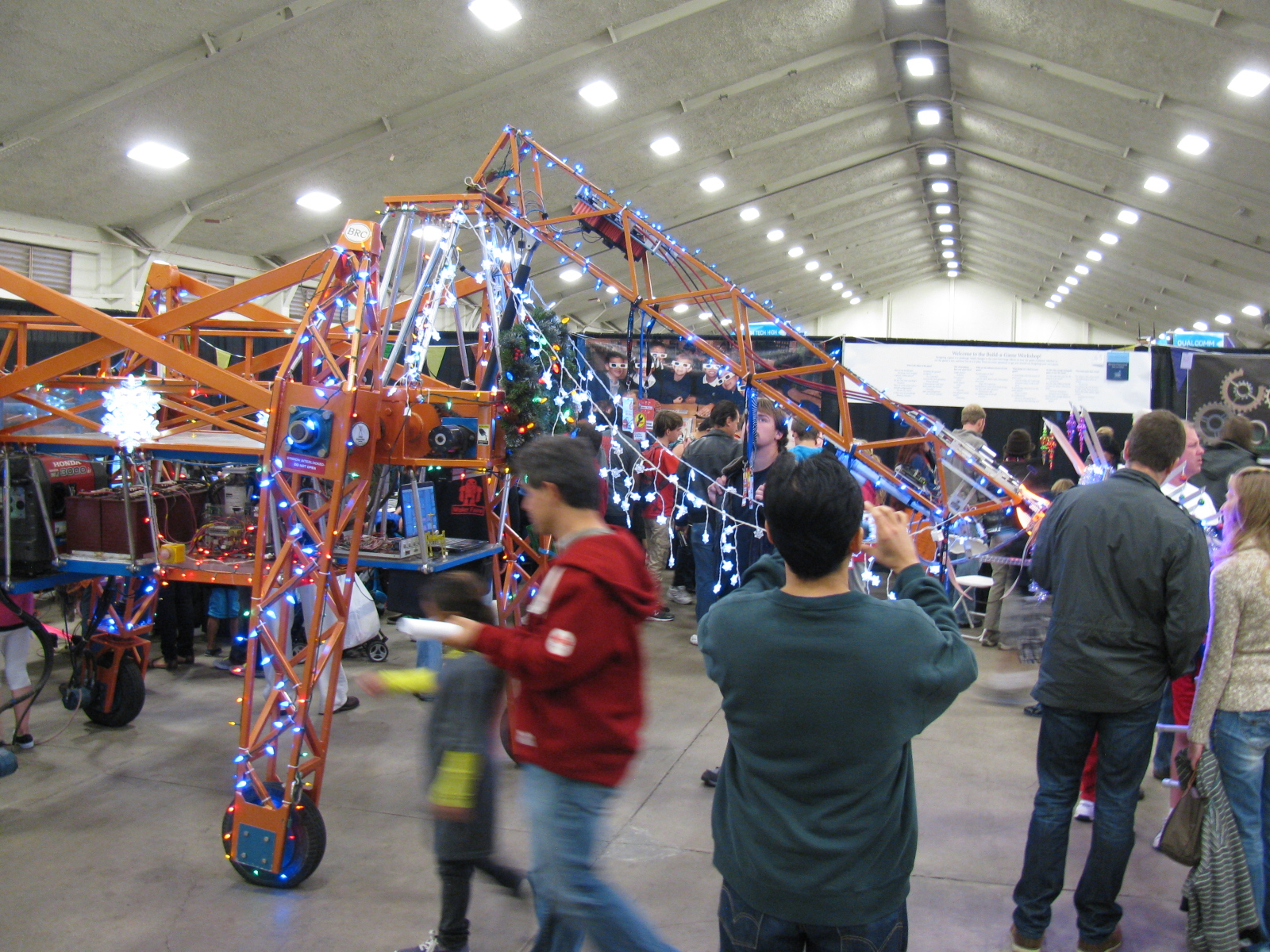
Russell – the Electric Giraffe at the 2013 San Diego Mini Maker Faire. Russell and its builder Lindsay, are San Diego residents
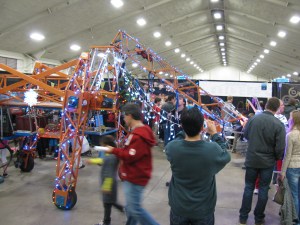
The Electric Giraffe – This image may give you some idea of Russell’s size – this is the “down” position, with head lowered for crowd interaction
Links to More Information
Amateur Radio General Information
CQ Amateur Radio Magazine
American Radio Relay League (ARRL)
Polaplexer for 2.3GHz (2300 MHz) – a Vintage Microwave Transceiver
Another Polaplexer Article
APRS – Automatic Packet Reporting System -Beacons
Byonics – I Use TinyTrak Beacon Kits
Microwave Ham Radio Clubs in Southern California
San Bernardino Microwave Society (SBMS)
Microwave Group of San Diego / San Diego Microwave Group
San Diego Area Radio Clubs
Go here and search for ham radio clubs in your area
Russell the Electric Giraffe

Announcing San Diego Mini Maker Faire 2013 – Visit the Maker Booth called “Not Your Grandpa’s Ham Radio”
Here’s a quick overview of Maker Faire projects from past “Not Your Grandpa’s Ham Radio” exhibits. . .
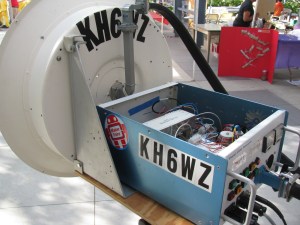
The KH6WZ 10 GHz (X-band) transmitter-receiver unit on display at the Orange County Mini Maker Faire on the UCI campus

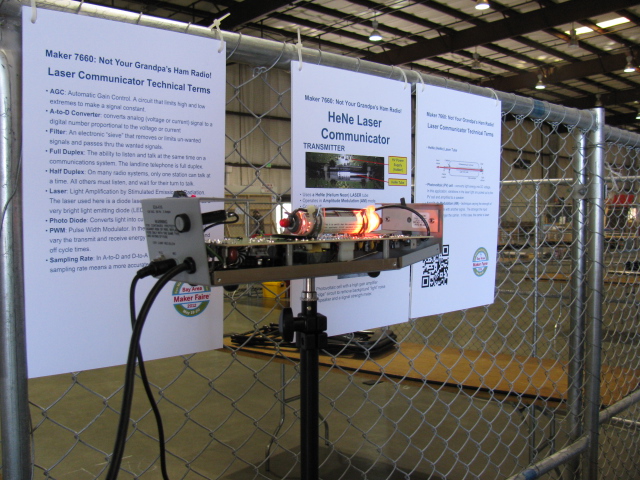
A vintage Helium-Neon (HeNe) laser communicator by Dennis W6DQ – from the 2012 Bay Area Maker Faire
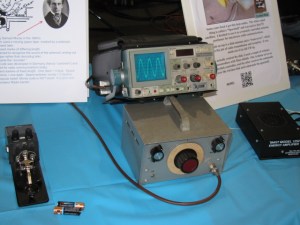
An audio frequency test station with an oscilloscope, signal generator and audio amplifier. A microphone inserted into the amplifier input became a popular function for kids and adults – Speak into the microphone and see what you sound like!

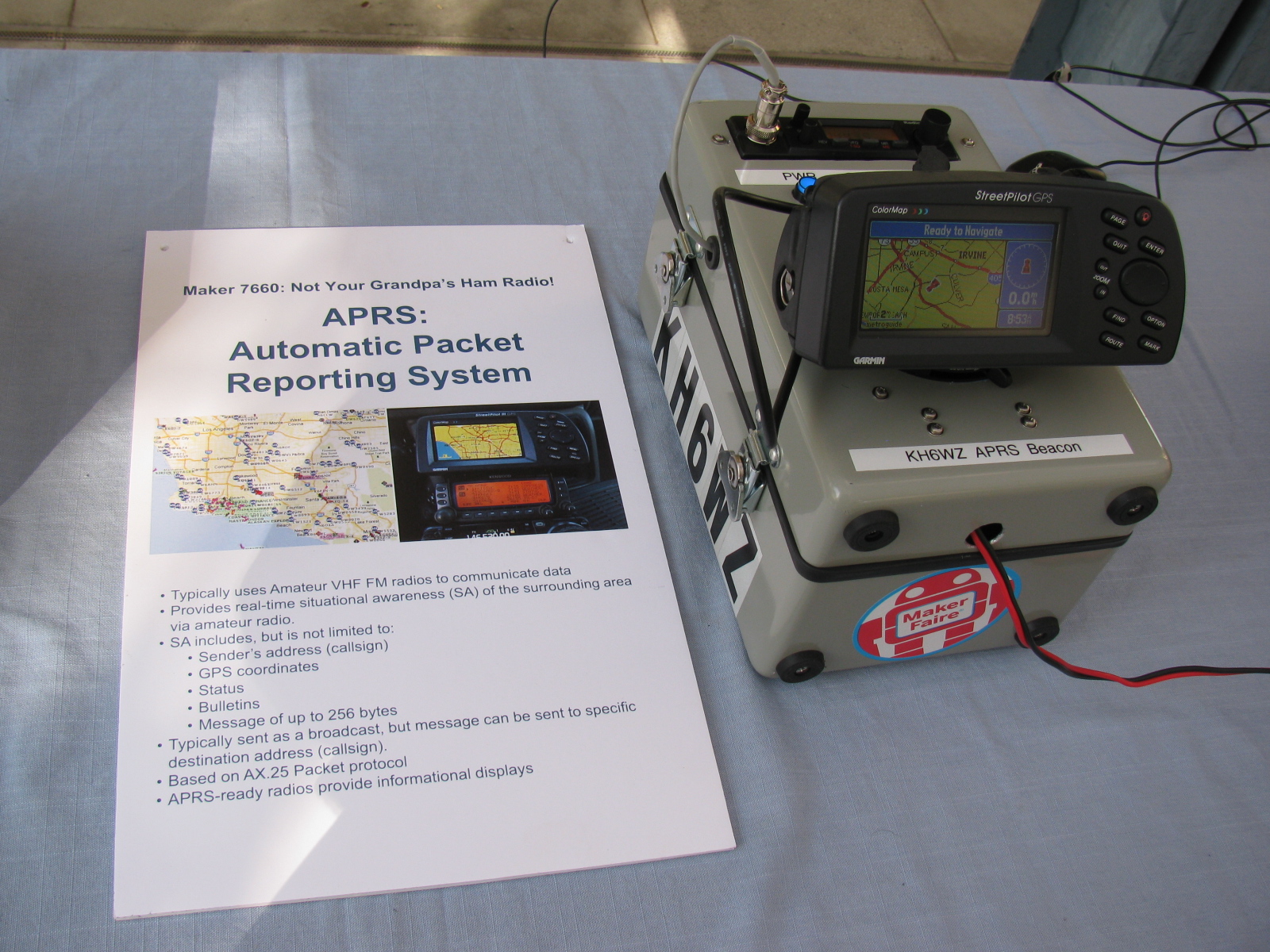
KH6WZ-5 APRS beacon – active and sending position data at the 2013 OC Mini Maker Faire at UCI. The beacon message included the Faire’s URL.

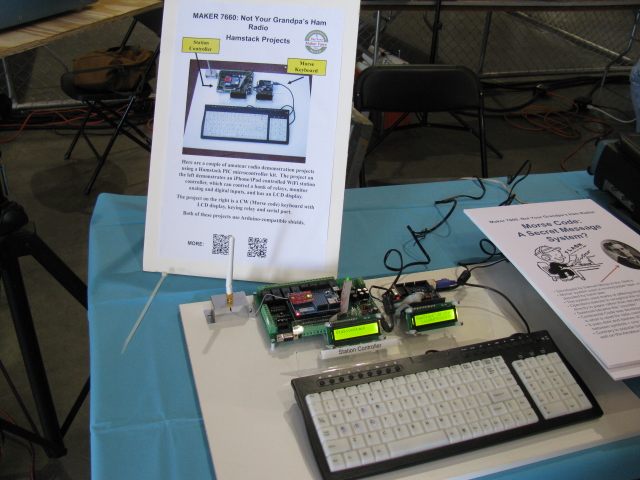
Morse Code reader/sender with wireless keyboard and radio interface by Brian W6BY. This setup uses Ham Stack modules available from Sierra Radio
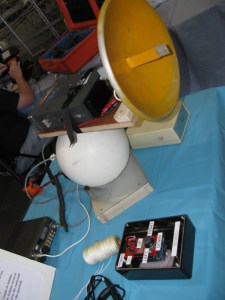
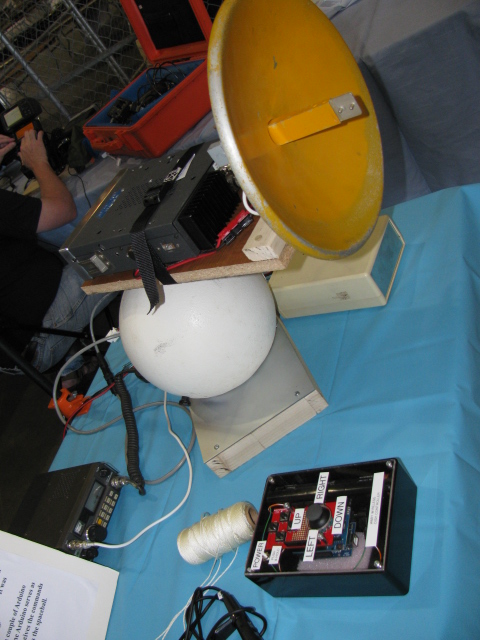
“Space Ball” azimuth-elevation antenna positioner, with wireless remote control and iPhone interface, by Brian W6BY

KH6WZ APRS beacon sending out the Discovery Science Center location
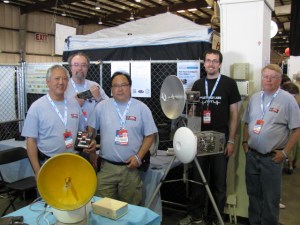
Not Your Grandpa’s Ham Radio 2012 Bay Area Maker Faire team – Left to Right: Brian W6BY, Dennis W6DQ, Wayne KH6WZ, Tony KC6QHP, and Mike Lavelle K6ML

Jeri Ellsworth – aka Circuit Girl – at the 2012 Bay Area Maker Faire. She’s playing her 8-bit bass key-tar.
More projects coming soon, so stay tuned!
Announcing San Diego Mini Maker Faire 2013 – Visit the Maker Booth called “Not Your Grandpa’s Ham Radio”
Maker Faire – where art, science and technology crash together!
>> Click here for more info! <<
The past weekend was a busy one indeed. I made some time to participate in the microwave contest, dragging my rig out to the bluff overlooking the Bolsa Chica Wetlands and then to El Segundo. The 10 GHz and Up Contest is unique, since it spans over two weekends, the first part is in mid-August and the second part near the end of September. This gives participants a chance to fix broken rigs and continue to add points to their scores.
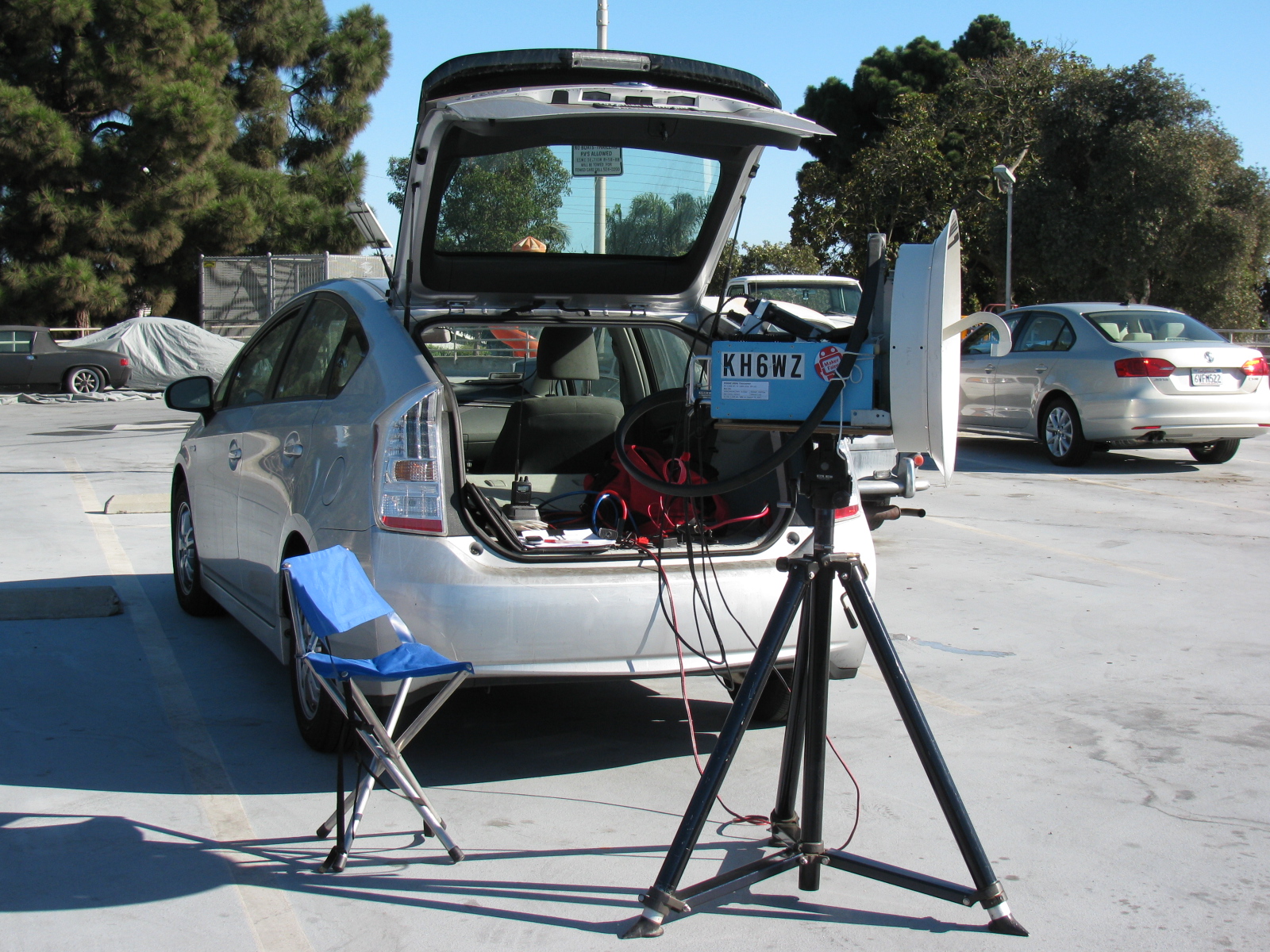
To be honest, I was not prepared for this contest. I did not have any roving plans, my Prius was not modified to supply my 7 watt 10 GHz rig with power and my mobile radio was not programmed with any of the liaison / coordination frequencies. However, I managed to have some fun testing out my homemade 10 GHz (X-band) rig.
I noticed something during the contest: I was afraid of killing the 12V battery on the Prius, so I left the car on and “ready” during the entire contest. I turned off the air conditioner and the courtesy light. As with normal operation, the gasoline engine will only run when it is needed to charge the system, including the 300V (or whatever voltage it is) traction battery.
Since the rig draws 10 amps in transmit, and transmitting a continuous signal for “beaconing” so that other stations can find me is a routine practice in microwave contesting, I was worried that something might happen to the Prius power system.
However, the car seemed to be fine, and the rig was happy to run under full DC power, producing a clean signal and no “unlock” condition. The engine did start up and ran for less than one or two minutes at a time, and the engine is so quiet, sometimes I did not notice it was on.
Using the Prius as a power system worked out so well that I will eliminate my spare battery idea and mount a power connector on the battery box lid so I can use the DC to power station equipment for the next contest. I have a 100 Ah gel cell battery in a big plastic box that I usually use for radio contesting, so it is independent from the car power system – but I discovered the battery was dead and was not holding a charge when preparing for the Disaster Expo – that is another story. . .
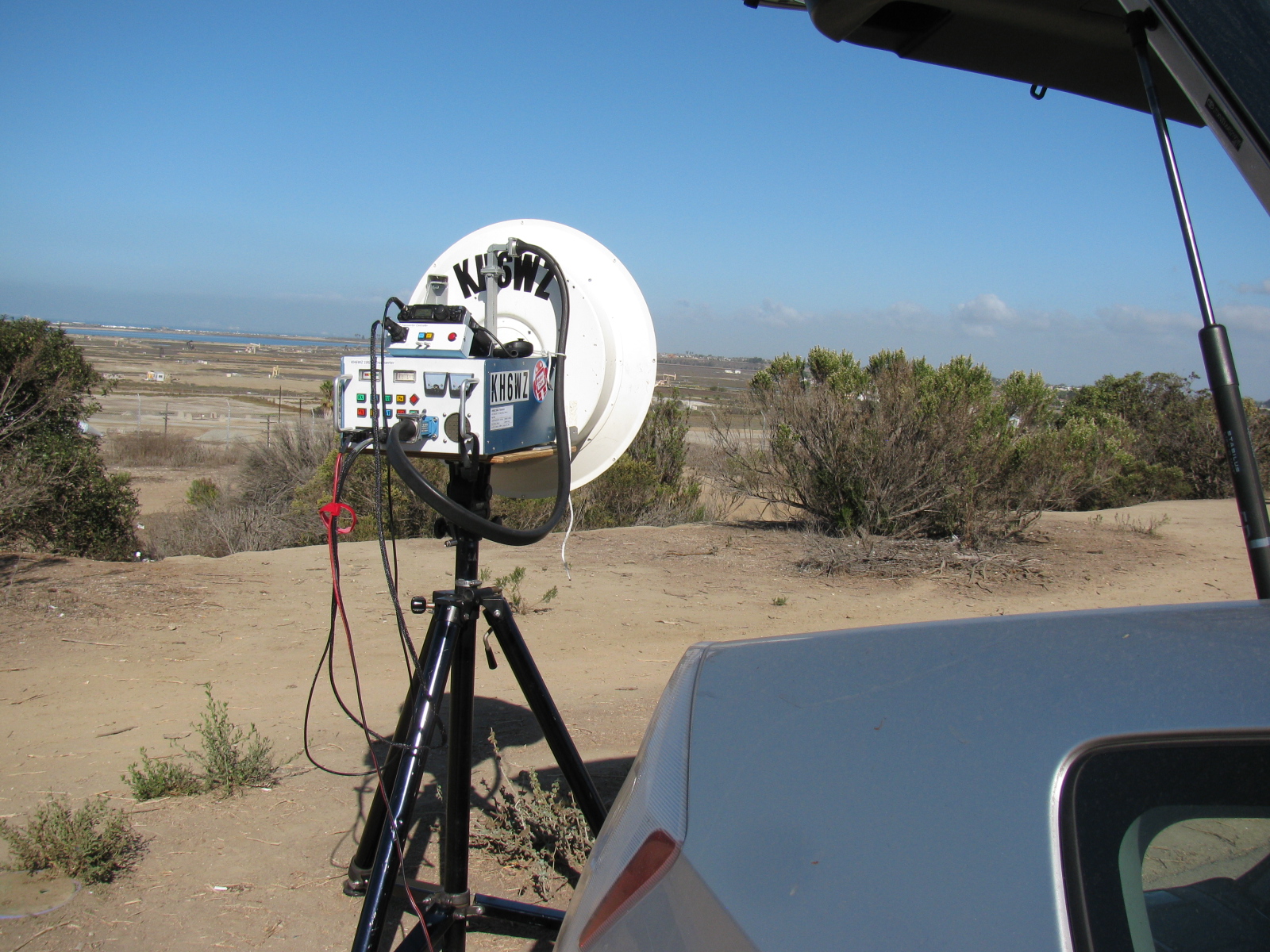
Since I operated from these two locations before, I don’t have too many pictures of these places, but these will give you some idea of what operating a rover station in the 10 GHz contest is like. Well, not really.
My un-official score for about 5 hours of operating time is:
1900 QSO Points + 3341 Distance Points = 5241 Final Score
Best DX is 217 km, when I worked K6NKC and KC6UQH in DM12rr (East San Diego County) from El Segundo, DM03tw
The most fun and challenging contact happened to be my last contact. It was a two-way CW contact with WA6JBD in DM14go (not sure where), from the El Segundo water tower location.
Of the 29 total contacts made, 19 were unique callsigns
Here are some pictures . . .
-
-
The first stop – KH6WZ in DM03xq – Huntington Beach, CA
-
-
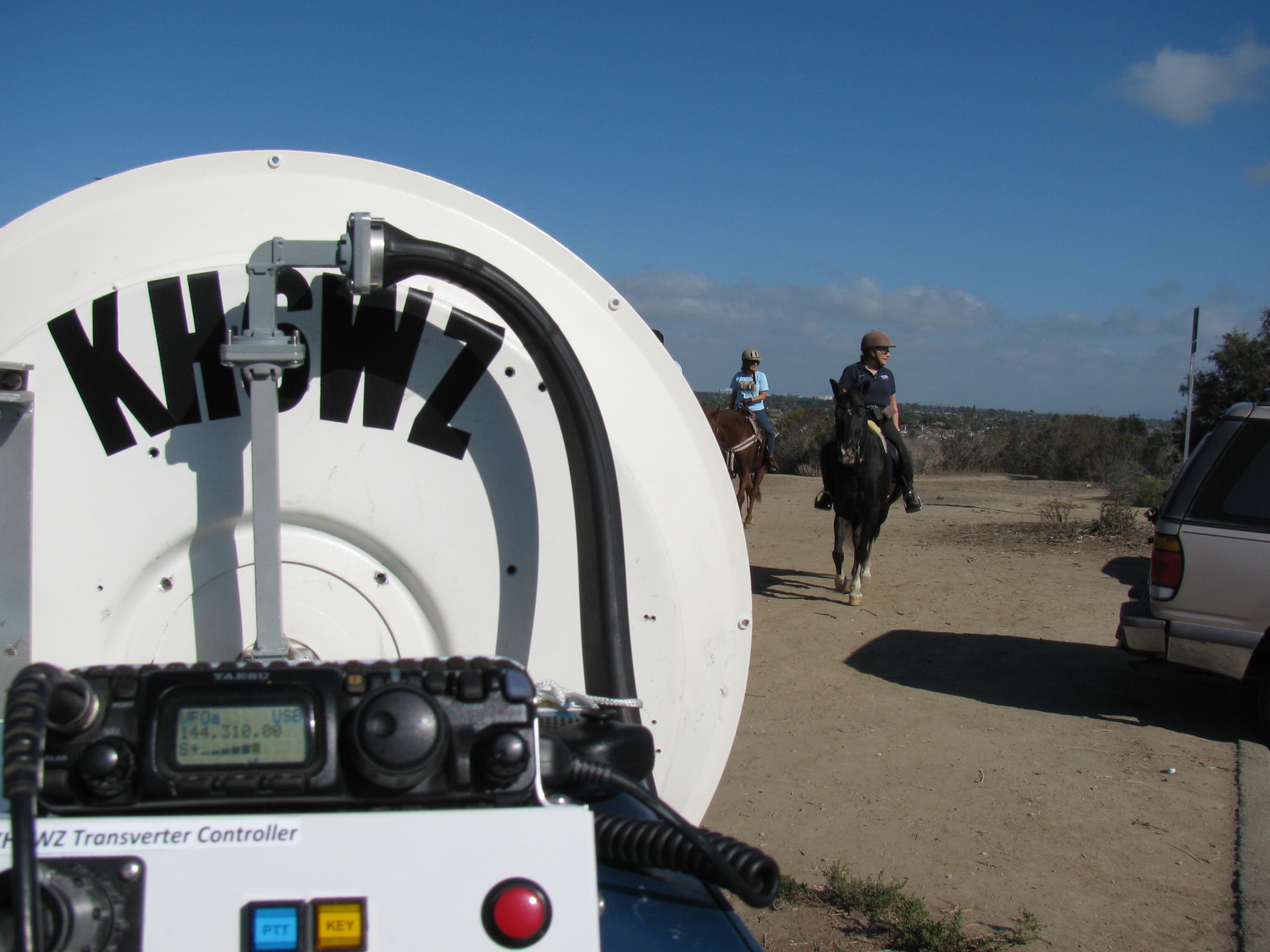
Some human as well as four-legged visitors to the Huntington Beach location. Take a look at the FT-817 S-meter and notice how the N6CA beacon (Frazier Mt., DM04ms) is booming in.
-

-
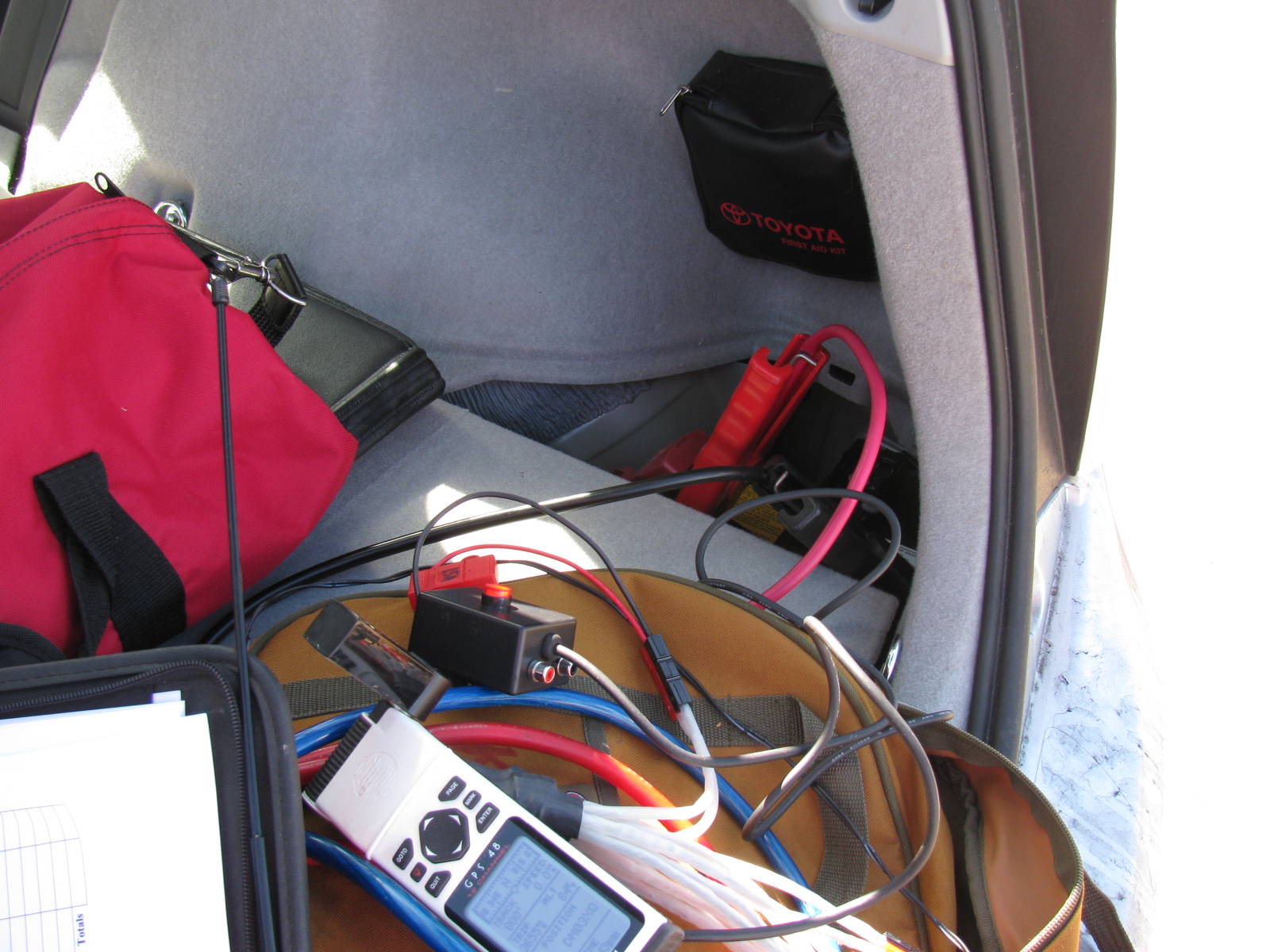
Battery jumper cables clipped onto the little 12V gel-cell in the back of the Prius supplied power to the station, which draws about 10 amps on transmit.
-
-
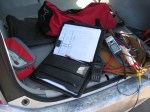
I really need to do something about the operating position inside the Prius. Yaesu FT-60, old Garmin GPS and the log sheets thrown in the back of the car.
-

-
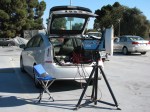
This is the second of two stops on contest Sunday. El Segundo, DM03tw. This is the top of a parking structure for a park, for some reason I never took note of the name. It is easy to find, just look for the water tower.
-
-
The KH6WZ station at DM03tw. The camping chair is more comfortable than it looks.
Discovery Science Center – Advanced Ham Radio on Display at the Meet the Makers Event

Signage at The Discovery Cube announces the Meet the Makers Event
Dennis Kidder (W6DQ), Walter Clark and I demonstrated our Maker Faire ham radio projects at the Discovery Cube in Santa Ana on June 29 and 30, 2013. We used my TinyTrak APRS beacon to indicate our location during the event. In case the plot is removed or expires, here is an image of the map showing our location. KH6WZ is indicated by the eye icon near the Interstate 5 freeway in Santa Ana.

This is a screen capture showing the KH6WZ APRS beacon data from the Discovery Science Center – Meet the Makers event.
This was a great opportunity to expose people to today’s technology Amateur Radio, and continued along my Maker Faire theme, “Not Your Grandpa’s Ham Radio.”
Dennis brought his dual band 10 GHz and 24 GHz transverter, controlled and interfaced to his software-defined radio (SDR).
Walt brought his polarization demonstration units, which helped people visualize how radio signals propagate and change as they travel through the air. Here’s how Walt explains his demos:
Two demonstrations show the structure of radio waves – in this case microwaves.
One
The structure of a radio wave in angle around the direction of travel: This is called polarization. A spinning bargraph that has a receiving antenna that also spins will reveal the way radio waves “look” to a receiving antenna. The lesson here is that the receiving and transmitting antennas have to be oriented to the same angle.
Two
The structure of a radio wave along the direction of travel: When a receiver is arranged to look exactly in [or along] the direction the radio waves are going out, reflections can be measured; just like in radar. The reflection off of the hand or the chest of a person causes the speaker to be loud or quiet depending on the exact position. It cycles from loud to quiet every 1.5 cm whether inches or many feet away. The lesson here is that with this equipment, you can picture in your mind the wavelength and especially note that the wavelength is the same no matter how far the radio wave travels.
We did not establish any goals for this event, but there were several memorable visitors to our little table display, including teachers, Maker Faire participants, some current and ex-ham radio operators, many engineers and retired engineers as well as engineering students.
This “Meet the Makers” event was a double treat for me, since this was the first time I visited the Science Center, and I had a blast talking about the new technologies being used by today’s ham radio enthusiasts.
Here are some pictures of this event . . .
-

-
An R/C R2D2 makes an appearance at the Meet the Makers event at the Discovery Science Center.
-

-
The 24-inch dish antenna makes a great stand for signage.
-

-
The KH6WZ APRS beacon display at the Meet the Makers event.
-

-
Dennis W6DQ, brought his software defined radio with 10 GHz and 24 GHz transverter to our exhibit.
-

-
Walt brought several fascinating displays to illustrate radio wave propagation.
-
-
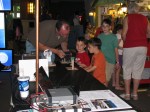
Dennis explaining the radio wave demonstration to our target audience: kids.
-

-
Great shot of Walt explaining radio wave propagation to some visitors.
-
-
The Science of Hockey at the Discovery Science Center
-
-
A close-up of one of Walt’s displays
Acknowledgements
Thanks to Bequi Howarth, of the Orange County Mini Maker Faire, who introduced us to the Discovery Science Center.
Links to More Information
Byonics (TinyTrak APRS and Weather Units)
Discovery Science Center, Santa Ana, CA
Orange County Mini Maker Faire, University of California, Irvine (UCI)
Maker Faire
Make: Magazine
American Radio Relay League (ARRL)
CQ Magazine
San Bernardino Microwave Society (SBMS)
Wayne Yoshida LinkedIn Profile





























 wayneyoshidakh6wz